
About Project Warlock II
Project Warlock II continues the first game’s story through three campaigns starring Palmer, Urd and Kirsten. Its 36 multi-level stages emphasize vertical arenas, while character-specific weapons, spells, perks and upgrades shape combat. Realmshift later lets players take any character into any chapter, extending the campaign structure with new combinations.
Project Warlock II follows the events of the first Project Warlock, shifting the focus from the original game’s lone protagonist to three of his disciples: Palmer, Urd and Kirsten. Each has a personal reason to confront their former master, and each leads a separate chapter with a distinct arsenal and combat identity. The full campaign contains 36 levels divided evenly across the three chapters. Its story moves from demon-haunted environments toward stranger cosmic territory, with the final chapter taking Kirsten beyond the stars. This sequel keeps the series’ mix of guns, magic, monsters and fast first-person action, while making character identity central to how each part plays. The three-campaign structure provides a clear progression through different protagonists rather than a single hero gradually collecting every tool.
The levels are built as vertical, multi-storey spaces, with platforms, buildings and connected floors changing how players read a room. A threat may be above or below the current position, and navigating the architecture involves looking for stairs, ledges and routes between elevations as well as identifying enemies. Each of the three chapters contains 12 increasingly intricate levels. That structure distinguishes the sequel’s environments from flatter corridor layouts: a space can open upward, fold across platforms or connect several floors, giving combat more directions to consider. The store description emphasizes sprawling vertical arenas, but the levels also serve as places to locate progression items and explore their component paths. Movement through these environments and movement during firefights become closely linked, since position affects both the route forward and the player’s exposure to attacks.
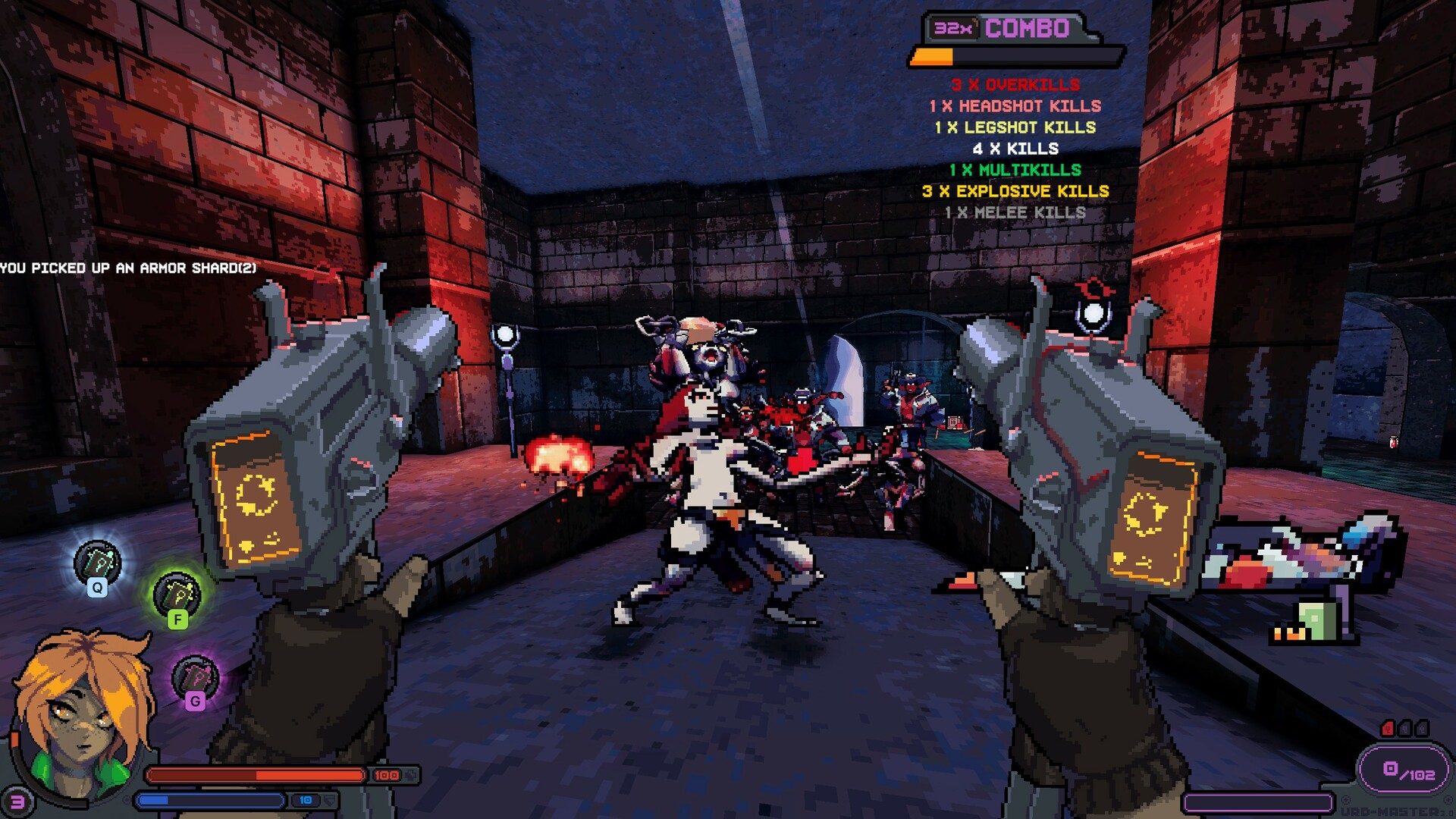
Palmer’s campaign opens the sequence with a style built around ice, fire and dual guns. His weapons and magic support direct ranged pressure against demons such as Ghouls, Turbo Knights, Cacobots and Pigdemons. Urd takes over in the second chapter, where nimble weapons such as a magic-infused dagger, a buckshot revolver and TNT charges suit a more agile approach. Her spells include Agility for speed, Poison for damage over time and Crystal for controlling the battlefield. Kirsten’s third chapter shifts the setting and toolkit again, using heat-based weapons and summoning magic against cosmic horrors. Her Nailgun can ricochet shots from walls, while the Lava Streamer scorches targets and Demonic Claws attack at close range. Those examples make the campaigns mechanically distinct as well as narratively separate.
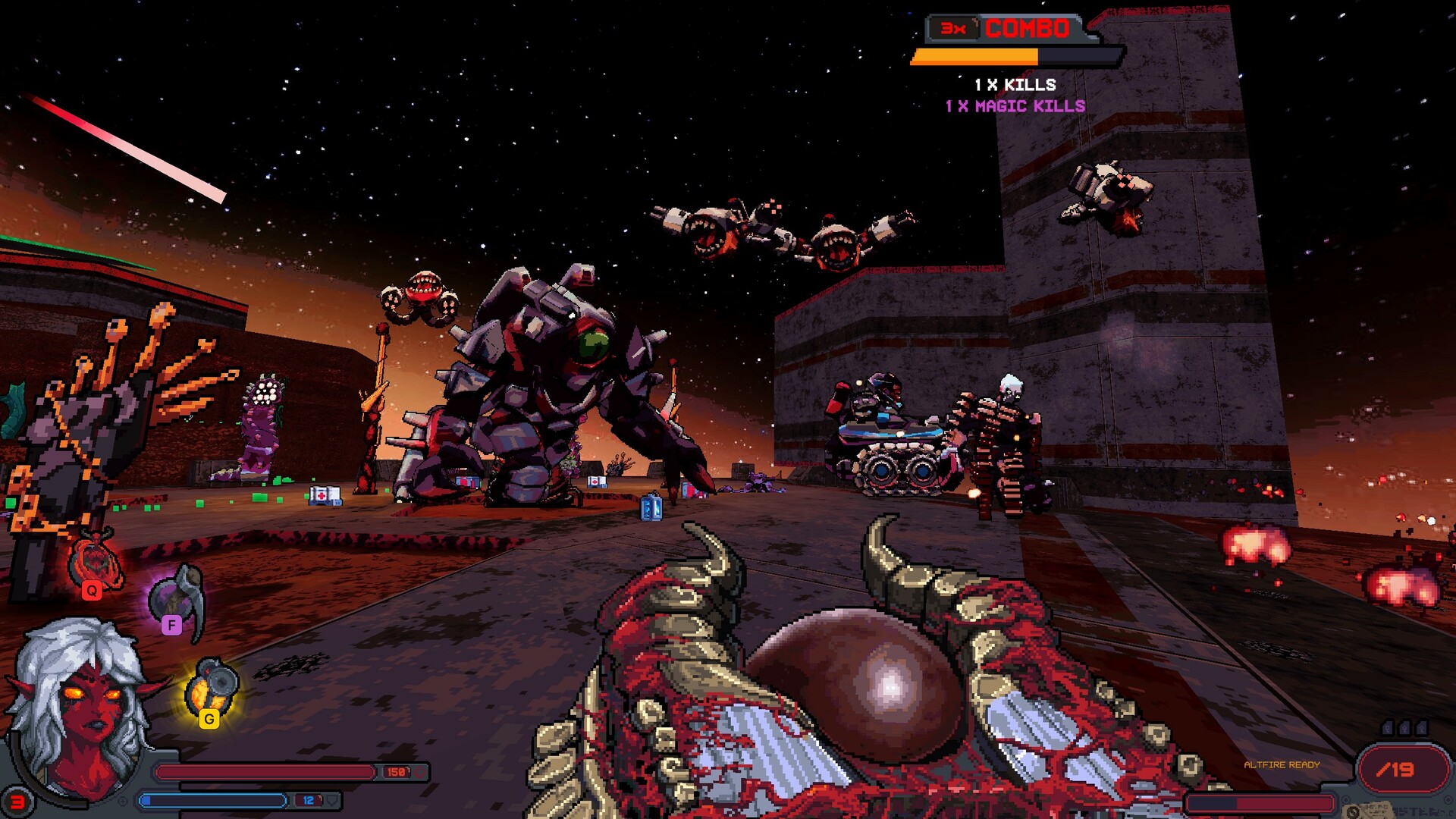
Across the campaigns, the game lists 54 weapons, 27 spells and more than 50 monsters. The arsenal is character-based: Palmer, Urd and Kirsten each bring their own weapons, skills and magical options, and their equipment can be upgraded into more specialized tools. That arrangement asks the player to learn a new combat vocabulary when control passes from one disciple to another. Palmer’s dual guns and elemental attacks, Urd’s smaller weapons and utility spells, and Kirsten’s heat and summoning powers all encourage different ways of handling the same broad pressure of demon combat. Recognizing an enemy and matching it to a suitable attack matters, while vertical arenas reward keeping track of where threats are positioned. The result is a shooter whose variety comes from campaign changes and loadout choices rather than a single fixed weapon set.
Progression extends beyond collecting weapons. Runes, stats, perks and passive upgrades provide character-specific ways to improve abilities, and more than 20 character perks and more than 20 passive upgrades appear in the feature list. Stats and perk points are found through the levels, then spent at stations in the Hub, an intermission space between stages that recalls the Workshop from the first game. The Hub gives players a place to apply found upgrades before returning to a campaign level. Each disciple also has unique upgrades that bring out the strengths of their arsenal. This makes exploration relevant to long-term character growth: searching a stage can uncover resources that change how a later fight feels, while the choice of where to invest determines which parts of a character’s toolkit become stronger.
Realmshift Mode adds another way to engage with the chapter structure after the game’s three character campaigns establish their individual identities. It allows any character to be used in any chapter, opening combinations that the original campaign order does not use. A chapter can therefore be revisited with a different collection of weapons and spells, changing the available responses to its enemies and spaces. The main story remains organized around Palmer, Urd and Kirsten, but this mode broadens the replay possibilities without collapsing their separate campaigns into one generic character. Together, the 36 vertical levels, distinct combat kits, Hub-based upgrades and flexible character selection give Project Warlock II a larger and more layered structure than a simple sequence of arena fights. It remains a single-player retro shooter, built around navigating dangerous spaces and adapting each disciple’s magic and firepower to the next encounter. Steam lists the sequel as a completed release, so all three campaigns and Realmshift are treated here as available content rather than future plans.
- Developer
- Buckshot Software
- Genre
- First-person shooter; action