
About Prince of Persia: Warrior Within
Pursued by the Dahaka after the events of The Sands of Time, the Prince travels to the Island of Time to alter the past and escape his foretold death. The Castle of Time links acrobatic traversal, weapon-based combat and sand-powered abilities across rooms that change between past and present.
Prince of Persia: Warrior Within is the 2004 follow-up to The Sands of Time, featuring an older Prince pursued by the Dahaka, a creature created by the disruption of the Timeline. The Prince believes that reaching the Island of Time and traveling into its past may let him prevent the Sands from being created and escape the death he believes is already written. The island’s Castle of Time, gardens, towers and surrounding ruins become the setting for that search. The Empress of Time rules the castle, while Shahdee serves her and works to stop the Prince. Kaileena, another figure within the castle, becomes a source of information about reaching its central chamber. The story centers on fate, time travel and the consequences of trying to alter events.
The Island of Time is explored across two periods: its past and its present. Special warp rooms let the Prince shift between them, and familiar rooms change their condition when time changes. A tower can have functioning machinery in the past and lie broken or overgrown in the present, so the route through a space depends on which version the player enters. Altering something in the earlier period can open a route in the later one, connecting traversal puzzles to cause and effect. The island is revisited from different directions rather than cleared as a simple sequence of disconnected stages. Finding a warp room, activating its controls and comparing the two versions of a room are part of understanding how to progress.
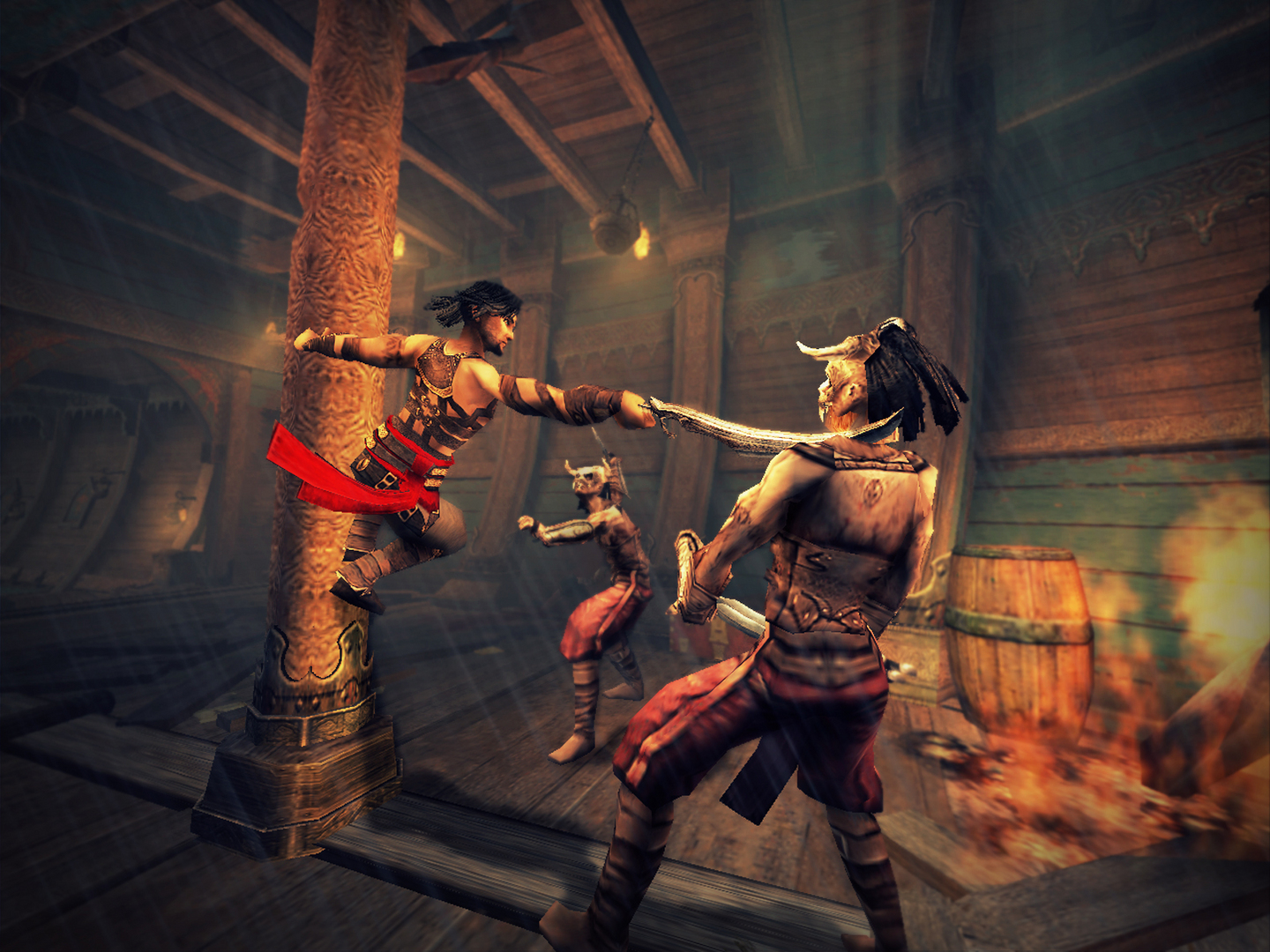
Movement carries the Prince through ledges, ladders, columns, poles, beams, curtains and ropes. He runs horizontally or vertically along walls, rebounds between opposing surfaces, swings from bars and ropes, and uses drops and jumps to continue through gaps. The PC manual describes attacks that can also use pieces of the environment, while the sequel adds dagger-assisted slides down drapes. These moves let a route combine height, distance and timing: a hanging lever may be reached from a wall run, while a rope or bar extends a jump toward the next platform. Traps such as blades and spikes occupy these routes, and some switches open doors only briefly, making precision and momentum central to getting through the castle.
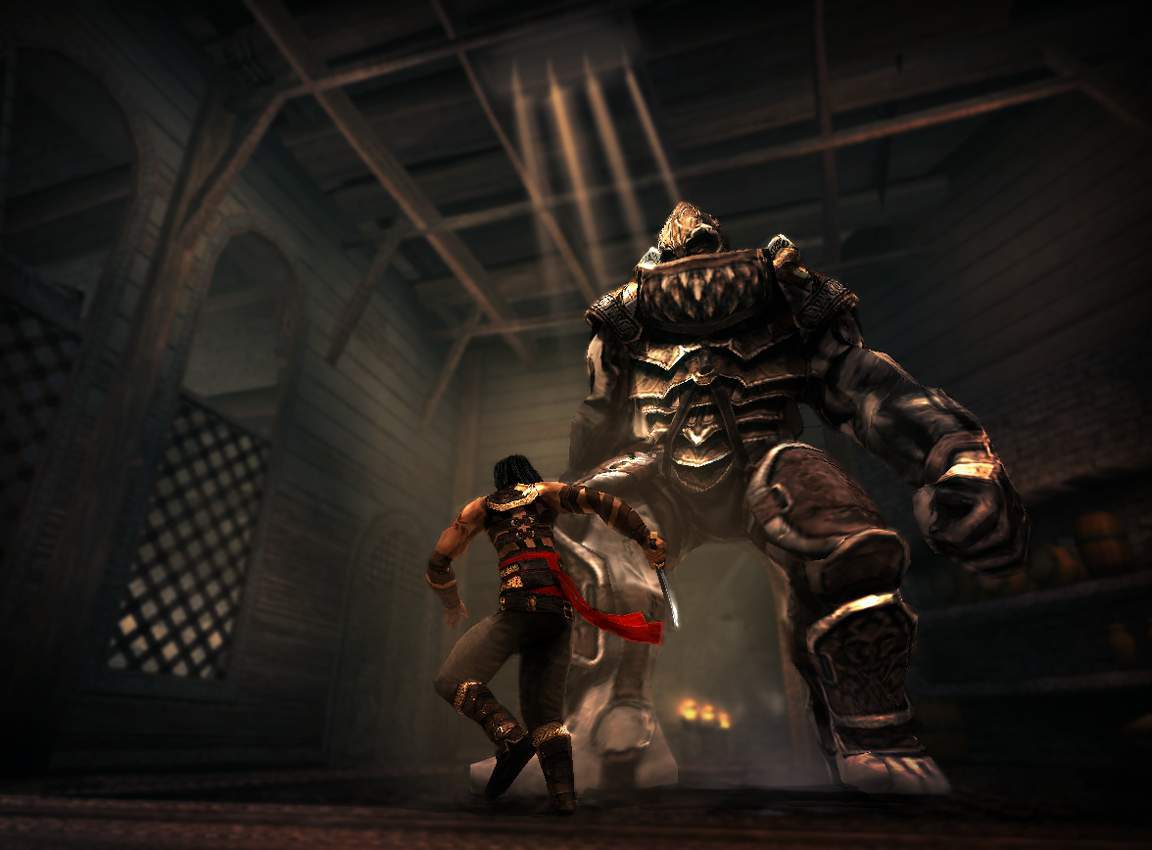
Combat gives the Prince a primary sword and a second weapon taken from racks or fallen enemies. Swords, axes, maces and daggers differ in reach, speed, damage and special attacks, and the secondary weapon wears down until it breaks. The player can chain primary and secondary strikes, vault or rebound off an enemy, grab and throw opponents, seize their weapons, or use them as a shield. Walls, columns and ladders can become part of attacks, so combat space matters alongside the selected weapon. After enough hits weaken an enemy, a finishing move can kill it and release sand. That resource restores the Prince’s time powers, making combat and exploration feed into the same supply rather than operating as separate modes.
The Prince’s time powers build on the sand medallion. Recall rewinds recent action, with a full timer allowing up to eight seconds, while Eye of the Storm slows the world around him as he continues moving at normal speed. Other powers consume sand slots for area attacks: Breath, Wind and Cyclone of Fate affect groups of enemies with increasing strength and lead time, while Ravages of Time lets him attack at high speed and defeat most enemies instantly. These abilities serve both fighting and traversal; slowing time can give the Prince room to cross a timed trap or reach a door before it closes. Finishing weakened enemies releases the sand needed to use them again, while each rewind or attack reduces the available stock.
Dahaka encounters turn traversal into a pursuit. The creature appears periodically, and the Prince must keep moving through walls, gaps, bars and ropes while avoiding a touch that ends the chase. Time portals and water barriers can provide routes away from the Dahaka, but reaching them requires a connected run through the environment. These sequences use the same movement vocabulary as ordinary platforming yet change its pressure: pausing to inspect the room or fight a regular enemy can be fatal while the Dahaka is present. The chase threat also explains why the Prince uses the warp rooms to alter the past, while the island’s shifting layout makes the escape route depend on both time period and current location.
Shahdee and Kaileena represent different obstacles and sources of direction within the Castle of Time. Shahdee serves the Empress and attempts to prevent the Prince from reaching the island; Kaileena helps him understand how to reach the castle’s central chamber. The Old Man’s warning at the beginning connects the Prince’s previous actions with the Dahaka’s pursuit. Rather than presenting a succession of unrelated enemies, these characters are tied to the island’s struggle over the Timeline and the Prince’s attempt to change his fate. The plot’s time paradoxes emerge through the relationship between the Prince’s actions in the present and changes he makes in the past, without requiring the player to treat the two periods as separate stories.
Progress is tracked through water fountains, checkpoints, the Prince’s health bar and the sand slots in his medallion. Fountains replenish health and mark places where progress can be saved; after death, the game offers a retry from the latest checkpoint. An in-game map shows visited areas, the Prince’s position and current objectives, while the combo list records available attacks. The Island also contains nine life upgrades, which extend the Prince’s health when found along optional paths through its spaces. This gives exploration a reward separate from reaching the next story objective: a detour can improve survival in later fights. Secondary weapons add another changing inventory, but unlike permanent health upgrades, they wear out during combat and must be replaced from the environment.
- Developer
- Ubisoft
- Genre
- Action-adventure