
About Prince of Persia: The Lost Crown
Sargon, a young member of the Immortals, pursues the kidnapped Prince Ghassan into Mount Qaf, a time-warped citadel where routes fold across Persian-inspired biomes. Combat, platforming, puzzles and unlocked Time Powers shape the connected action-adventure expedition led by Sargon across the mountain as he tries to bring Ghassan home.
Prince of Persia: The Lost Crown follows Sargon, the youngest member of the Immortals, an elite group of warriors serving the Persian Empire. After the Immortals help defeat the Kushan general Uvishka, Prince Ghassan is abducted during the victory celebration and taken to Mount Qaf. Sargon and his fellow Immortals pursue him, only to find a mountain where time has become unstable: past and future overlap, and the citadel’s residents and creatures reflect that distortion. The rescue mission gives the journey a clear objective, while the altered mountain makes its history and geography part of the problem. The story is separate from the 2008 Elika adventure and centers on Sargon, the Immortals and the strange conditions surrounding Ghassan’s disappearance.
Mount Qaf is a connected, side-scrolling 2.5D world rather than a sequence of unrelated levels. Its biomes range from the Lower City’s architecture and traps to the Hyrcanian Forest’s temporary plant platforms and the shifting stairways of the Sacred Archives. Paths branch, loop back and eventually connect, with some passages blocked until Sargon acquires the ability needed to cross them. Exploration therefore alternates between pushing toward a reachable objective and noting a ledge, barrier or mechanism to revisit after gaining a new power. The map records the layout as it is uncovered; optional Memory Shards let the player pin a screenshot of a location as a visual reminder of a locked route or puzzle. This supports return trips without turning the world into a linear checklist.
Sargon’s movement combines jumps, slides, wall jumps and acrobatic direction changes with powers earned during the adventure. An air dash lets him cross a gap or pass an obstacle that a normal jump cannot clear; further Time Powers change how he moves through and interacts with Mount Qaf. The same precision platforming also informs puzzle rooms, where a successful route may require threading between spikes, timed platforms or moving machinery. A bow expands his reach for distant switches and targets, and it can fold into a chakram that travels through openings, activates gears and returns when recalled. These tools serve both combat and traversal: they make space between Sargon and an enemy meaningful, while allowing the player to solve environmental obstacles from a different position.
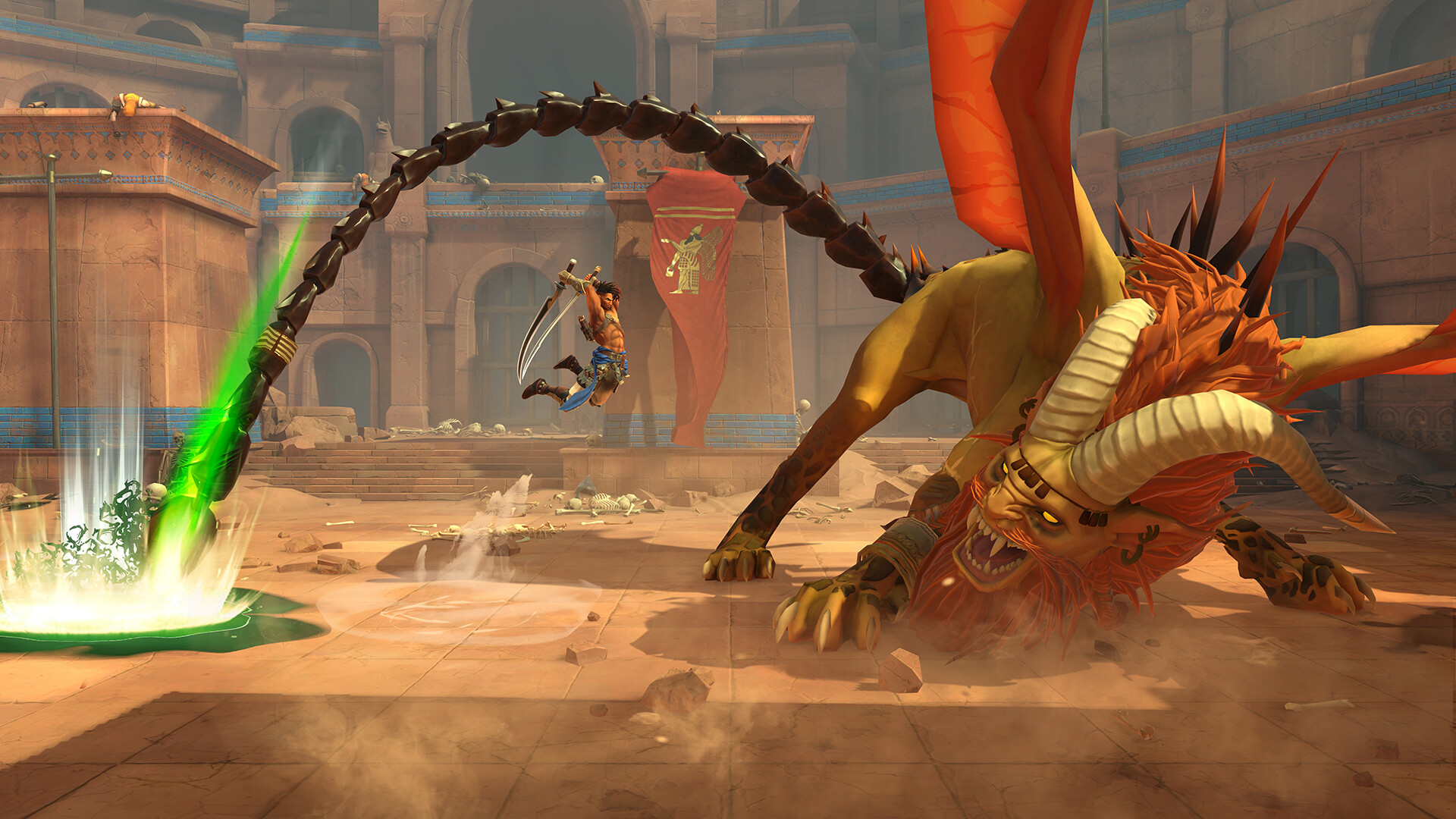
Combat is based on connecting Sargon’s twin blades, Qays and Layla, with movement and timed defense. He can attack in combos, slide beneath a guard, launch an opponent into the air, follow with an aerial hit and parry incoming strikes. Enemy warnings distinguish the response: an ordinary attack can be parried to interrupt, a yellow-glowing attack can be countered with a stronger cinematic parry, and a red-glowing attack must be dodged. Successful attacks build Athra, an energy gauge used for special Athra Surges; getting hit reduces that gauge. The meter can fill to two levels, and each level supports a different equipped ability. This makes a fight a sequence of spacing, reaction and resource decisions, rather than a matter of attacking whenever an opening appears.
Progress also comes from managing equipment and the resources gathered on Mount Qaf. Defeated enemies drop Time Crystals, which can be spent with Kaheva, the blacksmith, on amulets or upgrades for Sargon’s swords, bow and quiver. Amulets grant specific effects, such as changing an arrow shot or helping against a particular hazard, but each occupies part of a limited loadout; shopkeepers can expand how many Sargon may equip. Wak-Wak trees are safe points where he saves, restores health, potions and arrows, and changes his amulets or Athra abilities. That makes them useful planning stops: the player can adjust equipment for a boss, a platforming section or a return to an earlier route, then continue from a known checkpoint.
People Sargon encounters give the mountain’s exploration a second layer. Some characters offer quests, sell supplies, improve equipment, reveal map information or point toward secrets, so side routes can connect the rescue story to practical rewards. Fariba is associated with the map and the Eye of the Wanderer, the in-world framing for Memory Shards: Sargon can capture a place and pin that image to the map to remember a blocked passage or an unresolved mechanism. The map also distinguishes paths that are locked from those that remain unexplored, helping the player recognize when a newly gained power has changed the meaning of an earlier obstacle. This system turns backtracking into an intentional part of progression and gives visual context to notes made during exploration.
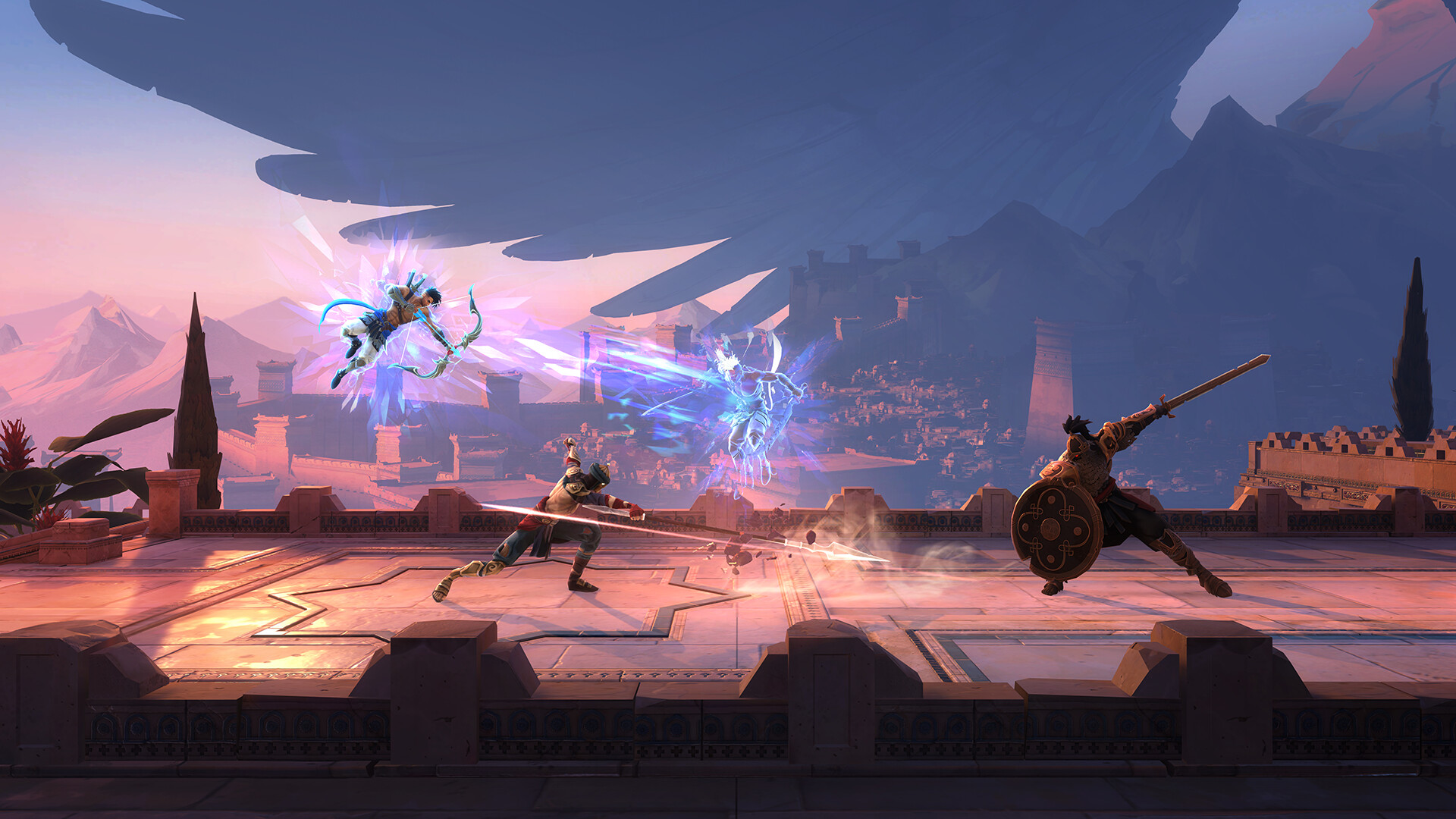
The game offers both Exploration and Guided map modes, and the player can switch between them as needed. Exploration leaves the next direction for the player to work out, while Guided mode can mark a broader objective; neither changes the underlying connected world. Difficulty settings can also be adjusted, including the timing window for parries, so a player may tune a demanding combat rule without removing the need to read an enemy’s attack. Optional Platform Assist can bypass certain main-path platforming sections. These settings sit beside the game’s core loop rather than replacing it: Mount Qaf still asks Sargon to learn routes, combine traversal abilities and react to enemies, but players can choose how much navigation guidance or timing pressure they want along the way.
- Developer
- Ubisoft Montpellier
- Genre
- Action-adventure platformer; Metroidvania structure