
About Prey
Prey (2017), developed by Arkane Studios, is a first-person science-fiction adventure set aboard Talos I, a research station orbiting the Moon. As Morgan Yu, players investigate a Typhon outbreak, explore interconnected station areas, and combine weapons, human and alien abilities, environmental tools, and scavenged resources to survive. Mooncrash is a separate expansion.
Prey is the 2017 Arkane Studios game, not the 2006 title that shares its name. Its base campaign follows Morgan Yu, a researcher who awakens aboard Talos I, a TranStar Corporation space station orbiting the Moon in an alternate 2032. The station has been overrun by Typhon, hostile alien organisms that escaped containment, and Morgan has to understand the emergency while navigating a facility whose systems, staff records and spaces hold clues about what happened. Morgan’s identity and role in TranStar’s research form a central mystery that develops alongside the immediate effort to survive the outbreak.
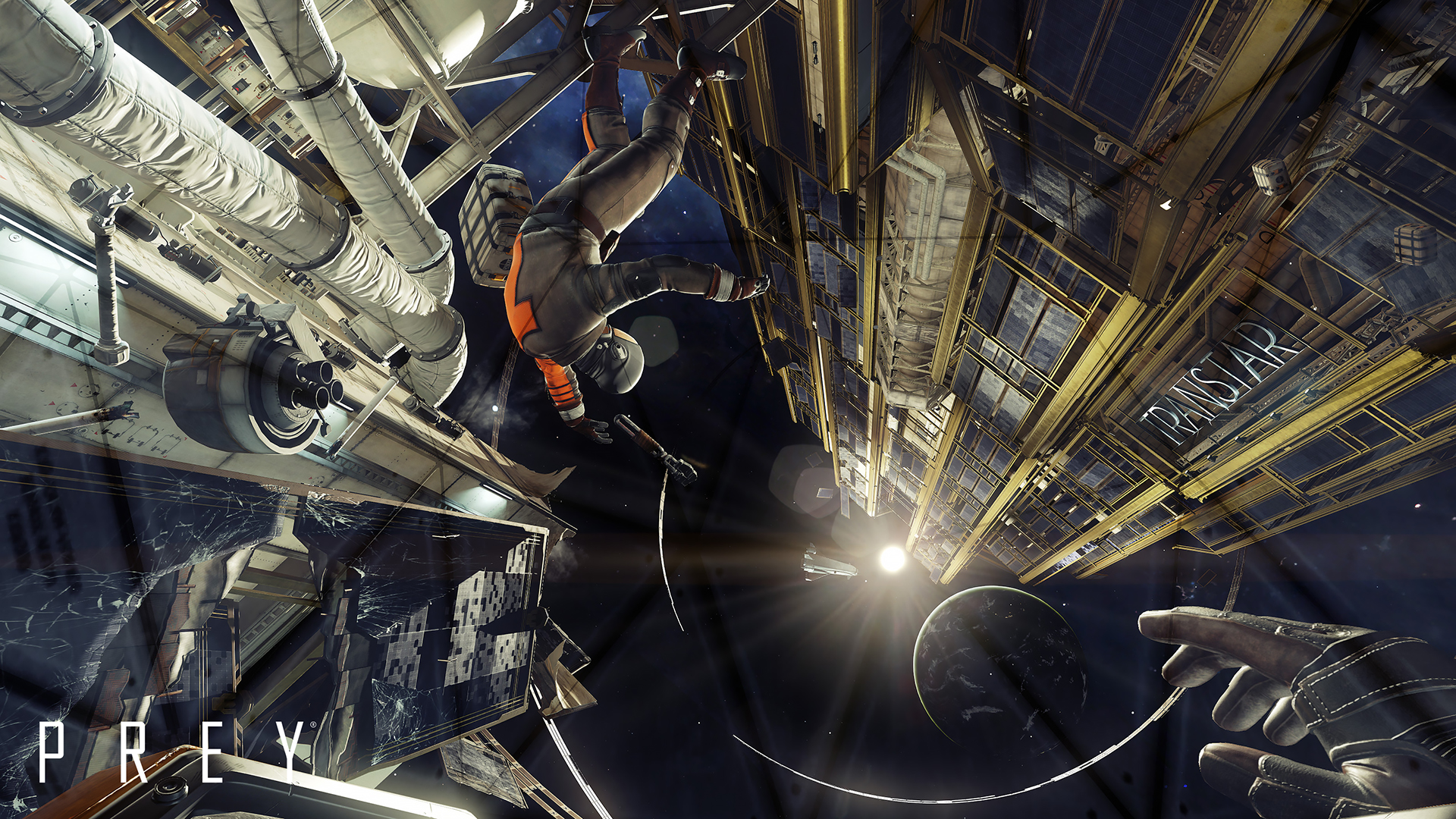
Talos I is the campaign’s main environment: a connected research and residential complex with corporate offices, laboratories, engineering spaces and public areas, as well as routes outside the station in zero gravity. Exploration is both navigation and investigation. Morgan searches rooms for access cards, key codes, supplies and information recorded in emails, audio logs and environmental details. Locked or blocked routes encourage players to look for alternatives: an access card might be elsewhere, a computer may offer another way through, or an ability or tool can create a path. Moving through the station’s exterior changes the immediate problem from room-to-room navigation to maneuvering in open space, and connected areas give Morgan multiple routes between parts of the facility. Returning to familiar sections with new resources or access can reveal useful routes and objectives.
Movement and combat use a first-person perspective, but the game’s tools serve more than one purpose. The GLOO Cannon fires fast-hardening adhesive foam that can temporarily restrain enemies and build climbable formations on walls or other surfaces. That makes it useful for controlling a threat and for reaching high ledges, vents or otherwise inaccessible places. The wrench, firearms, stun equipment and other devices provide different ways to handle encounters; ammunition and materials are limited enough that a direct firefight is only one possible response. Typhon include Mimics, which disguise themselves as ordinary objects, so players also learn to inspect a room and pay attention to suspicious movement or sound.
Neuromods are the main way Morgan develops new capabilities. Human skill paths improve practical abilities such as repairing machinery, hacking systems, increasing physical capacity or improving combat and stealth. Alien abilities are gained through research into Typhon and include powers that can affect enemies, objects or Morgan’s movement. The Psychoscope supports this research by scanning Typhon, revealing information that makes additional alien skills available. Examples include Kinetic Blast, which damages and pushes objects, Psychoshock, which suppresses a Typhon’s psi abilities, and Mimic, which lets Morgan take the form of a small object. Neuromod choices shape what Morgan can do in later encounters and how the player approaches obstacles. A player may disable or redirect a threat, exploit the environment, or use a newly acquired ability to open a different route.
Scavenging feeds into a linked recycling and fabrication economy. Recyclers break collected items down into material types, including objects found around the station and Typhon-related material. Fabricators use those materials to produce items such as ammunition, medical supplies, equipment and Neuromods, but a matching fabrication plan is needed for each product. The separate material pools mean a large stockpile of one kind does not automatically cover every crafting need, so players weigh whether to spend materials now or save them for another item. This gives ordinary objects practical value and makes inventory decisions part of exploration: carry useful supplies, recycle excess items, then spend the resulting resources where they solve a current problem. Recycler Charges bring a portable version of that process into a room, converting nearby objects into materials, though their area effect can also catch things the player intended to preserve.
The campaign also uses optional objectives to direct attention toward survivors, station systems and unresolved personal stories. Players can follow main objectives while deciding how much to investigate side paths, crew records and locked spaces. Talos I’s computers, announcements, notes and audio logs convey details of its work culture and emergency without turning every discovery into a cutscene. Audio communications and overheard conversations add context as Morgan moves through the facility, while objectives keep track of the immediate tasks that have emerged from those discoveries. In practical terms, a visit to an area can combine several activities: deal with or avoid Typhon, search for useful materials, use a power or tool to reach a closed-off space, and collect information that updates Morgan’s objectives. The same rooms can be approached differently depending on the skills and supplies available.
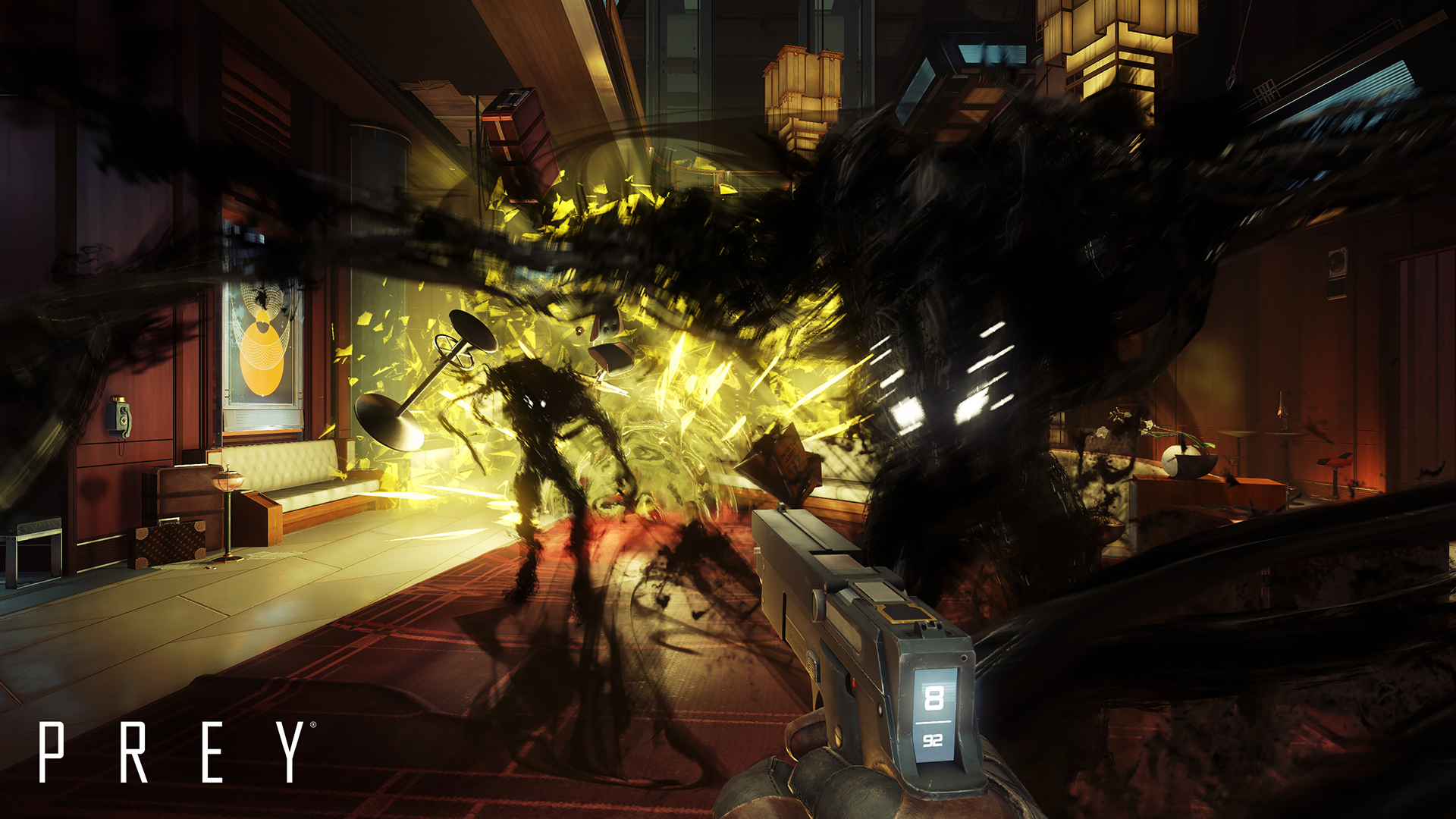
As Morgan acquires several Typhon abilities, Talos I’s security turrets can identify Morgan as a threat. Neuromod investment therefore affects more than Morgan’s available powers: alien abilities can expand the ways to solve problems while changing how automated defenses respond. Moving through a station watched by these systems adds a tactical consequence to research choices, especially when a turret covers a route Morgan needs to use.
- Developer
- Arkane Studios
- Genre
- First-person science-fiction immersive-sim adventure