
About POSTAL: Brain Damaged
POSTAL: Brain Damaged sends the POSTAL DUDE through surreal environments inside a distorted mind. This first-person shooter spin-off pairs crude dark humor with fast, skill-based combat, Quake-like movement, bizarre weapons and hand-crafted levels that twist familiar places into hostile dreamscapes.
POSTAL: Brain Damaged takes the POSTAL DUDE out of the series’ familiar setting and into a warped world inside his own psyche. The result is a first-person shooter spin-off built around distorted dreams, shifting environments and an original story that adds another strand to the POSTAL continuity. Running With Scissors’ crude, confrontational humor remains part of the tone, but the game takes a different action-focused approach from the main series. Rather than presenting a broad everyday sandbox, it sends the Dude across designed levels filled with strange opponents, visual jokes and sudden danger. The setting gives the developers room to turn recognizable motifs into surreal spaces, so the player’s route through a suburb, institution or other nightmare setting is also a trip through an unstable inner world. The POSTAL DUDE returns voiced by Corey Cruise, with guest appearances from other familiar voices.
Movement is central to how Brain Damaged plays. Brain Damaged uses Quake-like movement, and the fast pace rewards running, jumping and keeping momentum as enemies attack. A slide-jump can carry the Dude quickly across a level, letting the player traverse gaps and move through combat with more speed than a simple walk-and-shoot approach. The kick is another important action: timed well, it can deflect incoming projectiles, turning a defensive input into a way to answer an enemy’s attack. These abilities mean positioning is active. The player is constantly choosing whether to close distance, evade, jump between platforms or stay in motion while firing. The result is a shooter in which navigation and combat overlap, with movement skill shaping how a fight unfolds. Levels are designed around this pace, offering unusual geometry and routes that invite players to use momentum instead of stopping in the open.
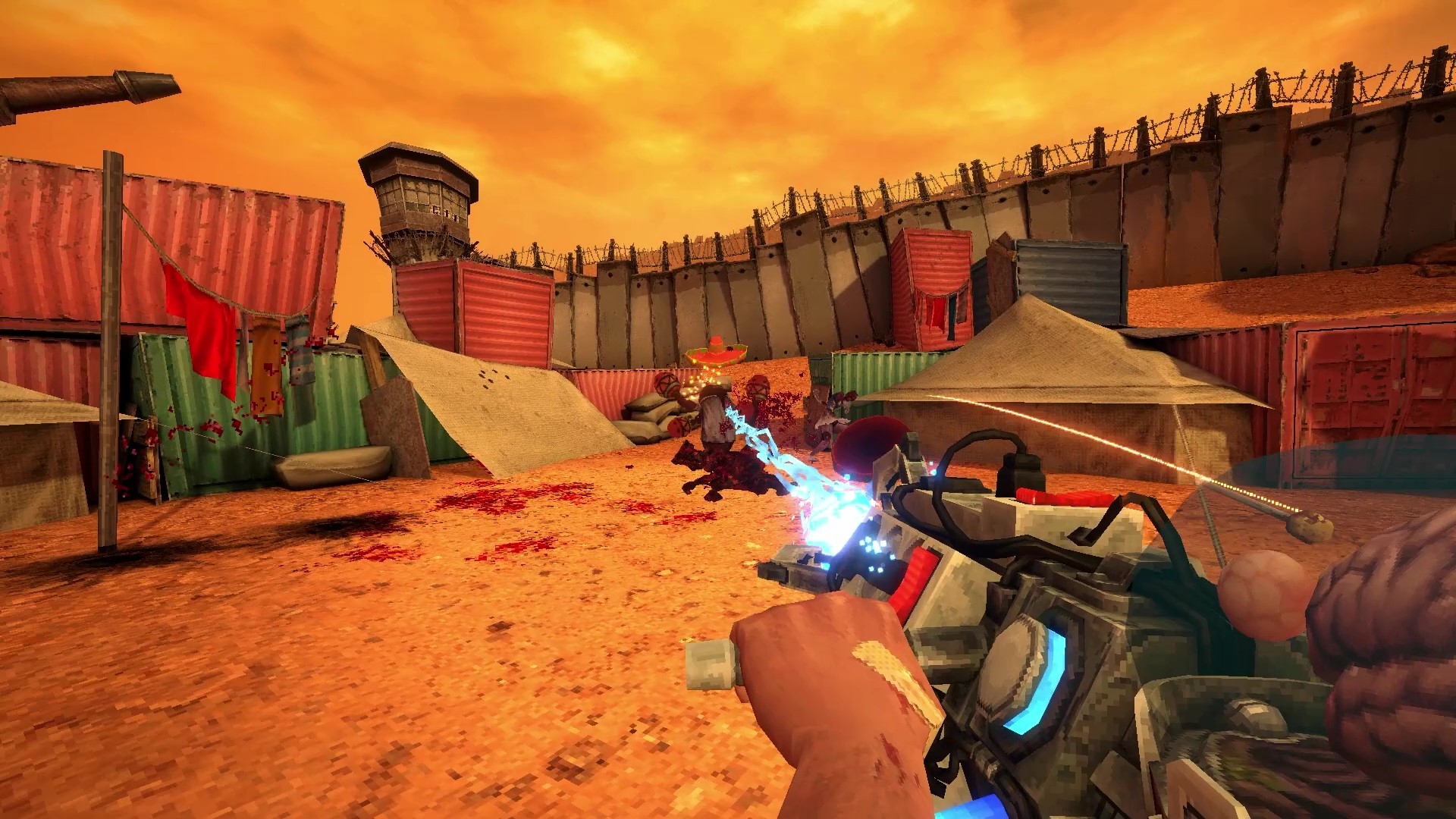
The weapons lean into the game’s absurd, grotesque humor while giving each encounter a changing toolkit. The shotgun is especially distinctive because its hook can latch onto enemies and pull the Dude through the air, extending both traversal and combat. It can be used to gain height or stay airborne while attacking, so an enemy can become part of the route through a fight. Other weapons create different tactical possibilities: a lightning gun attacks with an electrical effect, a minigun can track selected targets, and a nailgun can create a time bubble that freezes enemies and projectiles. Shooting projectiles into that bubble lets them remain suspended until the effect ends, turning timing and placement into a weapon of their own. The arsenal encourages players to combine movement with tools suited to the immediate threat. Each strange weapon also reinforces the surreal tone, making a fight both a mechanical problem and part of the game’s warped comic sensibility.
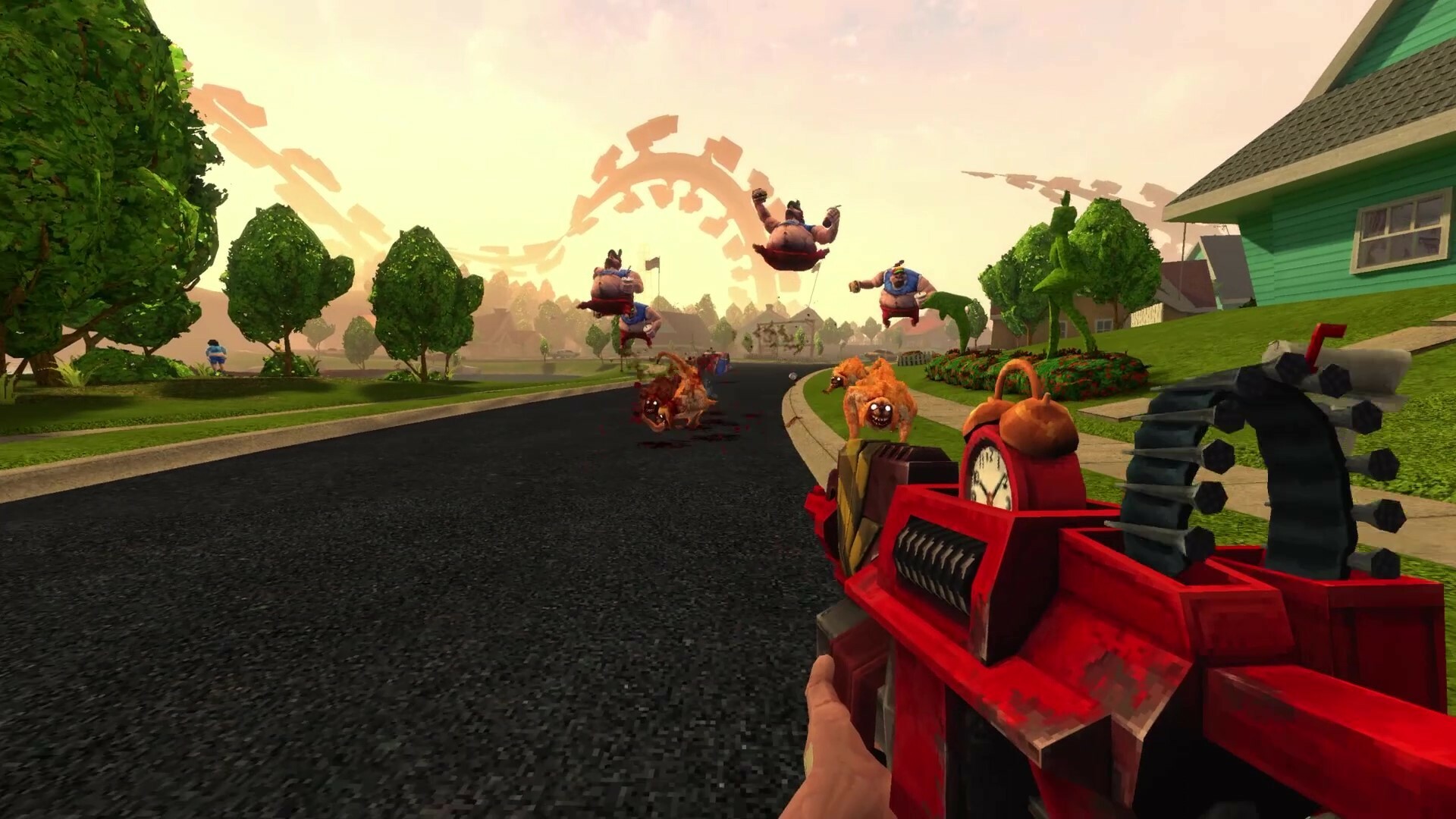
The environments are hand-crafted and designed to change shape as the Dude moves deeper into his mind. A pastel suburb can become grotesque, with streets and houses bending into unnerving forms; later areas shift toward settings such as a detention center, sewers or other surreal tableaux. These are not simply backdrops for combat. Level geometry provides routes to cross, spaces to explore and arenas where enemy groups test movement and weapon use. Quake-like traversal, jumping and momentum help the player move across the architecture, while distinctive set pieces turn the scenery into part of the joke or threat. Its enemies and environments are varied and meticulously designed, and the level-to-level shifts make the mindscape feel like a chain of incompatible dreams rather than a conventional town. The campaign’s authored stages focus attention on navigating the current space and surviving the encounters it contains.
Combat asks the player to read enemies and use the full arena. A varied enemy roster and fast encounters meet the weapons and movement systems in each fight. A close-range threat can be handled by creating space with speed; a projectile can be kicked back; a cluster can be controlled by the effects of a specialized firearm. The player is not limited to aiming from a static position, because slide-jumps and the shotgun hook can move the Dude around or above opponents. Different guns can also reward different timing: a tracking weapon, an explosive attack or a suspended projectile changes the value of a particular angle. This interplay gives each weapon a role in the moment, while enemies and architecture keep pressure on the player to keep moving. Weapons and traversal are designed as parts of one combat vocabulary, letting the player cross, evade and attack in a continuous flow.
Brain Damaged is a single-player campaign structured around authored levels and an all-original story, rather than the open-ended daily routine familiar from some earlier POSTAL entries. Secrets and alternate spaces reward looking beyond the route that leads directly to the next encounter, while unusual geometry can hide the way forward in plain sight. Its defining combination is the Dude’s speed, the strange machinery of the arsenal and a mindscape that can transform from one level to the next. The player moves through these constructed nightmares by fighting, exploring and maintaining momentum, with crude humor providing a deliberately irreverent voice for a tightly focused shooter.
- Developer
- Hyperstrange; CreativeForge Games
- Genre
- First-person action shooter; boomer shooter