
About Planet Zoo
Planet Zoo is a zoo-building and management simulation focused on designing habitats, caring for animals and keeping a public attraction running. Across Career, Franchise, Challenge and Sandbox modes, you plan paths and facilities, assign staff, monitor welfare, educate guests and develop a collection of connected spaces for wildlife.
Planet Zoo gives the player responsibility for shaping and operating a zoo, from its paths and buildings to the habitats where animals live. Its four modes frame that work in different ways. Career follows a globe-spanning sequence of zoos with characters and objectives; Sandbox offers broad building freedom with configurable animal and economy settings; Challenge starts a zoo with a functioning economy and optional goals; Franchise links multiple zoos and includes an online animal market and community challenges. The modes share the act of building and caring for a zoo, but set different expectations around objectives, finances and online features. In each, the player chooses how to lay out public routes and staff access, make room for animal homes, and connect the practical facilities required to keep the site operating.
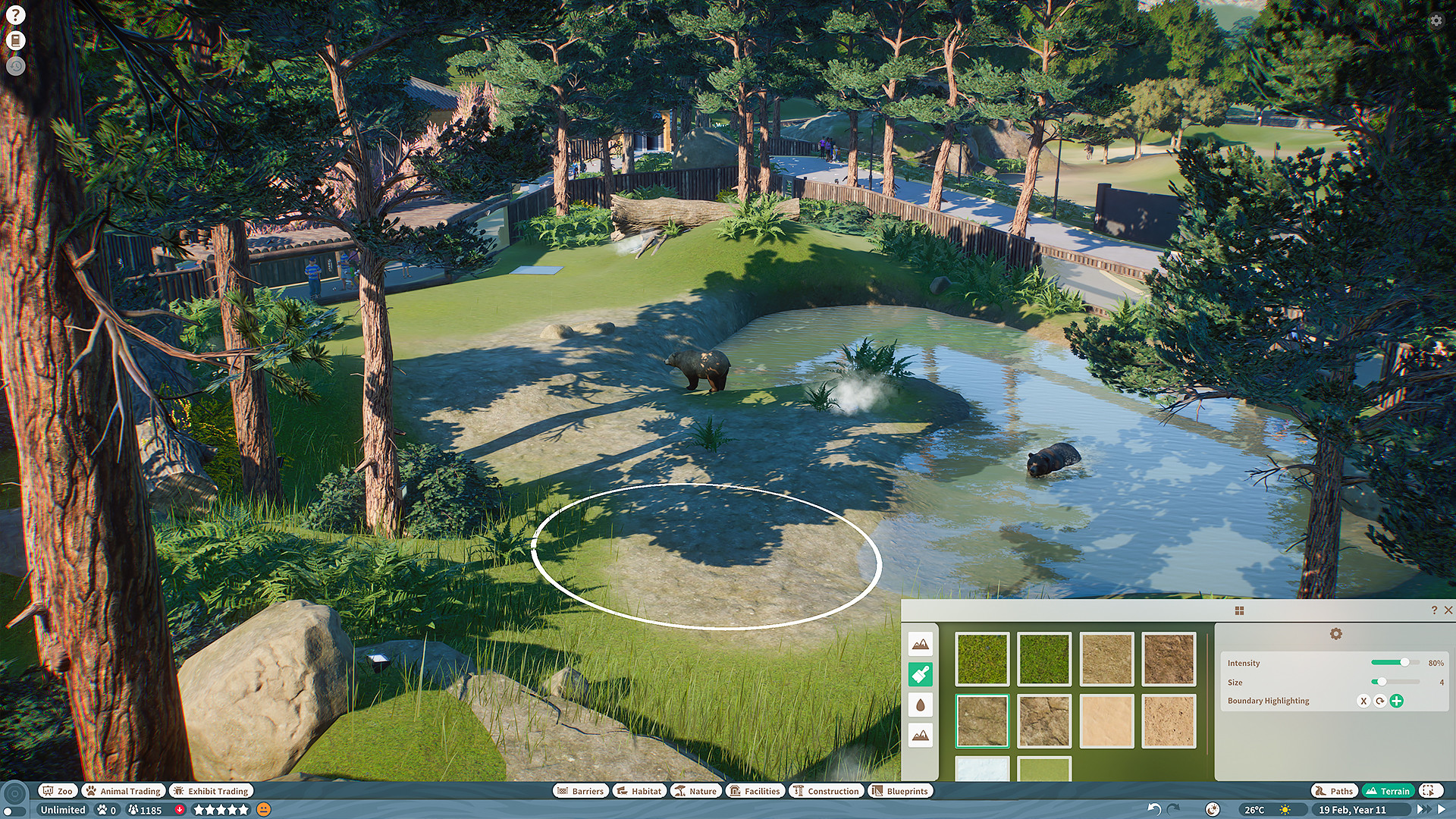
A habitat starts with a continuous barrier loop and a keeper gate, then needs paths and supporting facilities so animals and staff can reach it. Species have different requirements for space, terrain, plants, water, temperature, shelter and privacy; a habitat panel helps reveal whether its environment suits the animals assigned there. Barrier strength, climbability and water suitability matter because animals can escape when walls fail or their species can climb, jump or swim past a boundary. Guest views also matter: opaque walls can hide animals, while exposure to nearby visitors can stress some species. The design problem is therefore more than making an enclosure look complete. The player balances a species’ needs, safe containment, staff access and the experience of guests moving around the habitat.
Animal care is tracked through welfare needs that respond to the habitat and its upkeep. Animals need appropriate food and clean water, room to move, suitable surroundings, places to rest and, depending on species, opportunities for enrichment. Keepers prepare food at keeper huts, feed animals, clean habitats and report sickness or injury; water treatment facilities keep nearby water bodies clean but need power and maintenance. Vets treat illness and injuries, capture escaped animals and research species at a research centre. Research can unlock additional animal-care options such as food quality and enrichment. When needs go unattended, poor welfare can affect the animal and the wider zoo: stressed animals, illness, escapes and guest reactions all create new work. The player repeatedly checks conditions, places suitable objects and ensures staff can perform their duties.
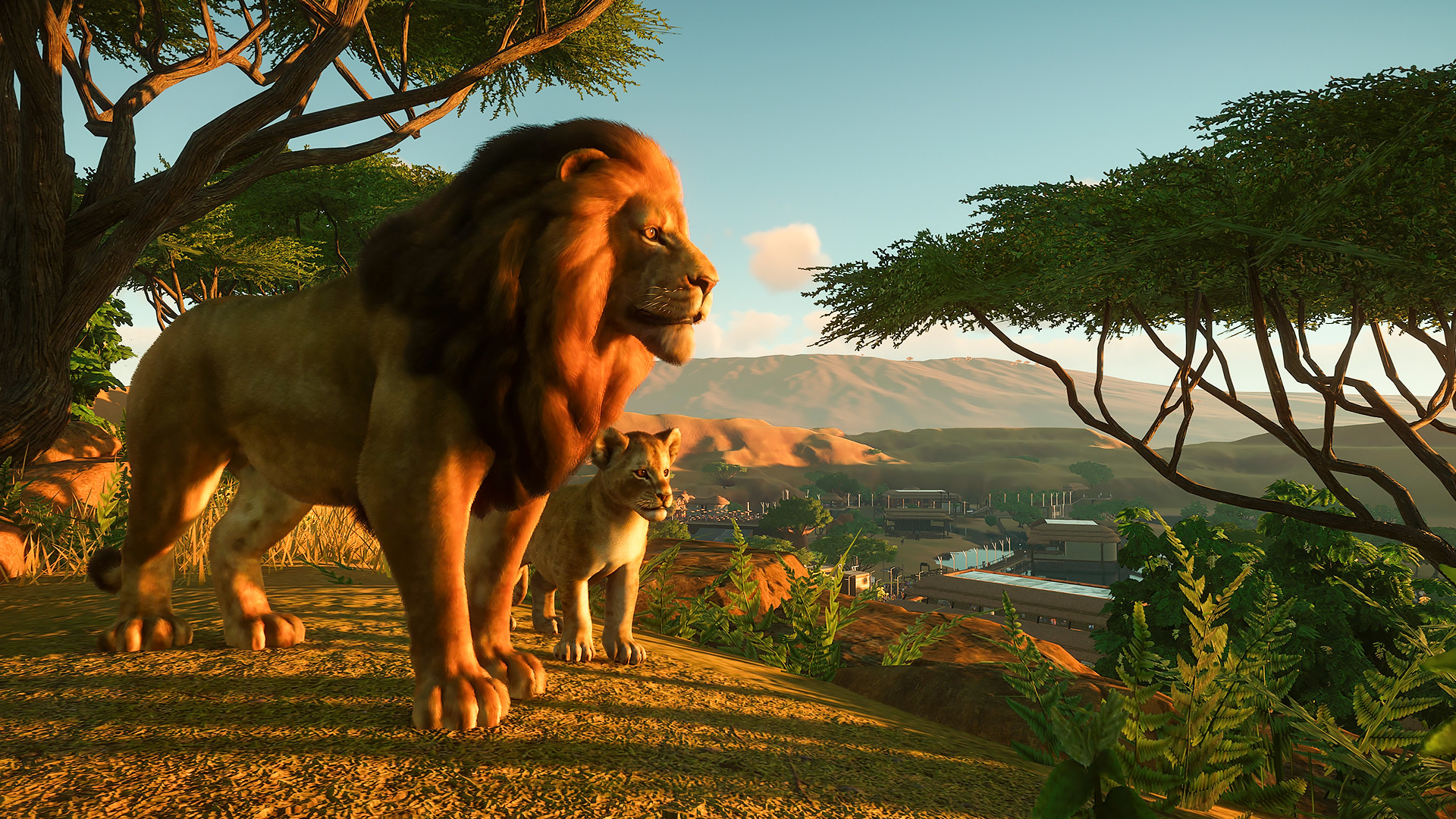
Staff form an operational network behind the public-facing exhibits. Keepers need keeper huts close enough to habitats to prepare food and make visits, while vets need surgeries for treatment and research facilities for animal research. Mechanics maintain barriers and repair utilities such as power and water treatment, and use workshops for research into facilities and scenery. Caretakers move boxed animals and clean paths, while vendors, educators and security staff support visitors and daily operations. Staff require rest, manageable assignments and accessible facilities; exhausted or unhappy employees can become less effective or leave. Work zones let the player group areas, facilities, habitats and exhibits for particular staff, helping focus their travel. As the zoo expands, placing back-of-house buildings and organizing routes becomes part of the same design task as arranging guest paths and viewing areas.
Guests arrive to see animals, move through the paths and use the services placed around the zoo. Their hunger, thirst, energy, toilet needs, happiness and interest in what they see influence how they respond to the visit and whether they spend money. Food and drink outlets, shops, seating, toilets, scenery and clear routes help support that flow, while litter, crime, poor animal welfare, overcharging or inconvenient layouts can undermine it. Education is another part of the visitor experience: signs, habitat boards, speakers and animal talks can communicate information about the animals. Educators can be assigned to scheduled talks or roaming talks, and guest information helps the player identify which areas need attention. The zoo’s finances link admissions and visitor spending with wages, upkeep, food, research and construction, so an attractive layout must also be practical to operate.
Building is itself a detailed system. Paths connect guest areas to viewing points and shops, while staff routes need access to keeper gates and service buildings. Barriers can be shaped to fit the terrain, and scenery pieces can be arranged into custom architecture rather than relying only on preset structures. The player can make a habitat feel open or secluded, build themed guest areas, and position facilities where they serve the zoo without overwhelming animal views. Research provides another form of development: vets study animals and care options, while mechanics investigate facilities, barriers and scenery. New zoos and scenarios give these systems different settings and constraints, from the goals of Career to the managed growth of a Challenge zoo. Franchise adds longer-term planning across linked zoos, with shared Conservation Credits, animal breeding and the choice to release animals to the wild or trade them. The central activity remains designing a place where animal care, staff operations and public access work together.
- Developer
- Frontier Developments.
- Genre
- Zoo-building, management and simulation game.