
About Planet of Lana
When a faceless machine army descends on a quiet fishing village, Lana’s sister is taken and the planet’s fragile balance is broken. Lana sets out with Mui, a small creature whose size and abilities complement her own, crossing hazardous landscapes through platforming, stealth and companion-led puzzles.
Planet of Lana begins in a settled coastal community where Lana lives with her sister. A sudden invasion by a faceless army of machines tears through that quiet routine, carrying people away and leaving Lana to search for her missing sibling. The journey moves beyond the village into a planet where human settlements, wildlife and machinery have long existed in a delicate balance. The machines are the visible threat, while the altered landscapes and scattered traces of the world’s past suggest that the disruption has deeper roots. The story follows Lana’s rescue mission across these environments, using scenes of movement and observation to reveal the world without relying on extensive spoken explanation. Far beyond the initial attack, quiet expanses, caves and abandoned villages place the rescue effort within a much larger planetary mystery.
Lana is the playable lead, but the journey soon becomes a two-character exercise when she meets Mui, a small, cat-like creature. Their differences shape both navigation and puzzle solving. Lana can move through spaces that are too dangerous or inaccessible for Mui, while Mui’s size and agility let the companion reach narrow gaps and higher ledges. They communicate through a fictional language, short vocal cues and expressive movement, so their relationship is conveyed through what they do together as much as through dialogue. The player guides Lana directly and directs Mui to nearby locations when a task calls for the companion’s help. The game’s central loop repeatedly asks the player to read the space, identify which character can reach a useful point, and bring both safely onward.
Movement and environmental puzzles form the basic rhythm of travel. Lana runs, jumps, climbs onto ledges and drops into lower areas as the landscape opens and closes around her. Objects, switches and changes in elevation are arranged as small problems: the player studies the route, tests how a reachable object affects the space, and works out how to use that opening to proceed. Some solutions require Lana and Mui to occupy different positions, so an obstacle asks the player to coordinate their routes and get the timing right. Puzzle ideas change with the surrounding terrain rather than relying on a single repeated device. New setups introduce different combinations of navigation, timing and interaction, while the game gradually teaches the actions needed to read them.
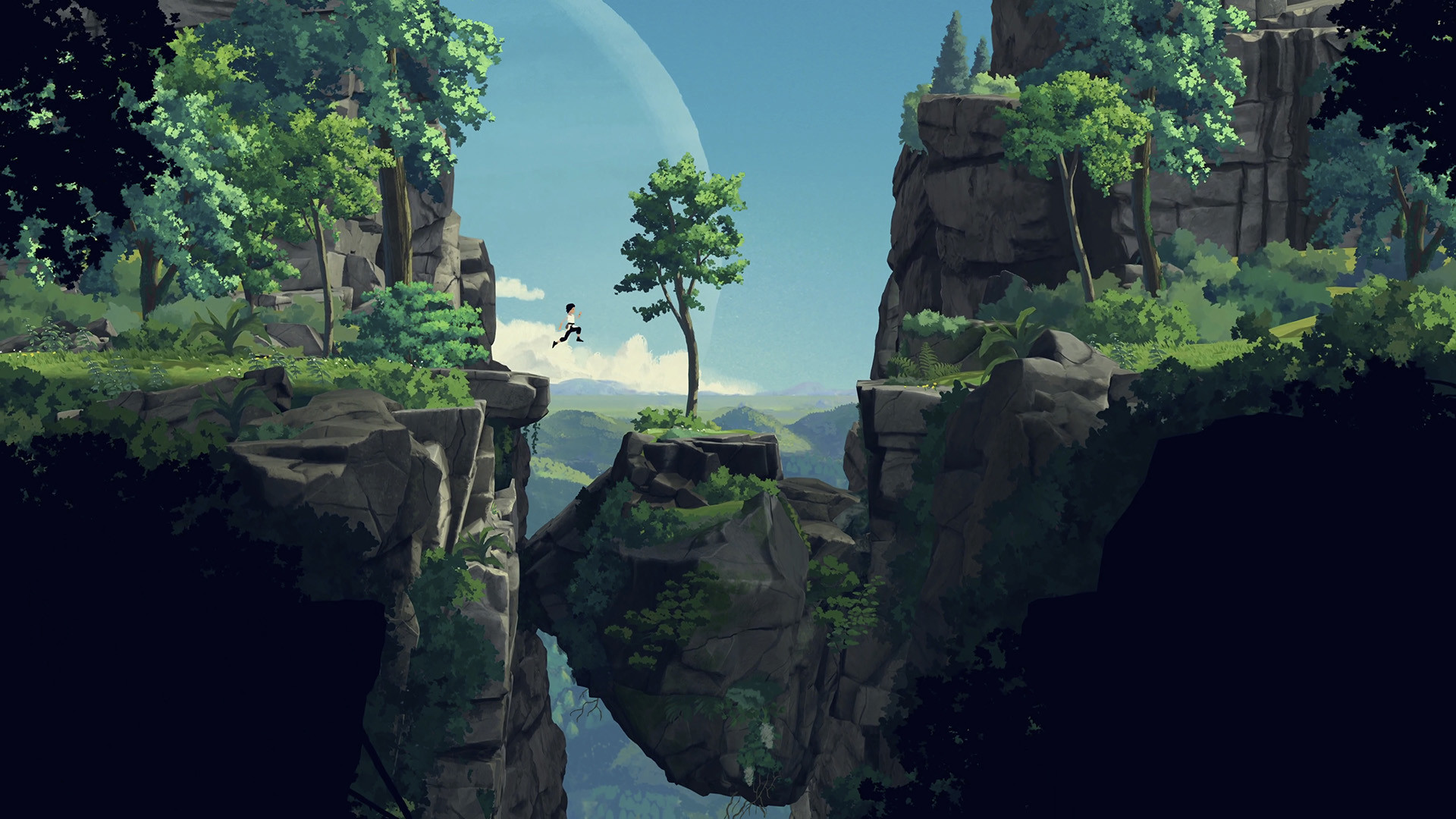
Mui has a direct role in those solutions. Lana can point the companion toward a location and ask Mui to interact with switches, including mechanisms beyond Lana’s reach. Mui can slip through tight openings and move onto higher surfaces, creating routes for the pair that Lana cannot use alone. The creature can also control some of the planet’s unusual animals, adding another way to affect the environment. These abilities are used as practical tools: a remote switch may change a barrier or route, while a controlled creature can help solve a local obstacle. Mui is afraid of water, however, so water crossings become a shared logistics problem. Lana has to find a way to get the smaller companion across before both can continue.
Hostile machines turn some routes into stealth puzzles. Lana cannot defeat them directly, so survival depends on staying outside their view and moving when a safe opening appears. Patches of grass and overhanging ledges provide places to hide; the player watches patrol movement, picks a path and times the crossing. The machines do not all search in the same way. Some travel through the air and scan with a spotlight, while others move along the ground in insect-like patterns. Encounters with a familiar machine can still demand a different route because its movement may change. Both Lana and Mui must reach safety, making it necessary to account for the companion’s position before leaving cover.
The planet’s animal life creates a second kind of danger. Some creatures attack when they notice the pair, and the answer again depends on reading their behavior and using the space rather than confronting them through direct combat. The two leads’ different movement options can turn a threat into a puzzle: one may need to draw attention or reach a control point while the other waits for a safe passage. Timing and route choice matter because a creature can cut off the obvious path. Between these encounters, short cinematic sequences connect one area to the next; some ask for quick reactions, while others let the player move through a scene as the story advances. The result is a progression built from platforming, companion coordination, evasion and brief action moments.
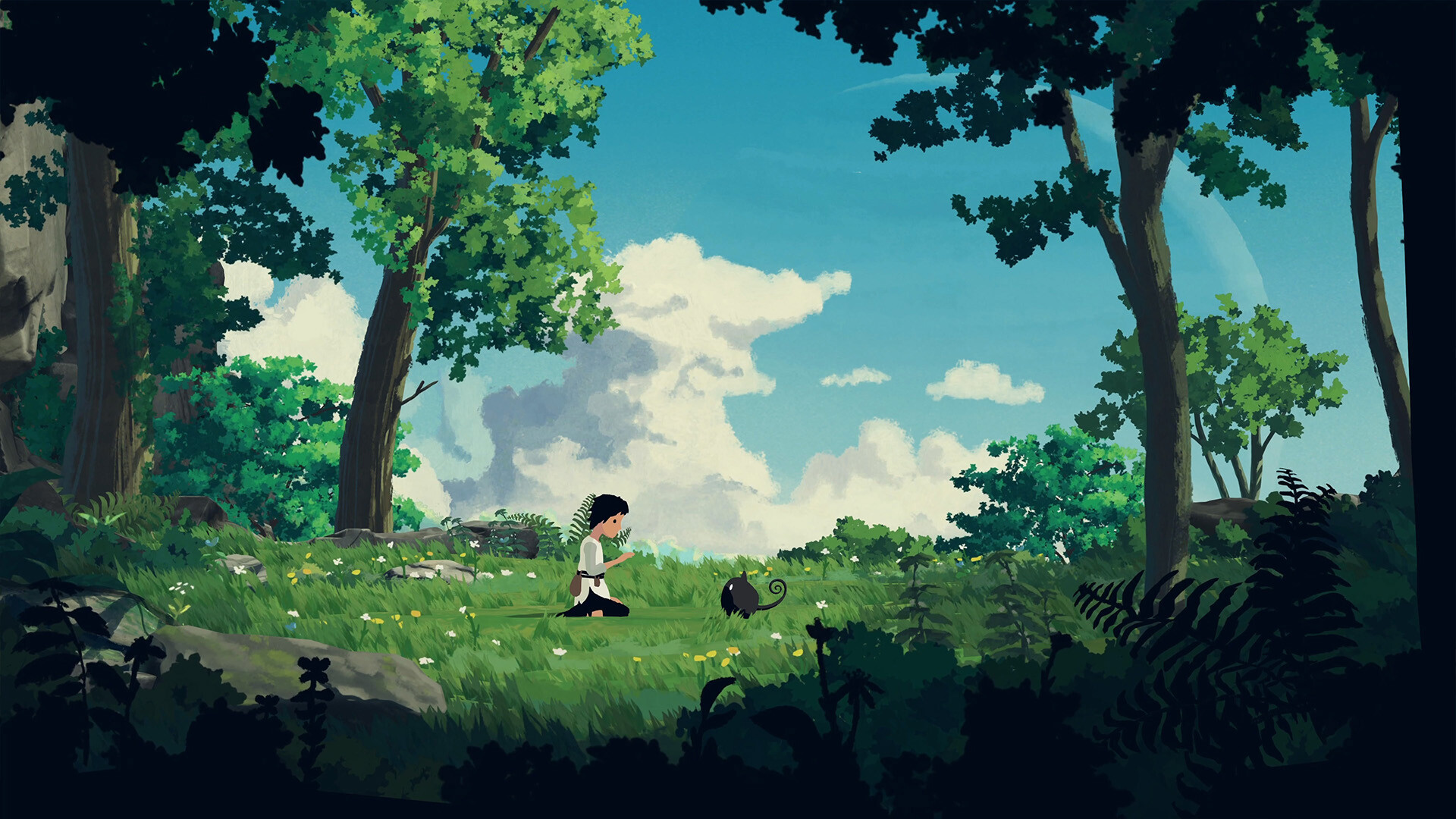
Planet of Lana also lets the landscape carry clues about its history. Away from the first village, the route passes other settlements that appear abandoned or damaged, and dark caves that hold secrets rather than simply connecting two platforms. Those places make the machine invasion feel spread across the planet: the player sees traces beyond Lana’s immediate surroundings. Optional collectible shrines add another layer, with clues that widen the picture of the planet for players who look beyond the main route. They sit alongside the environmental puzzles, so observation can serve two purposes: finding a way forward and noticing evidence about the world. The contrast between an abandoned settlement and the wild spaces around it also shows how the machine incursion has disrupted the balance described at the start.
- Developer
- Wishfully
- Genre
- cinematic puzzle-platform adventure