
About Phoenix Point
Phoenix Point is a turn-based strategy game in which the Phoenix Project tries to defend humanity from the mutating Pandoravirus. The player directs a global campaign of exploration, research, base management and diplomacy, then leads trained soldiers through tactical battles where free aim can disable specific enemy body parts.
Phoenix Point begins with Earth overwhelmed by the Pandoravirus, an alien threat that mutates living forms and spreads a microbial mist from the sea. The Phoenix Project, a secret organisation formed to protect humanity, has been scattered, leaving its surviving bases and records to be rediscovered. You take command of the organisation’s return: send aircraft across a ravaged globe, establish contact with human settlements, investigate old Phoenix sites and develop the technology needed to resist the invasion. The project is not simply rebuilding an army. It must learn what happened to its predecessors while responding to a threat that can produce new battlefield forms from biological material. This frame ties the world map to the tactical missions: finding a site may uncover research or open another operation, and defending a settlement can keep a foothold intact as the mist expands. The campaign follows that effort without requiring a fixed line of battles; exploration, preparation and combat feed into one another.
Humanity is divided among havens and rival factions, each with its own account of what survival should mean. New Jericho is the militaristic movement led by Tobias West, who seeks the eradication of the Pandoravirus and its creatures. The Disciples of Anu embrace mutation through a syncretic religion, while Synedrion tries to build a different kind of society among the ruins. None acts as a neutral quest board: their political aims can conflict, and the Phoenix Project can work with them through diplomacy, take technology through subterfuge or oppose them directly. Relationship choices affect what cooperation and research become available, so helping one haven can matter beyond the immediate firefight. The factions also make the global map a contest between human and alien pressures rather than a list of isolated missions. Their havens are places to defend, investigate or infiltrate, and their equipment and specialised knowledge can contribute to the Phoenix Project’s development when relations allow.
The Geoscape is the campaign’s planning layer. From it, you direct aircraft to reveal havens, scavenging sites and Phoenix Project locations, choose which signals to investigate, and decide where to construct or develop bases. Research projects turn recovered information into new weapons, equipment and capabilities, while soldier training facilities provide another route for developing personnel. These jobs compete for the organisation’s time and resources, so expanding every operation at once is not simply a matter of selecting all available options. Scouting also has a defensive purpose: the mist marks increased alien activity, and haven requests can pull a squad away from an archaeological site or another strategic objective. The game generates mission layouts from the structures at havens, Phoenix bases and alien sites, with destructible terrain changing the available lines of movement and fire. The campaign therefore asks you to balance travel, intelligence, construction and immediate aid rather than spend every turn only on combat.
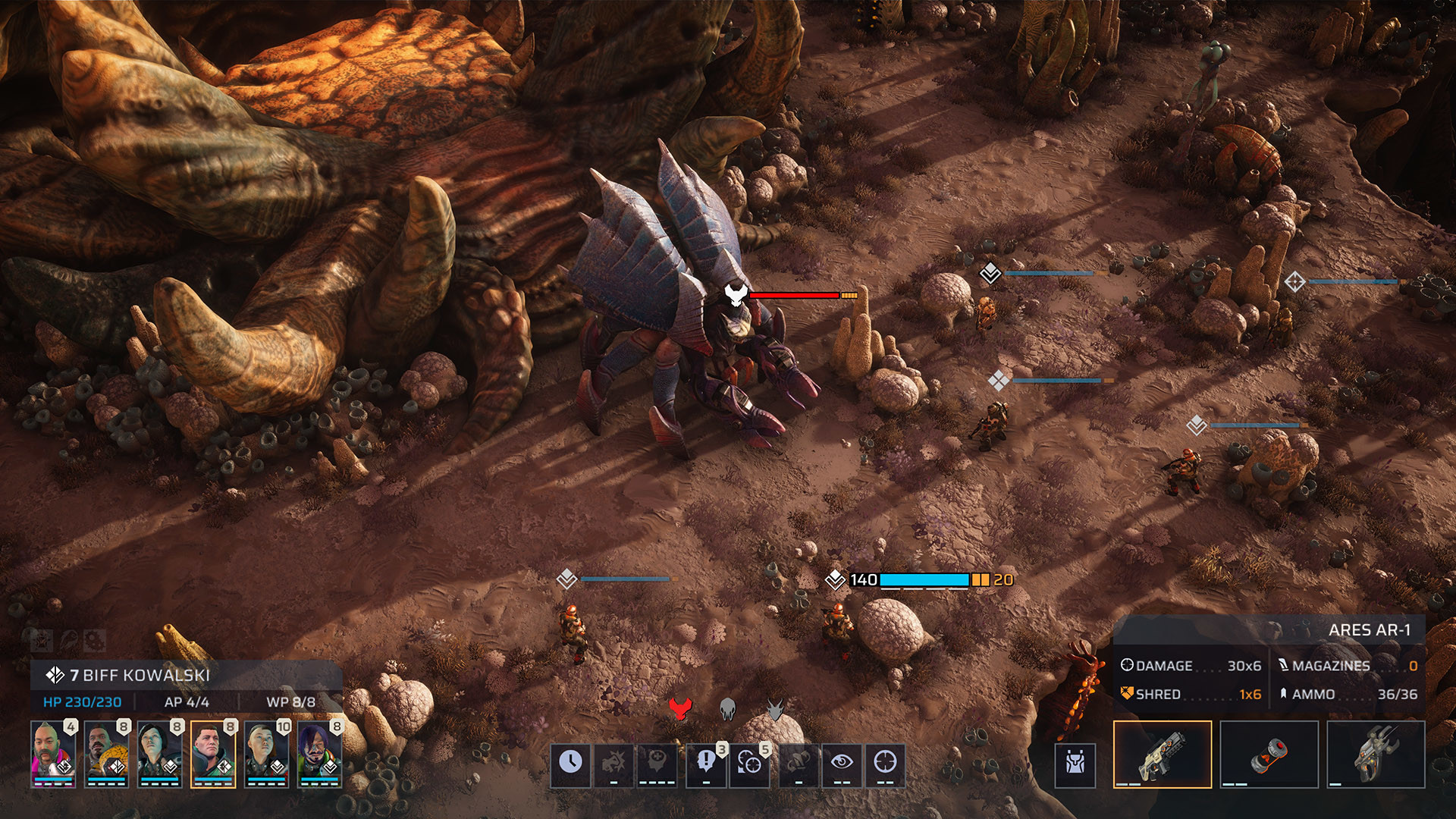
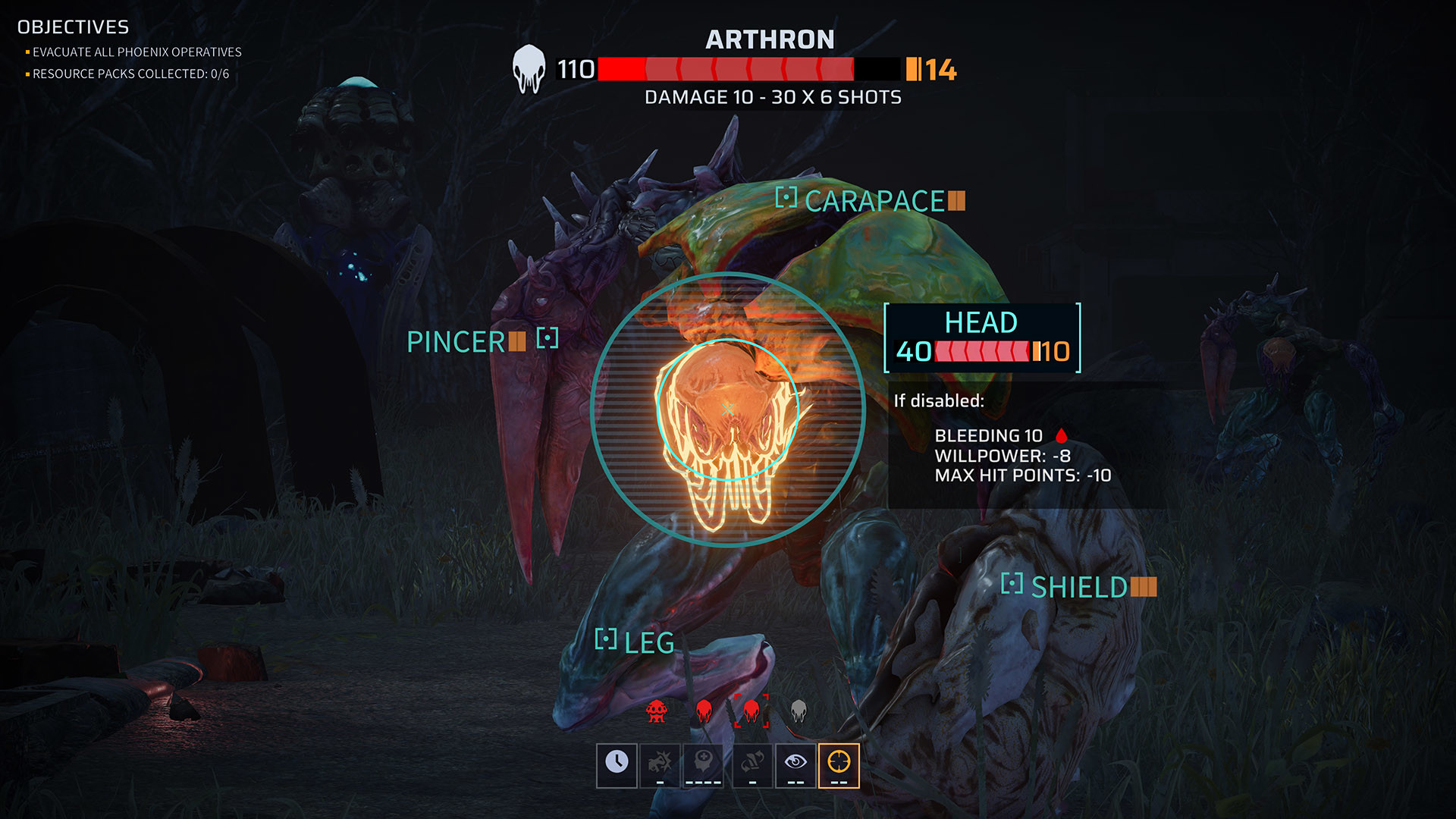
When an operation becomes a battle, you deploy a squad of soldiers and manage their actions on a turn-based tactical map. Movement is granular: a soldier can spend part of an action allowance moving, shoot, then continue to reposition, which lets you expose a unit briefly and move it out of an enemy’s line of sight. Free aim gives direct control over a shot’s target area instead of resolving every attack as an abstract hit roll. Against a Pandoran with a dangerous weapon arm, a soldier can try to disable that limb; against a larger creature, removing parts can suppress abilities and contribute bleed damage. Cover and overwatch still matter, but the maps and the enemies make line of sight, movement and target choice central to each exchange. Will points fuel special abilities and strenuous actions, adding a second constraint to how aggressively a soldier can use powers while a fight develops.
The roster grows through experience, training, recruitment and access to faction knowledge. Soldiers have class skill trees, and their abilities draw on technologies uncovered through research or gained by interacting with other human groups. A squad can include a basic Assault soldier alongside specialists such as a New Jericho Technician or a mutated Disciples of Anu Priest, but those specialised roles and equipment must be unlocked through the campaign’s relationships and discoveries. Anu’s Priests can use viral weapons and mutation-based powers, including abilities that reveal enemies or disrupt their perception; Berserkers specialise in close combat and can make melee pressure part of the team’s plan. Soldiers also carry their own equipment, so weapons, armour and tools can be assigned to suit a mission’s expected risks. If someone is lost or injured, the strategic layer’s recruiting, training and transport capacity becomes important: a powerful squad still depends on a working organisation behind it.
Pandorans are not a static enemy catalogue. The game describes them as a mutating force that develops new forms in response to the tactics and technologies used against it, so research and soldier growth occur while the threat changes too. That tension gives the campaign its recurring rhythm: scan the world, uncover a route or source of knowledge, decide which havens and faction relationships to prioritise, then field a squad equipped for the next mission. Objectives range from repelling alien attacks and defending bases to rescues, assassinations, sabotage and disputes between human groups. Some operations involve remote Phoenix Project locations and the archaeological trail of the organisation’s past; others bring the campaign to alien lairs or enormous creatures that demand targeted attacks on their body parts. Each result affects the next strategic decision, whether it provides new research, protects a settlement or exposes another place that needs attention.
- Developer
- Snapshot Games Inc.
- Genre
- Turn-based tactical strategy with global campaign management and RPG progression