
About Pentiment
In sixteenth-century Bavaria, artist Andreas Maler becomes entangled in murder investigations and local conflicts around Tassing and Kiersau Abbey. Players shape his education, interests, conversations, and use of limited time, deciding which leads to pursue and how to act within a community whose religious, political, and social changes unfold across generations.
Pentiment takes place in the fictional Bavarian town of Tassing and the nearby Kiersau Abbey, beginning in 1518, when the region sits amid religious, political, and social change. Andreas Maler arrives as a journeyman artist working in the abbey’s scriptorium, where he earns a living on commissioned work while developing his own artistic ambitions. When a murder pulls him into the community’s affairs, his role is less that of a trained investigator than an outsider who knows how to read people, ask questions, and move among different parts of local life. The game follows the town and its inhabitants over decades, so its central mystery sits alongside changing relationships, work, belief, and power.
At the start, players define parts of Andreas’s past through his education, travels, and personality. Choices such as where he studied, which subjects he pursued, and what kind of life he led establish what he knows about languages, religion, law, medicine, books, or local customs. These details can open particular conversation options or give Andreas a way to approach a question that another background would not provide. They are not a universal key that solves every situation: the options express a particular kind of knowledge or attitude, and how other people respond depends on the relationship and context. Later, his intervening travels add another layer to that history. The result is a version of Andreas shaped through dialogue and past experience, rather than through combat statistics or equipment.
Investigation is built around choosing where Andreas spends his attention. He can speak with townspeople, monks, and nuns, look into different leads, and take part in everyday activities, but the day has a rhythm and actions that advance events consume time. In the early periods, the schedule is marked by canonical hours: work periods give way to meals, and choosing someone to dine with can move the day along. A meal includes a small sequence of food choices and conversation; it may provide information about people or affect favour, while also closing off some of the time available. Because the clock keeps moving, it is impossible to pursue every conversation and lead before a deadline. The player therefore builds an account from the evidence and access available, instead of completing an exhaustive checklist. An activity often comes with a clear warning that it will advance time, making the cost legible before commitment. The schedule makes investigation a question of priorities: a lead can be left untouched as the next meal or evening arrives, and missing a conversation can mean that person is no longer available when the sequence of the day changes.
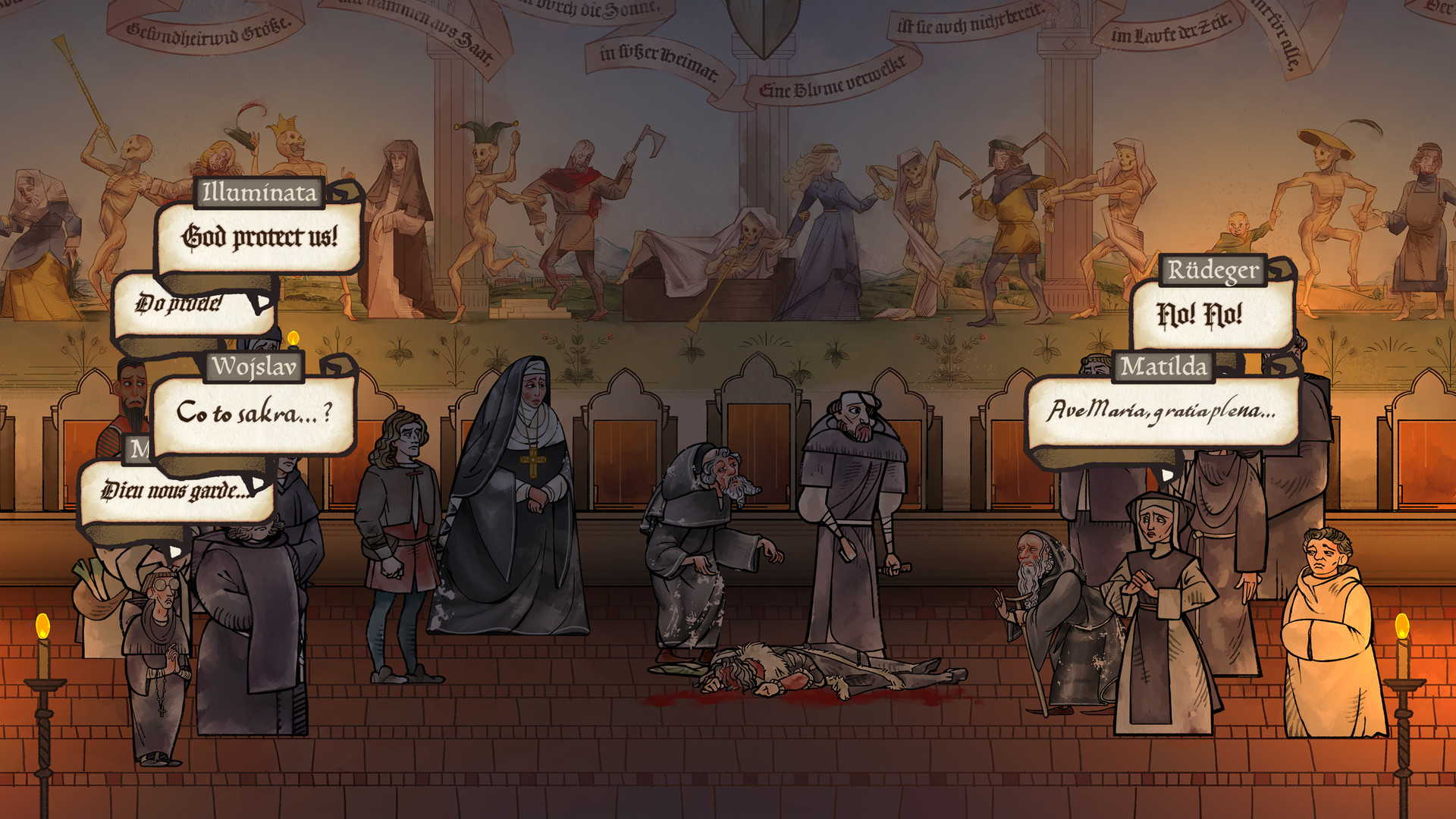
Most play happens through dialogue and exploration of the abbey and town. Conversations let Andreas ask about events, people, beliefs, and grievances, while some replies carry greater weight and are remembered by the game. When he later needs someone’s help or must persuade them to speak, earlier interactions can matter: accumulated goodwill or offence may affect whether the attempt succeeds, and a relevant background can sometimes help. This links ordinary social encounters to investigation; a meal, a polite exchange, or a poorly judged remark can shape what becomes possible later. The dialogue choices also give players room to decide how Andreas presents himself, whether as a curious scholar, a practical worker, or someone more convivial, while the situation and the other person limit what any one approach can accomplish.
The people around Andreas belong to a small, interconnected community rather than a set of interchangeable suspects. Tassing’s residents include peasants, craftspeople, and local authorities, while Kiersau is home to religious orders and those who support the abbey’s daily life. Their positions influence what they know, what they value, and how they understand events. As the story moves forward, the lives and choices of these people continue beyond the immediate investigation. Shifts in religious practice, political authority, education, and economic life reach the town in concrete ways, and decisions can affect relationships and the community’s future over generations. Pentiment uses this passage of time to make local history part of the story: the mystery unfolds within a place whose inherited conflicts and customs keep changing. The passage of years also changes who is present and what counts as familiar: children grow up, and earlier decisions and unresolved tensions become part of the town's shared past. The community's history is assembled from lives that continue between investigative episodes.
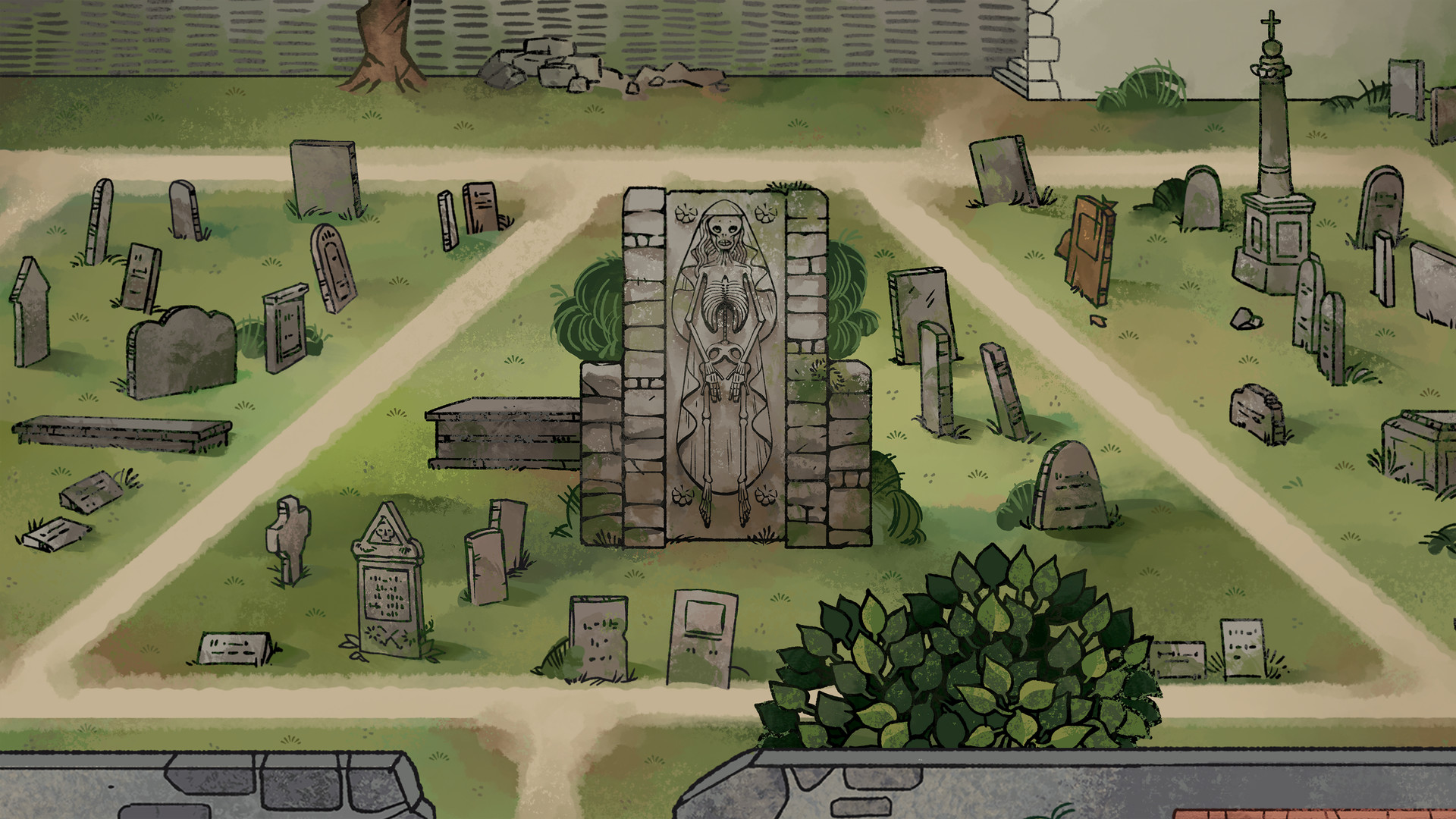
The visual presentation draws directly on illuminated manuscripts, woodcut prints, and early printed books. Characters and locations appear as figures on an illustrated page, with limited-frame animation preserving the look of printed and painted images as they move. This connection also fits Andreas’s work: the story begins in a scriptorium, where making and reading images and texts are part of the world rather than decoration outside it. The era’s movement from hand-copied manuscripts toward print gives the setting a material dimension, as ways of producing and sharing knowledge change. Dialogue is presented as written text rather than voiced speech, and the game offers an easy-read font setting for players who find its stylized lettering difficult. Its art and subject therefore meet in the same forms—books, images, language, and the people who create or interpret them.
- Developer
- Obsidian Entertainment
- Genre
- Narrative adventure