
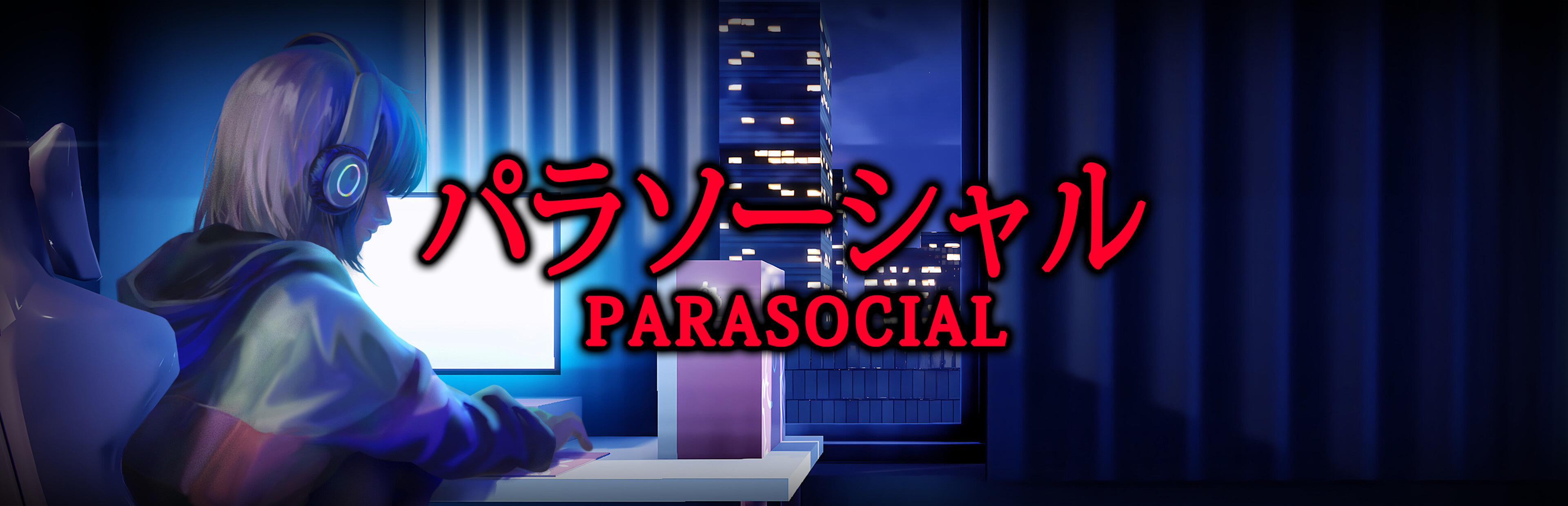
About Parasocial
Parasocial follows a VTuber whose face is exposed during a live stream, turning an online audience into a possible threat at home. Chilla's Art's 2023 first-person horror game moves between games played on stream, unsettling messages and ordinary trips outside. The danger lies in how little distance remains between a public persona and a private life.
Parasocial begins in a room arranged for a familiar kind of work: a person at a computer, playing a game while an audience watches and writes in chat. The player character presents herself through a VTuber avatar, a digital face intended to stand between her online presence and her private identity. The setup is more than background decoration. It gives the player two spaces to follow at once. A game occupies part of the screen; messages from viewers gather beside it; and the person operating the stream remains in a real room beyond the broadcast. When a link supplied through chat leads to her real face appearing on stream, that arrangement breaks. The threat does not wait for a monster to enter the apartment. The knowledge that strangers can connect her public channel to the person behind it changes what the same desk, screen and incoming messages mean. Chilla's Art frames the story around a streamer whose work depends on being visible, then asks what happens when she can no longer decide how much of herself the audience gets to see.
The first stream gives Parasocial its central contrast. Playing a game for viewers ought to be a controlled performance, with an avatar and camera arrangement defining what goes out to the public. The player must also watch the game within the game, so attention is divided between on-screen action and the accompanying conversation. Comments can seem like routine audience chatter until one reveals knowledge that a stranger should not have. The interruption is effective because it uses the tools of streaming rather than discarding them once the horror starts. A link, a feed and a message are ordinary elements of the setting; their purpose changes as the streamer's privacy weakens. The story's premise also makes the audience hard to read. Chat presents usernames and words, not reliable knowledge of who is on the other side or where that person might be. Parasocial does not need to treat every viewer as a suspect for the uncertainty to matter. One threatening message among many is enough to make the act of reading comments part of the story rather than mere scenery.
Away from the computer, the game follows the streamer through her apartment and nearby places. The small scale matters. A trip to a convenience store, a movement through a hallway or a moment alone at home would be unremarkable before the exposure; afterwards each is a test of whether the online problem has remained online. The player moves in first person, seeing doors, lift spaces and domestic rooms from the position of someone who must actually pass through them. The apartment is not a secure base that can be left behind between missions. It is where she works and where she tries to live, and the stalker's knowledge threatens both purposes. The street and shop give her contact with people outside her channel without necessarily making that contact reassuring. A brief conversation can be difficult to assess when the player knows little about what information has already spread. Chilla's Art uses these common places to make privacy feel spatial: a name, face or address disclosed through a screen can change the experience of walking a route that had seemed ordinary.
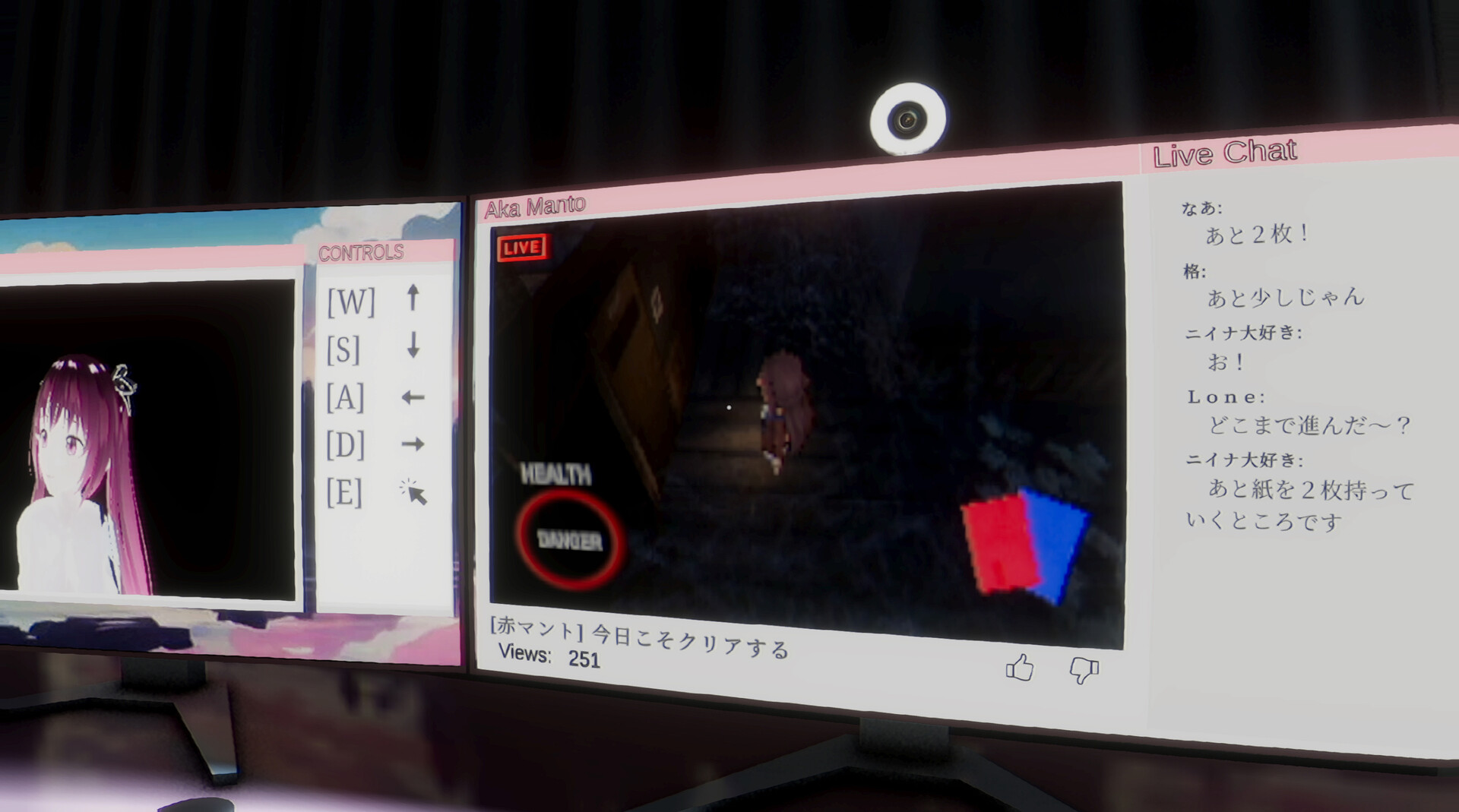
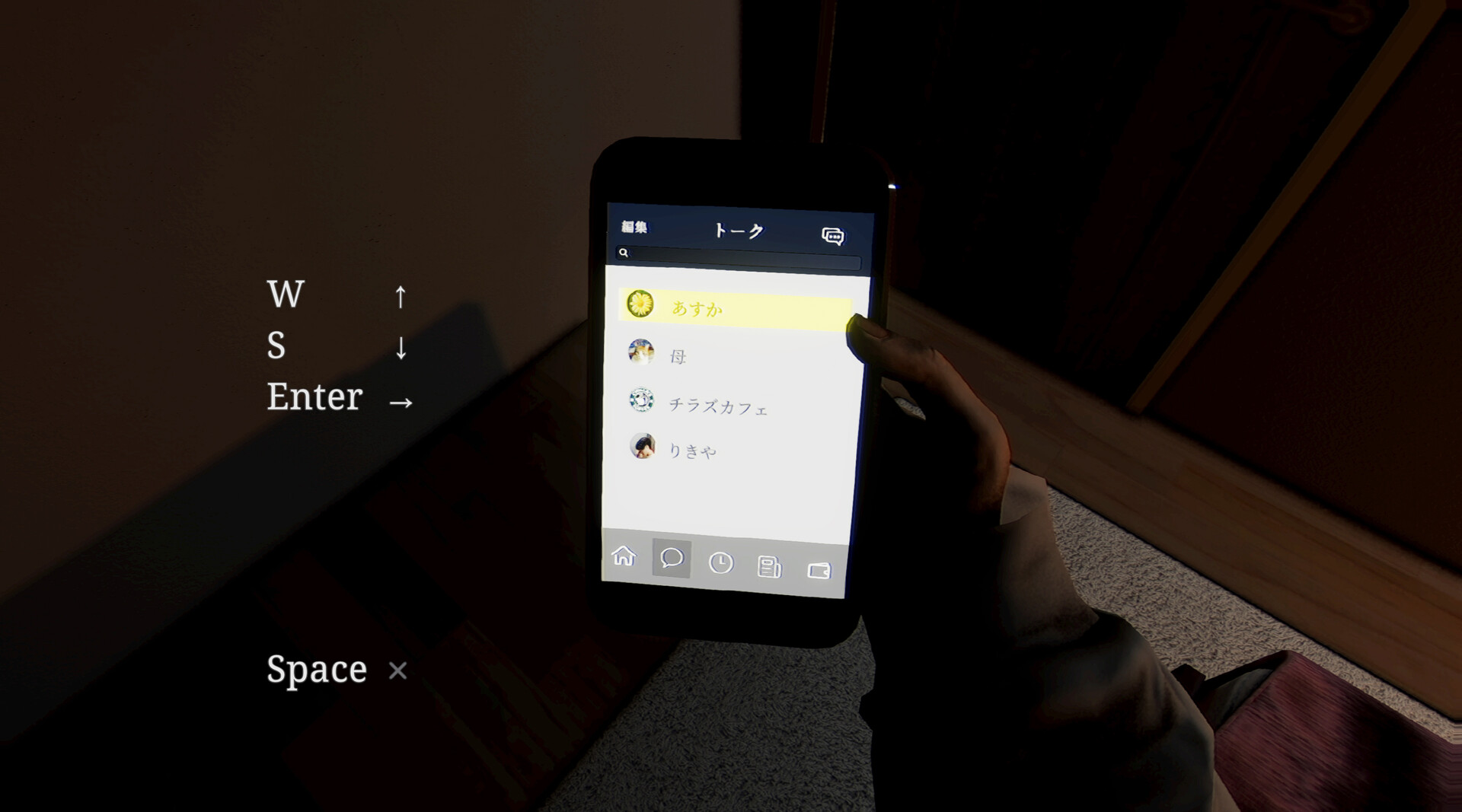
Communication becomes a second path through the story. Messages arrive from people who claim different kinds of familiarity with the streamer, and an unknown sender pressures her to continue playing supplied games. The player has to pay attention to what is said, when it arrives and what the sender appears to know. This is distinct from a conventional mystery in which all relevant evidence sits in drawers waiting to be collected. The streamer is still being contacted while the situation develops. Friends and people encountered in person can offer conversation, but a friendly face does not automatically settle the question of whom to trust. The game asks the player to inhabit that uncertainty without giving them a dependable investigator's overview of every relationship. It also keeps the online and physical sides of the story connected. A disturbing chat message may refer to a private event, while a routine outing can feel exposed because someone may be watching. The resulting tension is built from the overlap of two channels of information: what the protagonist chooses to share, and what someone else appears to have learned without her consent.
Parasocial is a directed horror adventure rather than a streamer career simulator. Its streams contain games within the game, and those playable moments briefly compete for attention with chat and the real room around the computer. Between them the player walks, inspects surroundings and follows the next piece of the unfolding situation. There is no advertised schedule of channel growth, subscriber management or business upgrades, and the developer does not present a weapon tree as the answer to the threat. That smaller mechanical vocabulary suits the story's subject. The player can move to another room or answer an immediate task, but cannot turn an online identity back into an unknown one with a skill point. The fear arises partly from having to continue familiar routines after the privacy boundary has failed. The game does not need to fill its neighbourhood with a broad cast of enemies or ask for combat mastery. A lift ride, a phone notification or a return to the streaming desk can carry the next change in circumstances. The question is what the player can recognise and what remains outside their view.
The presentation separates the polished idea of an online persona from the uneven texture of everyday space. A VTuber avatar gives the channel a designed face, while the stream's chat and inset game create a busy screen that invites divided attention. Outside that interface the first-person world has apartments, corridors and shops whose plainness makes unwanted intrusion feel more plausible. Chilla's Art describes the game's visual treatment through VHS and CRT qualities: screen trails, colour bleeding, noise, interlacing and jitter. Those effects can make an image less certain without changing the physical layout of a room. Ambient sound, a pause before a response and the ordinary noise of moving through a building also carry information when there is no continuous musical cue telling the player what to fear. Parasocial takes the shape of psychological horror through that pressure. The stakes are understood through a person's relationship to her audience, home and acquaintances, not through an abstract supernatural rulebook. The player is invited to notice how a familiar room feels different after learning that somebody else may know exactly where it is.
This is Chilla's Art's 2023 PC release, a compact story about a live streamer rather than a broad simulation of online fame. Its subject is specific: the gap between being known through an avatar and being located as a person. The title points to a one-sided sense of intimacy, where a viewer may feel close to somebody who has never met them, but the game makes that idea concrete through streams, chat, messages and everyday movements. The face reveal sets events in motion; subsequent scenes ask how the streamer handles contact that may come from an ordinary viewer, an acquaintance or the person making the threat. An overview can explain that pressure without naming a culprit or mapping a final decision. The appeal for someone approaching Parasocial is not a promise of dozens of mechanical systems. It is the chance to follow a small horror story in which the next broadcast and the next trip outside are connected. The same technology that lets the protagonist build a public presence also gives another person a way to reach into spaces she expected to keep private.
- Developer
- Chilla's Art
- Genre
- First-person Japanese psychological horror