
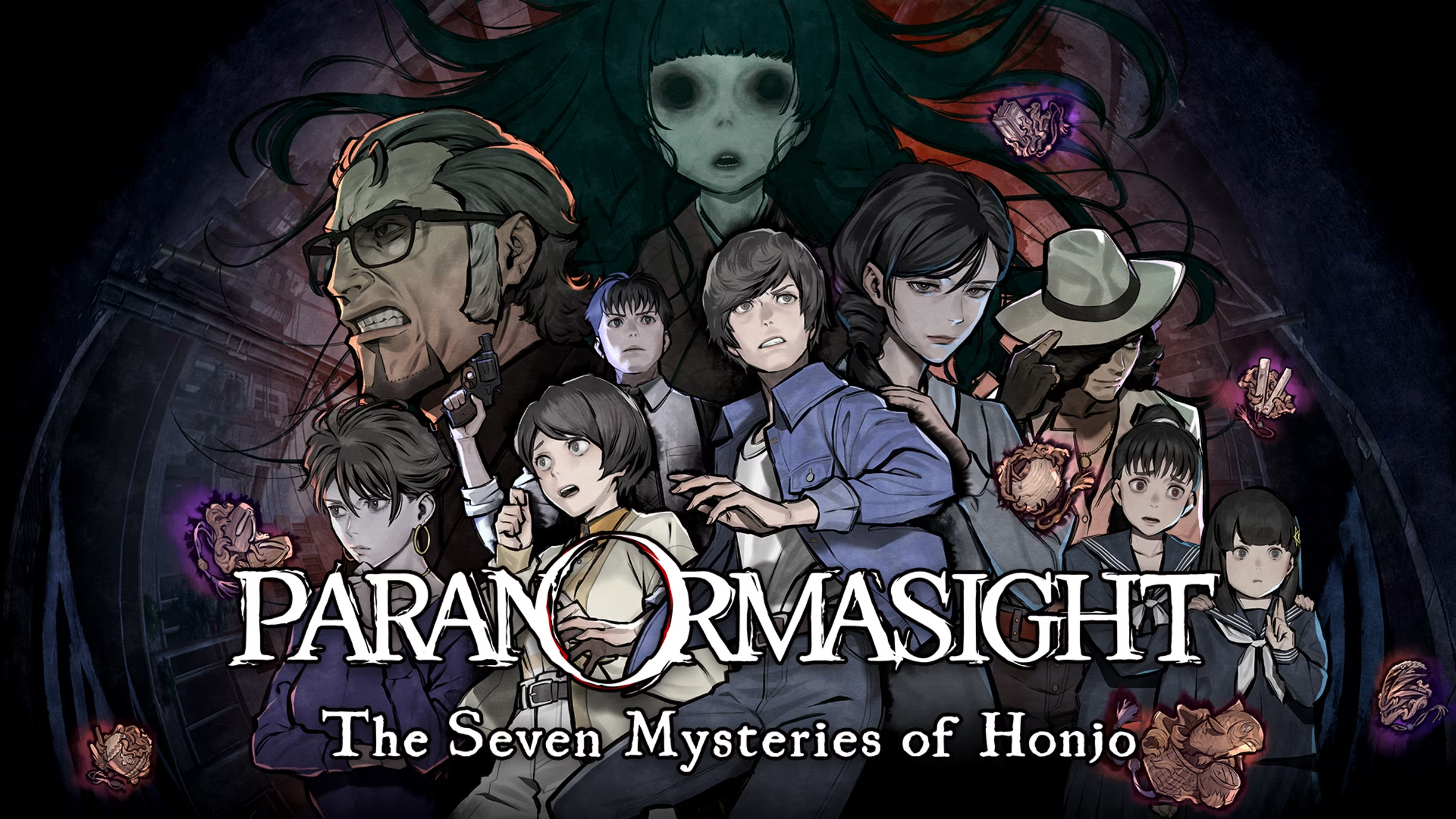
About PARANORMASIGHT: The Seven Mysteries of Honjo
In late-Showa Tokyo, office worker Shogo Okiie and a growing circle of investigators become entangled with the Seven Mysteries of Honjo and a rite said to restore the dead. This supernatural mystery visual novel moves between intersecting viewpoints, clue searches, guarded conversations, and curses whose conditions can turn investigation into danger.
PARANORMASIGHT: The Seven Mysteries of Honjo is set in Honjo, within Tokyo’s Sumida Ward, during the late Showa period. Its starting point is Kinshibori Park, where office worker Shogo Okiie meets his friend Yoko Fukunaga to look into local ghost stories. Yoko believes the Seven Mysteries connect to a Rite of Resurrection; Shogo is sceptical until the stories begin to intrude on events around them. The legends are not detached folklore presented between chapters. Their places, remembered incidents and supernatural rules shape what people investigate in the present. The wish to recover someone who has died gives the tales a shared pressure: characters approach the same mystery with different losses, hopes and ideas of what a resurrection would mean. Sumida is both a real Tokyo district and the game’s concentrated mystery setting, so a canal, park or neighbourhood landmark can carry local history as well as immediate danger. The story follows events across a short period, while allowing information from one character’s investigation to change how another strand is understood. Its premise grows through these connections, keeping the question of what the legends mean alongside the practical question of how anyone can survive them.
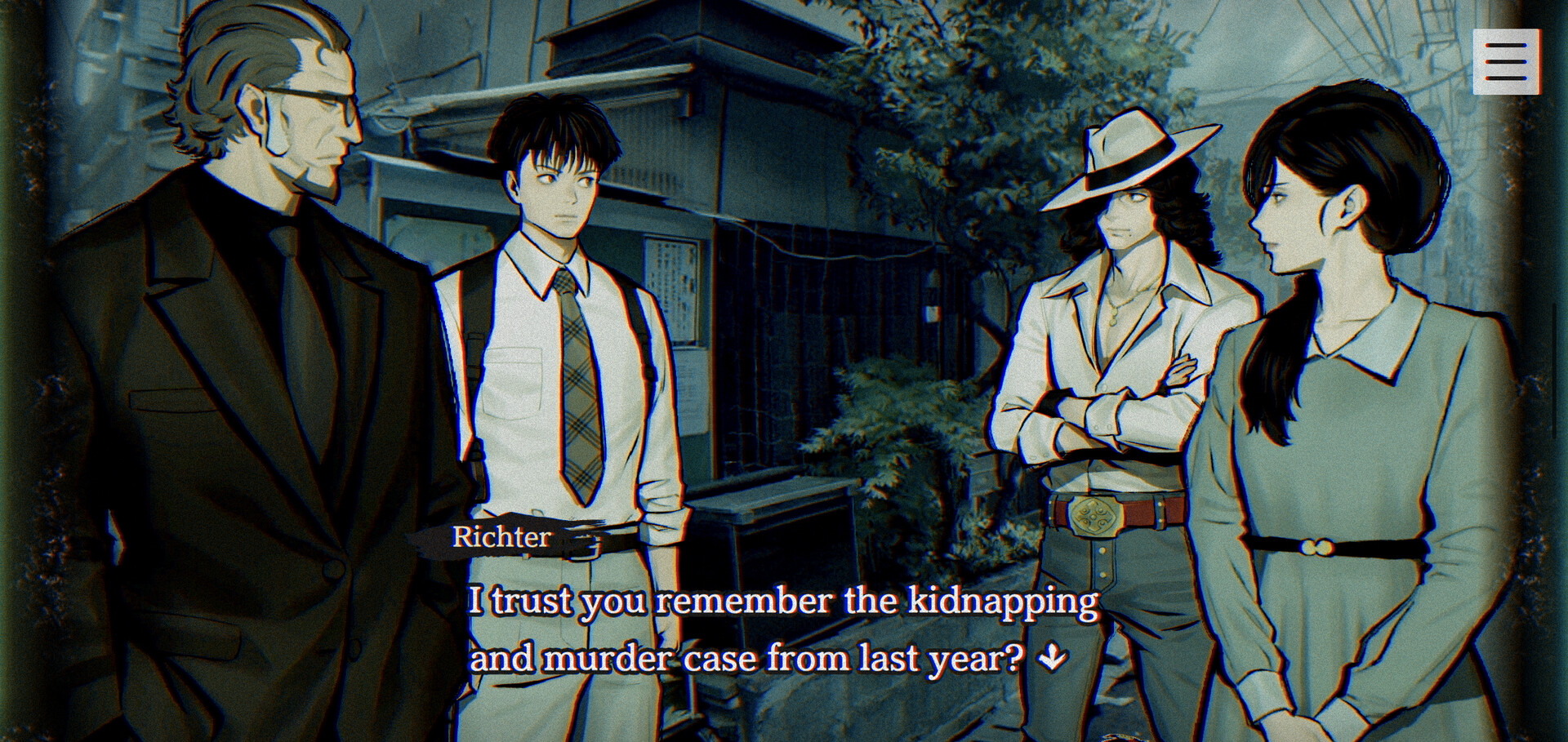
The viewpoint moves among people with separate reasons to pursue the unexplained. Shogo and Yoko provide the first entry into the legends: he brings the perspective of an ordinary office worker, while her interest in the paranormal is shaped by seeing things others cannot. Police detectives Tetsuo Tsutsumi and Jun Erio investigate a series of strange deaths, bringing professional inquiry into contact with events that do not fit an ordinary case. Elsewhere, high-school students Mio Kurosuzu and Yakko Sakazaki look into the suicide of Yakko’s childhood friend, while Harue Shigima seeks answers and revenge after the kidnapping and murder of her son. Private investigator Richter Kai becomes part of Harue’s search. These are not interchangeable narrators describing one case from different angles: their relationships, obligations and access to evidence differ. Their paths meet around the mysteries, and a fact encountered in one strand can clarify a problem in another. Moving between them changes the scale of the story, from a tense encounter in a specific place to questions about older incidents, police work, school life or a family’s grief. The ensemble structure lets the same rumour acquire different meanings depending on who is trying to verify it and what they stand to lose.
The curse system makes the legends active threats rather than clues alone. Certain people become curse-bearers and can use supernatural powers associated with the Honjo stories. Those powers have conditions: a target, situation or action must satisfy the relevant rule before a curse can take effect. That makes an encounter a problem of observation and inference. A person may be dangerous at close range, under a particular circumstance, or after a specific behaviour; recognising the condition matters as much as deciding what to say. Conversation choices and movement can expose someone to a curse, so the player must read what the other person is doing, consider the space around them and avoid acting on an incomplete assumption. The curse stones also give the story a contest of intentions. Some characters pursue the Rite of Resurrection, and the prospect of using curses to reach that goal draws people with incompatible motives into the same conflict. The game presents curse use as strategic, but the player’s role changes across its viewpoints: sometimes a character must survive another bearer’s power, and sometimes the possibility of wielding a curse becomes part of the scene. The rules are introduced through incidents and clues, giving the player material to compare rather than a single abstract combat system. This keeps supernatural danger tied to the local tales and to each character’s immediate decision.
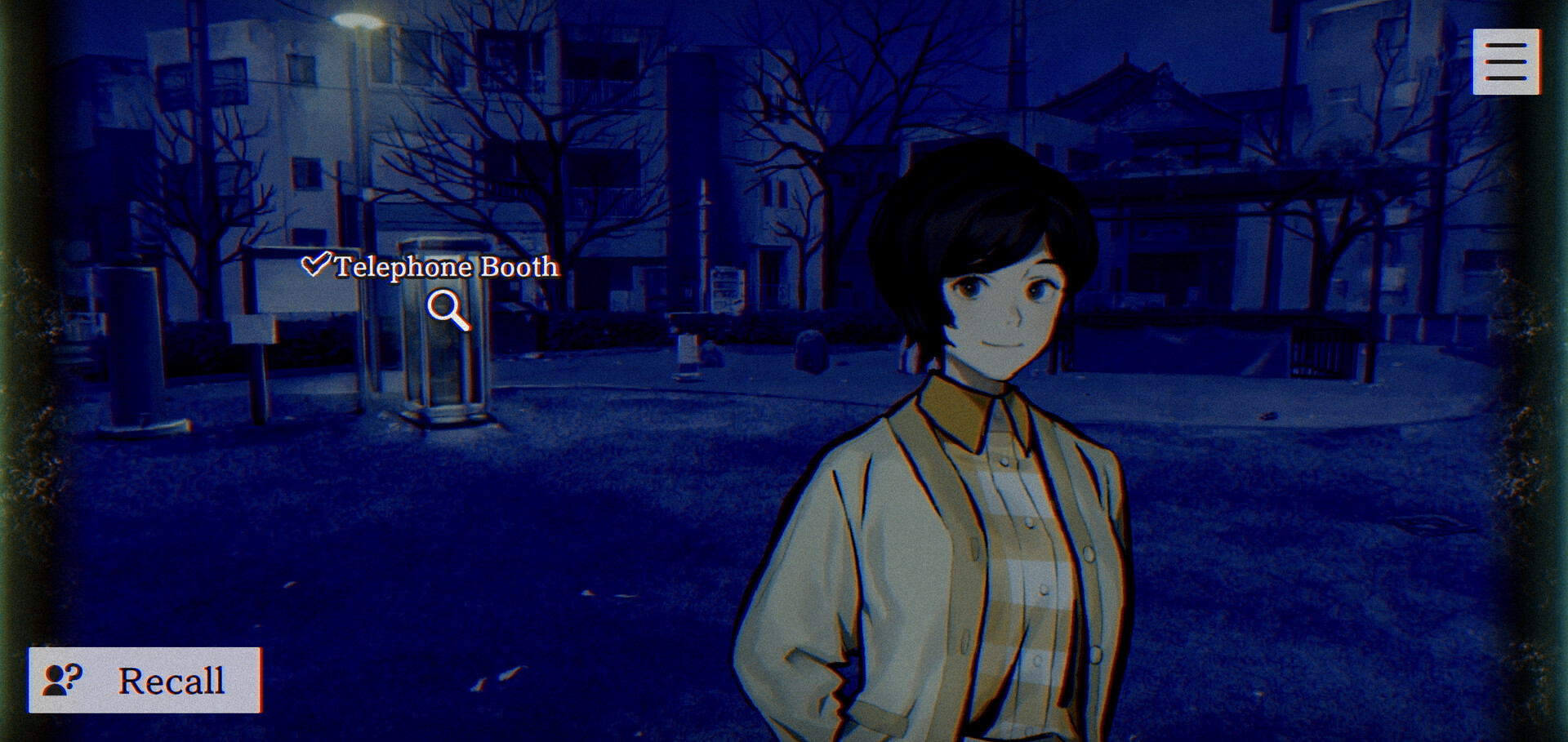
Most play combines reading conversations with examining a scene. During dialogue, characters ask questions, make choices and respond to information that may be incomplete or deliberately withheld. A conversation can advance an investigation, reveal a contradiction or place someone within the conditions of a curse. In exploration scenes, the player can turn through the surrounding view and inspect points of interest for clues or other details. The setting is presented with 360-degree photo-sphere backgrounds based on real Sumida scenery photographed with local cooperation; looking around therefore contributes both to atmosphere and to finding what a character has noticed or missed. Progress is not based on freely walking a three-dimensional character through the district. Instead, the player directs attention, selects available actions and determines how a scene is approached. Movement still matters in the fiction because choosing where to go, when to approach someone or how to respond to a dangerous situation can affect survival. The interface gives these investigations a visual-novel rhythm, interrupted by focused searches and decision points rather than continuous action. Dialogue and inspection feed one another: a clue can make a statement newly suspicious, while a conversation can point attention back to a detail in the environment. The player advances by making those links, not by accumulating combat strength or equipment.
The story chart organises the game’s multiple viewpoints and makes the order of available chapters visible. At a given point, some episodes can be entered while others remain blocked until a relevant event or piece of information is resolved. This structure makes progress partly an exercise in choosing which strand to follow next. When a conversation or decision ends in a fatal outcome, the game can return the player to the point of failure so a different approach can be tried. Reaching a dead end is therefore also a way of learning what a curse condition or character response requires. Revisited scenes remain useful because knowledge gained elsewhere may alter the player’s interpretation or reveal an option that was previously obscure. Timeline navigation and fast-forwarding through already-read dialogue help the player move between established material and new developments. The structure also supports alternate outcomes, including failures that provide context about the characters and the rules at stake. These tools matter to the mystery: information is distributed across episodes, and the player must carry it between scenes rather than treating each chapter as an isolated case. The story chart is both a navigation aid and a picture of how far the separate investigations have progressed, while the changing viewpoints provide a way to test an explanation against evidence gathered by someone else.
The presentation combines illustrated character portraits, stylised text and interface elements, and photographic environments. Sumida’s real locations appear as panoramic backgrounds that surround the viewpoint, while character art and framing keep conversations readable and expressive. The overall interface evokes an old television image, fitting the late-Showa setting without turning the game into a period-simulation system. Sound and visual direction support shifts between ordinary conversation, investigation and supernatural threat; the same place can feel different once a legend’s history becomes relevant. The game is a single-player supernatural mystery adventure structured as a visual novel, with scene inspection, dialogue decisions and branching outcomes. Square Enix developed and published the standalone Windows release, which brings the full mystery to PC rather than dividing it into separately sold episodes. The same named game is also sold for Nintendo Switch, and platform listings identify mobile releases as well; their store pages and control features differ. The Steam product is the complete standalone game rather than a separately sold episode, and its store page lists English, Japanese and Simplified and Traditional Chinese interface and subtitle support. Its content includes depictions of violence and bloodshed around the curse mysteries. Across its characters, locations and systems, the central activity remains following evidence through a network of personal investigations while judging when a story is only a rumour and when its rules have become dangerous.
- Developer
- Square Enix
- Genre
- Supernatural mystery adventure visual novel with scene investigation and dialogue choices