
About Paradise Killer
On Paradise Island, the ruling Council is murdered on the eve of a new island’s rebirth. Exiled investigator Lady Love Dies returns to search the open world, question suspects, and use Starlight to organize evidence. You decide whom to accuse, then argue your case at trial.
Paradise Killer begins on the eve of a planned rebirth. The island known as Paradise is due to give way to Perfect 25, but the ruling Council is murdered before that transition can happen. Lady Love Dies, an investigator sent into exile, is brought back to find the killer. The setting is an alternate reality where a human civilization worships dead alien gods and tries to restore them. That strange history gives the case a scale beyond a conventional locked-room murder, while the immediate task stays clear: explore the island, find evidence, and decide what it proves. The island's supernatural cycle is established as part of the setting; the identity and guilt of the people behind the Council's murder remain questions for the investigation and its player.
Lady Love Dies is the central investigator, but the game gives her a companion in Starlight, a personal computer and electronic assistant. As she searches Paradise Island, Starlight helps collect evidence, record testimony, and keep the investigation's information together. This makes the case an active process of gathering and interpretation. A clue can be logged beside a witness statement, then considered in relation to what other people have said or what the island reveals. There is no fixed order for finding evidence and questioning suspects. The investigation therefore does not depend on following one fixed trail from clue to clue. Love Dies returns with a mandate to identify a culprit, while Starlight gives her a practical way to retain the material needed to support an accusation.
Paradise Island is the main space for that work. It is a synthetic rock in an ocean beyond reality, a place where the Syndicate's immortal worshippers of dead alien gods live. The island is the 24th in a repeating sequence: each Paradise eventually fails, and a new one is born. The worshippers release psychic power meant to feed and eventually resurrect their gods. That energy also draws demons, which corrupt each island; the Council then brings a new alternate reality into being. These details are part of the world's lore and establish why the next transition matters. They do not by themselves settle the separate question of who killed the Council. Paradise Killer makes room for both a large supernatural history and an unresolved criminal case.
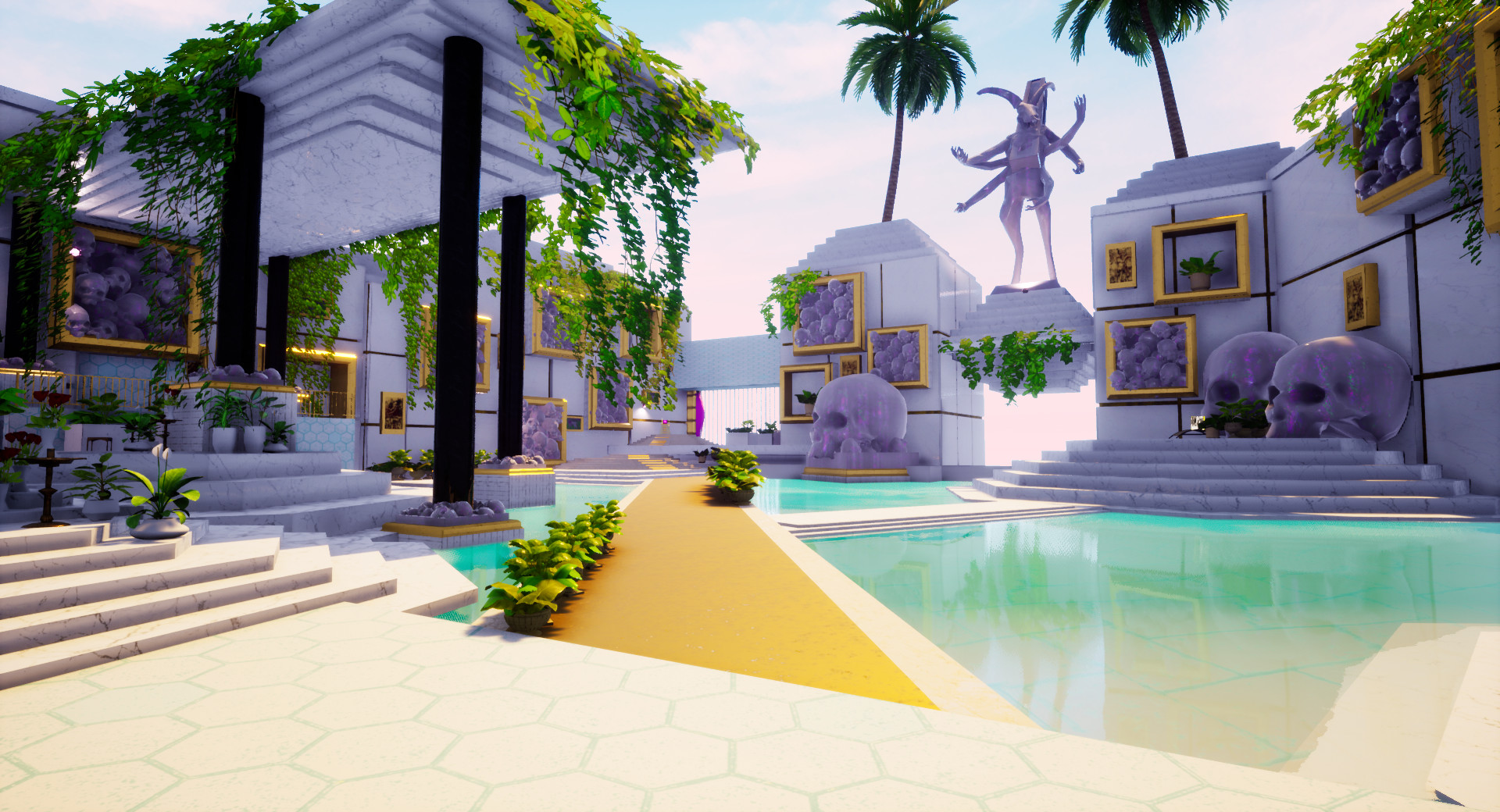
The open world lets you choose where to go and which leads to pursue. Rather than advancing through a single sequence of interviews, you search locations for clues, speak with suspects, and decide when the information is strong enough to act on. The people on Paradise have their own secrets and interests, and an old acquaintance can become a suspect as the case develops. Interviews give the investigation another kind of evidence: testimony can be compared against physical clues and other accounts. Because you may discover material in a different order, the picture of the crime grows unevenly. A new fact can change how an earlier statement reads, while a character's motives still need to be weighed against what the evidence supports. The freedom sits in the work itself: what to inspect, whom to question, and how to interpret the resulting record.
Exploration also involves the island's structures and relics. Strange objects preserve details about Paradise's alternate history, so examining them can expand your understanding of the world beyond the murder. Some areas are concealed behind ancient computers with hieroglyph puzzles; solving those puzzles opens new parts of the island and can lead to further evidence and secrets. This connects traversal to investigation: uncovering a route is also a way to reach more of the case and the setting's history. The island is not presented as a backdrop you cross only to reach the next suspect. Its strange architecture and artifacts contain information of their own. These discoveries can come in different sequences, so you have to distinguish what the island's lore establishes from what each clue contributes to the accusation you may eventually make.
Once you have investigated enough, you can take your interpretation to trial. The purpose is not simply to name someone; you must present a case and argue how the evidence supports a conviction. The game allows accusations against any suspect, but the burden of proving that choice sits with the player. Different combinations of evidence can support different theories, and more than one killer may be possible. A successful conviction is the formal condition for treating the crime as solved and saving Paradise, yet the game's framing keeps conviction distinct from absolute truth. The trial is where the facts you collected become an argument, and your chosen suspect determines the version of events you stand behind. The story does not force every investigator toward one predetermined verdict.
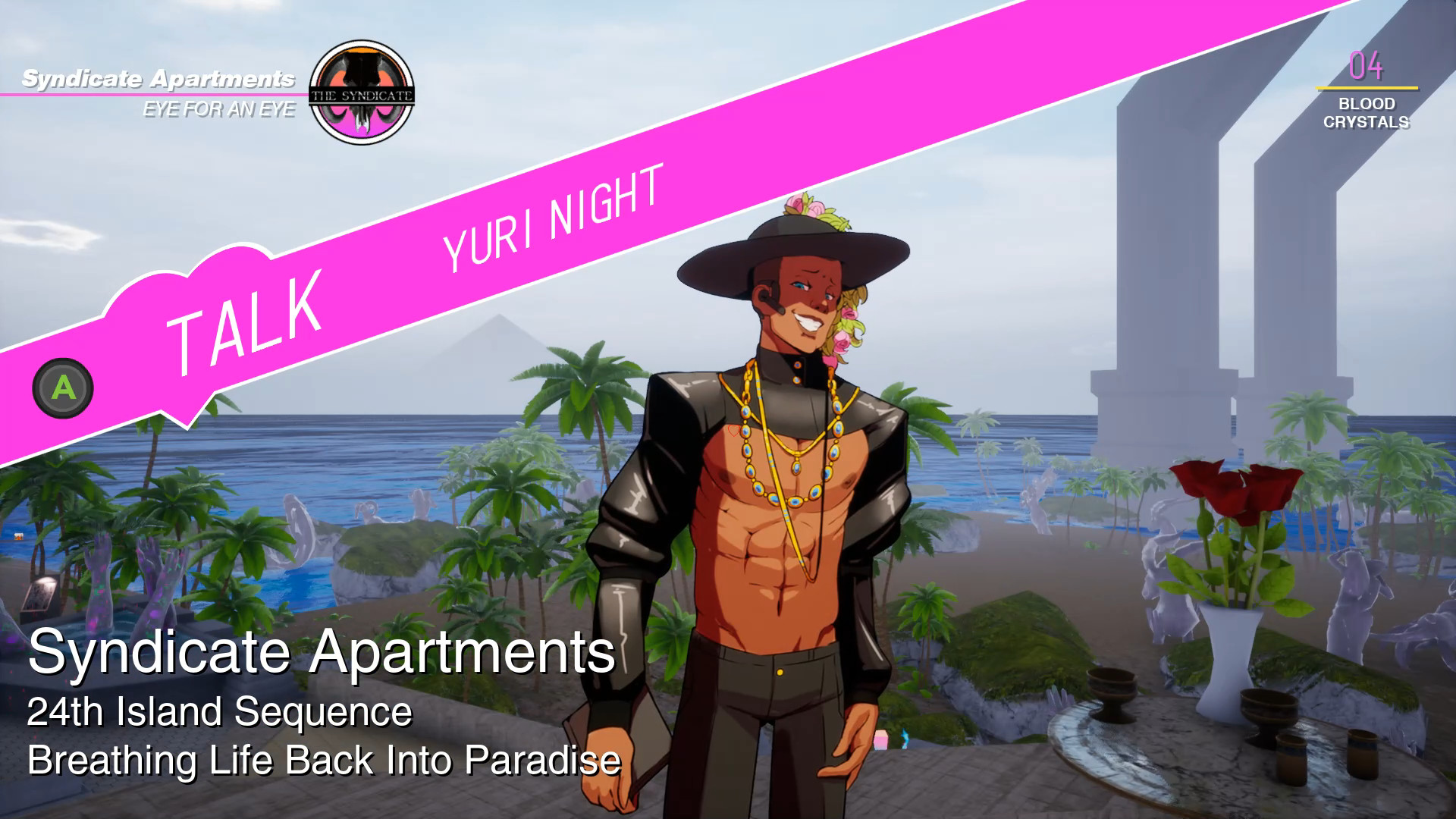
Away from the murder case, movement upgrades and an in-game economy support wandering through Paradise. The island also has music to discover, and the soundtrack can be arranged into a personal playlist. These systems give a reason to inspect places even when they do not immediately advance a theory about the Council. The order of discovery remains open: a locked route, an overlooked relic or an unvisited character may change what Love Dies knows before she chooses to go to trial. The game leaves that decision with the investigator, while requiring her to turn gathered facts into an argument rather than relying on an accusation alone.
- Developer
- Kaizen Game Works Limited
- Genre
- Free-form open-world exploration and investigation adventure