
About Paleo Pines
On the island of Paleo Pines, you and Lucky, a Parasaurolophus raised from an egg, search for her missing kind while making a home among friendly dinosaurs and the people of Pebble Plaza. Befriend species with a flute and treats, build a working ranch, and explore seasonal landscapes whose discoveries connect everyday care to the island’s history.
Paleo Pines opens with a journey that is both a search and a homecoming. The player character arrives on an island where people and dinosaurs live alongside one another, accompanied by Lucky, a Parasaurolophus who has been part of their life since she was an egg. The other Parasaurolophus are missing, and finding out what happened to them gives the wider adventure its direction. That mystery unfolds while the player meets the islanders, tends a ranch and learns how its landscapes work. The setting is not a prehistoric wilderness where dinosaurs are enemies to overcome: the official premise presents them as friendly animals and potential companions. The contrast between an unresolved past and an ordinary daily routine gives the story room to move between larger questions about Lucky’s kind and small acts of care. Quests bring those threads together, as practical requests from residents can teach a ranch skill or point toward another part of the island. The ranch becomes a base for both parts of the journey, a place to improve while the player follows leads beyond its fences.
The ranch sits beside Veridian Valley, an early region shaped around open rolling hills, tucked-away paths and roaming dinosaurs. Exploring on foot makes foraging and looking into side spaces part of travel; riding Lucky or another suitable dinosaur changes how the player covers familiar ground. Ariacotta’s red canyons offer a very different landscape from the valley’s flowers and meadows, so moving between regions also changes what can be found. Hidden collectibles, wild crops and animals reward attention to the edges of the main routes, while quests point toward landmarks and areas that may be easy to miss. Some dinosaurs can use their abilities to help with obstacles or other tasks: a Pachycephalosaurus, for example, can smash through barriers, while a bonded mount can help reveal collectibles. These skills give companionship a practical role in exploration. Each trip reveals creatures living in that region and routes that a companion may help open. As the player learns which dinosaurs can help with which barriers, returning to a familiar path can reveal a route or resource that was inaccessible earlier.
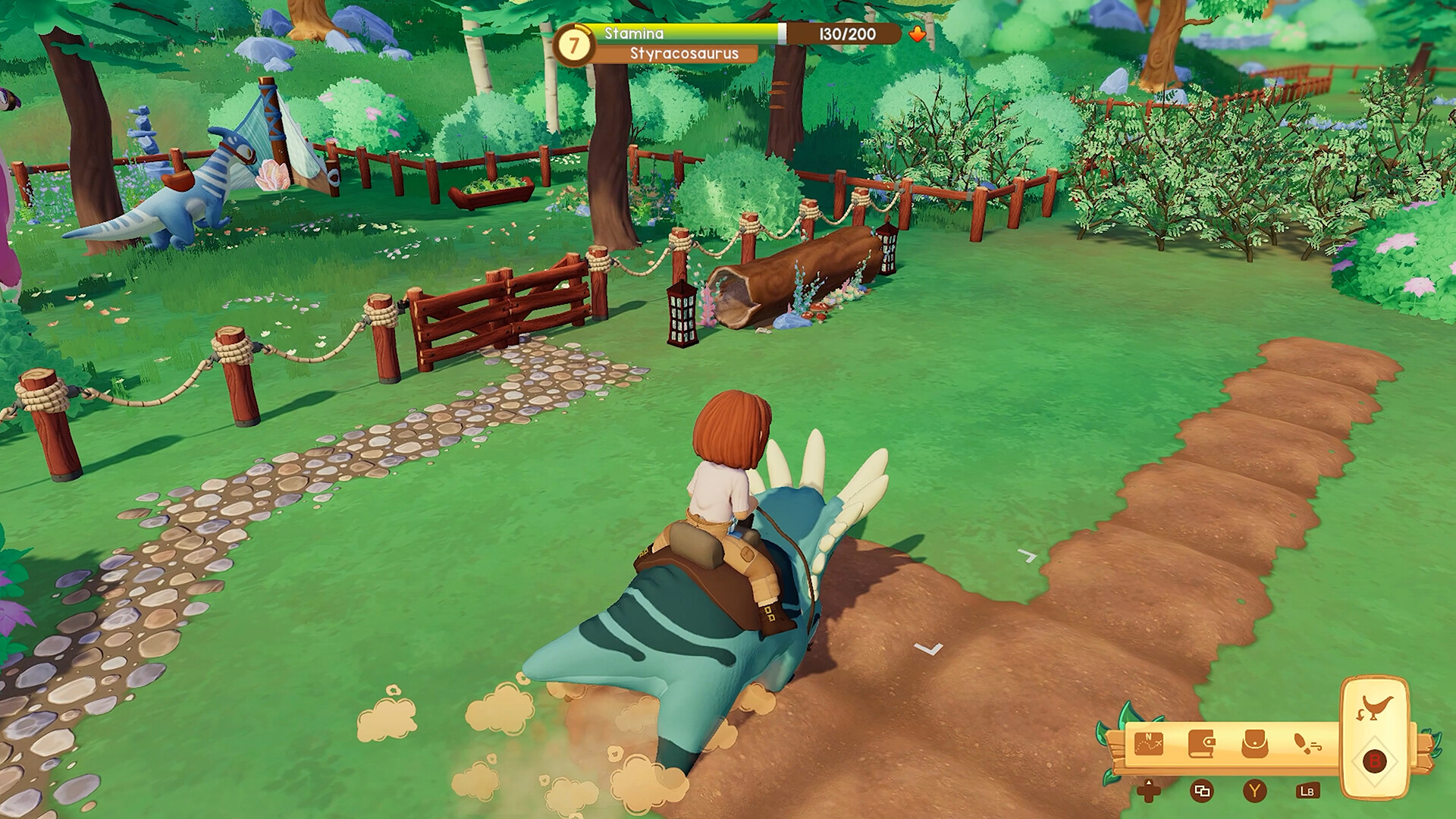
Meeting a wild dinosaur begins with attention rather than force. The flute lets the player mimic a dinosaur’s call, drawing it into an interaction; a suitable treat and a gentle nose boop can complete the introduction. Bringing a new friend home starts a longer relationship. The dinosaur needs a pen and suitable food, and friendship grows through care, treats it likes, affection and time spent walking or riding together. Its species and individual personality affect how quickly it trusts the player and what company it prefers: some dinosaurs do better alone, others in a small pack, and others in a herd. A comfortable pen and thoughtful attention therefore matter alongside the first successful encounter. As trust grows, a dinosaur large enough to carry a saddle can travel with the player, and helpers can contribute to ranch work or assist with particular tasks in the wild. Different species also have different skills, so the Dino Journal's information about island creatures can help the player consider which abilities may be useful for the next trip. The routine is reciprocal: taking an animal along and learning what it likes helps build the relationship, while the stronger bond makes it more willing to work beside the player. Discovery, daily care and mobility become parts of the same system instead of separate collection steps.
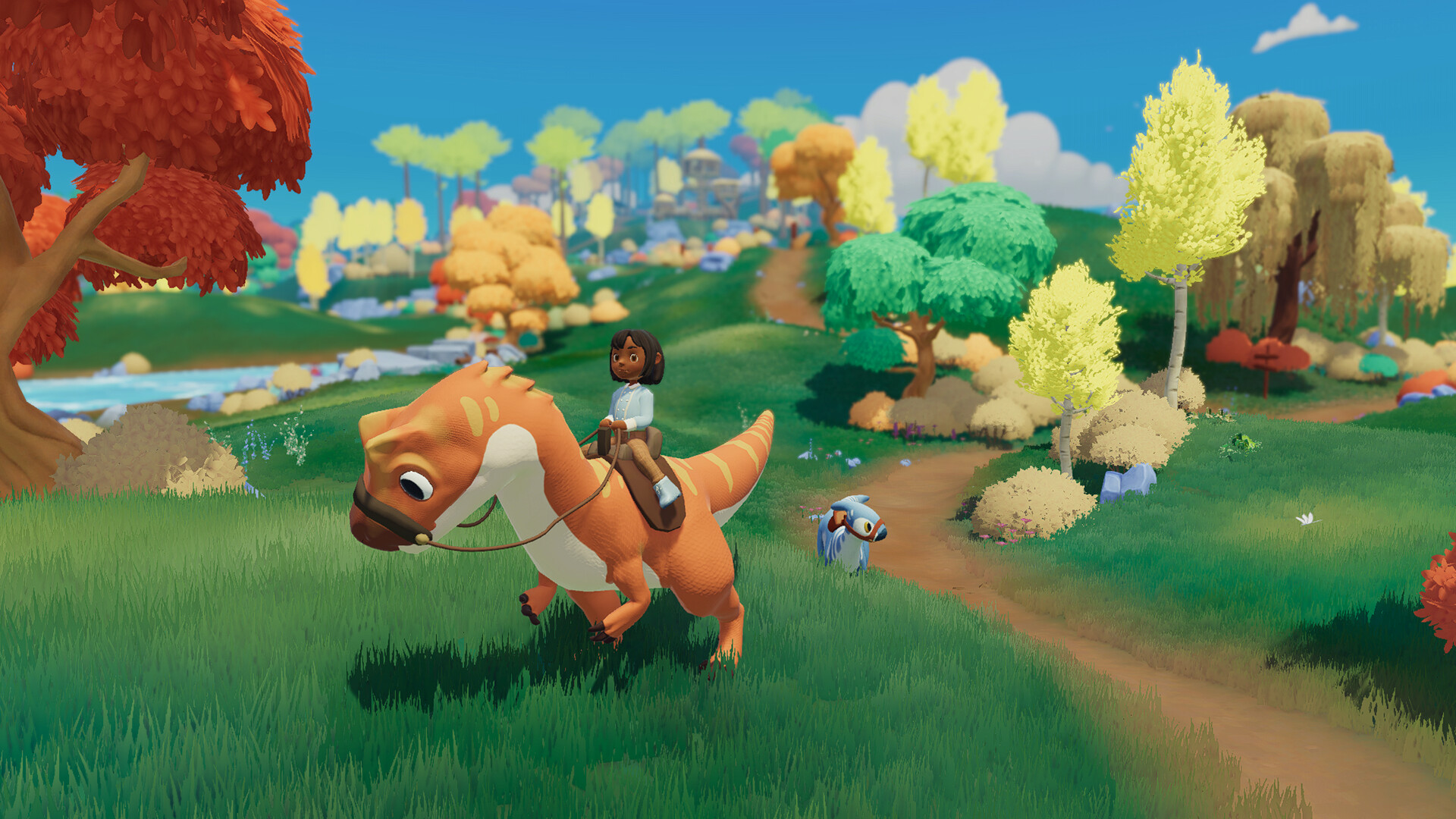
Ranch life turns those relationships into a working farm. At first, the player plants and waters crops by hand, then trusted dinosaur helpers can take on farm tasks according to their particular skills. Harvests can be traded with townsfolk, linking the ranch’s output to the community market. Crop quality depends on more than planting a seed: soil and season matter, and the weather changes what work a day requires. The island cycles through Triassea, Jurassos and Cretumnus rather than using familiar real-world season names. Rain can spare the player from watering, some fruit appears only in a particular season, and certain dinosaurs favour specific weather or places. A sunny day near a river may be a better time to search for one animal, while a rainy day leaves more time for ranch care. Farming and exploration thus share a calendar: crop planning, forage, weather and animal sightings all reward a player who keeps track of what is changing. The same day can therefore be split between a short chore list at home and an excursion timed around a creature’s habitat or a season-specific harvest.
The home plot is also a construction and organisation space. Players lay out crop rows, create pens and use decoration to give the ranch a personal style, from a garden to a denser farm. The animals’ needs influence those choices: a pen must be a suitable home, and companions respond to their diet, company and the attention they receive. Looking after them can include feeding, petting and taking them out, while the ranch grows more productive as different helpers are befriended. This makes expansion a question of how to arrange a place that serves both farming and the animals living there. A new dinosaur is not simply another item on a roster; it brings its own preferences and potential work. The player can also customise their character’s appearance and collect clothing associated with the island’s different areas. The wardrobe and ranch decor make personal expression part of the same steady progression as improving the farm, while practical choices about space and helpers determine how much can be managed in a day. Progress comes from gradually making the ranch more useful and welcoming, with personal expression alongside animal care and farming.
Pebble Plaza gives the island a social centre. Its stalls connect ranch work with trade: Marlo sells practical ranch goods such as fence posts, gates and farm accessories, while Pippin offers differently flavoured treats that are useful when approaching wild dinosaurs. Granny Agami sells seeds and produce, and can share farming advice. Owynn, a dinosaur researcher, helps teach the details of dinosaur care through quests about food, favourite treats and what makes animals happy. These people are not only shop menus. Quests begin with practical guidance, then encourage the player to explore deeper into regions or use tools in new ways; character-focused requests also reveal something about the person asking. Rather than building every relationship through a repeated gift or simple point counter, the game ties getting to know islanders to their stories and the help they need. The plaza’s vendors and community spaces give a reason to bring crops and discoveries back from the wild, while local errands can open routes and make another excursion possible. Because some traders appear on particular days, a return visit can also change what is available to buy or learn.
The calendar also changes how the community gathers. Three recurring festivals—Triassea Picnic, Shenanigan and Wisdom Day—give each season a shared event with its own activity and decorations to earn. At the picnic, islanders exchange dishes and recipes, and a communal food pile can attract dinosaurs; the flavour balance influences which kinds are drawn to it. Shenanigan centres on searching Pebble Plaza for small dinosaurs, while Wisdom Day asks residents to send a stick downriver and race it to a bridge. These activities add short community rituals to the longer ranch-and-quest cycle, and their rewards belong to festival occasions. The island also marks the anniversary of the player’s arrival with Budding Day, when neighbours bring food or produce. Visually, the seasons reshape foliage and colour, from Triassea blossoms to Jurassos’ brighter tropical growth and Cretumnus’ red and orange leaves. Character customisation, the changing island and the animals’ visible behaviour keep the setting legible as time passes. Progress comes from learning what a place, season or dinosaur needs, then using that knowledge across farm work, exploration and community life.
- Developer
- Italic Pig
- Genre
- Adventure, Casual, Indie, RPG, Simulation