
About Oxenfree
On an overnight visit to Edwards Island, Alex brings her new stepbrother Jonas to join friends Ren, Nona and Clarissa. A strange radio signal changes the gathering into a supernatural mystery. Alex explores the island, tunes into its signals and chooses how to respond as the group tries to understand what is happening.
Oxenfree follows Alex, a teenager spending the night on Edwards Island with her friends. She has brought Jonas, her new stepbrother, to the gathering, where Ren, Nona and Clarissa already have their own histories and tensions. The island was once used for military purposes, and the group’s casual visit leads them into contact with something connected to its past. When a radio signal opens a supernatural rift, the night becomes a search across the island for the others and for a way to deal with the strange events. The premise stays close to a small group of young people trying to make sense of a place they thought they knew, while their ordinary conversations continue alongside the increasingly unfamiliar surroundings.
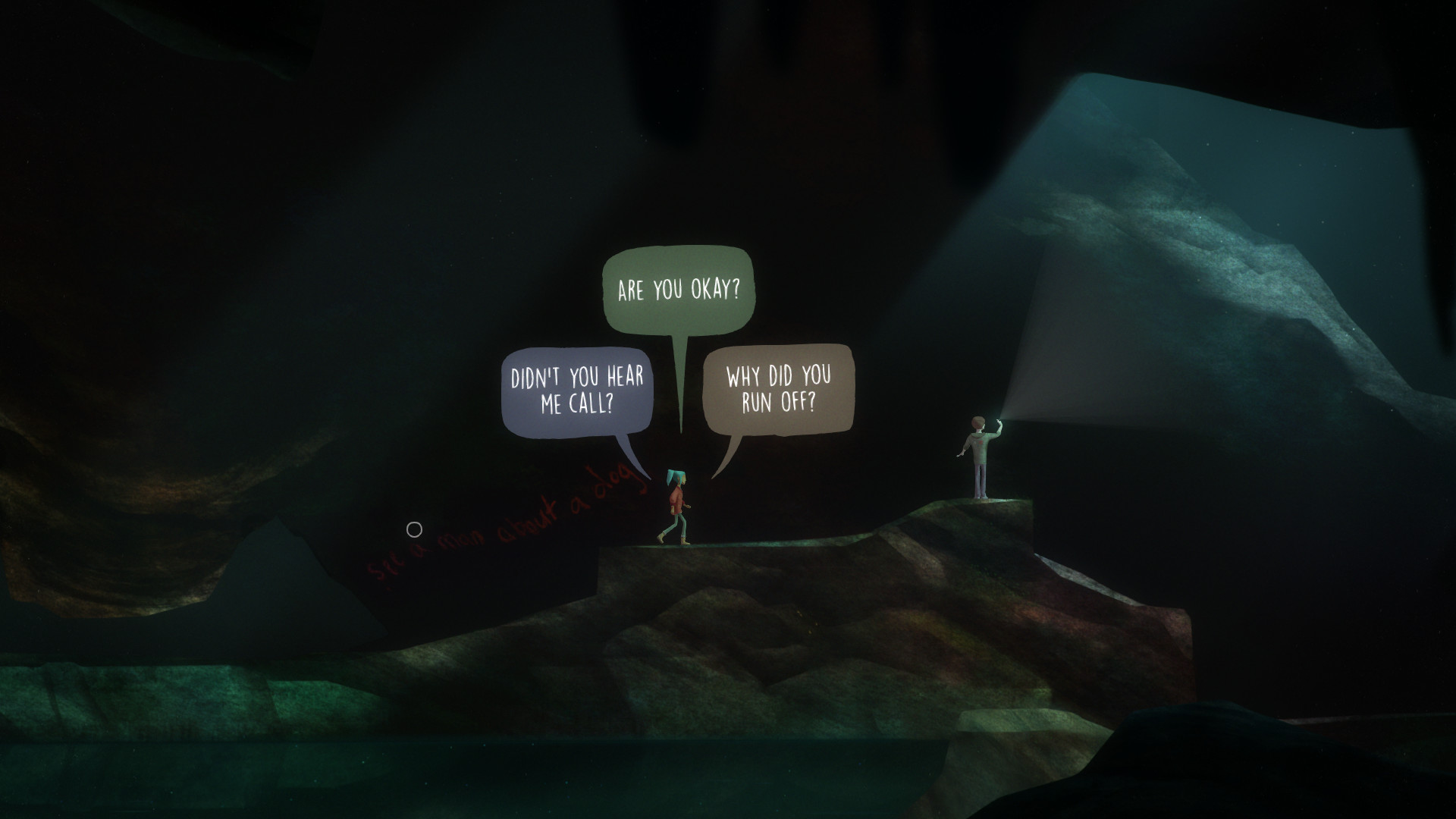
Movement and conversation happen together. Alex walks, climbs and jumps along connected island paths while friends talk beside her, rather than stopping for a separate dialogue scene each time someone has something to say. When a speech bubble appears, the player can choose one of Alex’s responses, wait, or sometimes interrupt a speaker with her own line. The others keep talking while the choice is available, and they can react when Alex stays quiet or moves away. That timing makes conversation part of navigating the island: the player decides whether to listen, join in, change the subject or let a moment pass as Alex and the group continue toward their next destination. The prompts offer different tones and questions, so they shape how Alex comes across without turning every exchange into a formal interview.
Alex’s portable radio is both a communication device and a way to interact with the island’s anomalies. The player moves the dial across frequencies, listening for clearer signals amid static and fragments of sound. Certain signals connect to spectres, while others reveal messages or trigger changes in the environment; marked points can use a tuned frequency to uncover fragments of Edwards Island’s history. In some situations the signal helps open a route or activate something nearby. Radio use is expressed through audio and picture as well as dialogue: interference thickens, voices distort and the image can shift as a signal is found. The dial therefore asks the player to listen and adjust, then watch how the surroundings respond. The radio also gives Alex a way to investigate without a separate inventory of weapons or instruments.
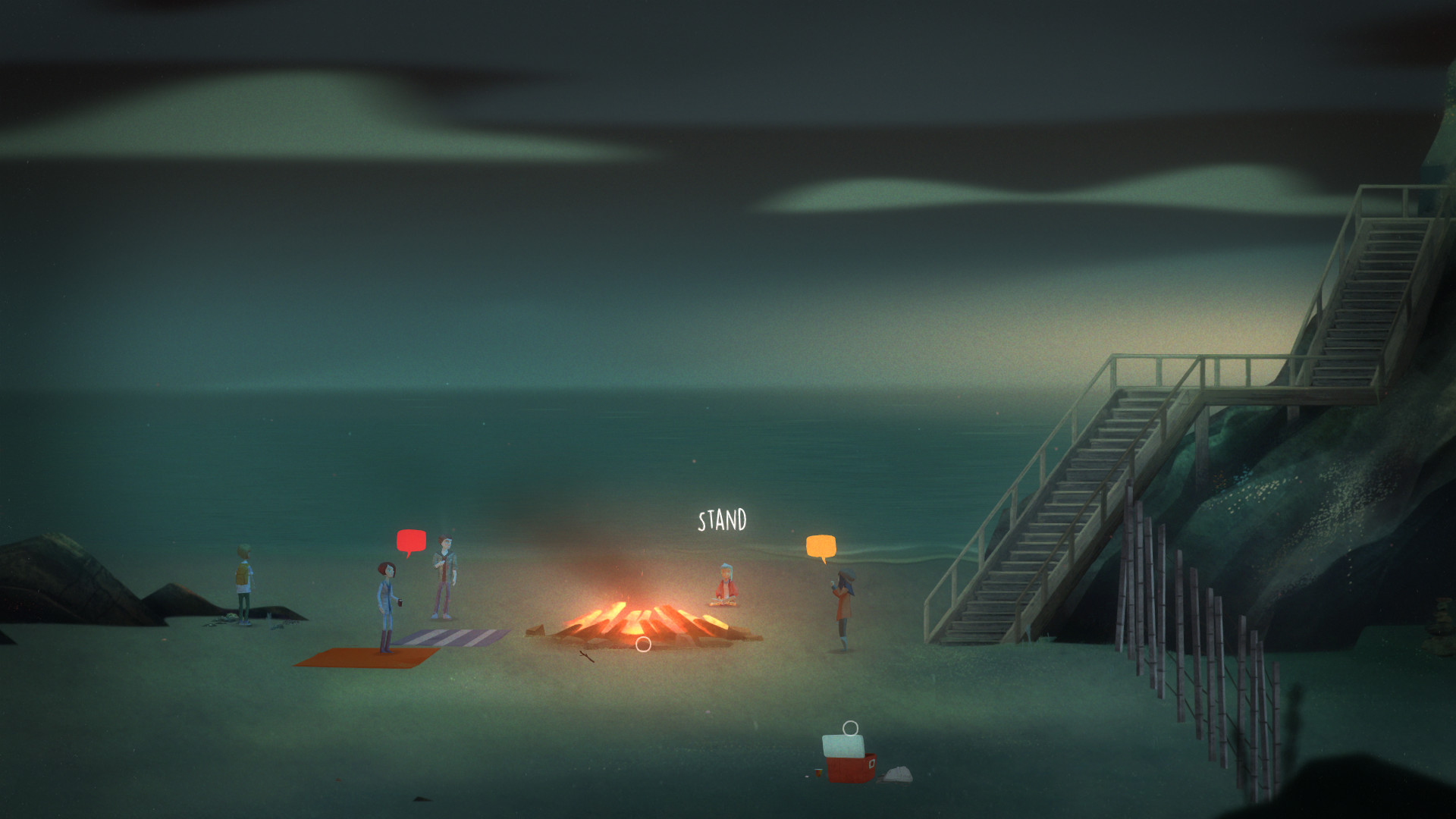
Exploration links the group’s conversations to practical obstacles. Edwards Island is arranged as connected locations, including woodland paths, caves, a beach, an old military installation and an abandoned settlement. Alex can move between them, inspect objects and interact with points that stand out in the scene. Some obstacles call for a radio signal; others involve finding an object or using a simple environmental interaction to continue. The route is not always a single straight line, and parts of the search allow the player to decide which person or area to approach first. These detours let different exchanges happen in a different order, while the broader story keeps drawing the group through the island. The movement itself stays readable and grounded in the terrain: Alex follows trails, crosses uneven ground, and climbs or jumps at designated ledges. Examining an object may provide context, while other interactions have a direct purpose in clearing the way forward.
The group’s relationships develop through small choices as well as major decisions. Alex can be supportive, teasing, guarded or impatient, and those tones shape how Jonas and the others respond to her. Early conversations establish the awkward step-sibling dynamic with Jonas, Ren’s tendency to fill silences, Nona’s quieter presence and Clarissa’s antagonism toward Alex. The player is not given a visible relationship meter; instead, later dialogue and behaviour show what the others have taken from earlier exchanges. Some decisions affect how scenes unfold and what the characters say later, while other choices mainly define Alex’s manner. Letting a prompt expire also becomes part of how Alex participates in a conversation. The game leaves the player to infer those social shifts from the next exchange rather than announcing a score or attaching a label to a friend.
Oxenfree tells much of its story through the combination of voice, sound design and distant views of the island. The camera frames Alex and her companions against coastlines, cliffs, treetops and buildings, so the environment remains present even during dialogue. Radio static and broken transmissions interrupt the group’s natural banter, making the same device that carries conversation into the supernatural. An original score by scntfc supports the shifts between quiet travel and moments when signals overwhelm the scene. The presentation keeps attention on both the island’s physical routes and the sounds that suggest something beyond them, while the cast’s exchanges give each stop a social context. The contrast between the friends’ informal speech and the radio’s unfamiliar voices gives the game two sound registers: one rooted in the group’s everyday relationships, the other connected to the island’s mystery.
- Developer
- Night School Studio
- Genre
- Single-player supernatural narrative adventure; Steam lists Adventure and Indie.