
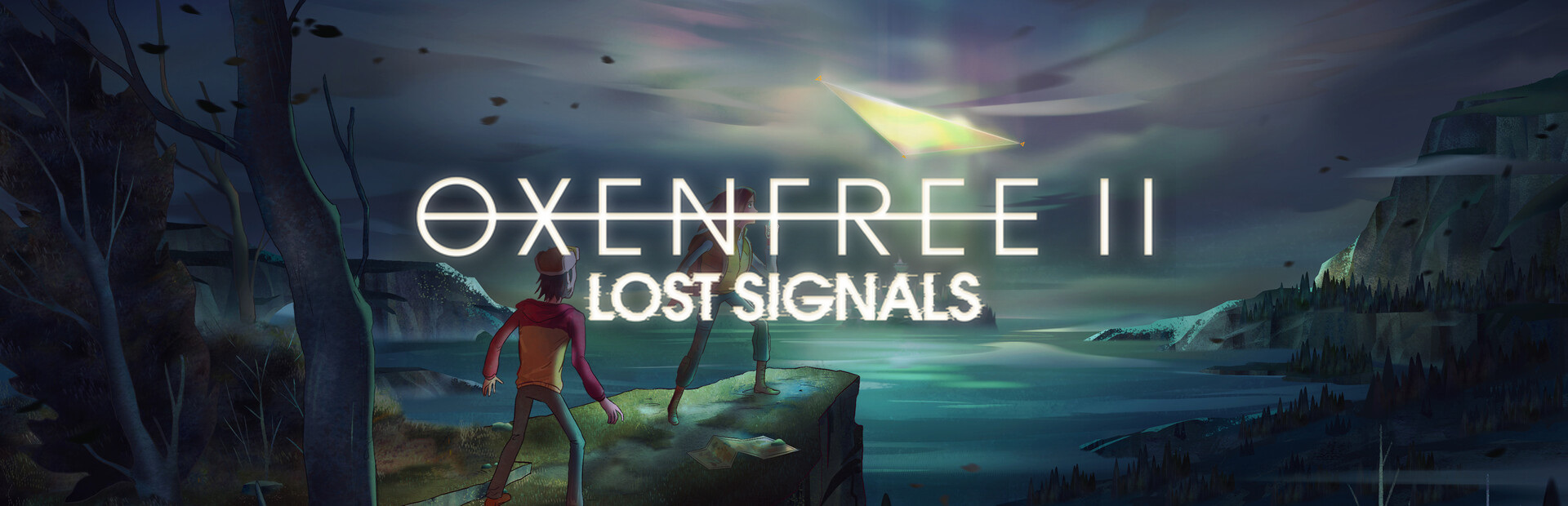
About OXENFREE II: Lost Signals
Five years after the events on Edwards Island, radio interference disrupts Camena's coast. Riley Poverly returns to investigate the strange signals, working with Jacob and local contacts while Parentage pursues a new portal. Explore cliffs, trails, and towns, tune a radio to the supernatural, and decide how Riley responds to people and events.
OXENFREE II: Lost Signals follows Riley Poverly, who comes back to her hometown of Camena five years after the events associated with the first OXENFREE. Electrical and radio equipment across the coast is behaving erratically: televisions switch on and off, aircraft lose radar, and broadcasts disappear into static. Riley is there to investigate the electromagnetic disturbances, with her former high-school acquaintance Jacob Summers alongside her. Their work begins with placing transmitters around the region to learn about the frequencies, but the investigation leads into a supernatural threat. Parentage, a cult-like group, is deliberately trying to open a portal and bring something through. This gives the sequel a new cast and a new local mystery while returning to the same broader continuum of rifts, ghosts, and disrupted timelines. The first game is not required to follow Riley's story; the connections to Edwards Island deepen the setting for returning players, while the immediate task is established in Camena. The central tension is therefore both practical and uncanny: Riley must reach sites where the signal can be studied, while deciding how to deal with people caught up in the anomalies and with Parentage's plan.
Camena is presented as a connected coastal landscape that Riley crosses on foot rather than as a sequence of isolated dialogue screens. Trails, town streets, cliffs, caves, mines, and other locations form a route through the investigation. The transmitter work gives movement a purpose: reaching a chosen point lets Riley install equipment and collect more context about the unusual frequencies. At difficult stretches, she uses climbing gear and a rope to move over steep terrain; the equipment is part of the story's practical fieldwork as well as a way through the environment. The landscape's vertical paths and uneven ground affect the pace, because walking with Jacob, pausing to talk, and finding a safe route are all part of an outing. The route includes places such as Tootega Falls, Garland Ghost Town, and Copper Creek, where story events and traversal meet. The spaces also host objects and events that prompt conversation or interaction, so exploration can interrupt a planned journey with a new clue or a call from someone elsewhere. Camena's physical geography and the radio mystery are linked: the player carries tools for reaching and investigating sites, while the strange signal turns familiar equipment and locations into sources of uncertainty. The game describes no combat system; its challenges are handled through traversal, investigation, radio use, and choices in conversation.
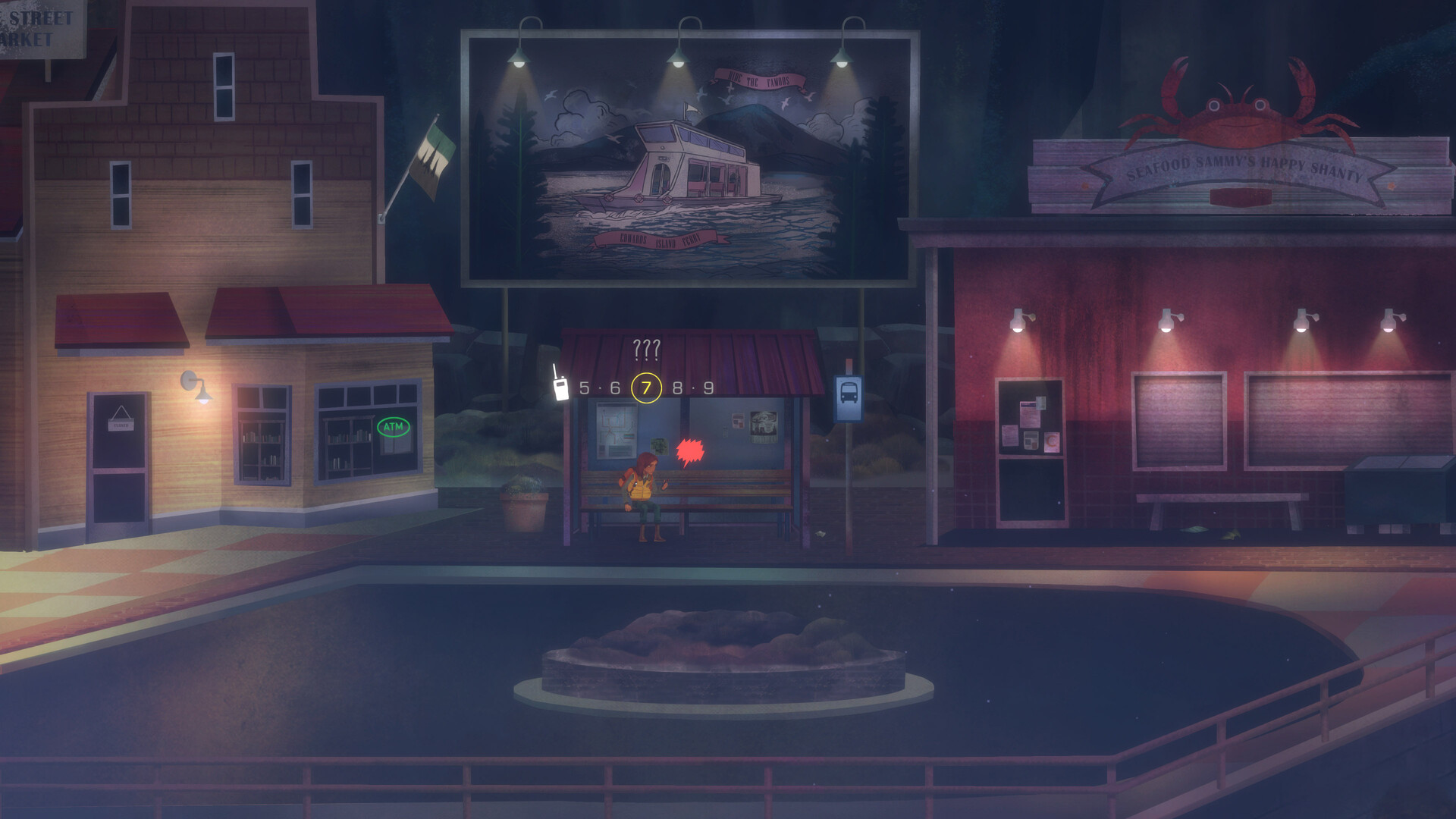
The walkie-talkie changes how Riley's conversations begin. Instead of waiting only for someone standing beside her to speak, the player can open the device while travelling and browse channels to contact people who are off-screen. Jacob is one of those contacts, but the channel list also connects Riley to residents with their own concerns. The call is optional: the player may ask for information, check on someone, or leave the contact unanswered and continue along the path. That choice can affect relationships and which story opportunities become available, so the device is both a practical way to learn about Camena and a means of shaping Riley's connection to it. The dialogue does not pause the adventure into a separate menu-driven chapter; it can take place during the return walk from a transmitter or in the middle of moving through the coast. The conversation system lets the player set its timing and choose who gets attention. Some contacts offer clues about the signals, while others bring everyday problems into the same channel as the supernatural crisis. The resulting rhythm alternates between physical travel and conversations that can change the emotional direction of a journey, rather than treating communication as incidental exposition.
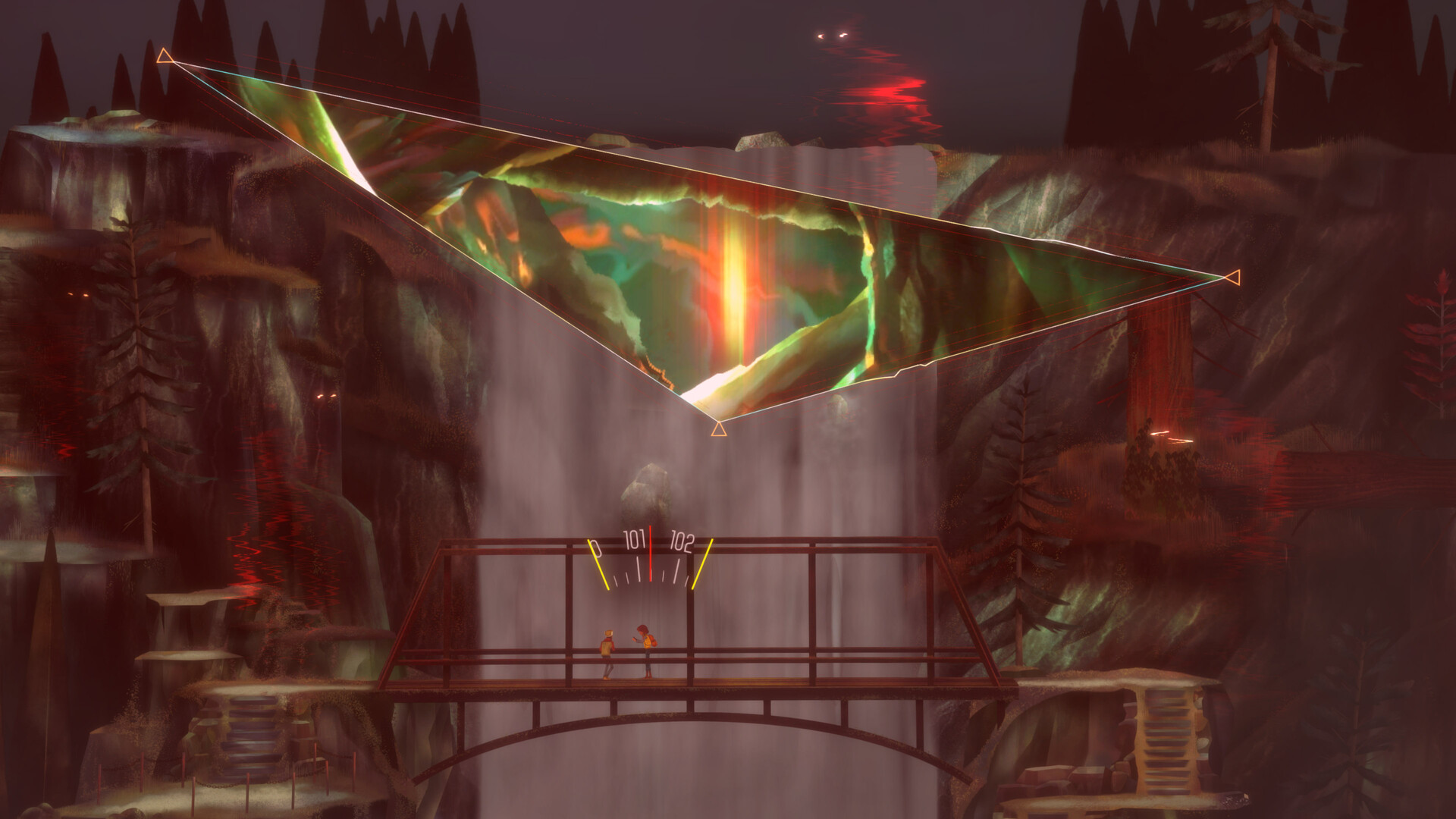
Riley's radio is distinct from the walkie-talkie. Tuning across frequencies brings in ghostly signals and can alter the world around her. The radio is used to communicate with the supernatural, manipulate events, and encounter time tears: fissures in the space-time continuum through which Riley can travel into the past. These moments connect the game's central electromagnetic disturbance to the earlier series premise, but the sequel gives Riley her own investigation and set of decisions. A radio frequency may be something to search for while moving through a location, and finding the right signal can turn an apparently ordinary stretch of coast into a point where time behaves differently. This means the radio is not simply an audio prop or a device for hearing dialogue; it is an interactive tool that can change what is possible in the environment. Its use complements the transmitters, which Riley plants to study the interference, while the walkie-talkie handles conversation with living contacts. Together, the devices create three different kinds of communication: collecting information about a signal, reaching a person, and making contact with forces that do not belong to ordinary time. The boundaries between those tasks are part of the mystery the player investigates.
The people Riley can reach are written as more than sources of instructions. Jacob is an old acquaintance and work partner whose willingness to talk can change over the journey. Maria hosts a student-run radio show at Camena High; she offers advice to listeners on channel eight, and a conversation with her can affect what music plays on the school's station. Nick is a sailor familiar with the coastline who may contact Riley and ask for help. Supporting him can provide insight into the strange events and lead to later contact as he faces a supernatural problem of his own. These relationships place personal decisions beside the larger threat. A channel may carry a clue, but it may also carry a request to listen or help with a problem that has no immediate technical solution. Riley's dialogue choices influence who she becomes, how her relationships develop, and which story options remain open. The game frames these responses as part of the investigation rather than as a separate morality meter: the player decides whom to answer, how to speak, and whether to give someone space. Parentage is another human presence in the mystery, pursuing a deliberate attempt to open a portal, so the supernatural danger is connected to choices made by people rather than to radio static alone.
Sound gives Camena much of its unease without turning every scene into an overt scare. Composer scntfc's score uses synth textures to sit beneath the coast's ordinary sounds and the radio's interference; the studio has described the music as a foreboding, changeable layer over the foggy headlands and town streets. That matters because the player spends time in places that can look familiar before the supernatural signal changes how they are understood. A transmission can make static feel like evidence, while music adds tension without explaining what Riley is hearing. The landscape also has a distinct visual identity: steep cliffs, remote paths, and town spaces frame the investigation as a journey through a real community rather than a succession of abstract puzzles. The score and the setting work at different scales, with the coastline giving the player a clear physical route and the shifting soundscape making that route feel uncertain. This contrast carries the atmosphere of the sequel: Camena remains Riley's hometown, with recognizable local life and familiar contacts, even as radio disturbances and ruptures in time complicate what the player sees and hears.
- Developer
- Night School Studio
- Genre
- Narrative adventure