
About OUTRIDERS
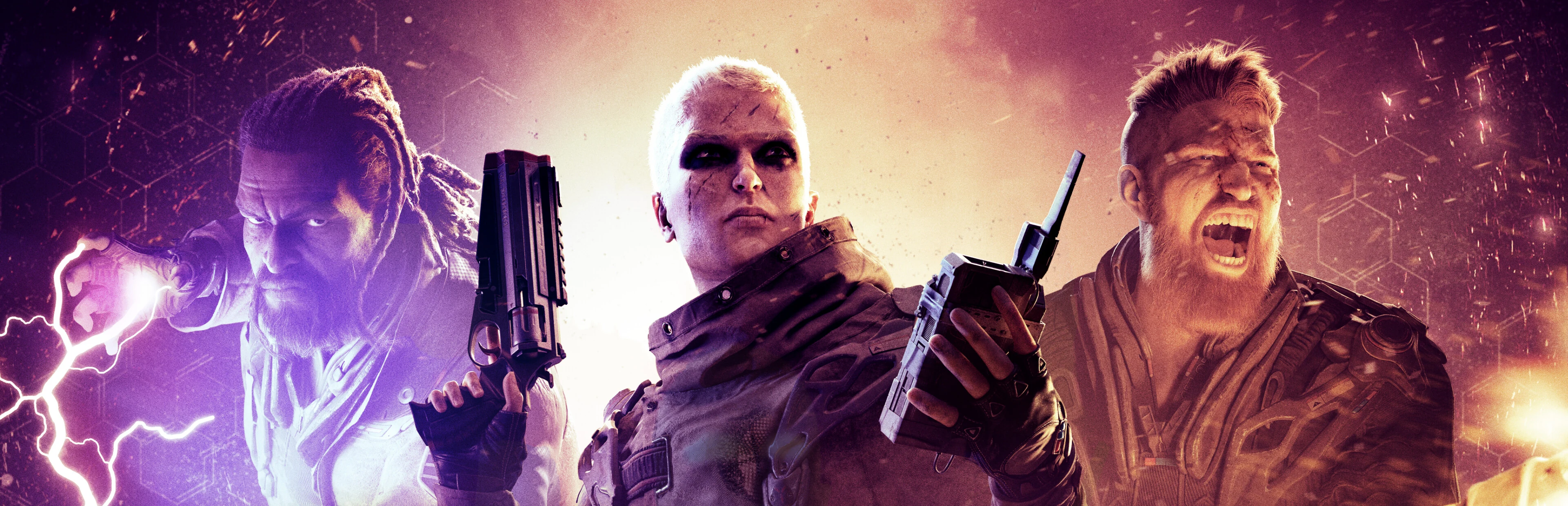
On Enoch, a colonization mission is shattered by the Anomaly, an energy storm that gives the surviving Outrider extraordinary powers. You awaken decades later and follow a mysterious signal across a hostile planet. Choose one of four classes, combine gunfire with abilities, and develop a build through class trees and customizable weapons and armor.
OUTRIDERS begins with humanity’s expedition to colonize Enoch. An energy phenomenon called the Anomaly disrupts the mission, and the surviving Outriders enter cryosleep. The player awakens decades later on a planet whose storms have changed its inhabitants and landscape, then sets out toward a mysterious signal that may offer a future for humanity. The expedition has become a struggle across hostile terrain rather than a straightforward settlement mission. The protagonist’s exposure to the Anomaly also makes them an Altered: a person with powers that turn combat into a mix of conventional firearms and supernatural abilities. The campaign’s central activity is to press forward through Enoch’s conflict while learning how those powers shape the character’s role.
At the start of the powered combat path, the player chooses one of four classes: Technomancer, Pyromancer, Trickster or Devastator. They each frame encounters differently. Technomancer supports long-range fighting; Pyromancer operates at medium range; Trickster is built around close-range hit-and-run attacks; Devastator is a close-range tank. The class also determines which active abilities and passive specializations become available. A character can equip only a selection of active skills at once, so the player chooses a small combat kit from a broader class set and can change it to suit the next encounter. Class identity also affects survivability: each role has its own healing behavior, tying staying alive to how it is played.
Fights use cover, movement and abilities together rather than keeping the Outrider behind a barricade. Enemies pressure firing positions, so the player shifts between cover, aiming, dodging and activating skills. Abilities can interrupt or reposition opponents, create area pressure or reinforce a weapon attack; their cooldowns make timing important. The class-specific healing rules encourage the player to use the intended combat range and attack rhythm. The Technomancer restores health through damage dealt, while other classes depend more on class-specific close or ability-based conditions. The result is that shooting is not a separate, safe phase from using powers. An exchange strings together firearms and Anomaly abilities while the player keeps moving to control pressure.
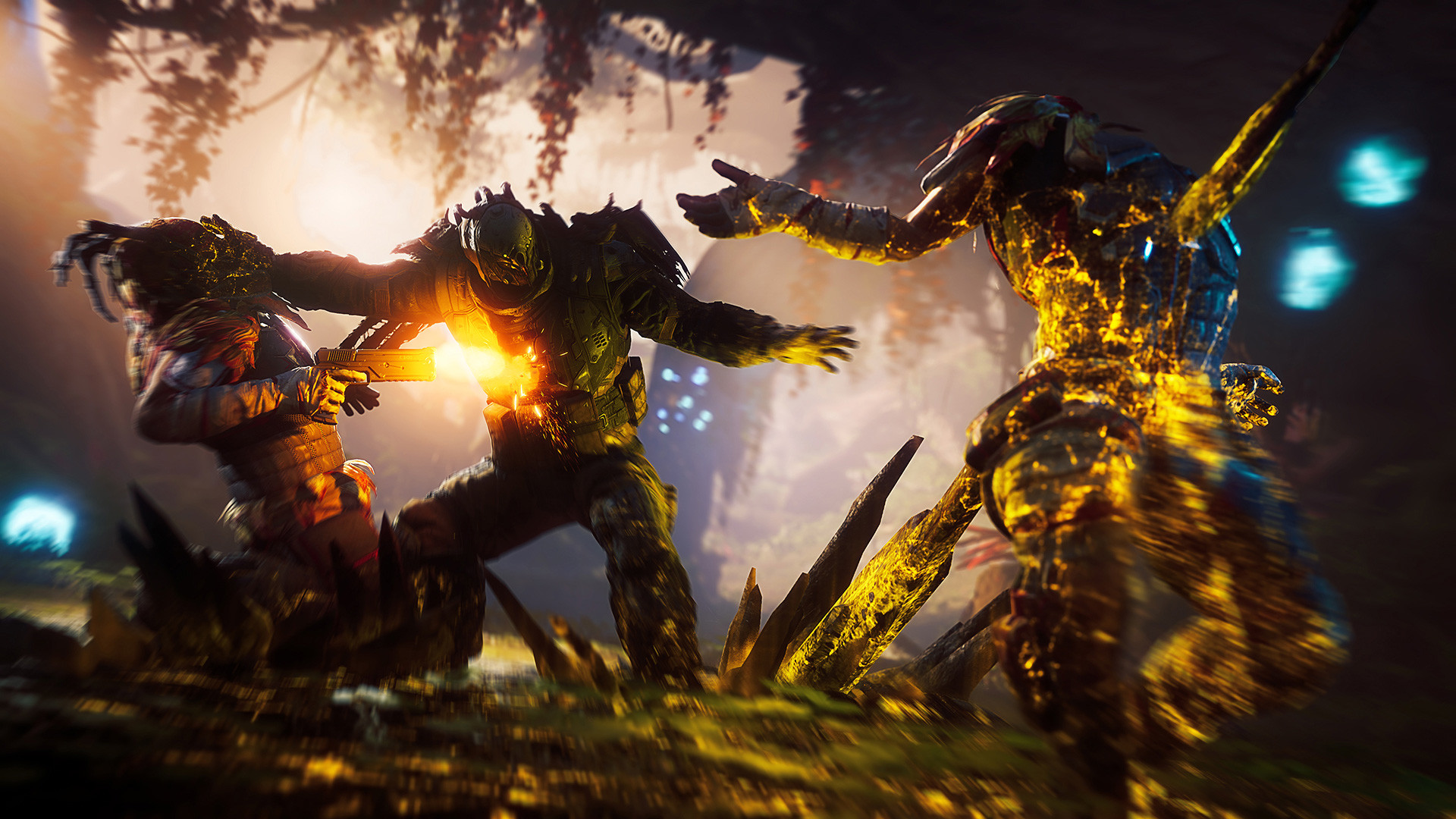
Each class has three specialization trees that let the player emphasize different aspects of its role. Class points provide passive bonuses and can be reallocated from the character menu, allowing experimentation without permanently locking the build. The active skill selection works alongside those passive routes: one loadout may center on damage, another on interruption or survival. The design encourages a relationship between a class’s powers and its equipment rather than relying on a single skill in isolation. Weapons and armor add attributes and mods that can alter behavior, while class-linked options can reinforce particular abilities. As the character gains levels, the player can refine this combination by changing the equipped skills, assigning class points and replacing gear.
Loot supplies much of the equipment progression. Enemies and exploration provide weapons and armor with different characteristics, and the player can dismantle unwanted pieces to recover resources and learn their mods for future use. Crafting with Dr. Zahedi lets the player upgrade items, change weapon variants, improve attributes or attach unlocked modifications. This turns a found item into more than a temporary replacement: a useful mod can become part of later equipment even when the original gun is dismantled. The player is continually comparing a weapon’s handling, its attributes and its attached effects against the chosen class. A status effect or ability-triggered mod can make a firearm complement powers, while armor choices can help specialize the character’s role.
Enoch’s progression combines story missions with side activities and equipment growth. The campaign leads through changing environments and hostile encounters while the player gathers loot, improves the character and unlocks further class tools. Cooperative play allows up to three Outriders to join forces, combining different powers and weapons against enemy groups; the number of players can change how much pressure an encounter places on a single character. The four class roles cover distinct distances and functions: Technomancer supports from range, Pyromancer works at medium range, Trickster attacks at close range and Devastator can absorb pressure near the front. A group can combine those roles to affect different parts of an encounter, but each player still tunes an individual class through skills and gear. The game also supports solo play, with the same class and equipment systems carrying the full combat burden for one character.
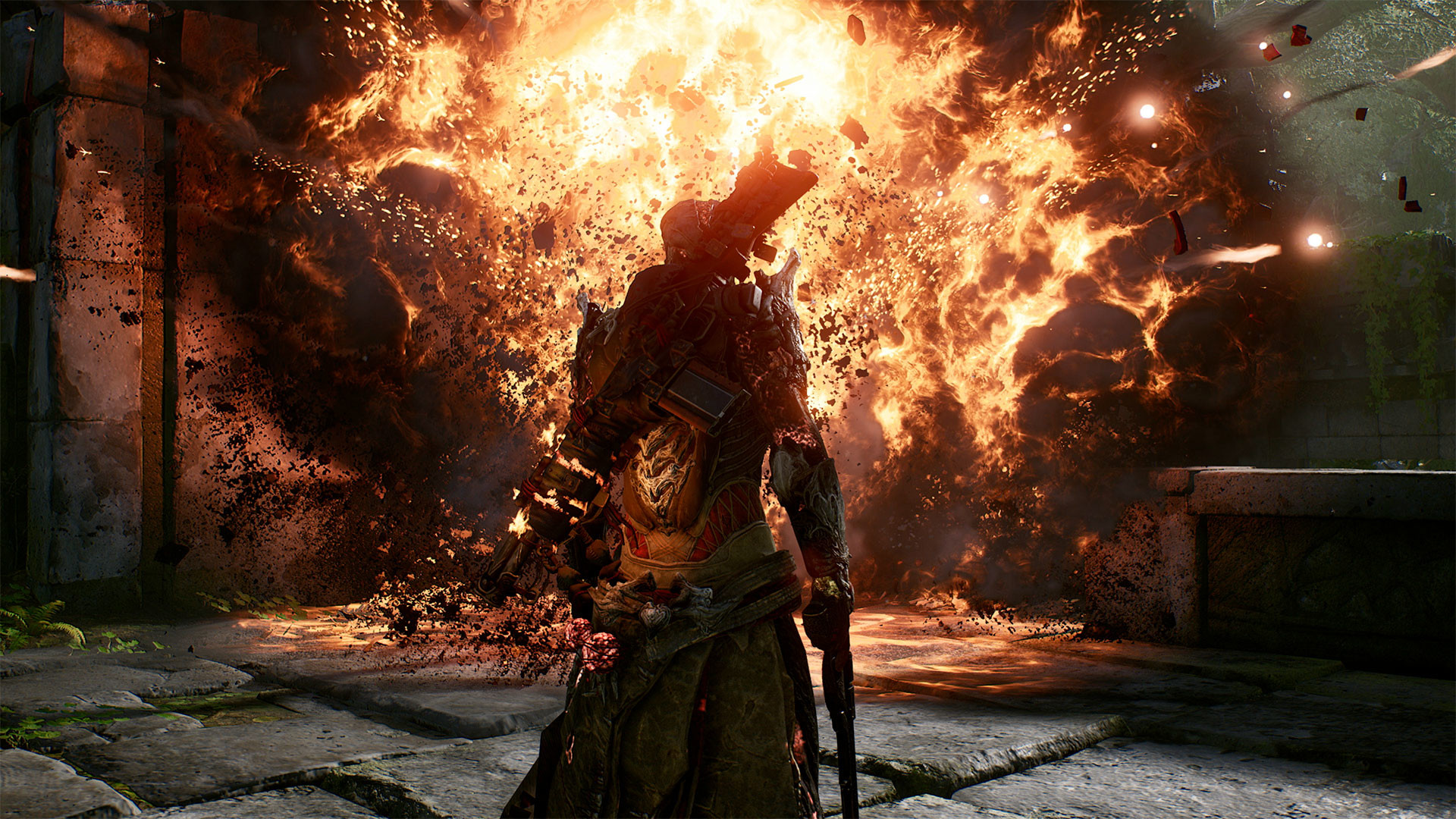
Finishing the campaign opens Expeditions, separate endgame encounters that take the Outrider beyond the main story’s sequence of missions. They give an established character more battles in which to use the abilities and equipment assembled across Enoch, with further loot providing reasons to revisit and refine that character. The free New Horizon update expanded these runs with additional Expedition maps and removed their timers, separating completion from a race against the clock. It also introduced Transmog, allowing equipment’s appearance to be changed without replacing the item’s combat properties. Those additions belong to the base game’s continuing systems; the separate Worldslayer expansion has its own campaign and progression features. The main story and the repeatable endgame consequently serve different purposes: one follows the signal, while the other extends the equipment hunt.
Four classes, hundreds of gear mods, and a second endgame bolted on by the Worldslayer expansion. Here is what you are choosing between, and what the Complete Edition actually contains.
Four classes, four instincts
The four classes are described by the abilities they give you rather than by a stat block. The Trickster is framed around assassinating, the Pyromancer around incinerating enemies, the Devastator around punishing them up close, and the Technomancer around engaging at range with heavy ordinance. That framing points at the distance each class is comfortable with rather than locking it in, so the class tells you where it wants to be, not where it is allowed to stand.
The class is really a choice about which powers you want to manage for the whole campaign, because the abilities you build around come from it. Staying alive leans on it too. The Pyromancer recovers health from enemies that die while burning, and the Technomancer leans on weapon and skill leech, so recovery is part of the class rather than a shared potion. The drop-in, drop-out co-op supports a party of up to three, and it means the group can change shape between sessions without anyone starting a new character.
The world tier is a difficulty you fine-tune
Outriders does not hand you a one-time difficulty setting and forget about it. The store describes the tiers as the way you turn up the heat once your build is perfected: a higher world tier means harder enemies and better loot, and it is also how the game gates the gear level you are allowed to equip. They are not all open from the start either, because world tiers unlock as you play, so a higher tier is a claim about a character that has earned its way up rather than a setting anyone can pick on the first day.
That makes the decision a trade rather than a preference. If your build cannot clear the tier you have selected, the better loot you were chasing sits behind gear you cannot equip yet, so the useful habit is to fix the build first and let the tier follow it. The endgame assumes you already understand the relationship between the two.
Mods are where the build actually lives
Buildcrafting runs through three systems that do different jobs. Hundreds of mods sit on your weapons and armour and change how that piece behaves, class skill trees decide which abilities you are built around, and attribute points push the numbers underneath both. Because mods attach to the gear rather than being picked once, a new drop is an opportunity rather than a replacement, and the same legendary can be pointed in a different direction.
Appearance is kept out of that argument, since gear you have collected can be applied as a look whenever you like. That means a set you like the look of never has to cost you a stat choice, which removes the one regret that usually follows a looter-shooter's best piece of armour.
Worldslayer is the second half
The Worldslayer expansion is where the progression stops being a campaign and becomes a ladder. It adds two PAX skill-tree branches to every class, extending a build toward deeper specialisation or a new hybrid rather than turning the class into a second one, and the Ascension system adds a long-term progression layer on top that you can respec freely.
Its endgame is the Trial of Tarya Gratar, and its difficulty comes from Apocalypse tiers that climb all the way to Apocalypse Tier 40, where the maximum gear level rises to 75. Each step up improves the loot and raises the chance of Apocalypse gear, and Apocalypse gear is the only gear in the game with three mod slots. The plain campaign is not forced onto the new scale either: World Tiers still apply to the original Outriders story, and only with Worldslayer installed can you run that story through the Apocalypse tiers instead.
Co-op, and the connection it needs
Outriders expects a connection. Its own system requirements list a broadband internet connection and the store lists online co-op, so this is not a purchase to make for an offline machine or a plane journey. Online co-op is also the only co-op the store lists, so there is no split-screen version to fall back on.
What you get in return is a shooter the store says plays in single-player or with up to two friends in seamless drop-in, drop-out co-op, with the same structure across the campaign, the Expeditions and the Trials, so the number of players is a preference rather than a separate mode. The game is still sold and still listed as online co-op; beyond those store facts we make no claim about the current health of its live service.
What the Complete Edition is
On PC the sensible question is which version to buy, because the store sells the base game and the Complete Edition side by side. The Complete Edition collects the base game, the Worldslayer expansion, the Hell's Rangers content pack and five exclusive emotes in one purchase.
You do not have to buy the bundle to reach the endgame, though. Worldslayer is also sold on its own as an upgrade and Hell's Rangers as a separate content pack, so an owner of the base game can add the expansion without repurchasing the campaign. Those are the only add-ons the store lists for the game, so there is no third expansion waiting behind a season pass, and a free demo is available if you want to test the shooting before committing to the tier climb.
Should you play it
Yes, if you want a shooter where the build is the game and the difficulty is something you take responsibility for. The class decision is the one that shapes everything after it, so pick the distance you already enjoy rather than the one that looks strongest, and expect to spend real time in the mod screen.
Two things to settle first. Confirm your connection is good enough for an online co-op shooter, because the requirement is written into the game's own system specs. And if the long endgame is what you want, Worldslayer is the purchase that matters, whether that means the Complete Edition from nothing or the standalone upgrade on a base game you already own.
Go deeper with V4mp
- Developer
- People Can Fly
- Genre
- Co-op RPG shooter
Explore OUTRIDERS further
Explore the wiki for detailed reference pages on the game's world, systems, items and locations.