
About Outlast 2
Investigative journalists Blake and Lynn Langermann follow a murder story into the Arizona desert, where a helicopter crash separates them near Temple Gate. As Blake searches for Lynn and pursues the case, survival depends on reading dangerous surroundings, managing his camcorder, and choosing when to hide or move through the settlement.
Outlast 2 follows Blake Langermann, a cameraman who works with his wife, investigative journalist Lynn. The pair travel into the Arizona desert while following a story that begins with the apparently impossible murder of a pregnant woman known as Jane Doe. A helicopter crash strands them in remote country and separates Blake from Lynn. The case quickly becomes personal: he has to find her while trying to understand the people and events around the crash. The premise puts a journalist accustomed to recording evidence in a place where observation can be dangerous, and where the people at the centre of the story do not welcome an outsider asking questions.
The wilderness surrounding Temple Gate is not an empty stretch between story scenes. It is the territory of a remote community led by Sullivan Knoth, whose followers have withdrawn from ordinary society and are preparing for the end times. The settlement’s isolation lets Knoth’s beliefs shape the rules of daily life, while the desert makes it difficult for Blake to find help or a clear route back to Lynn. The game moves through rural spaces and the settlement as the investigation draws him further into this closed world. Its central tension comes from the contrast between the journalists’ search for an account of what happened and a community organized around religious certainty and fear.
Blake has a camcorder, but it does not turn him into an armed investigator. The experience is built around survival and evasion: he watches, listens, and looks for routes through dangerous areas, then decides whether to keep moving or use a hiding place. Darkness can conceal both a path and a threat, so the camera’s night vision helps him read what he cannot see unaided. The camera’s sound-tracking function can help locate activity beyond his view. These tools have a practical cost because their use drains battery power, making them resources to manage rather than an always-on solution. The player alternates between gathering enough information to proceed and conserving the equipment needed for later dark spaces.
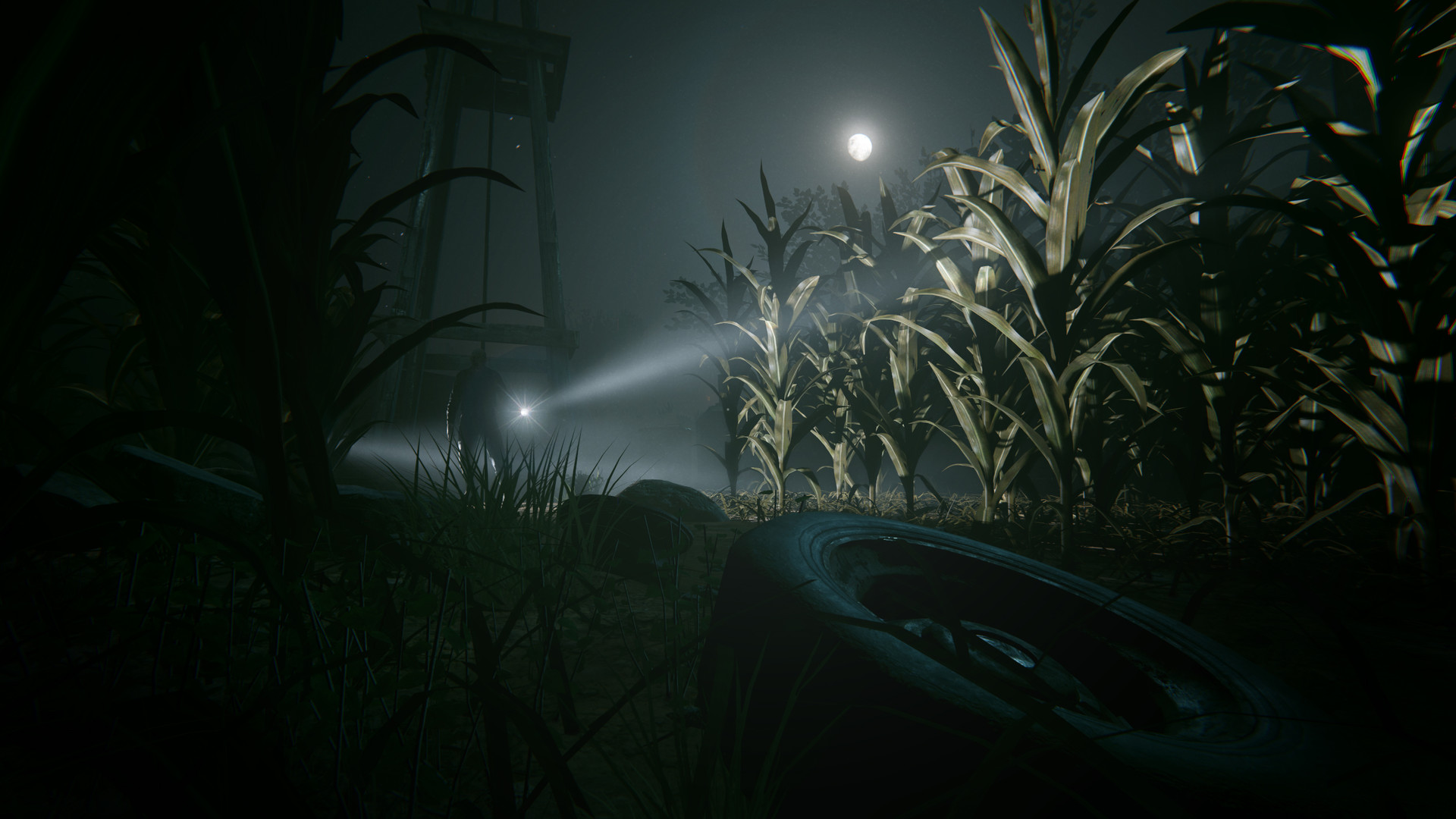
The camera also suits Blake’s role in the story. His work with Lynn is investigative, and the case begins with clues around Jane Doe’s death. Looking closely at a place can reveal what happened there, while keeping the camera ready can help him orient himself when the landscape or buildings obscure a threat. Yet recording and investigating do not remove the danger of being discovered. The player has to decide when an uncertain sound warrants checking with the microphone, when a patch of darkness calls for night vision, and when the safer choice is to wait or retreat. In this way, observation is both a narrative habit and a limited survival aid: it gives Blake information, but it cannot guarantee control over what he finds.
Temple Gate’s people are not presented as a single undifferentiated threat. Knoth’s authority gives the settlement a visible centre, while his followers make the community’s end-times expectations tangible. The game’s images of chapels, fields, improvised rural structures, and the surrounding wilderness reinforce how belief and geography overlap. Blake is not arriving with an established understanding of this group; he pieces together the situation while trying to locate Lynn. The search therefore develops through movement between exposed outdoor routes and enclosed spaces where clues, danger, and the settlement’s daily world can converge. The story keeps its focus on the Langermanns and this Arizona setting rather than continuing the first Outlast game’s cast and location.
Progress is shaped by pursuit and navigation rather than combat. Blake has to judge spaces for possible cover, use shadows and hiding places when an enemy is close, and move again when remaining still no longer seems safe. The camcorder can clarify a dark route or help him listen for movement, but relying on it indiscriminately shortens the time before he needs another battery. This creates a repeated rhythm of assessing the space, choosing the information tool that fits the moment, and acting on a partial picture. The situation can shift from searching for a lead to escaping danger without warning, so careful observation and quick movement serve different needs within the same investigation.
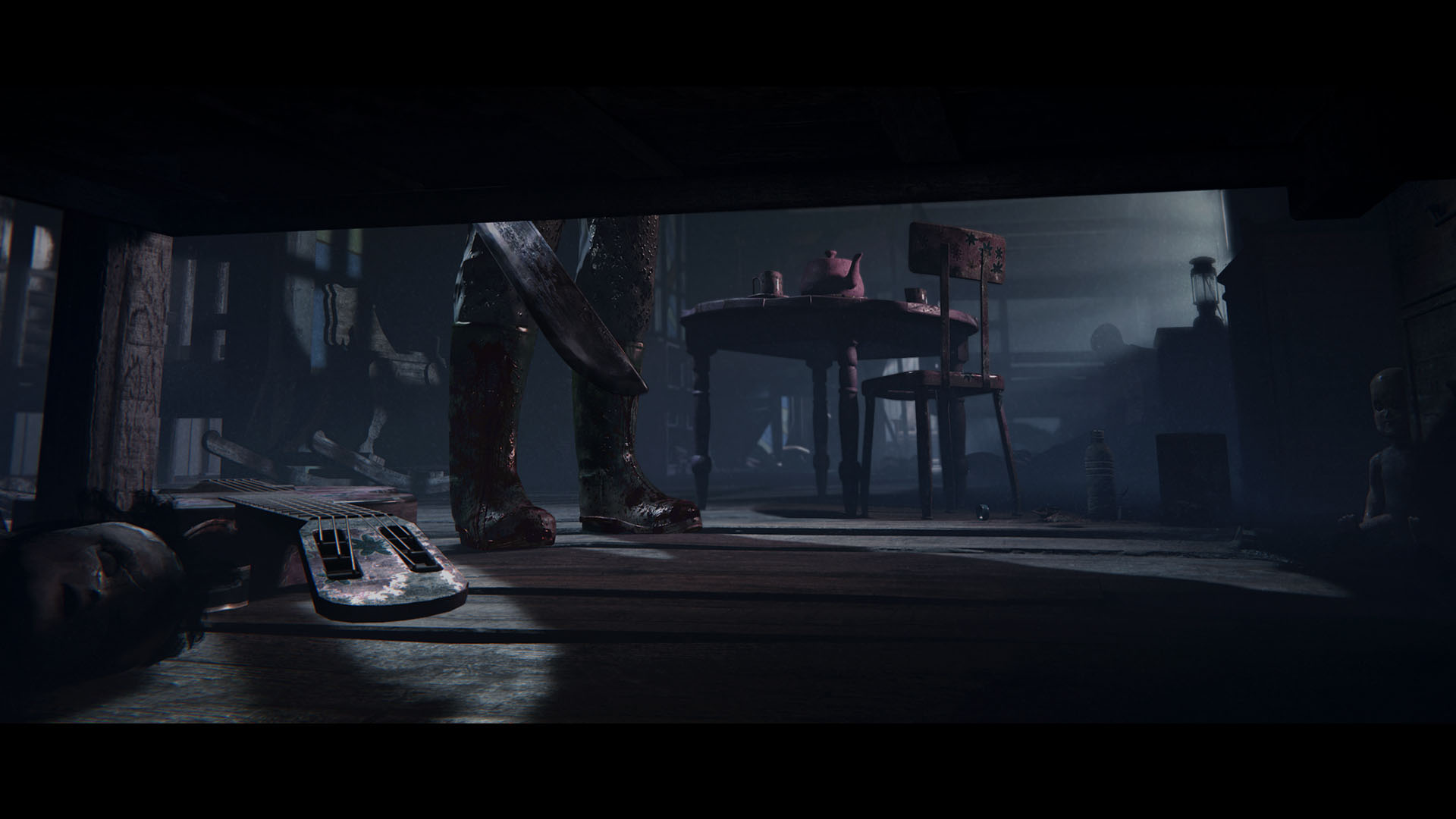
The story’s scope stays with Blake’s attempt to reach Lynn and understand the trail that brought them to Temple Gate. That investigation places a missing partner, a murdered stranger, Knoth’s isolated community, and the Arizona wilderness in the same unfolding crisis. The player follows the evidence Blake encounters while navigating spaces shaped by the settlement and by the physical risks of being alone in hostile country. Night vision and sound tracking can make the camcorder useful, but battery limits prevent it from erasing uncertainty. Outlast 2 turns that uncertainty into its basic survival problem: Blake must keep looking for answers while deciding how much attention he can safely spend on each new threat.
Outlast 2 is a single-player survival-horror game set in the same universe as the original Outlast, with a different cast and setting. Its action follows Blake’s search through the desert and Temple Gate rather than the earlier game’s asylum investigation. The player’s practical tasks are to read the environment, use the camera selectively, follow clues, and get through dangerous encounters without treating the camcorder as a weapon. The resulting story joins a journalistic investigation to a survival structure: the more Blake learns about the murder and the community, the farther he is pulled into a place where ordinary access to help has disappeared.
- Developer
- Red Barrels
- Genre
- Single-player survival horror