
About Outer Wilds
Join Outer Wilds Ventures as a new Hearthian astronaut and explore a compact solar system caught in a repeating time loop. Fly between changing worlds, use your tools to investigate Nomai ruins, and piece together clues about the system’s past and the strange events unfolding around you.
Outer Wilds begins in the Village on Timber Hearth, where the Hearthian space program is preparing to send you on your first expedition. Before leaving, you collect launch codes from Hornfels at the observatory and can talk with the villagers who have helped build Outer Wilds Ventures. The astronaut you play is equipped with a translator for Nomai writing, developed with your friend Hal, giving the trip a clear purpose: learn what happened to the ancient civilization whose ruins and technology are scattered across the system. A signalscope, scout launcher, spacesuit and small ship turn that curiosity into practical work. You can tune in to distant travelers, fire a probe ahead to photograph a place, and leave Timber Hearth to follow whichever clue has caught your attention.
The planets are close enough to see from orbit, but each asks you to approach it differently. The Hourglass Twins exchange sand over time: Ember Twin’s passages gradually fill while structures on Ash Twin emerge. On Brittle Hollow, impacts from the volcanic moon Hollow’s Lantern break pieces of the crust away, exposing new routes and dropping terrain toward the black hole below. Giant’s Deep is an ocean world ringed with storms and floating islands; Timber Hearth has familiar forests and geysers, while its moon, the Attlerock, offers a nearby first landing. These places are not static destinations. Their hazards and accessible paths change as the loop progresses, so arriving early or late can alter which rooms you can reach and what you can safely investigate.
Flying is part of the exploration rather than a menu choice. The ship moves through a physically simulated solar system, and thrust continues to matter after you stop pressing a control; approaching a planet means managing momentum as well as direction. You can use the ship’s log to review leads and select a known destination, then pilot toward it, land, and continue on foot in the spacesuit. Small bodies have little or no gravity, so walking over a surface may become a controlled drift. Oxygen and suit fuel put limits on how long you can remain away from the ship, while rough landings can damage the craft. The scout launcher helps you inspect a surface, check a hazard or keep a remote view of a location, but it does not replace going there yourself.
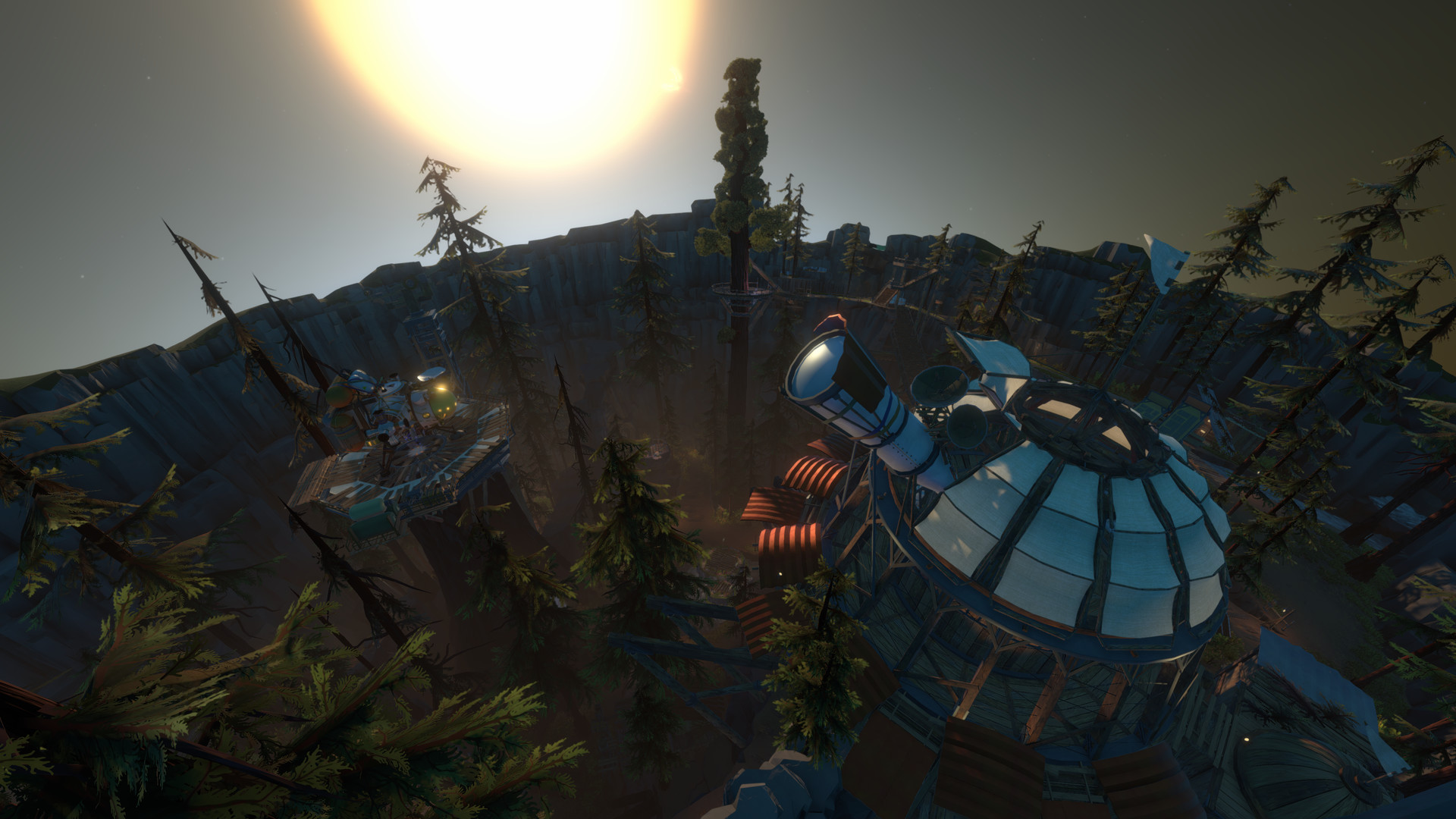
Nomai writing is one way to find a lead; sound is another. The signalscope lets you search for a transmission and then investigate its source, and some discoveries reveal a signal type that helps you locate related places elsewhere in the system. Finding one quantum signal can give you a way to search for related quantum locations elsewhere in the system. A sound can also be misleading at first. It may seem to come from a nearby rock when its source is actually on the far side of a planet, so turning the scope and listening from another position helps you work out where to travel. That makes the instrument useful for setting a destination, not just checking an object already in front of you.
The time loop changes how you approach a destination because its paths are part of the environment. On the Hourglass Twins, a route into Ember Twin’s caves can be lost as sand arrives, while Ash Twin’s towers become accessible as the exchange continues. Brittle Hollow’s surface is reshaped by impacts from Hollow’s Lantern, so the landing you make early in an expedition may not lead to the same walk later. The useful decision is often when to go as much as where: you can follow a lead to a planet, inspect the route you need, and decide whether to act now or return when the landscape shifts. Watching the landscape shows you when a route opens or closes.
The equipment supports observation, navigation and small experiments. A signalscope can distinguish transmissions and help you home in on one of the other Hearthian travelers; the scout can take pictures, measure the environment and reveal features that are difficult to see directly. Nomai mechanisms often respond to how you look at or move through a place, so careful observation matters as much as reaching a room. You may need to inspect the shape of a ruin, notice how a path changes, or compare a machine with instructions found elsewhere. The tools make it possible to ask better questions, while the hazards ensure that exploration remains physical: oxygen runs down, unstable ground can disappear, and unfamiliar terrain can turn a short trip into a hurried return to the ship.
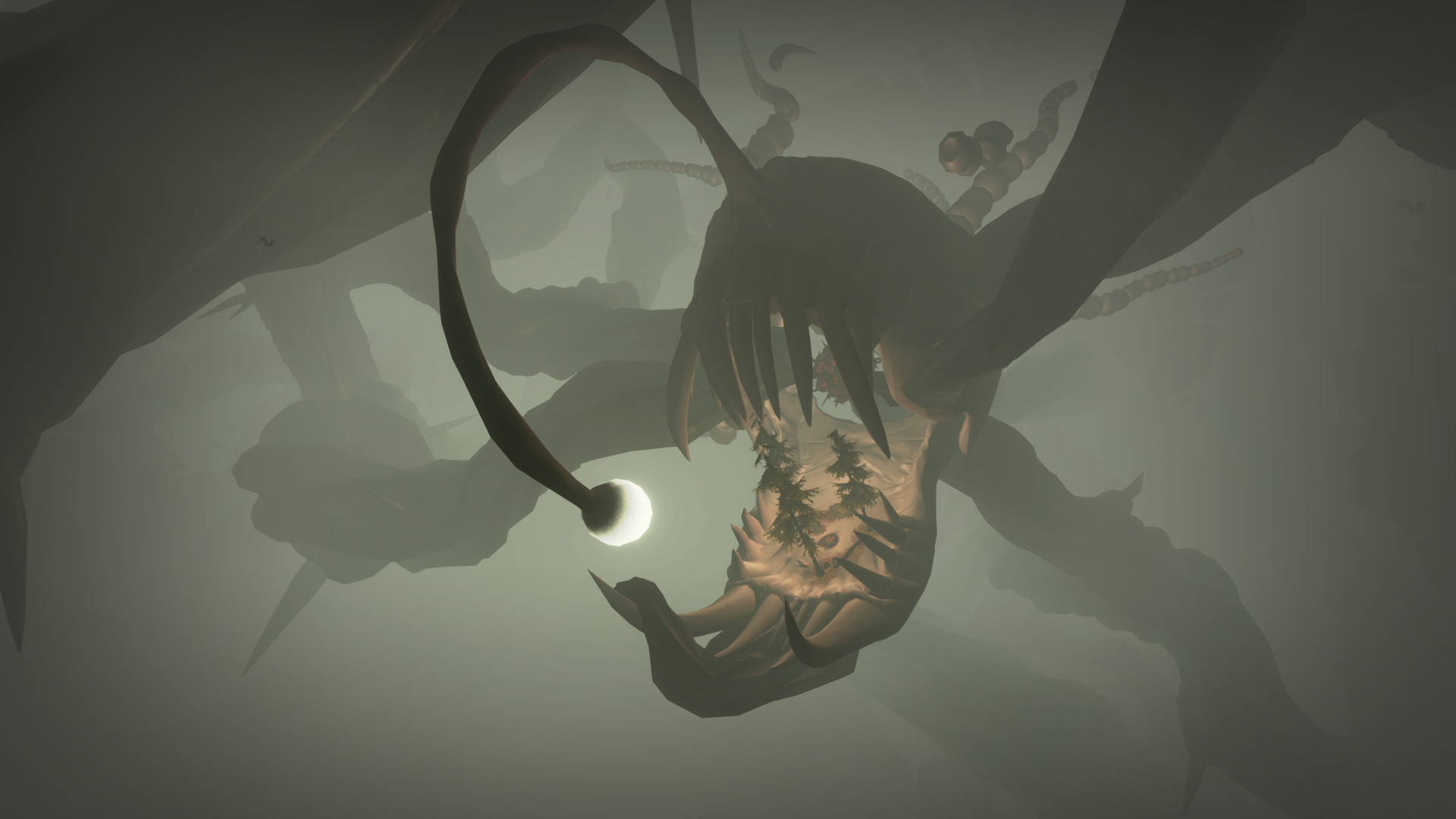
Nomai machinery adds another layer to moving through those places. The ruins use visual devices rather than familiar switches: in some locations, looking at an orb can activate technology, and tractor beams and gravity crystals shape how you cross a room or reach a higher path. The translator tells you what Nomai researchers wrote about their work, while the machinery shows how their ideas were built into the architecture. That combination gives a room several kinds of evidence to inspect: text, devices, paths and the way the surrounding planet behaves. You still have to pilot, land and manage the suit yourself, but reading an instruction elsewhere can change how you interpret a mechanism when you encounter it.
- Developer
- Mobius Digital
- Genre
- First-person space exploration adventure / open-world mystery