
About Ori and the Will of the Wisps
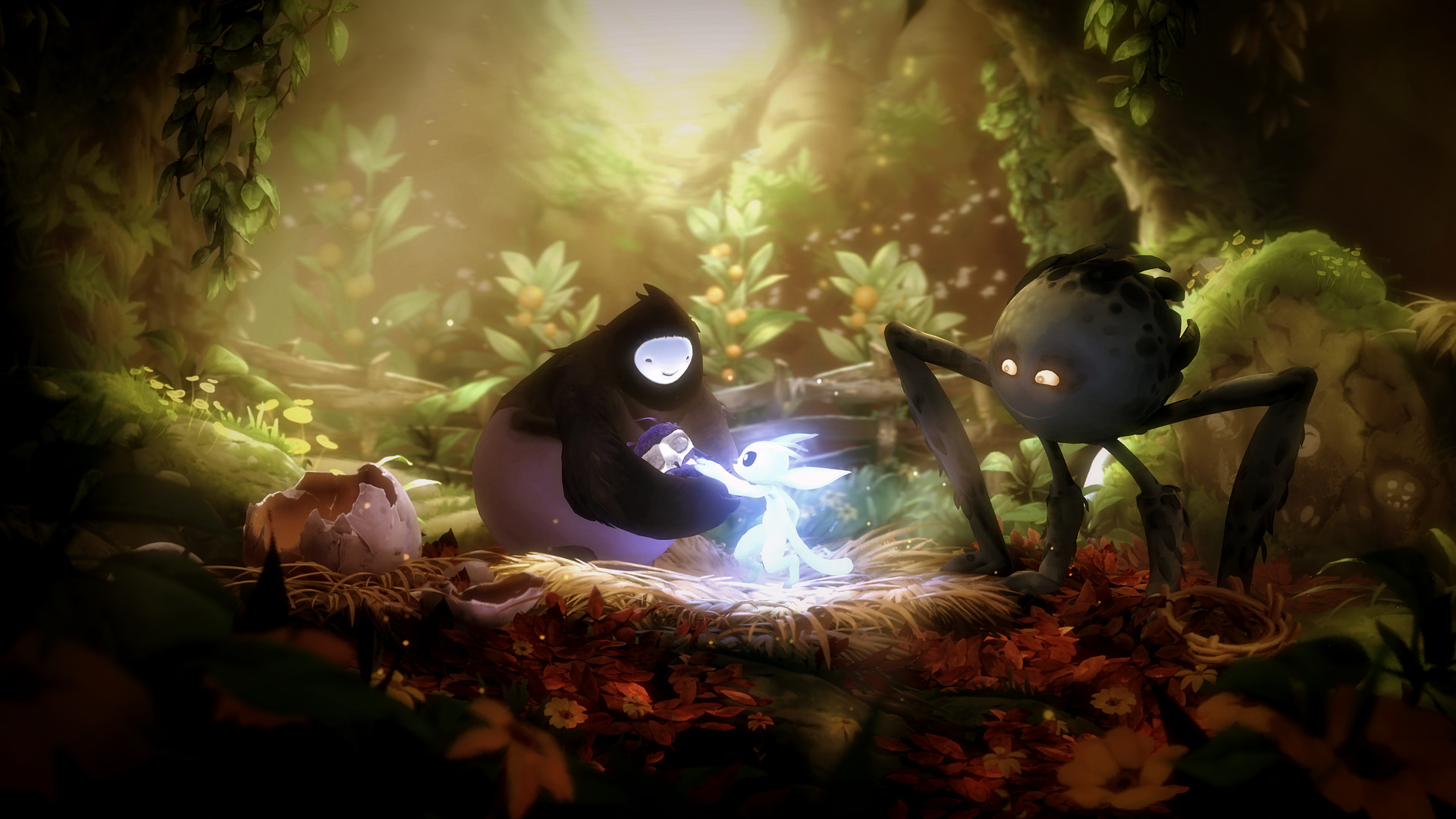
Ori and the Will of the Wisps follows the spirit Ori into the Forest of Niwen after a flight puts the young owlet Ku in danger and separates their family. Explore a connected world, learn movement abilities, fight with spirit weapons and customize Ori with Spirit Shards while searching for a way to reunite the family and heal the land.
Ori and the Will of the Wisps is a story-led action platformer about the spirit Ori and a journey through the Forest of Niwen. Its opening follows Ori’s bond with Ku, a young owlet born into Ori’s adoptive family. A fateful flight puts Ku in danger and separates the family, giving Ori a reason to set out across Niwen. The journey includes finding a way to bring the family back together and heal a broken land. Moon Studios developed the game as a sequel to Ori and the Blind Forest, with Xbox Game Studios as publisher. Niwen is presented through hand-painted environments, new friends and foes, and puzzles, while the original score is fully orchestrated.
The route through Niwen mixes travel with encounters with its inhabitants. Ori meets characters who can offer help and optional tasks alongside the search for Ku. One quest follows a trade sequence, while the Wellspring Glades has projects for Ori to complete, creating local objectives away from the main path. Puzzles and environmental obstacles interrupt the journey between these character moments, so finding the way onward often means looking across an area rather than following a straight corridor.
Ori’s movement develops beyond ordinary jumps as new abilities change which surfaces and objects can be used. Double Jump adds a second lift in the air, while Dash provides a horizontal burst. Grapple pulls Ori toward suitable hooks and blue moss, turning a point above a gap into a way across it. Bash works differently: it launches Ori away from a nearby lantern, enemy or projectile, and sends a projectile in the opposite direction. An incoming shot can therefore become something to use for movement or redirect toward a threat. Burrow makes sand traversable, allowing Ori to move through it and burst onward, while Swim Dash extends mobility underwater. These actions give different parts of Niwen their own ways of being crossed. A ledge, a hanging object and a sandy passage each ask for a different response, and gaining the relevant ability provides a reason to return to an obstacle encountered earlier.
Combat builds on that mobility with a selection of spirit weapons. Spirit Edge provides close-range blade combinations, Spirit Arc fires arrows of light, and Spirit Smash delivers a heavier sweeping strike. Their different reach and timing let Ori attack nearby enemies, reach a threat above a platform or commit to a slower blow. The terrain remains part of the encounter: a narrow ledge limits where Ori can land, while a projectile may offer an opportunity to Bash away or send it back. Spirit Shards modify abilities and can be equipped in a chosen combination, giving the player another way to adjust the tools already available. The game also has Easy, Normal and Hard difficulty settings. Boss battles bring larger threats into the journey, while escape sequences place the emphasis on moving through hazards under pressure. These situations use the developing movement kit alongside the attacks, so learning to cross an area and learning to survive in it often involve the same actions.
Exploration feeds into progression through pickups, merchants and ability improvements. Health and energy capacity have their own upgrades, while Spirit Light serves as currency to expand abilities or buy a map from Lupo, a merchant. Maps help make a large region legible, and optional branches can lead to resources that improve Ori rather than simply marking a collectible checklist. Unlocking and upgrading abilities, opening additional shard slots, and increasing life and energy are distinct progression goals. More shard slots let Ori carry a wider selection of effects at once, while finding and upgrading the Shards expands which effects are available to choose from.
Active abilities and Spirit Shards serve different roles. The ability wheel lets the player assign three actions for quick use, and those assignments can be changed as the situation demands; acquiring more attacks does not mean keeping every one on the same controls at once. Regenerate spends Energy to restore Life, making the two reserves connected rather than interchangeable. Energy is also used by powers such as Spike and Sentry, so healing and those attacks draw on a shared resource. Opher sells additional abilities and improvements for Spirit Light, including tools with different behaviour from the starting blade. A purchase can expand the available actions, while the equipped selection determines which are immediately ready. This gives the journey a practical preparation step: choose the abilities needed for the route or fight ahead, then reconsider that selection when a new obstacle appears.
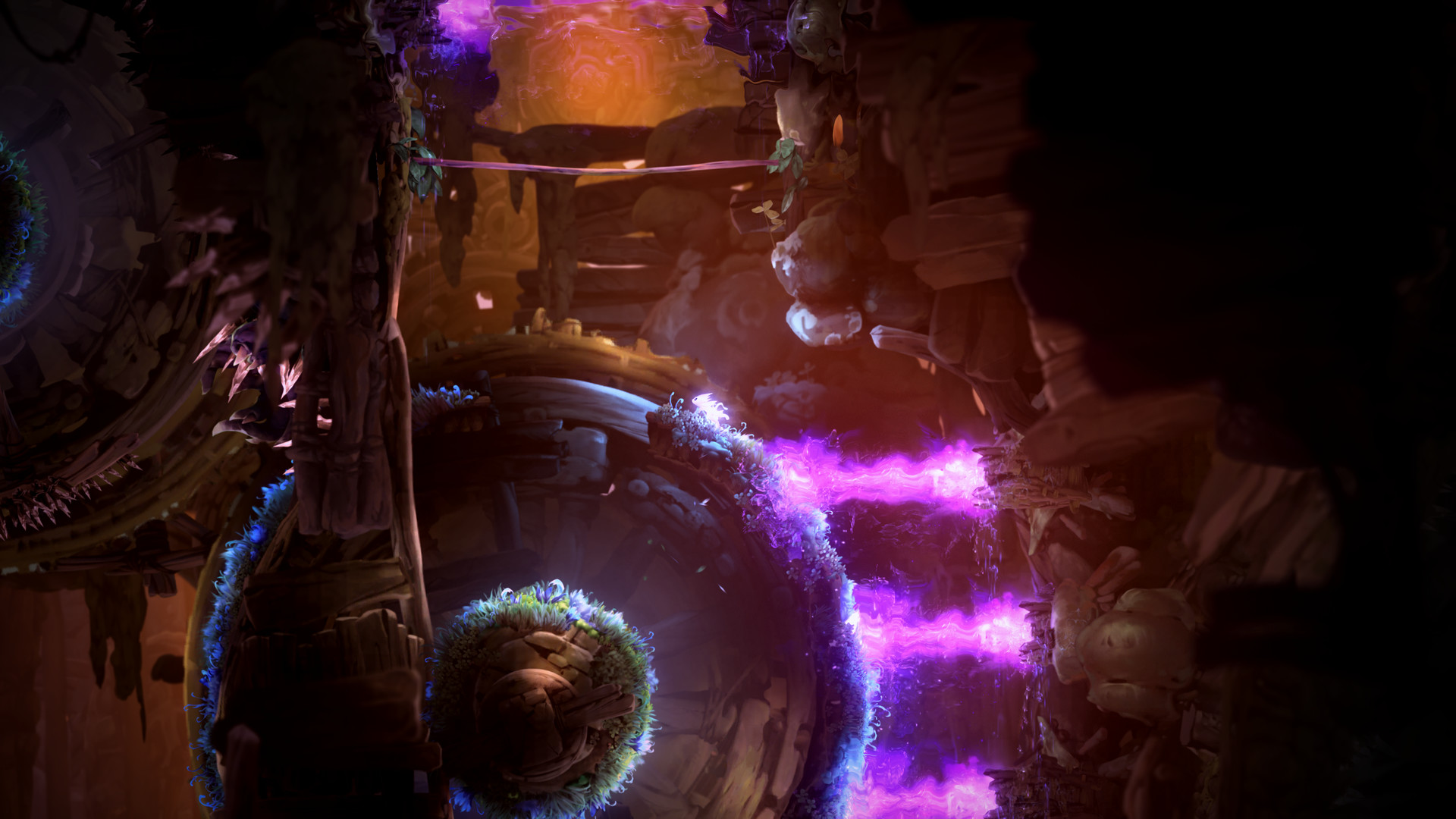
The optional trials focus on two different skills. Spirit Shrines stage timed battles against increasingly challenging waves of enemies and award rewards for completion. Spirit Trials set a speed-run route and compare times on leaderboards, turning movement skills into a race. One tests whether Ori can survive successive waves; the other tracks how quickly the player can carry momentum through a course.
- Developer
- Moon Studios GmbH
- Genre
- Action platformer