
About Open Roads
Sixteen-year-old Tess Devine and her mother, Opal, find old letters that send them across Michigan toward the Canadian border. In abandoned family houses, Tess examines the things people left behind and asks Opal what she knows. Open Roads turns a possible treasure hunt into a story about mothers, daughters and the lives they kept from each other.
A fall afternoon in 2003 leaves Tess Devine and her mother, Opal, sorting through family possessions. Hidden notes and letters in the attic point toward burglaries, a possible fortune and a past Opal has little reason to revisit. Tess is sixteen, old enough to question the version of family history she has inherited but still dependent on the person who has been telling it. The pair take the car through Michigan toward the Canadian border and stop at properties once occupied by relatives. Each empty room gives them a way into a different period of that family’s life. The immediate question may be what a letter means or where the next clue leads, but the more persistent question is why Opal responds to some discoveries with recognition and to others with silence. Open Roads places Tess in the awkward position of learning about a parent as a person with experiences before parenthood. Opal, meanwhile, travels beside a daughter who is beginning to make judgments and decisions beyond her control. The mystery matters because it keeps putting these two perspectives into the same car and the same rooms, where neither can simply set a difficult conversation aside.
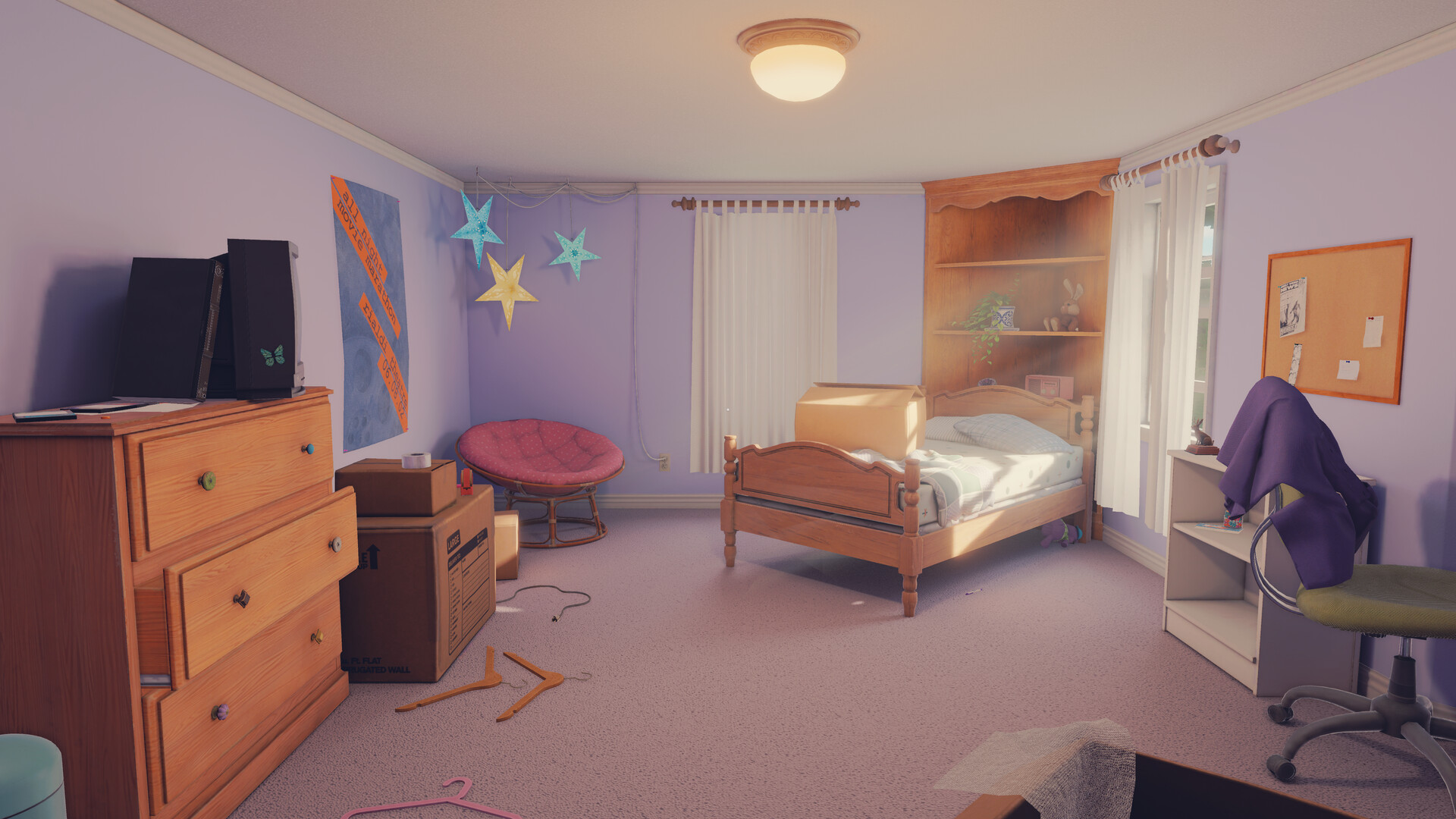
The journey is built around stops rather than an open highway to drive. Tess can move through domestic spaces in first person, look closely at photographs, papers and ordinary belongings, and decide which threads of a room to pursue. An abandoned family property is not merely a backdrop for a key item; the arrangement of its objects suggests the habits, hopes and omissions of people who no longer live there. A note may advance the search, while something apparently incidental can alter the picture of the person who wrote it. A player can follow the necessary clues, but inspecting more of the environment supplies context that makes later exchanges with Opal feel different. Sometimes Opal adds an explanation when Tess notices an object; sometimes she is evasive, which is itself information about what the place means to her. The first-person viewpoint makes examining a thing a physical act rather than a detached entry in a database. A photograph can be turned over, a container inspected, a printed detail seen close enough to invite another question. There is no combat loop or equipment build competing for attention. Looking and asking are the actions by which Tess makes progress.
Conversation gives that exploration a second voice. Tess can raise discoveries with Opal and choose how to respond, but these choices are not an invitation to invent an entirely different protagonist. Tess has an established personality and an established relationship with her mother. A chosen line changes how she navigates a particular moment, what aspect of a subject she presses and how openly she approaches Opal. It does not promise a new identity for Tess or a radically separate ending for every answer. This narrower scale suits a story about two people who know one another well enough to recognise a deflection. Their conversation can have humour and routine irritation alongside the weightier family disclosures. Opal may know the answer to a question Tess has only just learned to ask, yet a long drive does not automatically make that answer easy to give. In the game’s car scenes, the player can listen to the radio and talk while Opal drives. The travel time becomes a change of pace between searching rooms: the findings from one place have to be carried into the next, and the two women are left together with whatever has just been said.
That rhythm also keeps the early promise of a hidden fortune in proportion. The letters suggest an adventure with a destination and a prize, but the places along the way are full of quieter evidence about the family. The people who occupied them made choices that Tess and Opal understand from different distances. Tess can interpret an object as a fresh clue; Opal may remember the person, the argument or the years in which it belonged. The road trip mystery stays close to the mother-daughter relationship, so searching and conversation become two parts of the same action. Picking up a piece of evidence is not only a step toward the next address; it creates an opportunity to discover whether the two travelers agree about what their relatives were like. Even when a room is no longer inhabited, it is rarely empty of personality. Period furniture, old paperwork and household odds and ends make the family’s earlier decades visible without sending Tess physically into the past. One destination retains a markedly older appearance, allowing her to encounter the traces of an era that otherwise survives only in Opal’s memories.
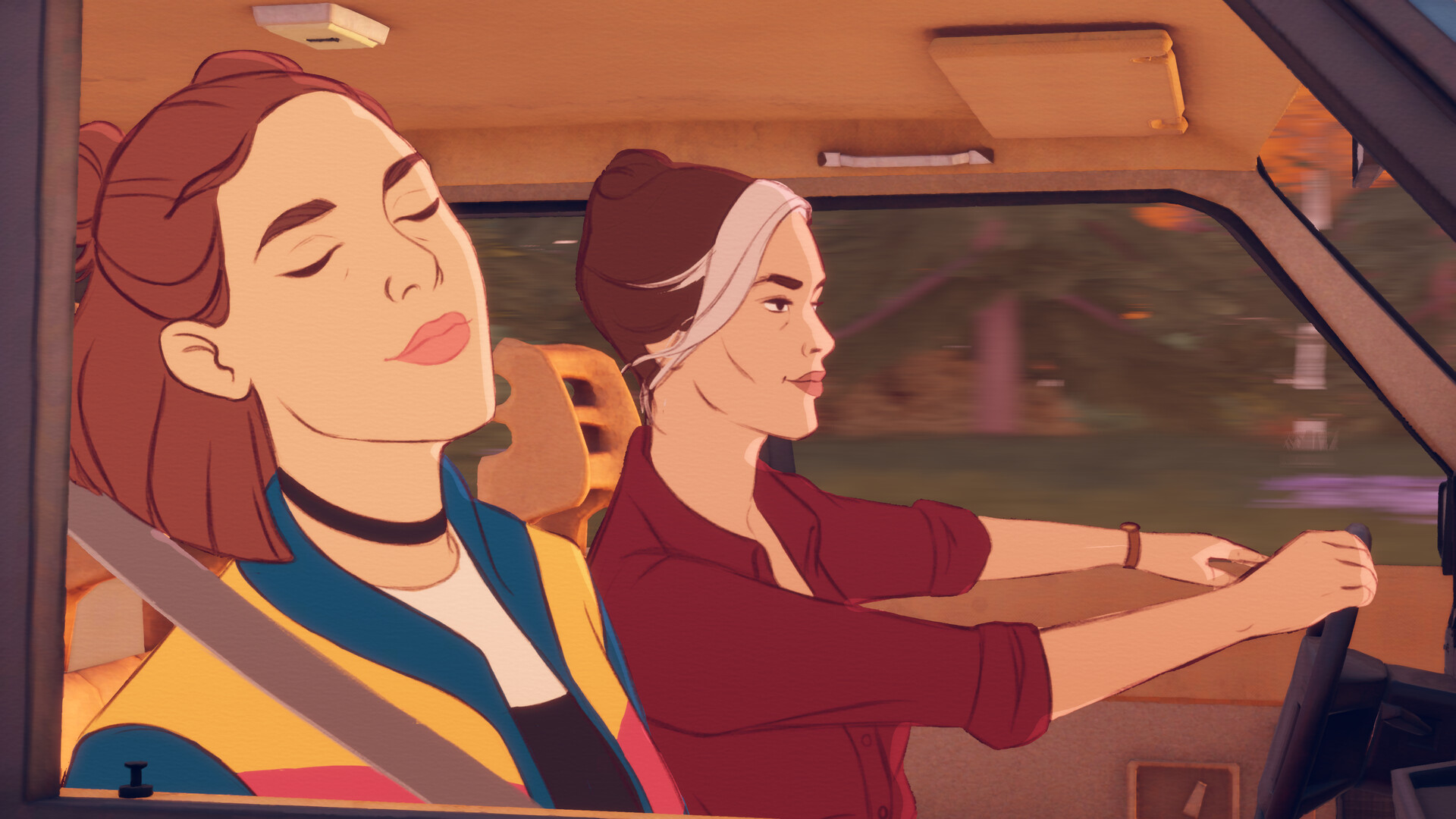
Open Roads makes the contrast between seeing and remembering visible in its art. Tess explores detailed three-dimensional environments from a first-person perspective, while the people she meets appear as hand-animated two-dimensional characters. This is more than a decorative division between background and portrait. Objects are examinable and textured, close enough for the player to notice a small mark or a line of writing; a few drawn frames carry the expression of a person in conversation. Coordinated colour and surface texture make those parts feel as if they belong to the same space. Tess may hold a photograph up to the camera and turn it to find what is on the back, then speak to an illustrated Opal who has her own reaction to what was found. In the car, the contrast is especially apparent: Opal is a drawn figure operating within a three-dimensional vehicle rather than a portrait isolated in a dialogue box. The blending of forms draws attention to the different ways evidence and memory reach Tess. One can be handled and inspected; the other has to be asked for, listened to and sometimes questioned.
The performances make that difference personal. Kaitlyn Dever voices Tess, and Keri Russell voices Opal, lending the conversations a continuity that a sequence of written clues alone could not provide. Their characters do not begin as strangers or sworn enemies. Their relationship already contains familiarity, affection and jokes, even before a buried family story gives them new reasons to disagree. Tess has her own interests and an emerging sense of what she wants, while Opal has lived through disappointments and decisions her daughter has not yet had a chance to understand. A found object can therefore change the subject of a conversation without changing the basic fact that they must continue travelling together. The game is set in a particular pre-smartphone moment, with radio, paper records and physical family possessions doing narrative work that a modern search history might otherwise perform. An old letter can sit unanswered for years; a family house can hold the evidence of an argument long after everyone involved has left. As Tess examines those traces, Opal remains close enough to explain them and free enough to refuse. The same physical evidence can sound different when Tess reads it alone or hears the memory Opal attaches to it. Neither a tidy family legend nor a single recovered object can contain everything that happened in those rooms. That is the tension carrying the trip from one stop to the next: Tess enters a place, sees what was left, and decides how to speak to the person who drove there with her.
- Developer
- Open Roads Team (release credit)
- Genre
- Single-player narrative adventure