
About Ooblets
Restore a farm in Badgetown, grow crops and ooblets, and settle challenges through card-based dance-offs. Help Mayor Tinstle and the town’s residents, build a team with distinct moves, and travel across Oob for new creatures, recipes and crops. Farming, friendship, tournaments, a player shop and minigames continue beyond the main story.
Ooblets begins when the player arrives in Badgetown, a seaside settlement in Oob, and takes on a rundown farm. Mayor Tinstle introduces the town and its needs; familiar residents include Rugnolia, Outgrid, Videon, Millew and Taffy. The community’s strange little creatures, ooblets, are grown from seeds and can follow the player around town. Rather than isolating creature collecting into a separate adventure, the game ties it to the daily work of farming, crafting, friendship and local challenges. The farm is a home base and a production site, while Badgetown provides shops, requests and social encounters. The main story concerns fixing problems around town and confronting a larger threat, then carries the player through a mystery that reaches beyond the starting settlement. New regions introduce additional characters, crops, recipes and ooblet species. The story has a defined ending, but the activities of tending land, collecting creatures, decorating and completing challenges can continue afterward.
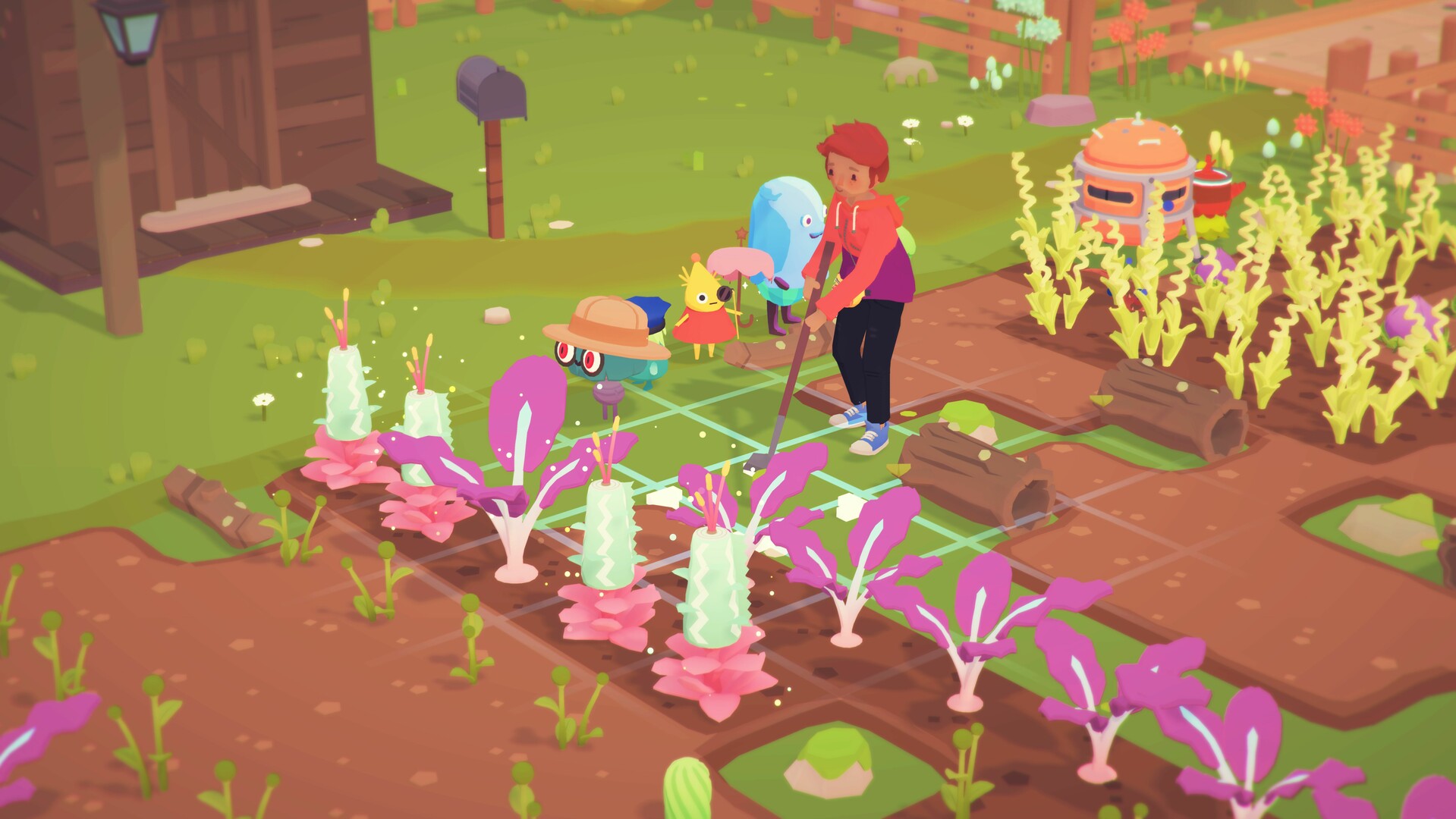
The farm supplies much of what the player needs elsewhere. Plots are cultivated, crops planted and harvested, and materials can be used in machines or cooking. Produce can be sold in town or turned into treabies, a food category connected to inviting wild ooblets into dance-offs. Seeds won from wild creatures are planted and grow into new companions, so farm planning contributes directly to team growth. Ooblets can also be assigned to oobcoops, where they assist with farm work; coop upgrades expand the kinds of work they can do. That creates several competing uses for time and harvests: sell goods for money, process ingredients, cook useful food, answer requests or grow a new creature. Home and farm decoration provide a more personal reward for collecting furniture and decor. Character customization adds hair, clothing, hats and accessories, so progress can change both the farm’s appearance and the player’s look. The farm is therefore not simply a quiet interlude between battles: its crops and companions feed the game’s social, economic and collection systems.
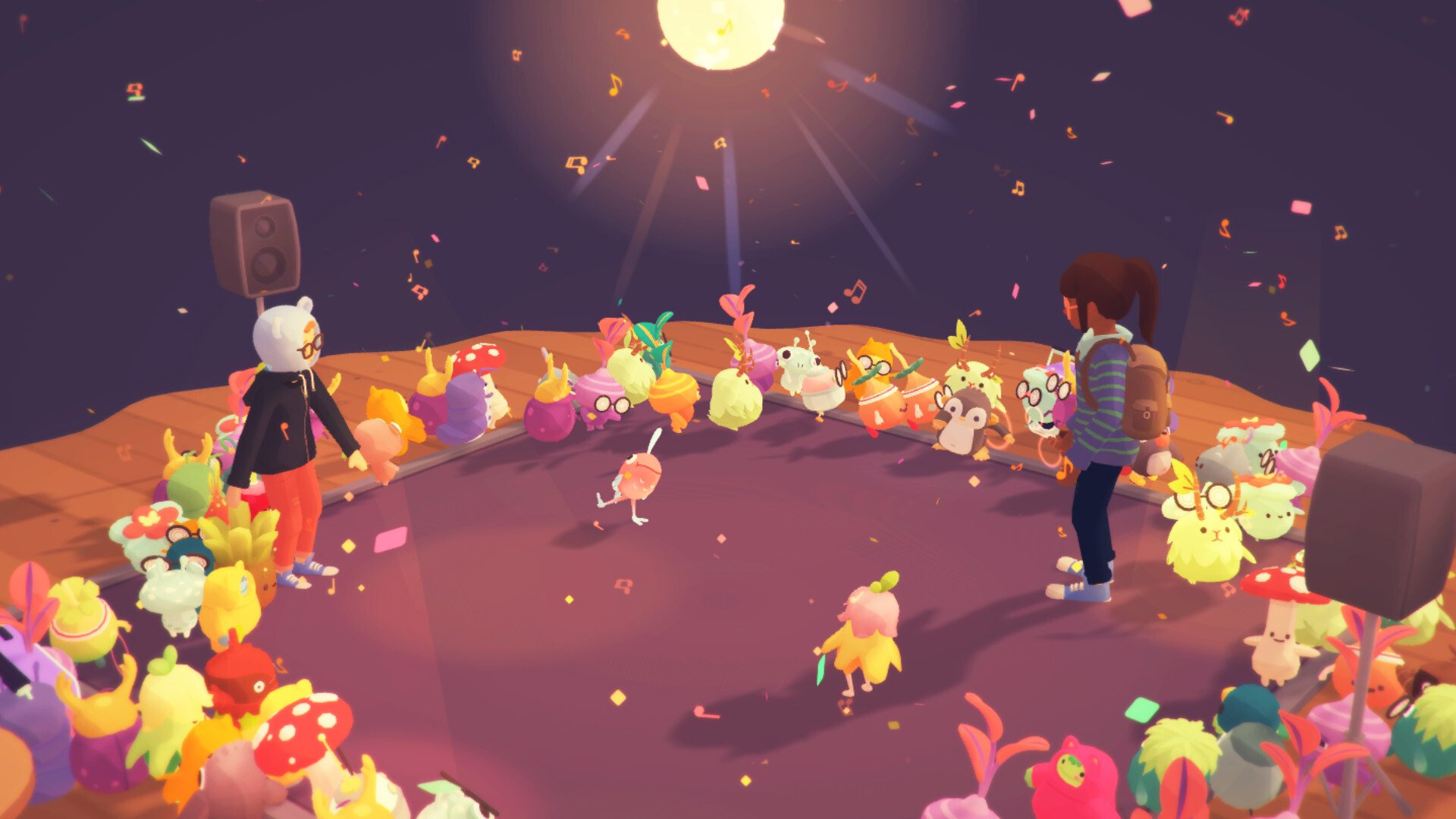
Dance-offs replace conventional creature combat with a turn-based card contest. Each team uses a deck of moves, draws cards and spends beats to play them; the goal is to reach the match’s point target before the opponent. A card might add points, disrupt an opposing team or improve the player’s position for later turns. Every ooblet contributes unlockable moves, so team selection changes the available deck and the options in a match. Winning against wild ooblets can award their seeds, which return the contest to the farm as a growing project. Matches against characters, tournament bouts at the dance barn and encounters with wild creatures all make dancing part of the town’s progression. The system connects collecting to strategy: a broader roster means more possible moves and team combinations. The developers describe the dance-offs as a replacement for traditional creature battles, designed around the game’s lighthearted tone. The match is resolved through cards, beats and score rather than attacks, health bars or defeating creatures through violence.
The story opens outward as Badgetown’s needs lead to new repairs and unlocks. Travel to regions such as Port Forward, Nullwhere, Mamoonia and Tippytop introduces different environments and new resources, characters, crops, recipes and ooblet types. Port Forward has an arcade-filled boardwalk and cabinets with minigames; other regions include a swamp and desert setting, while Tippytop’s frozen peaks change the visual character of exploration. Discovering these areas expands the farm’s options when the player returns home, since new crops and recipes can be incorporated into production. The central mystery gives these journeys direction, and the official game description notes a major threat that must be addressed through dance battles and minigames. A dirigible and a possible mystery island are also part of the broader setting described on the store page. Exploration is thus an engine for adding content to the home routine, not only a way to visit scenery. Each region can add new species to raise, ingredients to process and people to meet.
The residents of Badgetown give the player a set of recurring social goals. Conversations, gifts and errands build relationships with townsfolk, while Mayor Tinstle’s tasks point toward community repairs and features to unlock. The dance barn runs tournaments, placing organized competition alongside challenges in the wild. Daily challenges offer shorter objectives, and badges, friendship stickers, lost ooblets, clothing, furniture and rare Gleamy variants provide different types of collection goals. Seasonal events add activities and collectables tied to real time. The game leaves room to choose which of these pursuits gets attention on a given day: farm work, a social visit, an errand, a dance match or exploration. These paths overlap through resource use. A crop may be sold, processed or saved for a request; a new ooblet may work in a coop and contribute signature moves to the dance deck. Friendship and customization add character to the long-term routine, so progression is expressed through both new capabilities and visible personal collections.
A player-run shop provides another way to turn production into progress. Once unlocked, the shop can sell crops and crafted goods to people in Oob. The player chooses stock, restocks shelves, decorates the space and negotiates prices through a minigame; upgrades expand the business. This makes the economy an active system rather than a simple sale screen. The same harvest could be put into a machine, cooked, used for a request or sold, and the shop adds an additional payoff for producing a varied stock. Shop work also complements the farm’s role as a source of resources for exploration and collection. Ooblets assigned to oobcoops can help with agricultural work, while the creatures grown from seeds become members of the dance team. Their utility crosses systems: companions support production at home and provide unique moves in contests. As the player unlocks more recipes, machines and shop improvements, planning involves deciding which resources will best support the next goal.
Ooblets is a colorful three-dimensional, single-player game that combines farming, town life, creature collection and card-based dance battles. The player moves among the farm, Badgetown’s shops and gathering places, the dance barn and regions opened through story progression. The game’s activities include arcade minigames, sea-dangling, tournaments, a shop and seasonal events alongside the central farm-and-creature loop. Its presentation supports a deliberately eccentric world, where strange regional settings and dance competitions sit beside ordinary work like planting, cooking and selling produce. There is no conventional combat system; disputes and challenges use dance-offs. The PC version is available on Steam, and the official site identifies a physical Nintendo Switch edition.
Ooblets also gives individual creatures a later mobility reward through Oobmobiles. When an ooblet reaches the required level and receives a driving license, it can ride in a small vehicle; the Department of Ooblet Vehicles (DOV) provides the licensing and vehicle kiosk. The kiosk’s available vehicle changes from day to day, and event periods can bring a separate selection of themed cars. This feature turns creature leveling into a visible customization milestone alongside learning dance moves: the reward is a vehicle an ooblet can use while traveling around town. Oobmobiles do not replace the farm role of oobcoops or the strategic role of signature moves, but add another long-term goal for raising a favorite creature. The system also links ordinary progression to a playful collectible display, since vehicles can be bought before a particular ooblet is licensed and saved for later use. The named DOV and its rotating kiosk make the reward part of Badgetown’s wider set of shops and services.
- Developer
- Glumberland
- Genre
- Farming, town-life simulation, creature collection and card-based dance battles