
About OlliOlli World
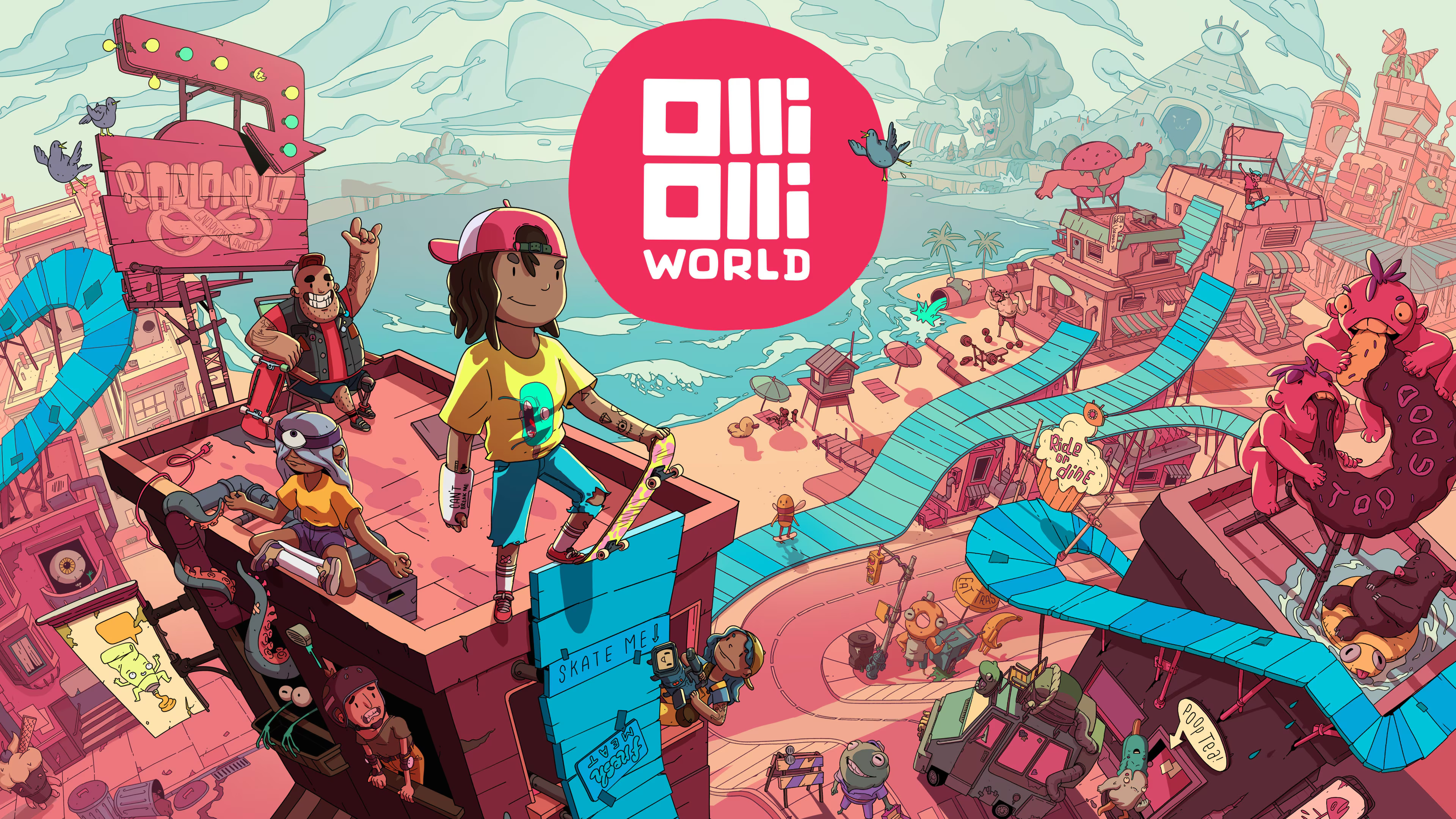
OlliOlli World is a skateboarding action-platformer set in Radlandia, a hand-drawn world built around the search for its skate gods. Ride branching courses, combine flips, grabs, grinds and manuals into score-building lines, take on local challenges, and customize a skater whose route through the campaign can be replayed for new paths and better scores.
Radlandia is presented as a vast skate park shaped by five skate gods, whose existence is part of the world’s playful mythology. The player creates a skater and enters a campaign to meet the gods and learn what it takes to reach Gnarvana, guided by Chiffon, their emissary. That premise gives the journey a destination, while the moment-to-moment focus stays on learning courses and finding better lines. The setting mixes recognizable skate spots with surreal scenery and inhabitants: Roll7 describes ice-cream people, business frogs, rainbow rivers and oversized creatures among its oddities. Locations such as Sunshine Valley, Burntrock, Inflatable Alley and Los Vulgas give the ride changing visual identities, from coastal promenades to dusty terrain and courses crowded with ramps and rails. Conversations with Chiffon, fellow skaters and local residents place challenges in this communal skate culture. The story remains light and episodic, using each area’s people and landmarks to frame the next stretch of skating rather than interrupt the course flow with a separate adventure-game structure.
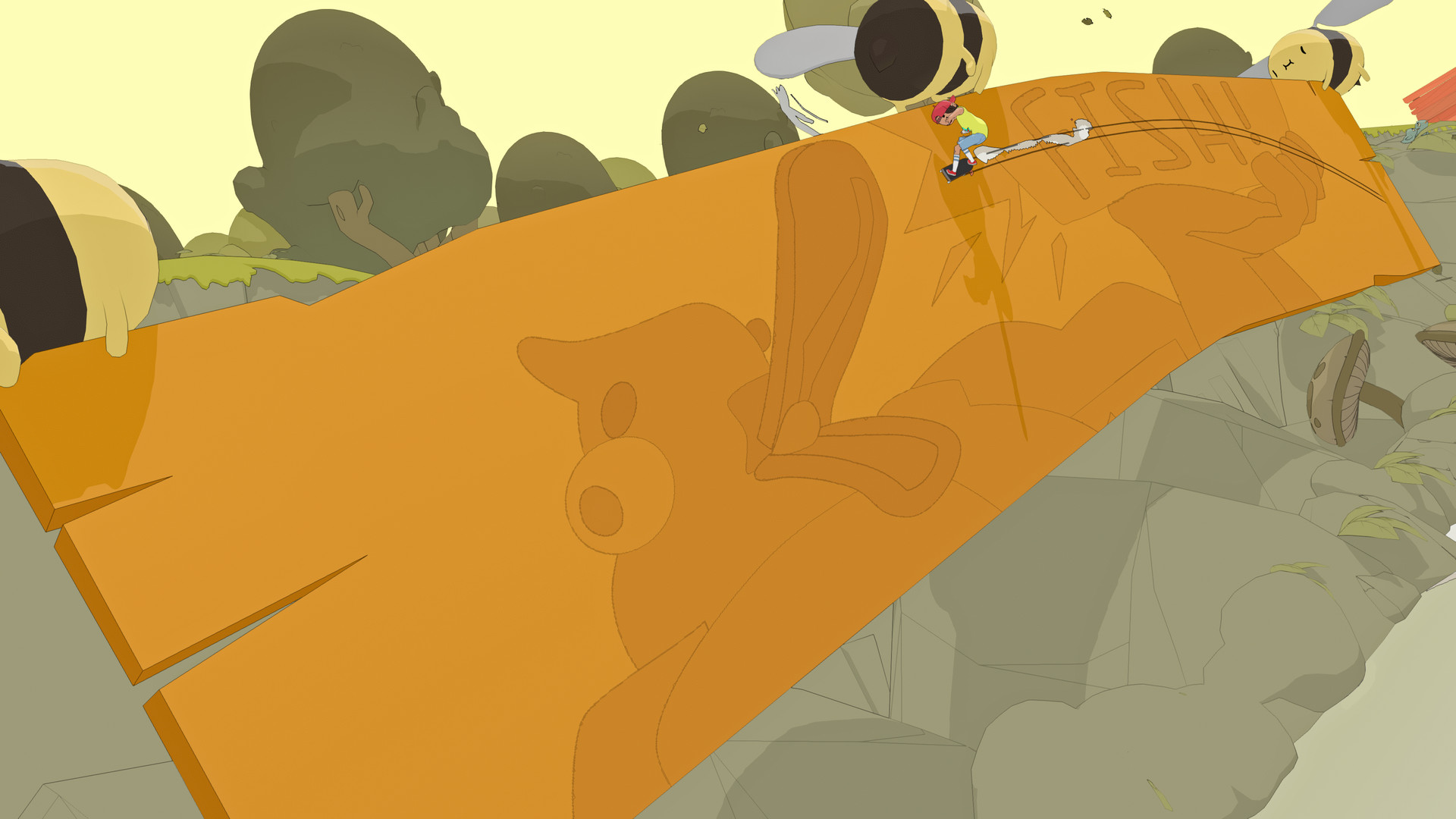
Courses play from a side-on viewpoint, with the skater moving continuously through a designed sequence of hills, stair sets, gaps, rails, quarter pipes and walls. The basic objective is to reach the finish, but the track also acts as a chain of trick opportunities: an obstacle can be cleared, ridden, or used to launch into another move, depending on timing and input. Tricks are performed with directional stick gestures, while the other controls support grabs, grinds and manuals. The range of moves lets a player choose a simple safe response or attempt a more involved trick, and the game introduces course features over time so new interactions arrive in context. Rails and wallrides extend combos across grounded sections; quarter pipes and ramps create air time for flips and grabs. The layout keeps the next obstacle visible as the skater advances, so route reading and anticipating a landing are part of the control challenge. A mistake can end the current combo, but the campaign is built around retries and checkpoints, making it possible to learn a difficult segment without treating every imperfect landing as a complete level reset.
Scoring depends on linking moves into a combo and landing cleanly. Individual tricks add points, while a growing multiplier makes a long sequence worth more points than disconnected tricks. Manuals help connect tricks across flat ground; grinds and wallrides provide further transitions and can refresh the opportunity to keep a sequence going. The player has to judge when to add another move and when to land: extending a combo raises its potential, but a slam can discard the points held in that unbanked sequence. A checkpoint gives a natural place to end a combo and secure accumulated score before taking more risk. Landing timing also matters, with a precise landing improving the result and a rough one reducing it; Roll7’s guidance explains that imperfect timing does not automatically prevent finishing a level, though it matters when pursuing high scores. Variety matters as well: repeating a trick can be worth fewer points than mixing moves, and the trick reference helps players identify options. These systems connect execution to course knowledge. A line that seems difficult at first can become a practiced route where the skater chooses a branch, preserves balance, varies tricks and times a final landing to meet a score target.
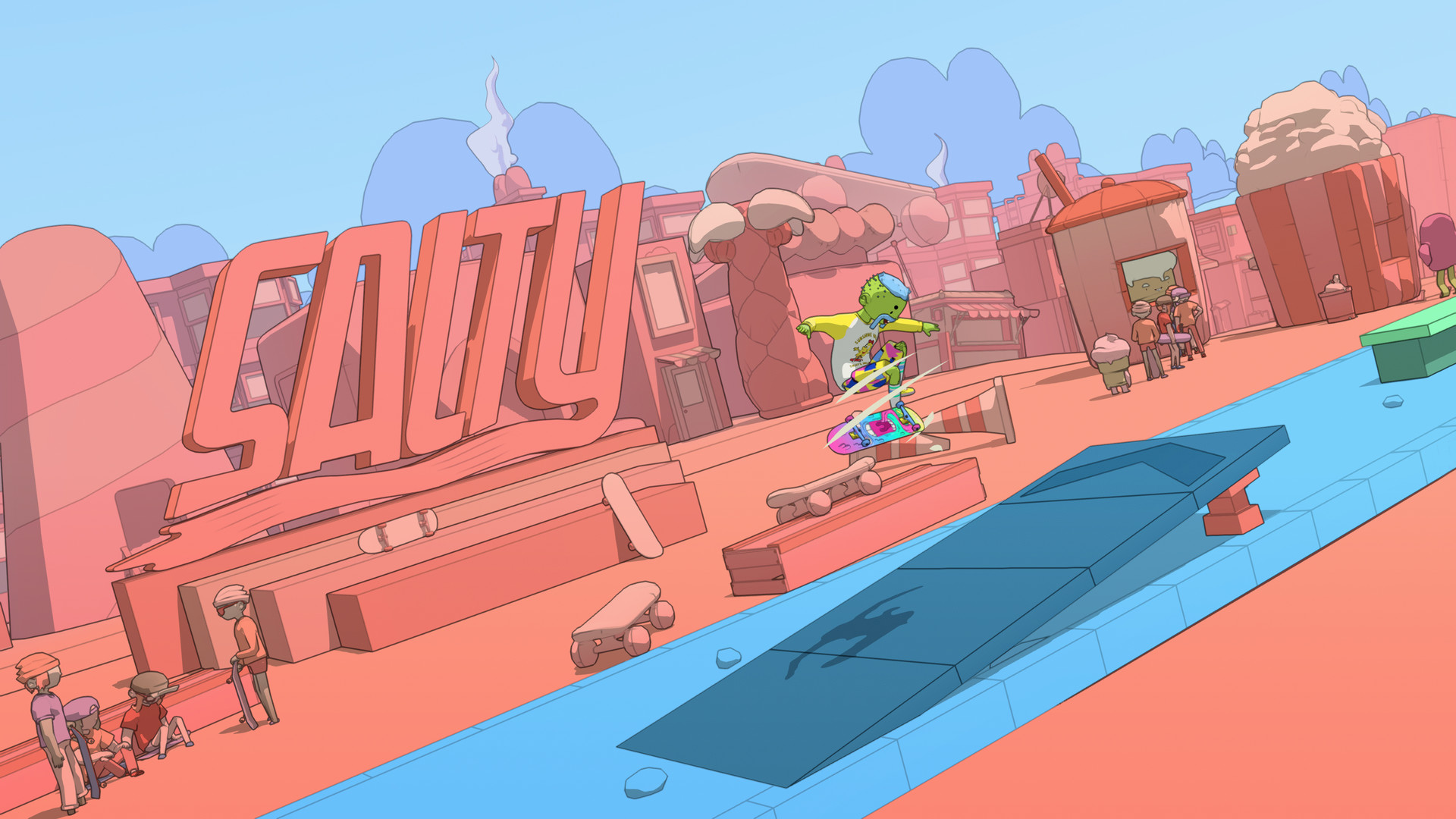
Radlandia’s levels are not single fixed corridors. Some courses split into alternate routes, including more demanding Gnarly Routes with greater scoring opportunity, and hidden ramps, jumps and quarter pipes reward players who notice a way off the main line. Branches can expose different side quests, obstacles and trick setups, giving a replay a distinct shape instead of merely repeating the same run. Many levels include local score thresholds and three additional challenges that ask for a particular performance or interaction with the environment. Their requirements vary by course: one may emphasize a specific trick, while another can ask the skater to hit objects placed along the route. Clearing these goals and beating score targets earns customization rewards. The course map therefore supports several kinds of progress at once: reaching new areas, discovering alternate terrain, completing a character’s request and improving a score. A checkpoint restart is useful for practicing a demanding section, while a full restart remains available when the aim is to connect the whole level into one continuous high-scoring line.
The campaign’s progression also changes how the skater can express a run. Challenges and high scores unlock clothing, accessories, boards and appearance options, allowing a created character to take on a distinct look as the journey continues. The player can customize tricks too, selecting moves that suit a preferred style or a particular gap in a sequence. This affects both presentation and the vocabulary available when constructing combos: a player can favor grabs, flips or other moves, while still needing to respond to the geometry of the course. The game’s onboarding and gradually introduced features make that broader trick set learnable in stages, and the Tricktionary provides a reference for the available moves. Character creation offers flexibility in physical appearance and gear, while boards and outfits supply further rewards to collect. Progression usually asks the player to reach the end of a level, leaving perfection and high scores as additional goals rather than gates to every next course. Later lessons add techniques such as late-tricking and grind-switching, which can be carried back to earlier levels to explore new combo links and improve local records. Stomping, a precisely timed way to land tricks at their full value, is optional; this leaves room to learn the route first and refine timing as a scoring skill. The result is a progression loop tied closely to skating: perform, explore, complete local objectives, unlock options, then return to routes with a clearer idea of how to combine the expanded repertoire. Checkpoints and forgiving completion requirements support practice, while the top score targets still ask for precision and sustained control.
Beyond the authored campaign, OlliOlli World includes asynchronous competition and generated courses. Global leaderboards let players compare scores on campaign levels, while Gnarvana League groups competitors around a shared randomly generated stage and tracks their results over a timed round. League placement can move players through ranks and seasons, adding a recurring score target beyond the campaign’s local challenges. Gnarvana also offers a course generator with settings such as biome, difficulty and length; generated runs can be saved and shared by seed so others can skate the same layout. Roll7 describes this as sandbox play for creating and sharing levels, alongside the competitive Leagues. These modes reuse the same mechanics, but shift the purpose from completing an authored route to testing consistency against another score or exploring a fresh arrangement of obstacles. The presentation reinforces the relaxed, eccentric tone through bold animated character designs, bright environmental palettes and an electronic soundtrack. On Steam, the base game is listed as a single-player title with achievements and Steam Cloud support; its separate Rad Edition bundle lists the base game, VOID Riders, Finding the Flowzone and a skate deck. The two expansions require the base game, so this profile describes the standalone campaign and modes rather than treating expansion courses as included base-game content.
- Developer
- Roll7
- Genre
- Skateboarding action-platformer