
About NINJA GAIDEN 4
An ancient enemy’s return leaves near-future Tokyo beneath a rain of miasma. Raven Clan ninja Yakumo fights cybernetic soldiers and fiends while confronting his connection to the Dark Dragon and the legendary Ryu Hayabusa. Rapid weapon combos, transformations, parries and aerial techniques make each encounter a contest of timing, positioning and resource use.
NINJA GAIDEN 4 places its ninja action in a near-future Tokyo where an ancient enemy’s resurrection has brought an endless rain of miasma. The city is no longer simply a backdrop for combat: the Dark Dragon’s failed return has left districts flooded, dangerous and exposed to fiends that materialize without warning. Yakumo, a young ninja of the Raven Clan, enters this crisis on a mission to assassinate Seori, the priestess who sealed the Dark Dragon. What he learns changes the purpose of that mission. Rather than carrying out the original order, he resolves to break the seal on his ancestor, drawing him into direct conflict with Ryu Hayabusa, the legendary ninja of the rival Hayabusa Clan. Their shared destiny gives the story its central tension: Yakumo’s decision and Ryu’s opposition are both tied to the same ancient power.
Yakumo’s place in the Raven Clan shapes the people and institutions surrounding his journey. Seori was responsible for sealing the Dark Dragon and, while held in a high-security prison, proposes an alliance to Yakumo after recognizing him as a Raven ninja. The outline leaves her intentions uncertain, so the partnership begins with a question as well as a practical goal. Misaki, a Raven strategist, accompanies Seori’s mission; Umi provides communications support to Yakumo; and Tyran, a martial arts master, trains him in techniques developed through years of study and combat. Across the conflict stands the Divine Dragon Order, a paramilitary force led by Supreme Commander Kagachi. Its troops defend a population under constant threat, while Kagachi’s apparent connection to Ryu adds another point of overlap between the clans and the organization. These roles make the struggle more than a duel between two exceptional fighters.
The setting changes the character of the spaces Yakumo crosses. Sky City Tokyo is a once-great metropolis ravaged by the persistent miasma, where fiends appear unexpectedly and the Divine Dragon Order serves as the population’s defense. At the city’s outskirts, Fuuhaku Sanctum is a group of shrines in steep mountain valleys. Strong winds make access difficult, and the area is sacred to local tengu who punish trespassers. The Drowned District offers a different kind of danger: lower Tokyo has flooded under the Dark Dragon’s rain, rising water is monitored by the Order, and abandoned facilities reveal a past built around wealthy residents’ debauchery. Dragon’s Maw, by contrast, is the Order’s military headquarters, defended by modern security systems. These distinct environments suggest movement between exposed urban ruins, guarded facilities and hostile terrain, giving the supernatural threat a civic and physical footprint.
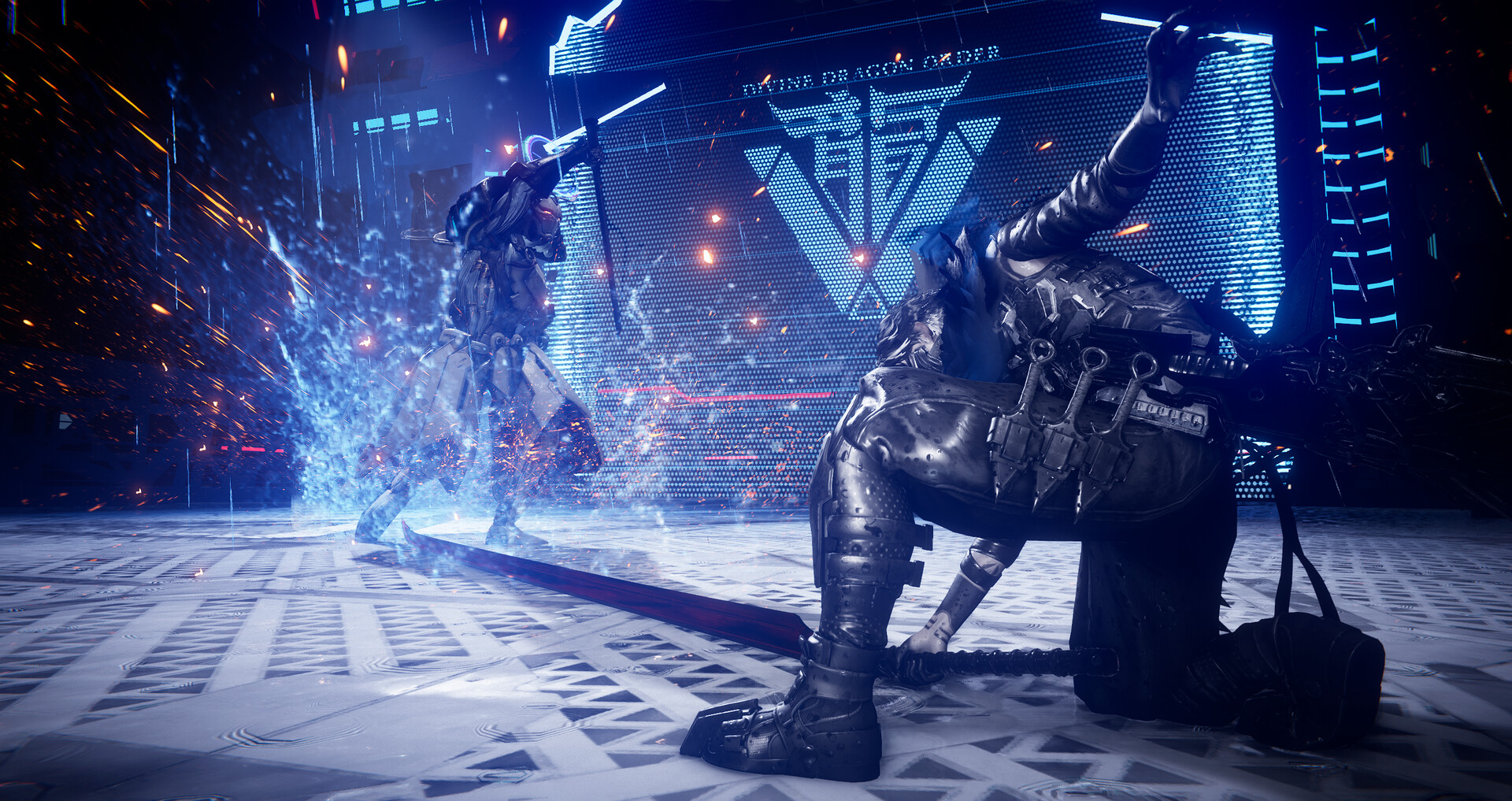
Combat combines the series’ established techniques with a two-character form system. Yakumo can enter Bloodraven Form, while Ryu uses Gleam State; attacks in these modes consume a gauge but can break an enemy’s guard or interrupt a powerful attack. Their abilities give transformation a tactical role: it is a resource to spend when an opponent’s defence or wind-up creates an opening. In base form, holding the heavy attack button charges a weapon for an Ultimate Technique, which grants brief invulnerability when released after a sufficient charge. A successful read of an incoming strike can instead trigger Fatal Flash, a parry followed by a quick counter. The player is therefore encouraged to distinguish between attacking pressure, defensive timing and a deliberate charged response. These systems make precision matter at close range, where one opening can turn a dangerous exchange into a counterattack.
Movement and follow-ups keep fights from remaining on the ground. Flying Swallow carries the character rapidly toward an enemy from mid-air, while Wind Path uses an opponent as a springboard to gain height. Once a foe is launched, Izuna Drop grabs and drives them into the ground, damaging nearby enemies on impact. When an enemy is dismembered, an Obliteration Technique can finish them with a heavy attack. Each action creates a different transition: approach, reposition, juggle, area impact or execution. That sequence of choices helps explain the game’s fast pace more concretely than speed alone. The player has to track enemy states and decide whether to extend an aerial attack, turn a stagger into a finish or use the moment to shift to another threat. The familiar named techniques return as functional parts of the encounter rather than isolated callbacks.
Weapon choice adds another layer to those decisions. Yakumo’s Cursed Blades: Takeminakata provide quick consecutive strikes with twin blades in base form and longer-reaching Tachi attacks in Bloodraven Form. Twilight Piercer: Yatousen switches from rapier thrusts to lance drills, while Tremor Staff: Magatsuhi changes from close-range staff strikes to hammer blows with an area effect. Dark Arsenal: Kage-Hiruko uses assassin’s tools for ranged and close attacks, then mechanical arms in Bloodraven Form. The two modes alter a weapon's reach and role along with its appearance. Ryu’s Dragon Sword supports rapid techniques from the Hayabusa tradition, with faster consecutive strikes in Gleam Form. Switching weapons during combat lets players develop a style around spacing, clustered opponents or quick pressure, while form changes provide a second way to adjust how a weapon behaves.
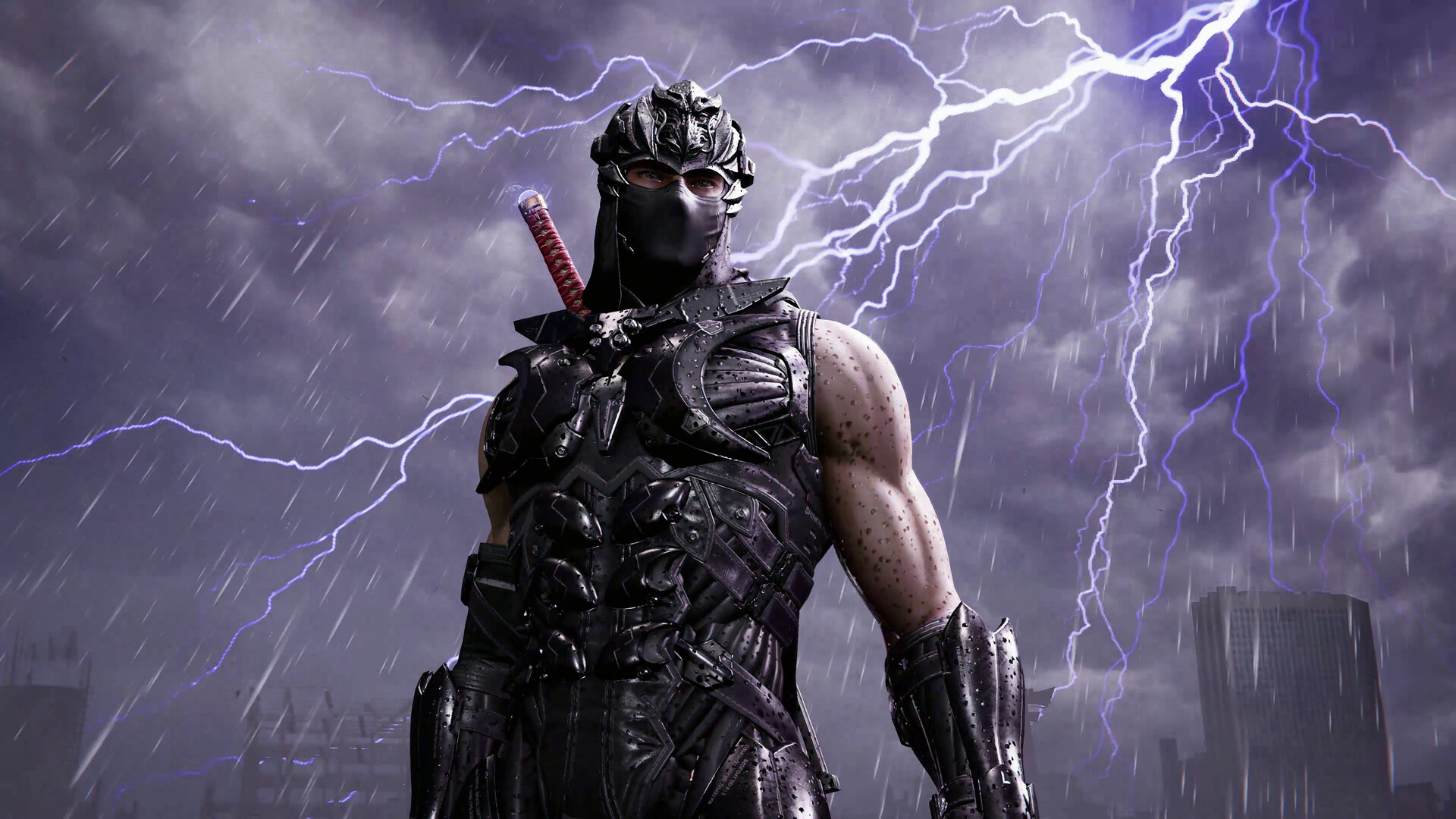
Progression continues beyond the main story through features that turn mastery into a separate pursuit. Difficulty settings include HERO, which supplies assists, and MASTER NINJA, aimed at players seeking a greater challenge. After completing the story, Chapter Select allows chapters to be replayed as either Yakumo or Ryu, so both characters can be taken back through the campaign’s stages. Trials also unlock after the story and set battles against bosses or other encounters under special conditions. These options give the action different contexts: a first run follows the unfolding conflict, while chapter replay and Trials invite focused practice with the combat systems. The premise remains centred on the Dark Dragon’s return and the two clans’ competing responses, but the post-story structure shifts attention toward learning enemy patterns, refining weapon choices and testing execution under constraints.
- Developer
- PlatinumGames Inc. / Team NINJA / KOEI TECMO GAMES CO., LTD.
- Genre
- Action-adventure / hack-and-slash action