
About Nightmare Reaper
A patient’s disturbing dreams become the arenas of Nightmare Reaper, a first-person shooter set across a succession of violent, shifting nightmare worlds. Fight through enemy-filled stages, search for treasure and secrets, and build an arsenal from unpredictable weapon drops. Gold carries into upgrades between levels, while the full campaign can be played solo or with up to three friends.
Nightmare Reaper frames its shooting as a patient’s passage between a psychiatric hospital and the nightmares she experiences there. In those dream spaces, she confronts monsters and other hostile figures with an expanding stock of weapons. The story is deliberately restrained: the hospital, the patient’s circumstances and fragments of information between stages supply context without turning the campaign into a long stream of exposition. The contrast between a comparatively contained ward and the dangerous spaces of the dreams gives the action a narrative frame, while the mysteries around the patient remain in the background as the player moves from one nightmare to the next.
Most of the campaign takes place in first-person levels built around combat, navigation and searching. The game combines hand-designed sections with procedural generation, so routes and room arrangements can vary while keeping the broad structure of a stage intact. Enemies occupy open areas and corridors, and progression through a level can involve finding keys, activating switches or locating a concealed passage. Destructible walls and hidden rooms reward looking beyond the most direct route. The setting and visual palette shift as the chapters advance, from tomb-like or natural environments to hospital spaces and city scenes. This changing scenery gives each stretch of the campaign a distinct backdrop while the player continues to move, aim, fight and collect resources.
Combat draws on the fast movement and direct aiming of classic first-person shooters, but the weapons are distributed as loot rather than arranged as a fixed arsenal. Drops can include conventional firearms alongside stranger tools such as magical weapons, and each find may carry a different collection of effects. The game advertises eighty weapon types and more than thirty enchantment categories, giving each drop scope to change the next fight. Weapon effects can alter how a fight unfolds, with elemental properties such as fire, ice or electricity among the possibilities. The player can change weapons during a stage and respond to the enemies and spaces in front of them, building short-term firepower from whatever the level provides.
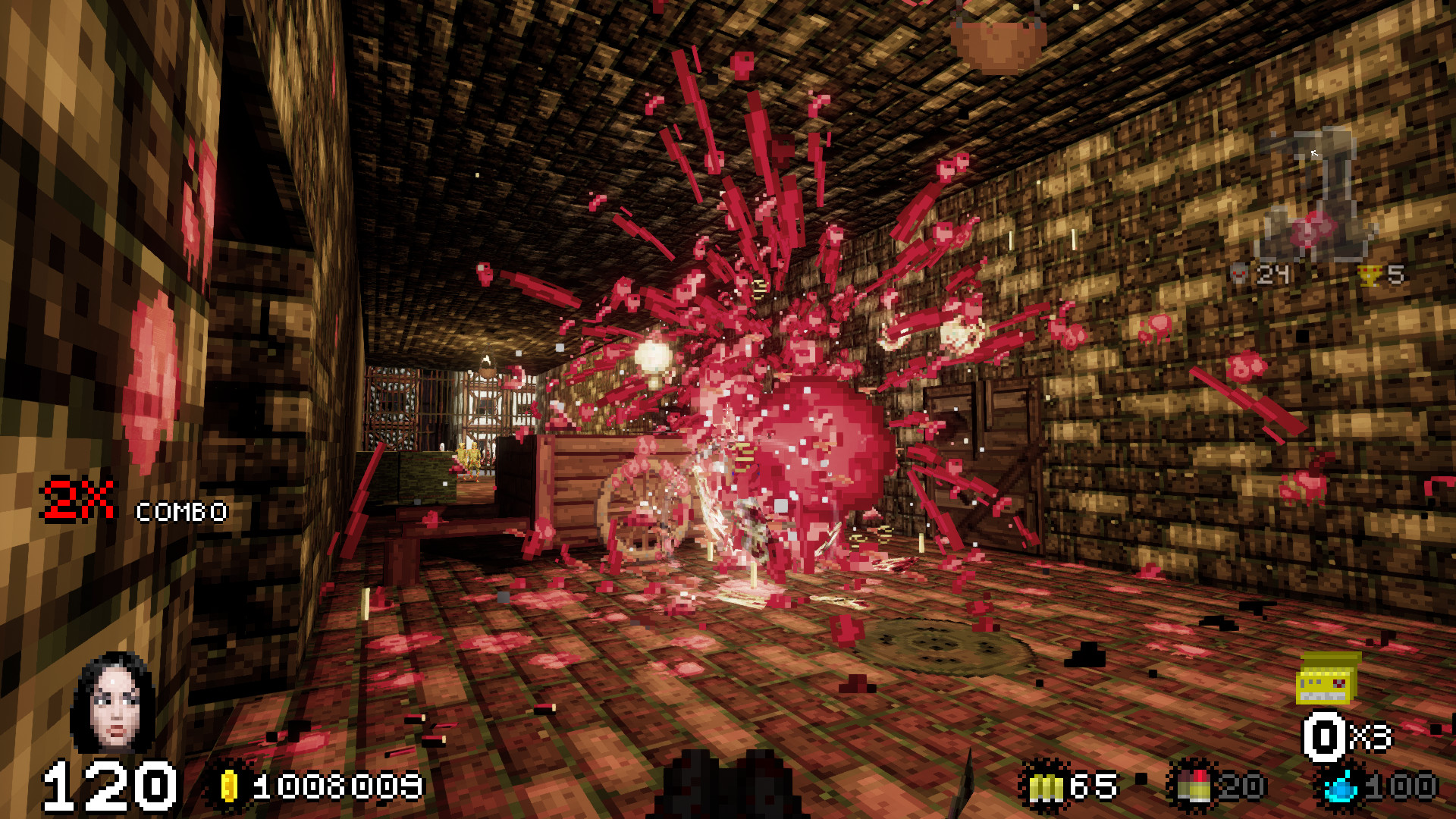
A stage also connects immediate survival to longer-term resources. Enemies, containers and hidden rooms can yield gold and other treasure, giving exploration a direct value beyond finding the exit. At the end of a completed level, the player selects a weapon to carry forward; other collected weapons are converted into money. That decision makes the inventory temporary while preserving some benefit from a successful run through the stage. If a run ends before completion, the weapons acquired during that attempt are lost, while collected gold remains available for progression. The resulting loop ties together fighting, searching, deciding what equipment is worth keeping and spending the proceeds on improvements before continuing into another generated layout.
Character upgrades are presented through handheld-game imagery in the hospital between nightmare stages. Cartridges found during the campaign open additional skill trees on the patient’s portable game system. Gold pays for skills and abilities within those trees, and unlocking a skill can lead into a brief, self-contained two-dimensional minigame styled after older action and platform games. These interludes give progression a different rhythm from the three-dimensional shooting: the player leaves the nightmare arena, navigates a compact side activity and returns with a stronger character. The upgrade layer expands the options available in later fights, while the repeated hospital visits and journal material add small pieces of story alongside the mechanical rewards.
The full campaign supports either solo play or online co-op for two to four players, including its New Game+ mode. The cooperative update also adds a separate deathmatch mode, where players use randomized weapons and can set custom match rules. New Game+ adds another skill tree and minigame, and the update introduces elite enemies and additional weapon variants. These modes extend the same emphasis on variable equipment and replaying stages into different group formats. In the campaign, players can follow the patient’s progression alone or alongside friends; in deathmatch, the focus shifts to competing with the weapons and conditions selected for that match. Both options sit alongside the original loop of clearing nightmare stages, collecting treasure and expanding the character’s abilities.
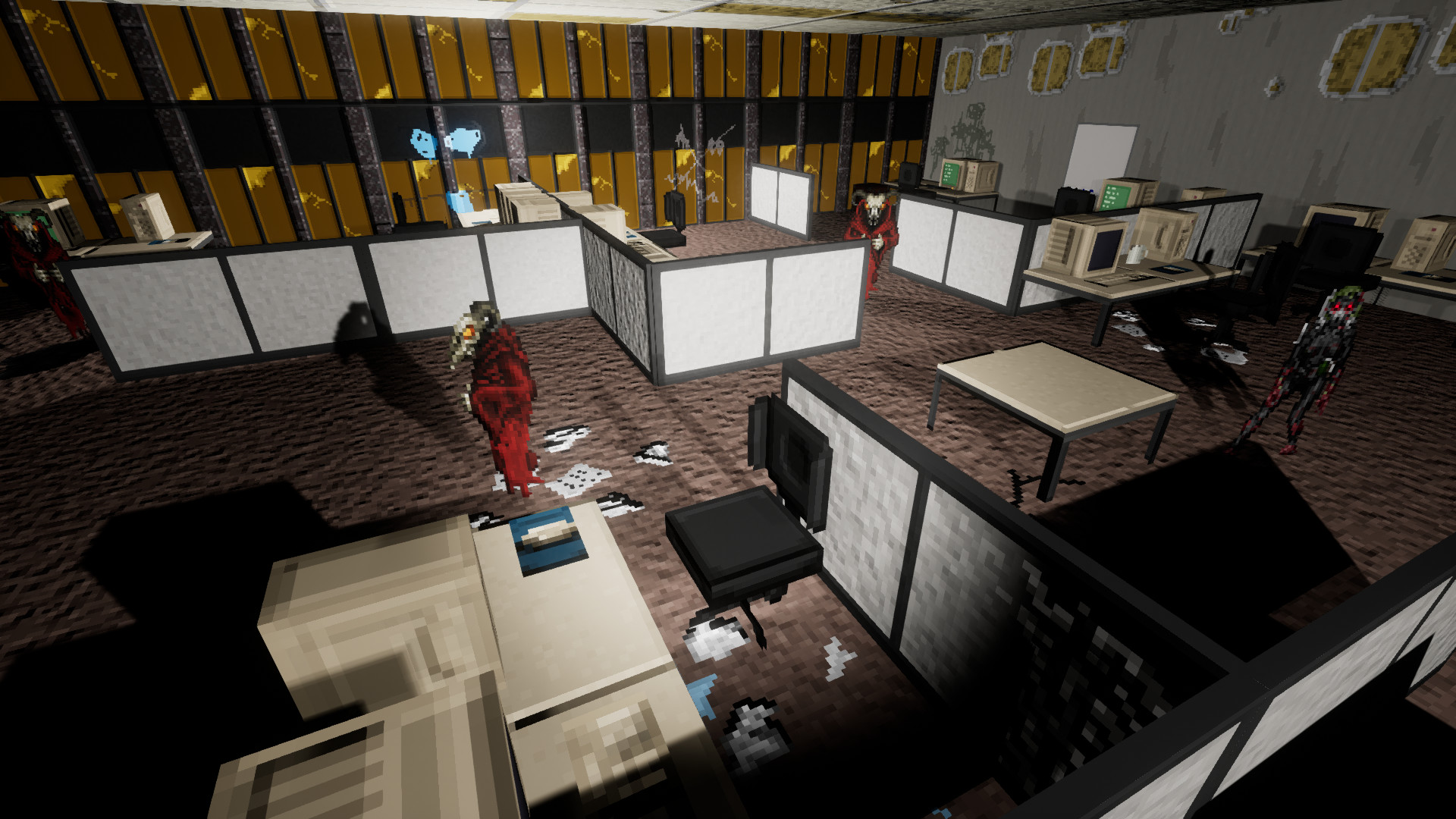
Between encounters, Nightmare Reaper uses brief returns to the hospital to mark progress and keep its dream framing present. Journal pages and changes around the patient’s room add context without replacing the action-focused structure. Within each stage, treasure hunting, power-ups, enemies and secrets give the player reasons to explore side routes before reaching the exit. Random events can further change what happens during a level, while different chapter environments alter the visual character of the spaces being crossed. A route learned in one generated stage therefore does not necessarily reveal where the next key, switch or concealed room will appear, keeping navigation tied to the current layout. Taken together, the game’s activities move between shooting through a nightmare, searching its rooms, choosing persistent rewards and using those rewards to prepare for the next stage.
- Developer
- Blazing Bit Games
- Genre
- Retro-inspired first-person shooter with looter-shooter and rogue-lite elements