
About [Chilla's Art] Night Security | 夜間警備
A night guard enters an office building to make his rounds, checking rooms, lights, alarms and doors before moving to the next floor. Night Security is Chilla's Art's 2023 first-person Japanese horror game. The repeated patrol gives the player a familiar procedure while each level makes the empty workplace a little harder to trust.
Night Security gives its protagonist a work assignment with a clear beginning and an increasingly uncertain end. Before arriving at the office building, the guard is briefly seen at home with his family. The transition from that domestic space to a late shift makes the building feel like a place he has chosen to enter for ordinary reasons, not a forbidden location he has gone looking for. Once inside, he starts a patrol that should be simple: inspect the premises, deal with anyone still there and secure each level. The building rises through eleven floors, and the upward route provides a visible measure of progress. There is always another floor waiting after the current one. Chilla's Art uses that structure to turn repeated security work into a suspense device. The player can learn the shape of a hallway and still hesitate before entering it again, because the important question is not merely where the doors are but what might have changed behind them.
Each round asks the guard to check the details a worker would reasonably be responsible for. Fire alarms need inspecting, lights left on in bathrooms need attention, and doors must be locked before the patrol can continue. Employees who remain late may have to be sent home. These are direct interactions rather than an elaborate simulation of building management, but their sequence matters. A player enters a room, looks for what needs checking, returns to the corridor and confirms that the floor is secured. The elevator then carries the guard upward. This gives the game a cycle with a practical purpose, so a strange event has to compete with a task the player still needs to complete. A person lingering in an office is not automatically a monster; at first they may simply be someone who missed the end of the working day. As the floors change, the same responsibility to inspect and close spaces forces further contact with places that no longer feel routine.
The setting is an office rather than a castle or abandoned hospital. Meeting rooms, work areas, cubicles, bathrooms, security spaces and a cafeteria divide the building into recognisable zones. Computer screens, desks and internal doors suggest that people occupied these rooms only hours before the guard's shift. Some spaces can be approached as straightforward checks, while others require the player to notice an object or interaction that interrupts the regular pattern. The view is first person, so visibility depends on the angle from a doorway and the light within a room. A floor may have an apparently familiar plan yet a different atmosphere from the one below it. That combination prevents the eleven levels from acting as eleven unrelated stages. The guard is moving through one building with repeated duties, and the player carries expectations from lower floors upward. When a room breaks those expectations, the contrast comes from remembering how an ordinary office was meant to look.
The elevator is central to the pacing. It is the reliable route between completed levels, a place where a player can register how far the guard has gone and anticipate the next floor. The transition also narrows the apparent options: after finishing the current checks, the player does not wander across an open city but goes farther into the same building. Rooms and corridors are compact, so the suspense does not depend on long distances or difficult navigation for most of the shift. What changes is the reason for looking back. A passage that previously led to a routine alarm may contain a new sign of disturbance; a colleague or worker may seem less reassuring when the guard is several floors above the lobby. The game sometimes departs from the ordinary round with puzzle or action moments, but it keeps the patrol as the frame of reference. Those exceptions have force because the basic tasks and elevator rhythm were established first.
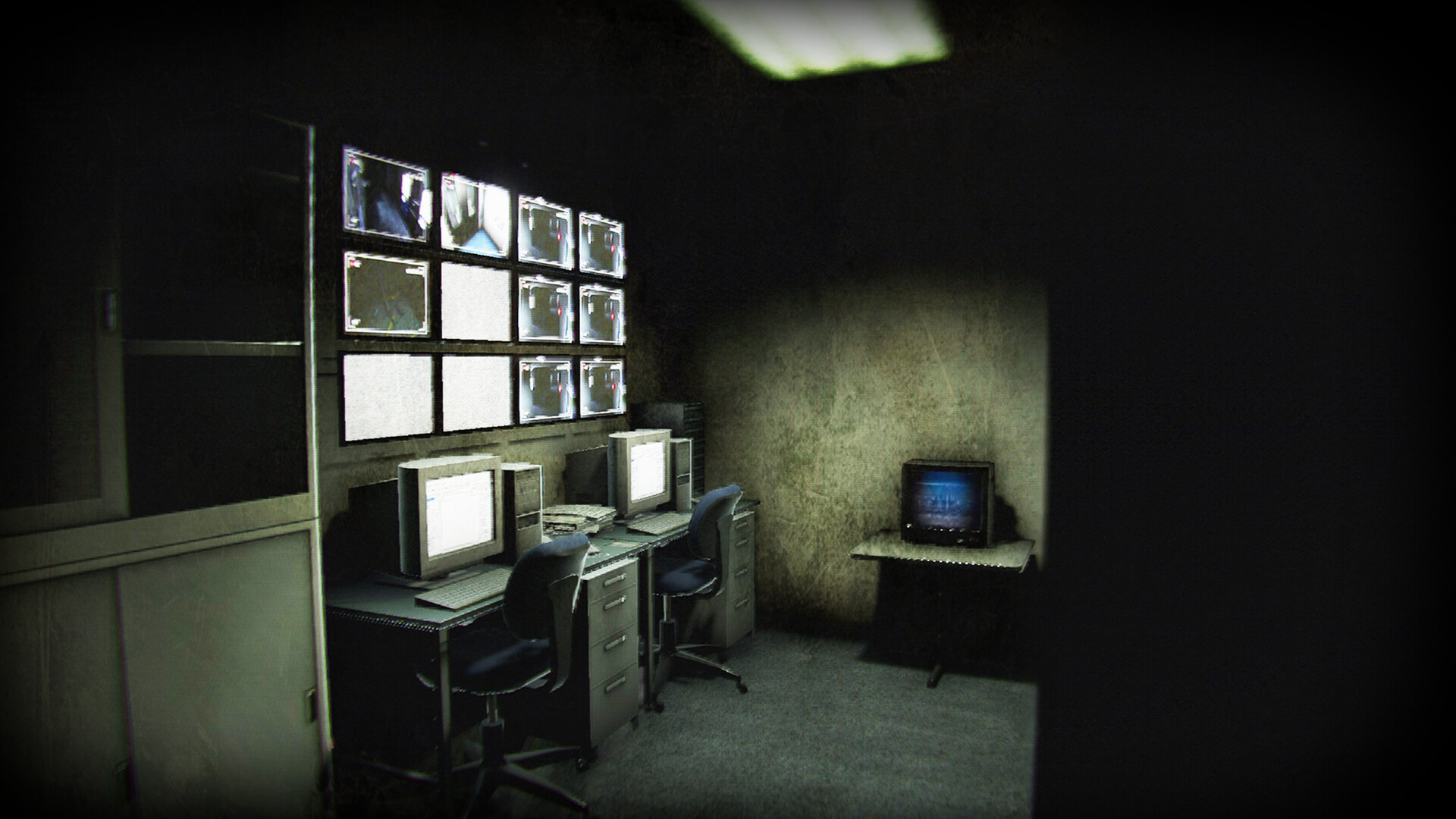
The security role gives the player several ways to watch a space without fully controlling it. Cameras show selected parts of the building, but a fixed image cannot explain every sound in a nearby corridor. The guard can read notes and examine equipment, yet he still has to leave the security position to finish the round. Turning off a light or locking a door is a mundane act that also changes what can be seen and how easily a room can be revisited. Some office workers reveal fragments of life in the building rather than delivering a complete account of what is wrong. The player therefore collects impressions through work: a person still present after hours, a room whose contents seem misplaced, a sound that does not match the quiet floor. This is a more constrained perspective than that of an investigator compiling an exhaustive case file. The guard knows enough to do his job, and the player must decide what to make of the events that job exposes. The security room offers equipment and a temporary point of reference, yet it cannot complete the patrol by itself. Every useful observation eventually leads back to a physical room, a door or an alarm that still needs checking.
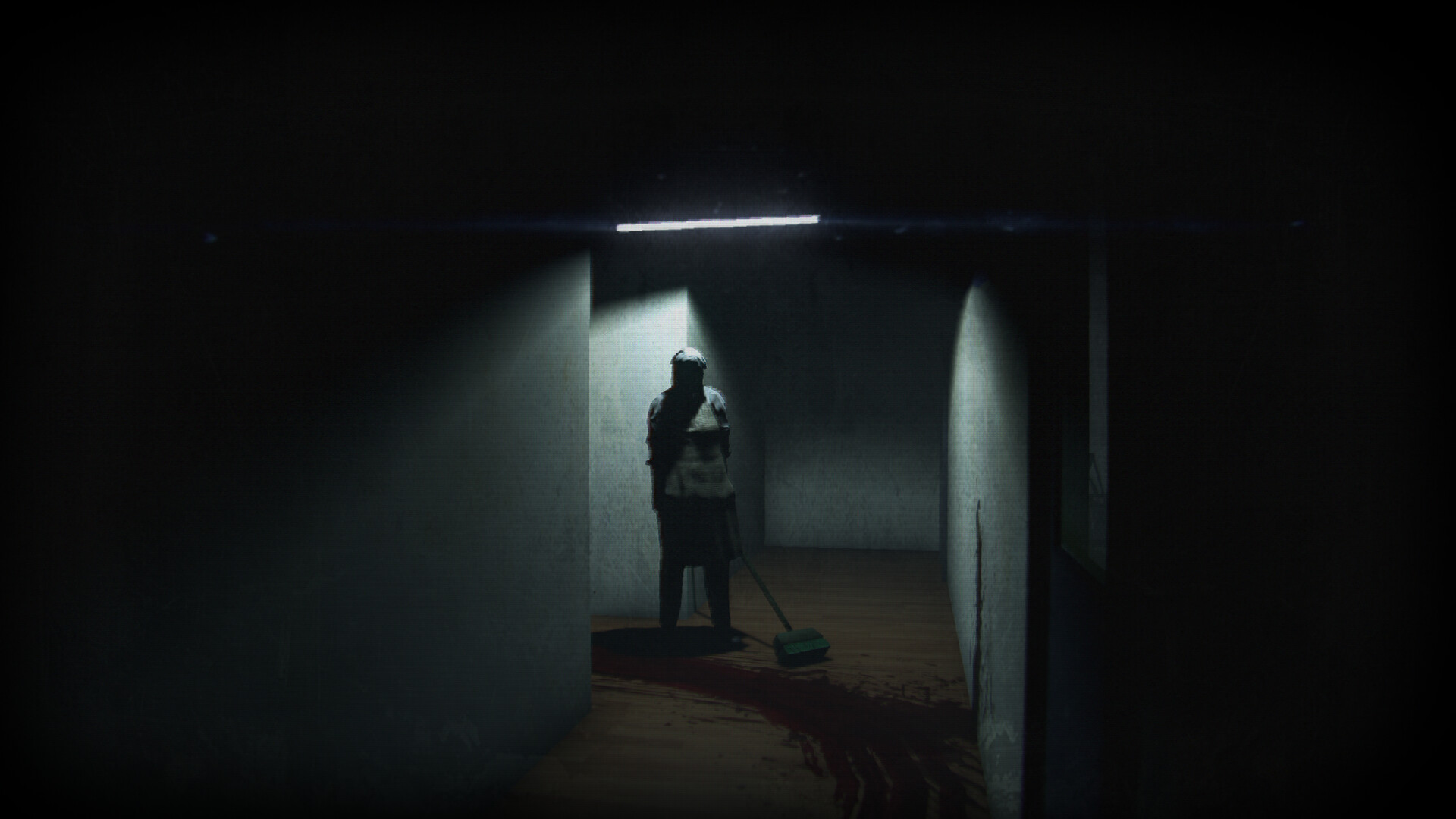
Chilla's Art's visual treatment makes the building less stable without changing its geography. A VHS-like effect can be toggled in the options, adding analogue noise to offices already defined by low light and artificial illumination. The title's Japanese horror framing is present in the slow inspection of normal spaces, the fear of turning toward a noise and the possibility that an apparently safe work routine cannot account for what is happening. There are sudden moments, but the most persistent device is anticipation of the next check. The office design matters here: repeated desks and corridors give the player a sense of order, and that order becomes uncomfortable when a floor has its own peculiar detail. Sound, empty rooms and the distance from the lobby support the same escalation. The guard may be performing the correct security procedure while feeling less secure himself. The visual filter is optional; the increasingly strange sequence of rooms and interactions remains the game.
Night Security is Chilla's Art's 2023 PC game, not a general guide to every title in the studio's catalogue. Its official listing confirms autosave at each floor and two endings, which fits a journey built from discrete upward stages. Those features do not turn the About page into a floor-by-floor solution: the individual choices, collectibles and final events are best left to a dedicated guide if one is later researched. The useful expectation here is a compact first-person horror story in which securing an eleven-floor workplace becomes progressively more troubling. Players should expect room inspection, switches, doors and conversations to do more of the work than fighting or character upgrades. The first few checks teach the player how a normal night ought to proceed; the rest of the building tests how long that explanation can survive. The path through the offices is clear enough to follow, but understanding what happened there is a different task. The floor-based save points also suit the rhythm of the job: a completed level is a finished round, while the next opens another set of checks. The practical checklist keeps giving the guard a reason to continue even when the human reasons to leave seem stronger.
- Developer
- Chilla's Art
- Genre
- First-person Japanese psychological horror and patrol-based adventure