
About Night in the Woods
After leaving college, Mae Borowski returns to Possum Springs, a former mining town where old friends and familiar streets have changed. She spends her days exploring, talking with people close to her, and taking part in small diversions as unsettling events draw her toward a mystery in the surrounding woods.
Night in the Woods follows Mae Borowski, a young cat who leaves college and moves back in with her parents in Possum Springs. The town is recognizable to her, but returning does not restore the life she remembers: her former friends have their own routines, and the place has continued to change while she was away. The setting is a former mining community facing a diminished local economy, and its streets bring together family homes, shops, gathering places, and the edge of the woods. Mae’s first task is simply to re-enter that world. She walks through town, encounters neighbors, and begins rebuilding connections, while small details and overheard talk show that familiar surroundings can feel different when seen again as an adult.
Movement through Possum Springs is presented as side-view exploration with light platforming. Mae walks, runs, jumps, and climbs across streets, rooftops, interiors, and paths, with routes opening into connected parts of town rather than a combat-focused level structure. Objects and people invite interaction; stopping at a notice board, visiting a shop, or approaching someone can lead to a short exchange or reveal a piece of local life. The player chooses where to spend time and whom to seek out as the days progress. Revisiting places matters because conversations and available scenes can change, and not every encounter is a required objective. The ordinary act of making a circuit through town supplies the rhythm: travel, notice what is different, talk, and decide how to use the time Mae has that day.
Mae’s family and old friends provide the main relationships. At home, she shares space with her parents and navigates the awkwardness of returning after time away. Around town, Bea and Gregg are central friends, while Angus is part of the wider group. Dialogue choices shape Mae’s responses and help determine which friend she spends time with; these decisions lead to different hangouts and scenes rather than turning the story into a branching catalogue of outcomes. Conversations also vary in tone, moving from jokes and casual gossip to more personal concerns. Optional encounters with neighbors and townspeople broaden the picture beyond Mae’s immediate circle. When Mae checks in online with friends, those exchanges extend the relationships beyond face-to-face meetings and reflect the group’s familiar shorthand and habits.
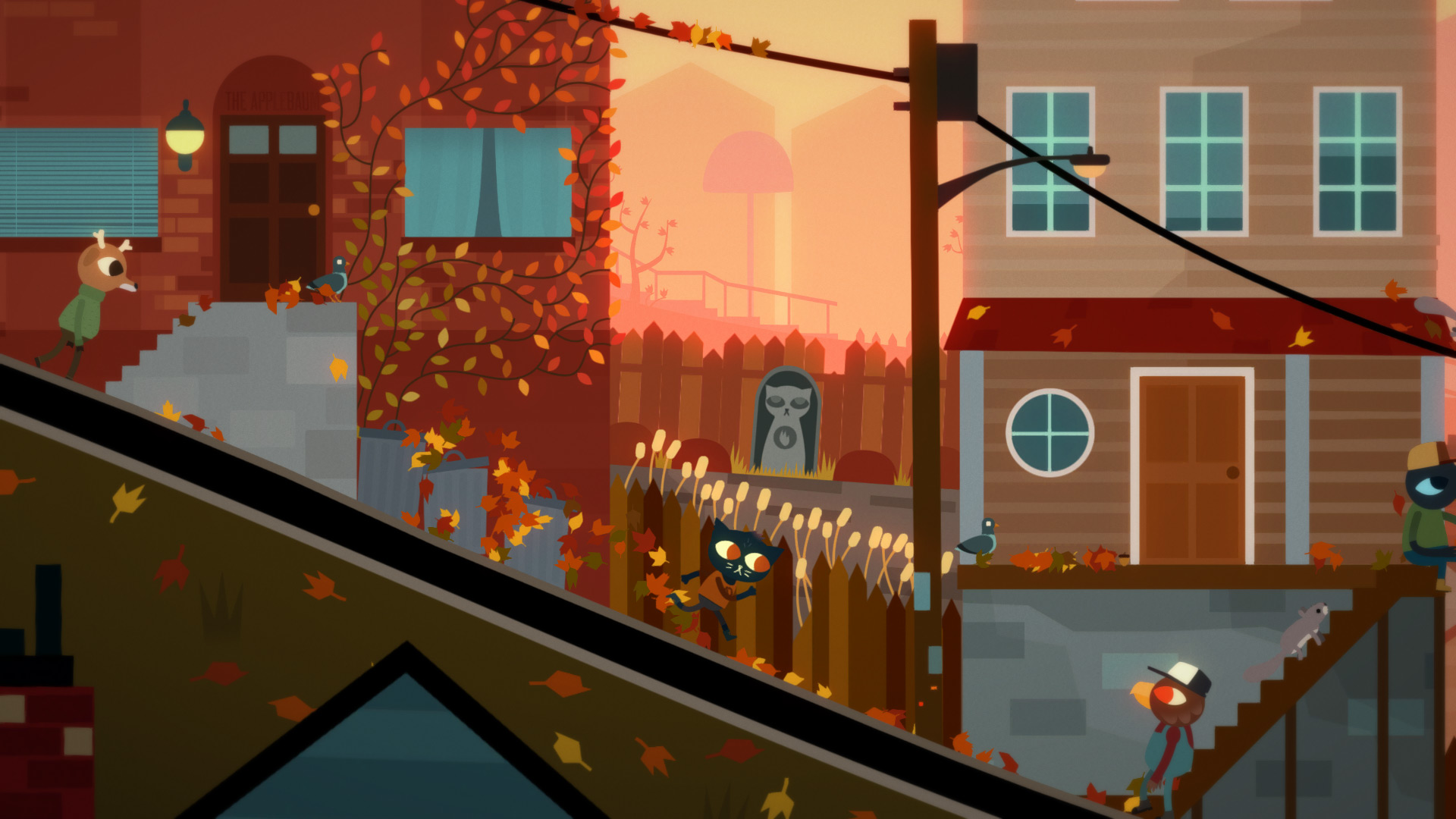
The day-to-day structure gives those relationships room to develop. As Mae explores, the player can follow one friend’s invitation or another, and the choice changes which events and shared activities appear along that route. Those scenes are not interchangeable dialogue stops: they include distinct small interactions that reveal how the characters spend time together and how the town feels to them. Talking with people more than once can uncover new lines as events move forward, while some locations become relevant on particular days. The result is a changing itinerary built from repeated walks and selected company. Mae’s choices affect the experiences seen during a playthrough, but the broad movement remains centered on returning home, reconnecting, and learning what has altered in both her friendships and the town.
Short activities break up the conversations and walking. Band practice uses a rhythm-game format in which the player follows musical notes in time, while other scenes give simple actions a social context, such as aiming food toward a friend. Mae can also take part in mischievous episodes with Gregg, including a knife-dueling diversion, or use a baseball bat to break objects. These moments are brief and tied to the people or situation around Mae, rather than forming a separate progression system. A game called Demontower sits on Mae’s laptop as an optional game within the game: it uses a top-down view, combat against enemies, bosses, and a sequence of levels. The main adventure also includes dream sequences built around platforming through shadowy spaces and finding musicians. Their movement and atmosphere differ from the town’s daytime routine while remaining connected to Mae’s experience.
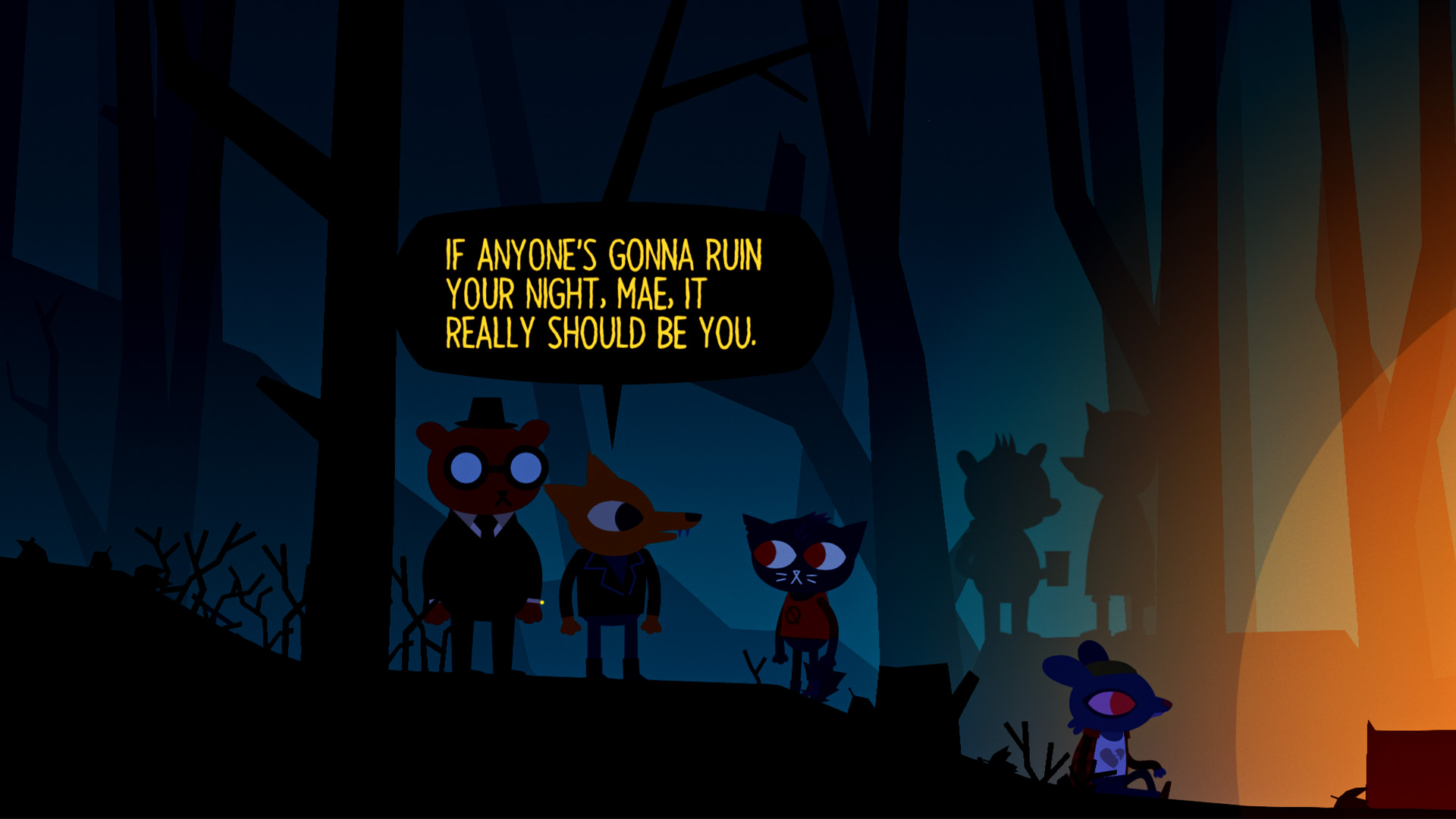
Alongside the familiar work of reconnecting, strange incidents begin to unsettle the town. As autumn deepens, strange events point toward something in the woods; the story lets that question develop through Mae’s encounters rather than explaining it at the outset. Players move between social scenes, local observations, and these increasingly uneasy moments, so the mystery is part of the town’s gradual change. Its presentation pairs expressive animal characters and hand-drawn environments with a distinct musical score. The contrast between warmly lit homes, recognizable streets, and darker wooded spaces supports shifts between comic everyday conversation and uncertainty. Optional conversations can lead to small personal observations, such as a neighbor sharing poems or a rooftop visit spent looking at stars and hearing constellation stories. Those encounters add detail to the town’s daily life while the central mystery gathers weight. Across the campaign, exploration, relationship choices, short minigames, platforming, and the developing mystery form the activities through which Mae encounters Possum Springs again.
- Developer
- Infinite Fall
- Genre
- Narrative adventure with exploration, dialogue, light platforming, and minigames