
About NieR:Automata
In a distant future, android soldiers of YoRHa descend from an orbital base to fight machine lifeforms across a ruined Earth. NieR:Automata follows combat android 2B, scanner 9S and independent prototype A2 through linked missions, exploration and battles that gradually change perspective on the war and the beings caught within it.
NieR:Automata is an action role-playing game set in a distant future where humanity has been driven from Earth by machine lifeforms created by invaders from another world. Human survivors are said to live on the Moon, while android soldiers fight on the surface on humanity’s behalf. The player begins with YoRHa combat model 2B and her support unit, Pod 042, sent from the orbital Bunker to assist the Resistance. YoRHa gives its soldiers numerical designations rather than personal names, and its strict military routines frame the early missions. Yet Earth is not an empty battlefield: the ruined city, desert, forest, flooded coast and other connected areas hold android outposts, machine communities and traces of older human life. The campaign’s central conflict is therefore encountered through orders, encounters and local stories as well as direct combat.
2B is a close-range fighter whose swords and Pod let her engage enemies at different distances. She is paired with 9S, a YoRHa scanner model assigned to research and intelligence work; he can fight, but his specialty is hacking machines and gathering information. The third central android, A2, is a former YoRHa prototype who operates independently and favors close combat. The narrative’s playable focus shifts among these characters as the conflict develops. A change of viewpoint can revisit familiar circumstances while foregrounding information or actions that another character could not access, then carry the story into later events. The campaign is arranged as successive routes rather than a single uninterrupted perspective: completing one major passage leads into further playable material, and continued progress is needed to reach the story’s broader resolution. These changes are part of the game’s structure, not optional character selection before every mission.
Between directed story encounters, the player can travel through contiguous regions on foot, run, jump, climb, ride some animals and use Pod-assisted movement such as gliding. Combat can begin directly in the field, while missions send the androids between the Bunker, the Resistance camp and objectives across the landscape. Access Points, disguised as vending machines, reveal area information, provide quick saves and allow messages to be checked; enemy attacks can temporarily prevent their use. Characters encountered during the campaign offer side quests, which add errands, combat tasks or conversations alongside the main orders. Shops give the player reasons to bring gathered money and materials back to settlements: weapon traders sell or improve weapons, item vendors stock consumables and chips, and Pod technicians offer upgrades and programs. Fishing at water and riding fed wildlife give exploration additional activities beyond reaching the next objective.
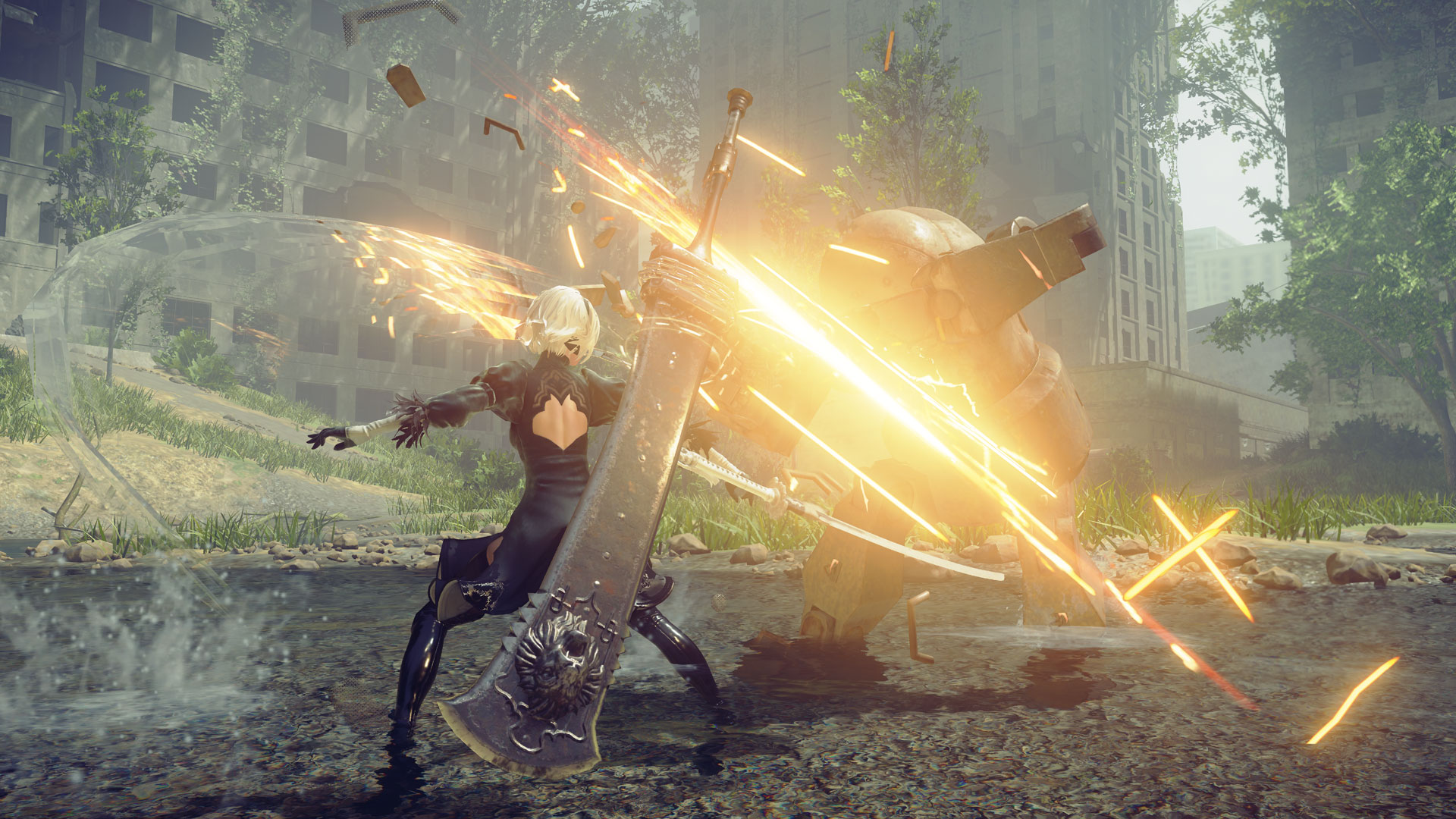
Battles blend fast melee attacks with the Pod’s ranged fire. Light and heavy attacks can be combined into strings, and two weapon sets can be prepared so the player can switch combinations during a fight. The weapon families have different reach and rhythm: small swords are balanced, large swords trade speed for force and reach, spears make direct long-range strikes, and combat bracers emphasize quick repeated blows at shorter range. Dodging is central to avoiding incoming attacks; a well-timed evasion opens a counterattack. The Pod fires at distant targets and can use a targeting lock, while its separate Pod Programs supply special actions with cooldowns. Pod attacks may supplement a melee combo, pressure enemies from a safer distance or interrupt groups, and Pods can also assist traversal. Some encounters shift the camera into side-on or overhead views, changing how the same basic actions read without turning the world into separate mission screens.
Character growth combines experience levels, equipment improvements and a configurable chip loadout. Defeating enemies and finishing missions earns experience, while weapons can be found, bought and upgraded by traders using money and required materials. Each weapon family changes the feel of light and heavy attack strings; raising weapon levels also unlocks entries in that weapon’s story, giving equipment its own small narrative thread. Plug-in Chips adjust functions such as attack strength, damage reduction and interface information. Each chip uses part of a limited storage capacity, so the player chooses which effects fit the current setup instead of equipping every available bonus. The capacity itself can be expanded, while chip combinations can support different combat or utility priorities. Weapon improvements, levels and chips therefore answer different needs: a new weapon changes moves and reach, levels raise basic attributes, and chips tune selected behaviors within the available space.
9S changes the encounter loop by adding hacking. Under the conditions the game allows, he can breach an enemy or other target; success damages it or lets him take control. The hacking sequence moves into a compact shooting challenge in which the player pilots a marker through hostile projectiles and attacks a target core. Hacking can bypass some ordinary exchanges and obtain information, but 9S’s role does not remove the need to move, evade and use his weapons in other situations. His missions make investigation and access to machine systems part of play, while 2B and A2 place more emphasis on direct melee pressure. Pod Programs, weapons and chips remain important as the campaign moves among their differing strengths. This changing balance makes the playable character’s abilities a practical part of the story’s perspective, since each android approaches the war with a distinct assignment and toolkit.
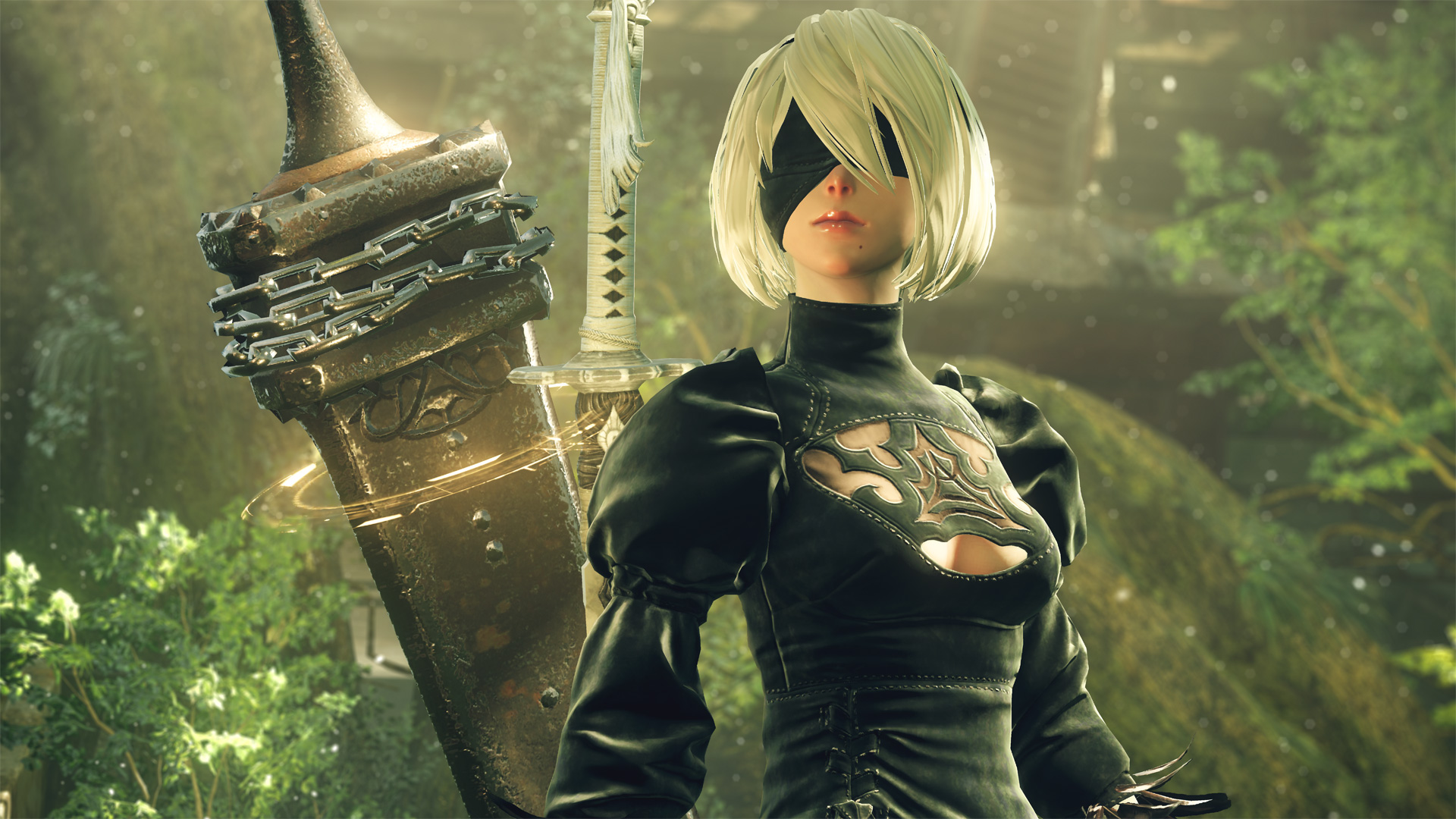
The presentation also changes shape as the player travels and fights. The camera can move smoothly between third-person exploration, side-view passages and top-down encounters, while retaining familiar controls across those shifts. Certain sequences put the androids in flight units, turning the action into scrolling projectile battles; later scenes return to ground movement and close combat. These changes in viewpoint alter how enemies and the landscape are read, even when the underlying movement and attack controls remain familiar.
- Developer
- PlatinumGames Inc.
- Genre
- Action RPG