
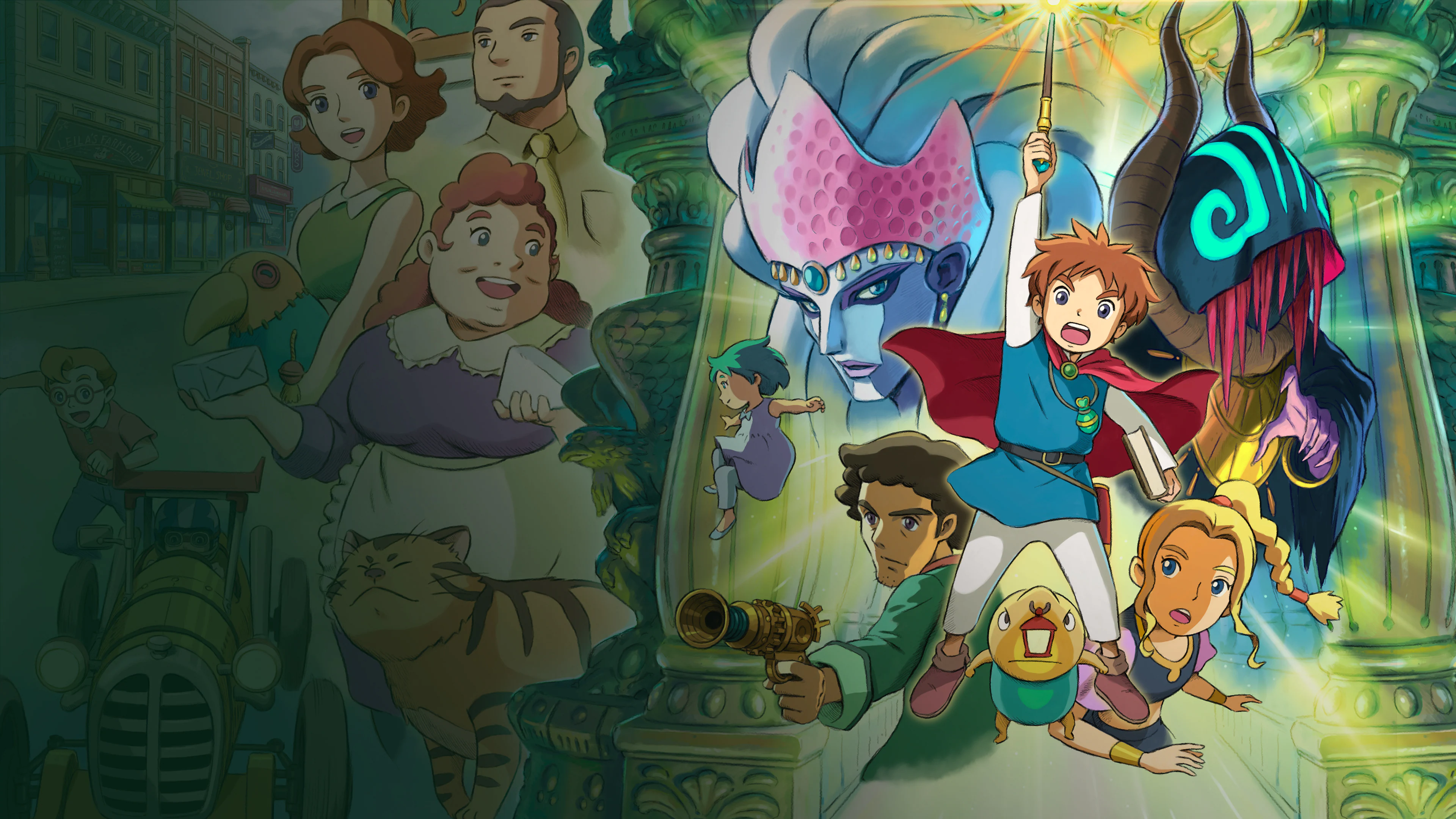
About Ni no Kuni: Wrath of the White Witch Remastered
After a tragic loss in his hometown of Motorville, Oliver crosses into a parallel world with Drippy, its self-appointed guide, hoping to find a way to bring his mother back. He studies magic, helps people across unfamiliar kingdoms, and builds a party of human companions and familiars to face the dangers surrounding their journey.
Oliver begins as a boy from Motorville whose ordinary life is broken by a tragic incident. On reaching the other world, Oliver meets Drippy, a small and flamboyant resident who becomes his guide and companion; Drippy helps him understand that he can become a wizard and travel between the two worlds. The journey is driven by Oliver’s hope of bringing his mother back, but the route quickly expands into a wider struggle involving people whose hearts have been damaged and a spreading threat to the kingdoms beyond Motorville. Drippy remains Oliver’s companion and guide, while new human allies join as the story opens up. Their personal troubles are connected to the game’s central idea that people can lose or lack qualities such as courage, kindness, or enthusiasm. Oliver learns magic that can take a needed quality from someone who has an excess and give it to a person who needs it. These encounters provide practical reasons to meet townspeople and learn what has gone wrong in each place, while keeping the larger emotional stakes tied to Oliver’s family and the fate of both worlds.
The Wizard’s Companion is both a story object and the framework for Oliver’s growing command of magic. Its pages introduce spells and explain the creatures and customs of the other world, and new entries arrive as the journey proceeds. Oliver’s magic handles more than combat: it can open certain chests, restore or transfer pieces of heart, and provide ways to cross otherwise blocked routes. The story teaches new uses as it develops, so returning to earlier places with a wider spell set can make previously inaccessible objects or routes reachable. People encountered in towns also supply errands, information, and magical context, and resting at inns can add missing Companion pages. This gives the book a place in the rhythm of play: it records a body of world knowledge while reflecting the practical abilities Oliver has gained. The spell list also makes Oliver distinct from the creatures and companions who fight beside him. His role is not only to issue commands in battle; he is the party member whose magical repertoire connects exploration, puzzle-like obstacles, and the story’s heart-based themes.
Travel moves between detailed settlements and dungeons and a broader world map that links regions. On foot, Oliver explores paths, talks with residents, enters shops and inns, searches buildings and caves, and follows routes into areas where hostile creatures roam. The world map presents geography at a larger scale and makes enemy creatures visible, so a player can try to approach from behind, engage, or steer clear. Later story progress adds forms of transportation that extend the reach of the map and make distant shores and places possible to visit. This gradual expansion means that movement is part of progression: a region first reached through a narrow route can later become one stop among many on a wider journey. Treasure also rewards attention to the environment. Some finds sit in containers or marked points, while others are concealed or sealed behind magic and call for a spell or ability acquired later. That structure makes revisits meaningful without turning every return into the same task, because character growth, new magic, and transportation change what can be reached. The scale alternates between room-by-room exploration and a compact map view that helps connect the kingdoms.

Exploration feeds into a steady series of practical activities rather than consisting only of the main route. Swift Solutions gathers errands and bounties, which send Oliver to help residents or confront a dangerous fiend; completing them awards money, items, and merit stamps that can be exchanged for rewards. Shops provide equipment and supplies, while inns restore the party and add context through the Wizard’s Companion. Dungeons and towns contain treasures, some of which need a specific spell, later-acquired tool, or a companion in the party before they can be opened. This gives return visits a clear purpose: a chest that was sealed earlier may now yield something useful, and an earlier settlement may have new tasks or conversation as the story advances. The battle system also connects exploration to resources, since enemies provide experience and may leave items, while battlefield glims can recover health or magic. Alchemy adds another use for collected materials by combining ingredients through recipes into improved items. These activities support each other: fighting can supply components and growth, side tasks can supply stamps and equipment, and exploration opens routes to more encounters and stores. Optional work therefore strengthens the same party used to advance the narrative.
Encounters use an arena where combatants can move while commands are selected, combining real-time movement with menu-based tactical choices. The player can switch control among available human characters and their familiars, choosing attacks, spells, tricks, items, or defensive actions as a battle unfolds. Actions have timing and recovery, and familiar stamina limits how long a summoned creature can remain effective before it needs to be recalled. A familiar and its human partner share a battle role, so switching between an exhausted familiar and another available option matters. The party can also issue broad all-out attack or all-out defense instructions when an enemy prepares a dangerous move. Elemental affinities shape those decisions: attacks and equipment can carry fire, water, storm, light, or darkness properties, while enemies and familiars may resist some forms and be vulnerable to others. Correct timing can interrupt an incoming move, and defeating enemies can release green or blue glims that restore health or magic. A rarer golden glim fully restores the character who collects it and enables a powerful Miracle Move. Boss encounters therefore ask the player to watch enemy tells, manage stamina and resources, and choose whether the moment calls for offense, defense, healing, or a change of familiar.
Familiars are creatures that can be raised and deployed as the party’s main source of specialized combat actions. The roster is not limited to story gifts: after Esther joins and the Temple of Trials is complete, an enemy may show hearts during a fight, creating an opportunity for Esther to use Serenade and tame it. Each party member can take three familiars into battle and keep additional ones in reserve, so the lineup can cover different strengths and tactics. Familiars earn experience in battle and can be fed treats that raise attributes and familiarity; a favorite treat builds that bond more effectively. Their species group, elemental sign, growth pattern, tricks, and transformation options give the collecting loop a functional purpose. Familiar stamina encourages rotating the active creature instead of relying on one summon continuously, while shared partner resources make the selection a tactical extension of the character using it. As the group grows, battles draw on a shifting combination of Oliver’s spells, other companions’ abilities, and the familiar currently summoned. This makes party development an ongoing process of catching, training, and choosing a balanced set for the encounter ahead.
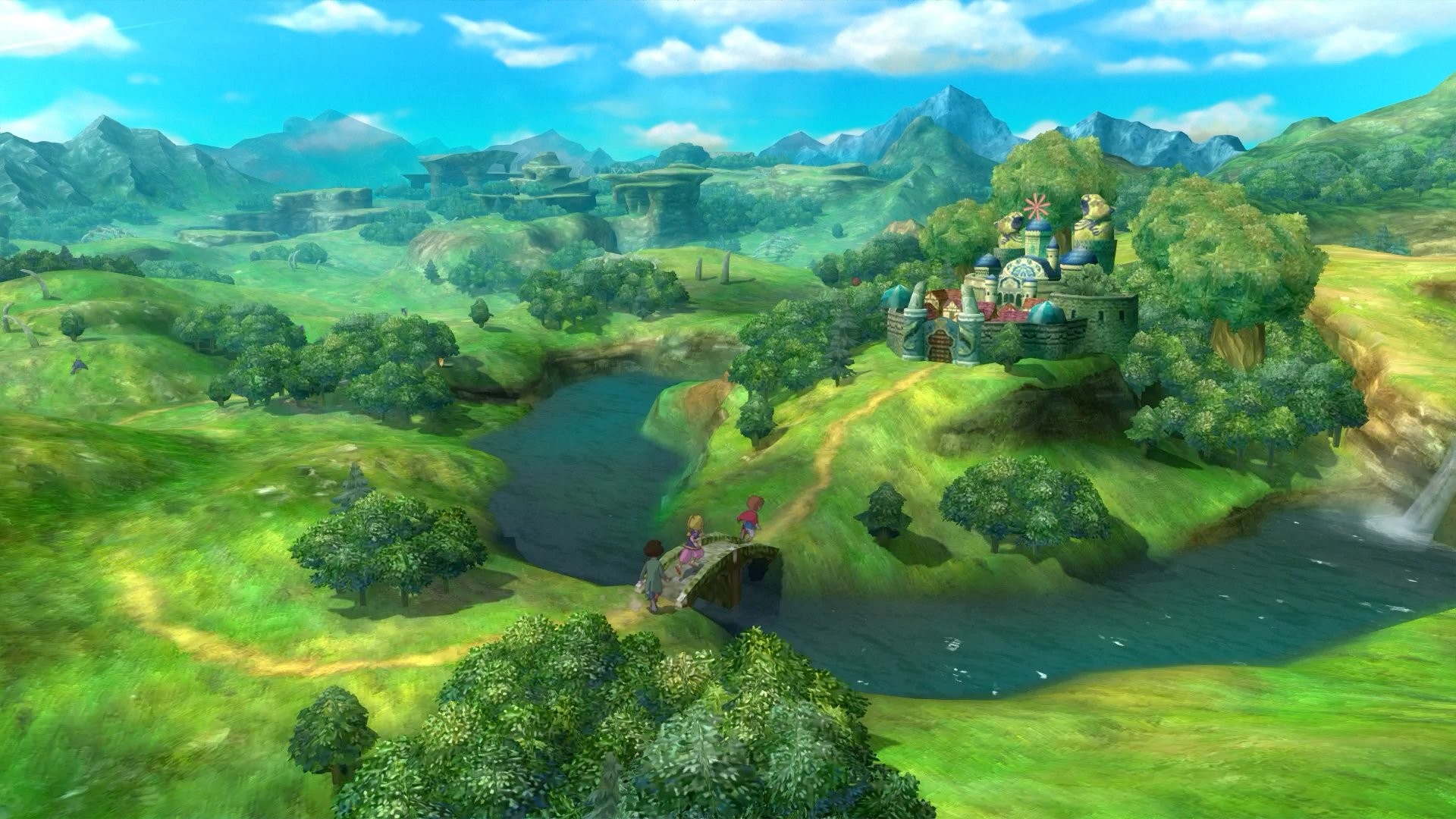
The presentation combines LEVEL-5’s role-playing structure with animated cut-scenes storyboarded and created with Studio Ghibli, and a score composed by Joe Hisaishi. The contrast between Motorville and the other world gives the journey two distinct visual contexts: familiar streets frame Oliver’s loss, while the fantasy kingdoms introduce their own architecture, landscapes, and local concerns. Illustrated environments, character animation, and expressive cut-scenes carry story beats between exploration and battles. The Steam release is the 2019 PC remaster, developed by LEVEL5 Inc. and QLOC and published by Bandai Namco Entertainment. This release improves graphics and performance while retaining the Wrath of the White Witch story and its action-and-menu combat. Bandai Namco distinguished this remastered PC and PlayStation 4 release from the Nintendo Switch version launched alongside them, which was the original version adapted for that platform. The PC remaster preserves the original story and combat systems while sharpening their presentation, and remains a separate release from the Switch adaptation and the later Ni no Kuni II. The illustrated world map and hand-drawn scenes give Oliver’s movement between Motorville and the fantasy kingdoms a visual continuity as his powers grow.
- Developer
- LEVEL5 Inc.; QLOC (Steam-listed PC remaster developers)
- Genre
- Role-playing game