
About Neverwinter Nights: Enhanced Edition
Create a hero in the Forgotten Realms and enter Neverwinter as a plague called the Wailing Death spreads through the quarantined city. Investigate the crisis through towns, dungeons and wilderness, using Dungeons & Dragons character rules, real-time combat and allies. The Steam Enhanced Edition also includes two expansions, premium modules and tools for creating adventures.
The original Neverwinter Nights campaign begins while the city of Neverwinter is under quarantine. The Wailing Death has killed thousands and continues to infect residents, and Lady Aribeth de Tylmarande calls on adventurers to help restore order and find a cure. The player creates the hero at the centre of that effort and travels through the city, its surrounding wilderness and dangerous dungeons as intrigue and dark magic complicate the search. The campaign moves through distinct areas rather than one continuous landscape: settlements provide people to question and services to use, while hostile locations turn information gathering into exploration and combat. This is the story of the base campaign only. Its plague investigation is a separate adventure from the expansion stories included in the same Enhanced Edition package.
Before setting out, the player chooses a race, class, alignment and ability scores, then develops the character through skills, feats, equipment and spells. The available classes cover different approaches: fighters focus on martial ability, rogues apply practical and stealth skills, clerics wield divine magic, and wizards and sorcerers use arcane spells through different class systems. Race and class requirements shape which combinations are possible, while ability scores affect how effective particular skills and abilities become. Alignment expresses a character’s relation to good and evil and law and chaos; the manual notes that it can affect some non-player characters’ reactions and whether certain items can be used. The design makes a character build more than a choice of weapon: it affects which obstacles the hero can handle directly and what options may be available in a conversation or encounter.
Advancement gives the player regular opportunities to specialize. Experience from adventures raises character levels, which can grant more skills, feats, spells and class abilities. Skill points increase ranks in practical disciplines, and the interface shows each skill’s modifier and the cost of improving it. Feats add capabilities or strengthen existing ones, while class features create distinctive tools: a druid can summon an animal companion and later gain animal forms, a fighter earns bonus feats, and a cleric can turn undead. Multiclassing allows a character to combine class paths, but each level gained is a choice about what the hero will be able to do. The player can also shape appearance and description, giving the created character a recognizable place in a campaign whose dialogue and encounters respond to the abilities, alignments and actions brought into it.
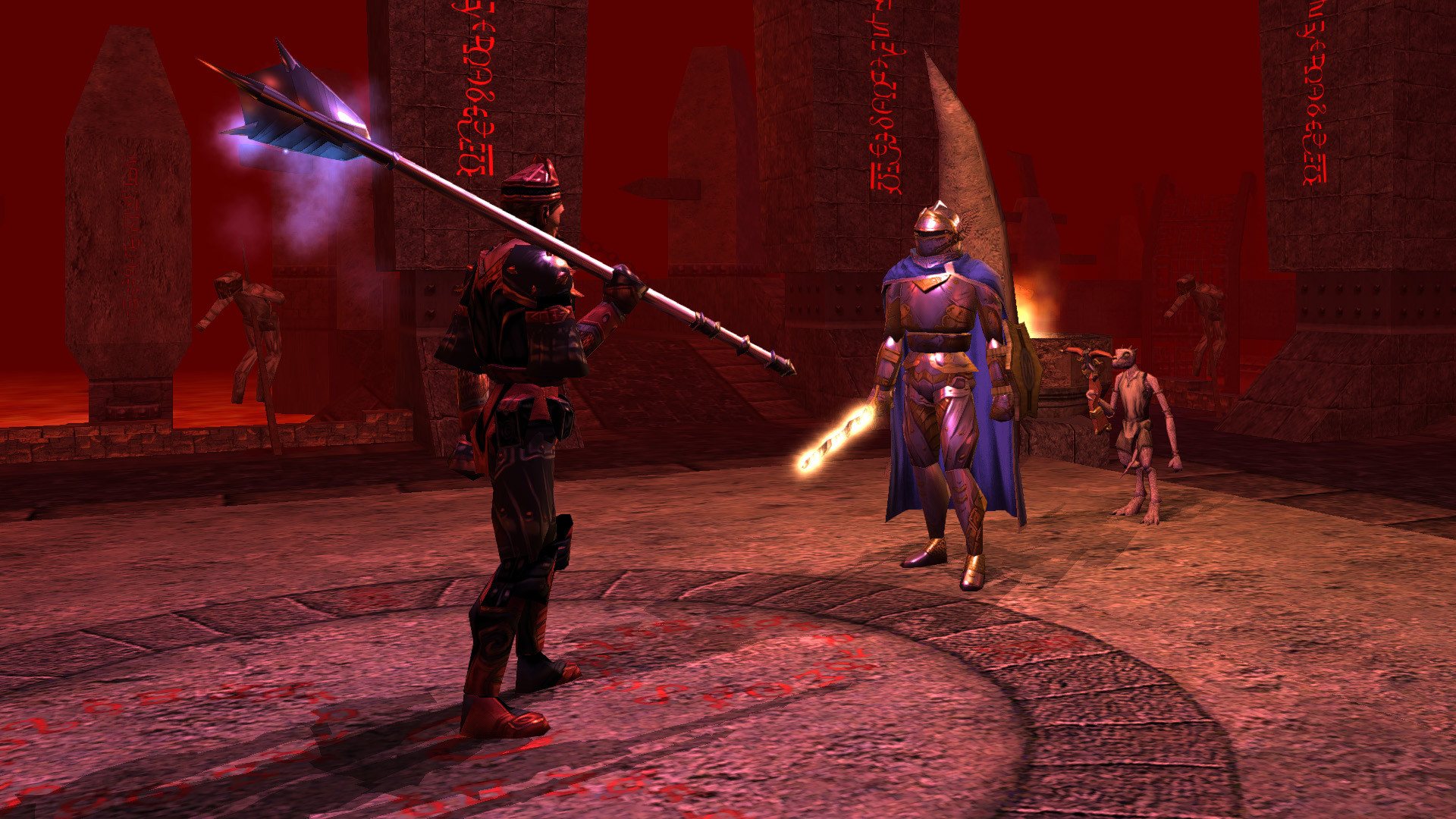
Combat plays in real time while applying the turn-based Dungeons & Dragons third-edition rules. The player issues movement, attacks, spells and other actions, and the action queue shows what the character is doing and what has been ordered next. Attacks are resolved by rolling against an opponent’s Armor Class; ability modifiers, equipment, feats and effects can change the result. The player can queue compatible tasks, such as opening a door, picking up an item or casting a spell, while a new movement or combat order can replace tasks still waiting. This makes the timing and order of commands part of combat management. A protective spell, a change of target or a healing item can be chosen while the encounter unfolds. Resting restores health and some class resources but takes time and cannot be done during or immediately after combat, so the player must find a safe interval between dangers.
Outside combat, the player interacts with the world through context-sensitive menus and the skills attached to the character. A right-click opens radial options for the selected object, person or place; a locked container, for example, may offer different responses depending on the hero’s abilities and available spells. The character sheet and skills panel help the player judge where the hero is competent, while conversations supply information and connect the campaign’s requests to places the group can reach. Non-player characters may become friendly or hostile in response to the hero’s actions, and the original manual notes that attacking innocents can cost allies while helping an evil group may create other relationships. The result is an adventure loop of talking, travelling, investigating, fighting and improving the character, with player actions shaping how particular people respond rather than every encounter being a battle.
The two expansions tell their own linked stories. Shadows of Undrentide sends a student from the Silver Marches to recover four ancient artifacts and investigate a long-dead magical civilization. Hordes of the Underdark continues that expansion’s character journey, taking the hero beneath Waterdeep into the increasingly hostile Undermountain. Their premises and locations differ from the Wailing Death campaign, so the package is best understood as several adventures built around the same rules and character framework, not as one plague plot that continues unchanged. The Steam edition also lists three separate premium modules: Kingmaker, ShadowGuard and Witch’s Wake. These offer additional standalone stories alongside the original campaign and the expansions, while community-created modules broaden the range of adventures available through the game’s longstanding creator community.
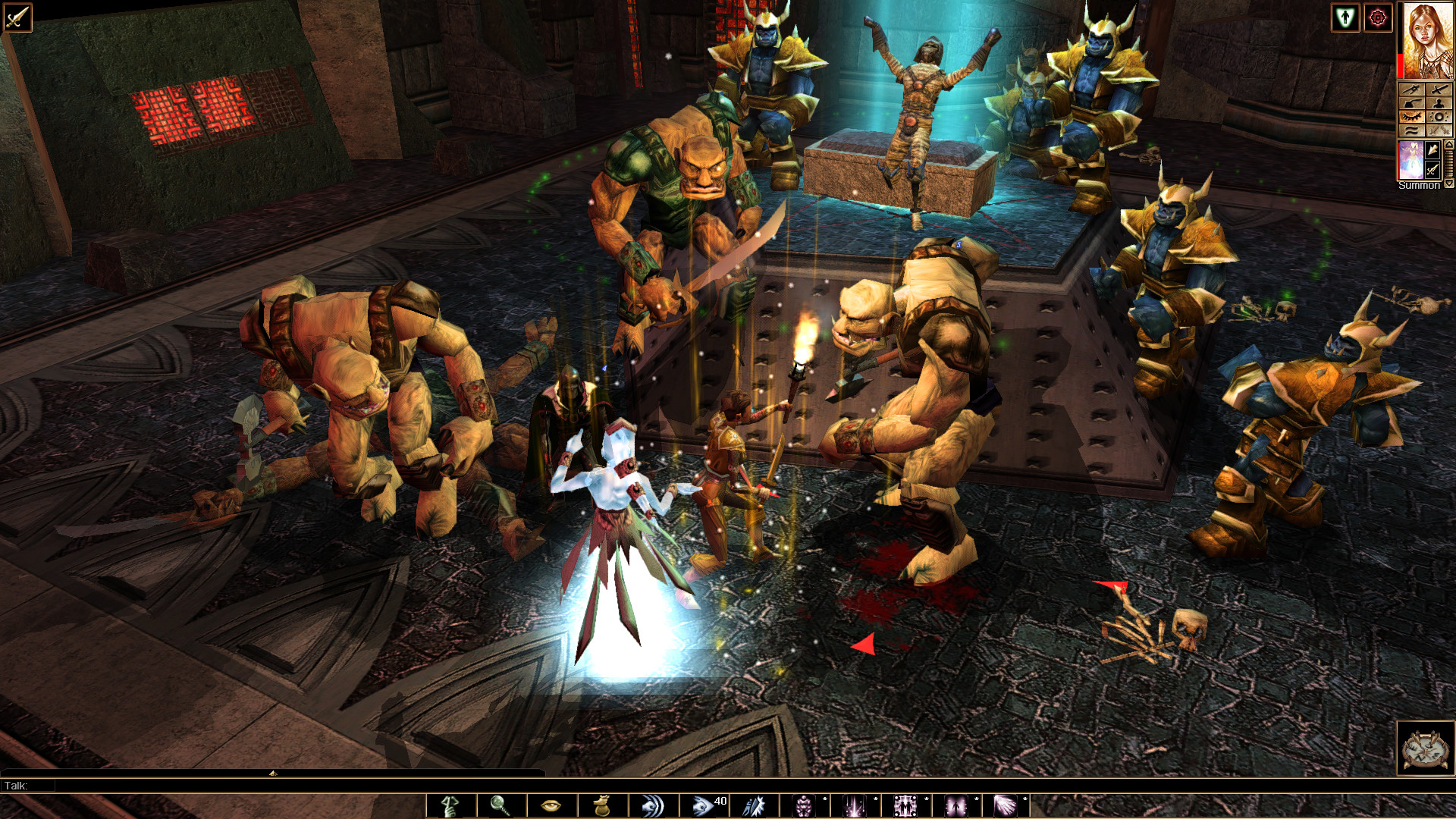
Neverwinter Nights also includes a creation and multiplayer layer alongside its authored campaigns. On Windows, the Aurora Toolset lets creators assemble areas, encounters, creatures, objects and traps into modules; the Dungeon Master client provides controls for running a multiplayer adventure and directing what players encounter. Steam identifies the Enhanced Edition as supporting online co-op, online player-versus-player, Steam Workshop and a level editor. Beamdog describes the edition’s display scaling for high resolutions, graphics options, restored multiplayer and improvements for toolset users, as well as compatibility with original-game saves, modules and modifications. The Steam package specifically lists the original campaign, Shadows of Undrentide, Hordes of the Underdark and the three PC premium modules described above. That distinction matters because the Beamdog page notes that console editions include a different premium-module selection.
- Developer
- Beamdog
- Genre
- RPG