
About Neon White
Neon White is a first-person action platformer about a sinner recruited from Hell to hunt demons in Heaven for a chance at redemption. White races through compact stages, using Soul Cards as both weapons and one-use movement abilities. Between runs, conversations and gifts connect the competition to a mystery about the other Neons.
White arrives in Heaven with a new name, a missing past and a job that sounds straightforward: help clear the realm of demons. He is one of several Neons, assassins drawn from Hell to compete for a chance at permanent residence in Heaven. The setup turns each day's assignments into both a demon hunt and a contest. White's rivals include Red, Yellow, Violet and Green, each carrying a distinct personality and a connection to the questions surrounding his lost memories. The game lets that uncertainty sit in the background while its short action stages establish the rules of the competition.
A stage asks White to reach its exit while eliminating every demon placed along the route. The spaces are built for movement at speed: platforms, gaps, hazards, elevated routes and enemies all shape the path between the start and finish. A clear is not simply a matter of reaching the end alive, because the clock measures how efficiently White dealt with the required targets and traversed the arena. The first route through a level may be a safe line that proves it can be completed; subsequent attempts invite closer inspection of where a jump can be shortened, a target approached differently or a detour removed.
Soul Cards make the route a resource puzzle. Cards found along a level provide limited-use weapons, so White can fire them at demons, but most can instead be discarded to trigger a special action. A handgun card, for example, grants a double jump when discarded. A Fireball card fires a close-range blast and can be sacrificed for a directional air dash that damages enemies in its path. Other card abilities include a ground pound and a grappling hook. Spending a card for movement removes its remaining ammunition, so every discard weighs the value of a shot against the possibility of reaching a ledge, crossing a gap or taking a faster line.
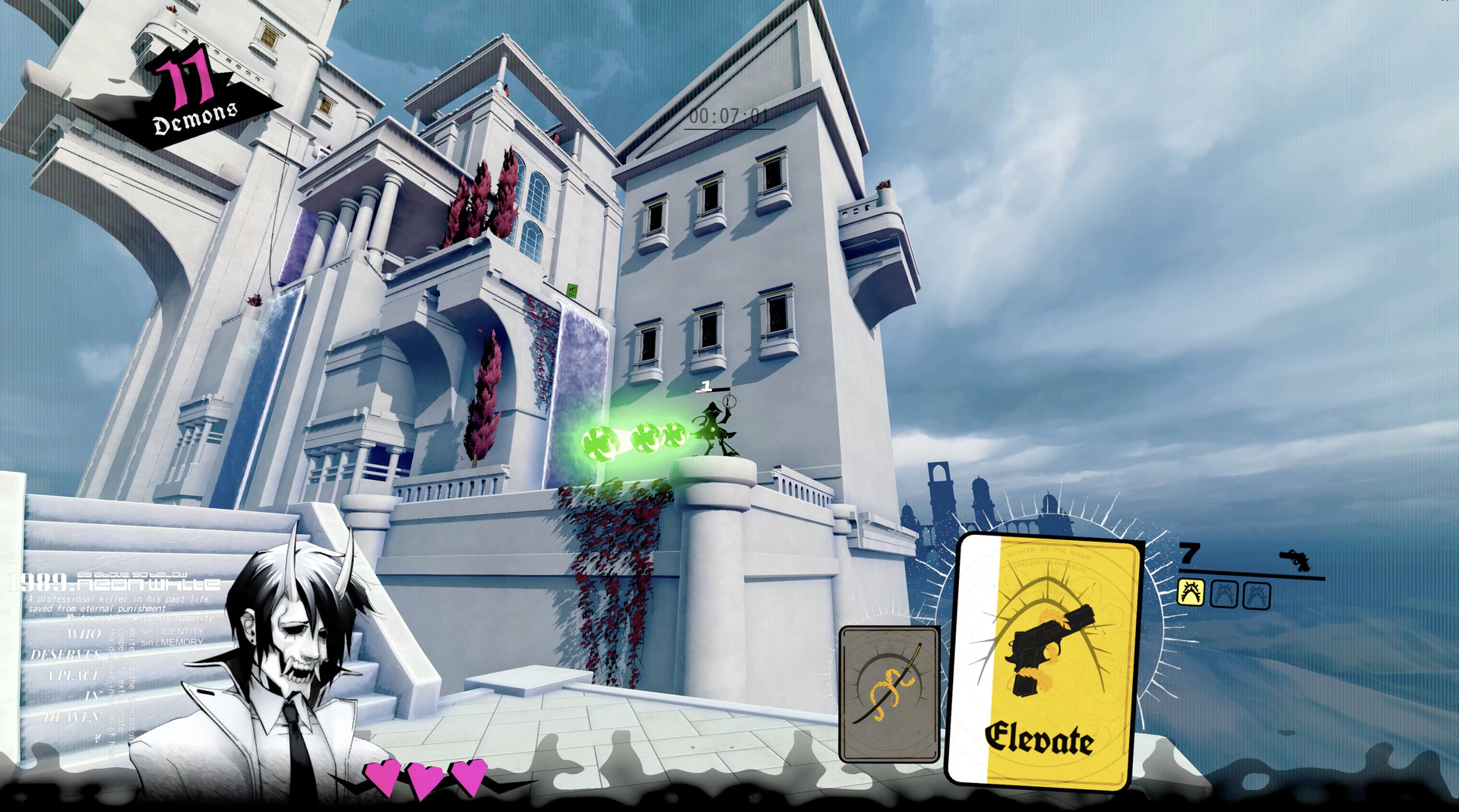
The levels supply their own cards and place them in particular spots, making their layout part of the decision. White can carry only a small selection at once, and the cards available ahead suggest which actions the route may demand. An assault-rifle discard launches an explosive that can clear a group of demons, break certain barriers or propel White upward; the same action can therefore serve combat and traversal. A slam can damage enemies and break surfaces below. The remaining ammunition also represents a possible movement ability when used at the right moment. Replays make those trade-offs easier to see and execute.
Completion times award medals, with Bronze, Silver, Gold and Ace marking progressively faster clears. Gold medals contribute to White's Neon Rank, which is needed to move on to later assignments, while Ace times offer a demanding target for players who want to refine a route further. Levels can be replayed immediately, and a mistake or an inefficient card use can be answered with a quick restart. Each stage also tracks Insight as it is replayed; raising it reveals rewards such as a ghost of a previous run or a hint toward a shortcut. Those aids let the player compare movement and learn a route without removing the timed challenge.
A first clear also opens a different reason to revisit a stage: gifts can be found off the fastest route and brought back to characters in Heaven. Giving a present can unlock further dialogue or a character side quest, adding small, separate challenges alongside the main demon-hunting assignments. A gift may require a different order of Soul Card use from the quickest exit route, turning the search into a small movement puzzle of its own. Each has a particular recipient, giving White another way to learn about that person's relationship with him. The space between runs works like a social hub and visual-novel interlude, where White can speak with the other Neons and the inhabitants who orbit their competition. These quieter scenes contrast with the focused timer, while the conversations gradually give context to the cast and White's amnesia without making every level a story sequence.
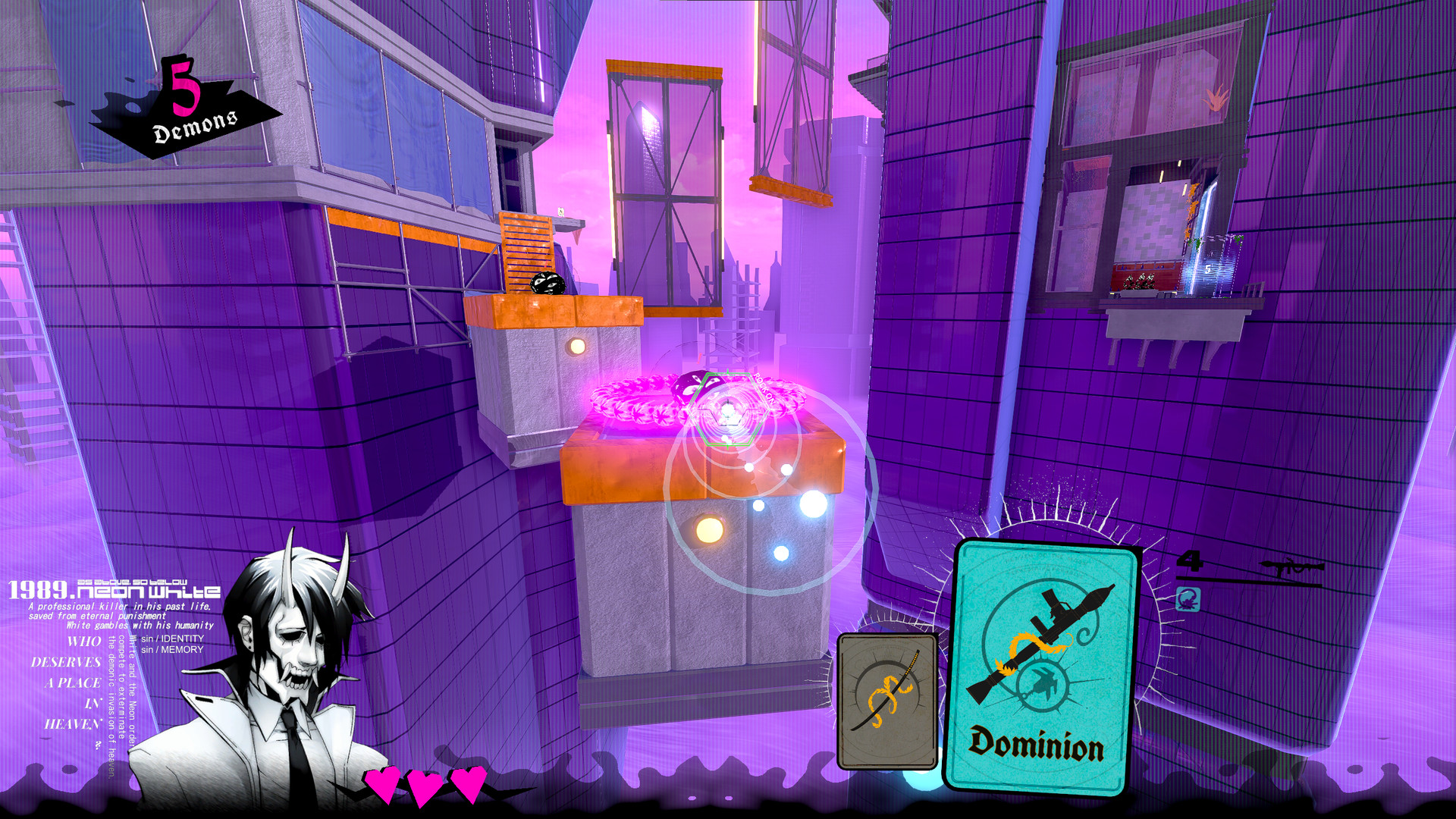
The larger structure alternates these two rhythms. A set of stages forms a day's work, and earning enough rank through medals opens the next portion of the contest. Some assignments introduce new combinations of enemies, terrain and card uses; character quests add their own variations on the movement challenges. Later, the contest also brings White into stages built around confronting rival hunters, asking the player to use the same movement and Soul Card skills against a different kind of opponent. These encounters extend the competition beyond clearing a route of demons while keeping the focus on precise movement and resource use. The premise remains spoiler-light: Heaven is an arena with an infestation to clear, and the other hunters appear to know more about White than he does. Across both the hub and the stages, progress comes from learning the rules, improving times and choosing how deeply to follow the personal stories tied to the competition.
- Developer
- Ben Esposito / Little Flag Software, LLC
- Genre
- First-person action platformer with speedrunning and card-based combat/traversal