
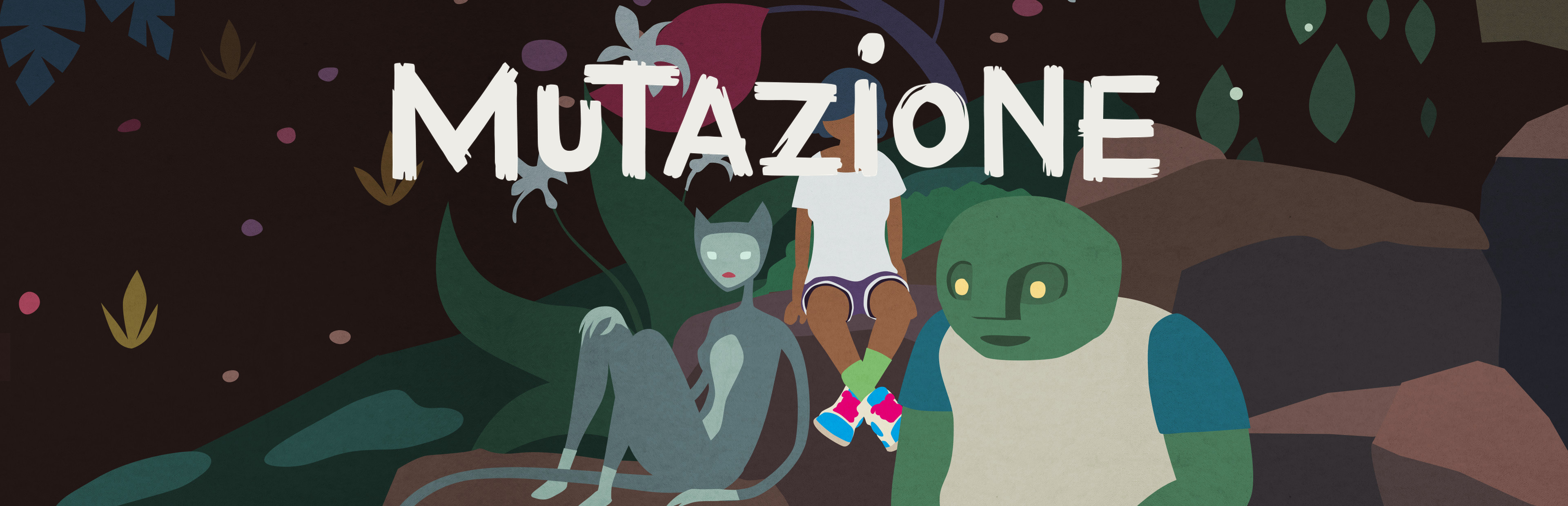
About Mutazione
Fifteen-year-old Kai visits the isolated community of Mutazione to care for her ailing grandfather, Nonno. As she meets the island’s residents, follows their changing routines and helps restore its musical gardens, ordinary conversations lead into older secrets connected to the Moon Dragon meteor and the strange life that grew in its wake.
Mutazione begins with Kai travelling to an isolated island community to look after her grandfather, Nonno. More than a century earlier, the Moon Dragon meteor struck a tropical holiday resort there. Most residents died, while survivors developed mutations and eventually formed the small settlement of Mutazione after rescue efforts withdrew. The present-day community lives among the changed landscape and the remains of the resort, where ordinary social life coexists with supernatural mysteries and unusual plant life. Nonno’s illness gives Kai a family reason to stay, but her visit soon involves more than nursing: he has plans for her, people in the community have histories with one another, and a bird-like figure appears in her dreams. The story follows Kai as she becomes part of a place whose residents already have routines, friendships, conflicts and memories before she arrives. The game describes itself as a mutant soap opera, and its focus reflects that form: personal conversations, family ties and community drama carry as much weight as the larger mystery. Kai is central to what the player does, yet she is one participant among an ensemble rather than the only person with a story. The gradual unfolding of those relationships connects the meteor’s legacy to present-day questions of care, change and belonging.
Most of Kai’s movement is on foot through the island’s connected locations. She walks between homes, gardens, communal spaces and the traces of the old resort, looking for people to speak with and objects or seeds to examine or collect. Contextual symbols distinguish common interactions: a hand indicates something that can be picked up, an eye marks something Kai can inspect, and a clock identifies an event or conversation that advances the current time of day. This gives exploration a conversational rhythm. Kai may check a place for new details, gather something useful, or decide whether she is ready to trigger a scheduled story beat. Characters do not simply wait in one spot for the player; their routines place them in different locations at different times. Narrative designer Hannah Nicklin describes how characters such as Mori, who serves food at the Stir Fry, and Spike and Claire, who meet near the harbor in the morning, follow these routines. The island therefore asks players to pay attention to when and where they look for someone. Some optional conversations and smaller plotlines can be missed as time moves on, while required story moments help Kai proceed. Moving through familiar places at new times reveals different interactions and shows a community carrying on beyond the immediate task.
Conversation is the main way Kai learns about the people around her. Residents speak in their own styles and bring separate concerns to their exchanges with her; the dialogue can offer reactions that let Kai respond earnestly, defuse a moment with humor or sometimes remain quiet. These choices can color a scene and open different details, memories or side stories, while the main narrative still follows its intended course. The larger freedom lies in which optional conversations Kai pursues, how much of the community’s overlapping history she hears, and which relationships she spends more time understanding. Her journal helps make the day’s structure visible by recording tasks and reminders, including people to check on and things promised to others. Some conversations and actions advance time; the clock symbol warns when an interaction will do so. This means the player can explore a little more before choosing to move the day forward, rather than having time pass invisibly with every step. The cast’s schedules and interwoven plotlines create a sense of a lived-in place: Kai can encounter a scene between other residents, not only a conversation arranged to deliver her next instruction. Her role is to listen, help where she can and gradually understand the history connecting the community.
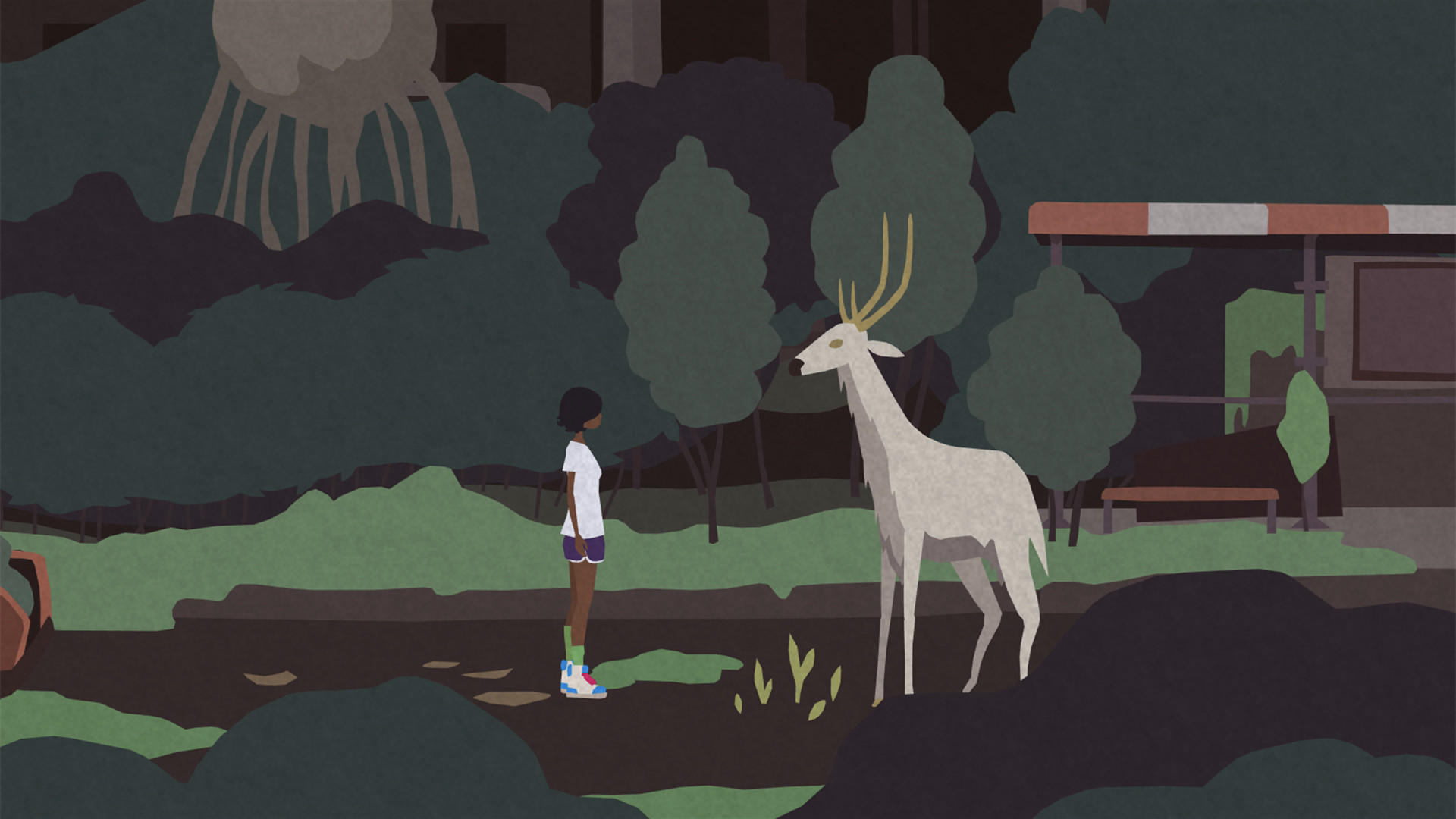
Gardening is the story mode’s central hands-on system and a practical part of Kai’s work with Nonno. She gathers seeds from plants and other growth around the island, then plants them in particular gardens scattered through the community. The plots have different soils and layouts, so a seed suited to one place may not behave the same way elsewhere. Each seed is associated with a musical sound or instrument, and plants growing together build a changing soundscape. As they develop, their musical parts become fuller, and the composition shifts over time. Planting is therefore both a task and a way to shape the character of a place. Kai learns songs that help plants grow, and completing garden requests contributes to the story’s progress. Seeds collected in one part of the island can be used in a later plot, so exploration feeds into cultivation, and the gardens in turn feed into Kai’s work for the community. The musical result is not a separate soundtrack layered over the activity: the plants themselves supply notes and sounds as they grow. This ties the game’s ecology, progression and presentation together, making the garden a visible sign of Kai’s growing involvement with the island and a place whose character emerges through the seeds she chooses.
The garden system has a broader experimental form alongside the story. In standalone Garden Mode, players can work with gardens outside the narrative’s requests, customize their arrangements and listen to the compositions that emerge. Die Gute Fabrik’s later New Sounds & Seeds update added more plants to this mode and described eight unlockable gardens, each providing another space for arranging plant-generated music. The studio also introduced the Cloud Garden as a special area available in Garden Mode, and seed sharing lets players send and receive seeds with friends on supported PC and console versions. These additions extend the same basic connection between plant growth and sound without changing the premise of Kai’s visit. The story gardens remain tied to particular locations, their soils and the events of the narrative; the standalone mode makes garden arrangement an activity in its own right. As plants grow, their sounds combine into compositions that can be revisited and changed by trying different seeds or layouts. The official update reports more than 120 plant species and instruments across the completed game and its Garden Mode content, but the player does not need to collect every variety to follow Kai’s main story. Gardening can serve the immediate requests that move the plot along, or provide space to experiment with how the island’s different seeds sound together.
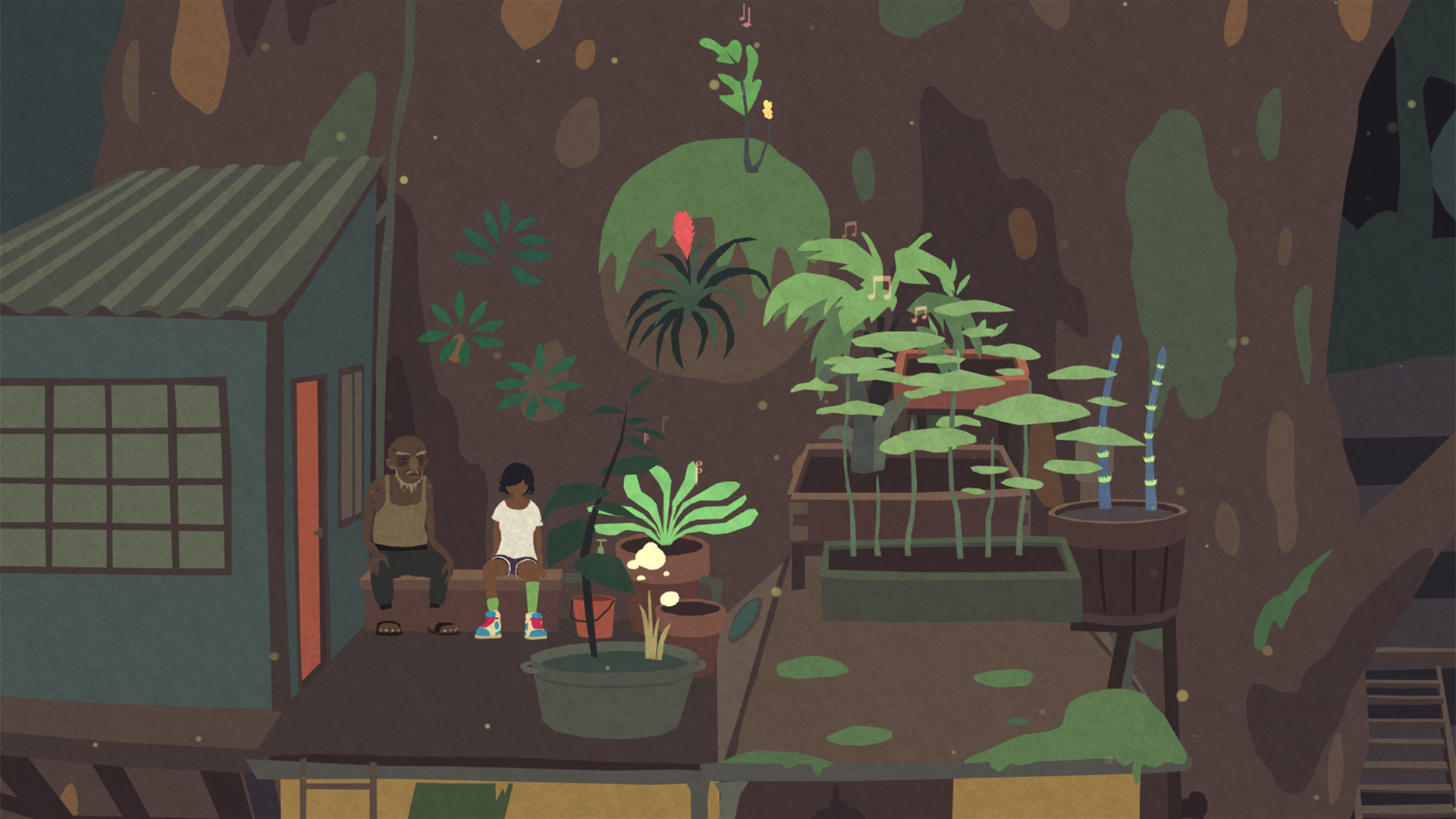
Mutazione presents this community through a hand-illustrated, colorful world whose visual warmth can shift when scenes turn toward loss or the island’s uncanny history. Its sound design has two closely connected parts: conversations and everyday events give the residents their voices, while the gardens create layered music from the plants Kai cultivates. The game’s pacing follows eight story days, each divided into named periods such as dawn, morning, lunch, afternoon, evening, night and late night. Conversations, journal tasks, garden states and other events can determine which interactions become available, while the journal and clock symbol help communicate when an action moves time forward. These systems let the player follow the central story or spend more time with optional threads when they appear. Mutazione was developed by Die Gute Fabrik and is published by Akupara Games. The Steam release lists Windows, macOS and Linux system requirements; Akupara also lists console and mobile ports, including PlayStation 4, Nintendo Switch, Xbox, Android and iOS. Steam lists a Deluxe Edition bundle containing the game and soundtrack. The developer’s New Sounds & Seeds update also describes Garden Mode, Cloud Garden and seed sharing as additions to the game. Those garden features expand experimentation around the same world and musical plant system, while the story remains focused on Kai, Nonno and the residents whose lives intersect on the island.
- Developer
- Die Gute Fabrik
- Genre
- Adventure, Indie