
About Mutant Year Zero: Road to Eden
Mutant Year Zero: Road to Eden follows a band of Stalkers who leave the Ark to search the dangerous Zone for supplies and answers. Its journey joins real-time exploration and stealth with grid-based tactical combat, while mutations and scavenged equipment shape how each three-mutant expedition handles hostile patrols.
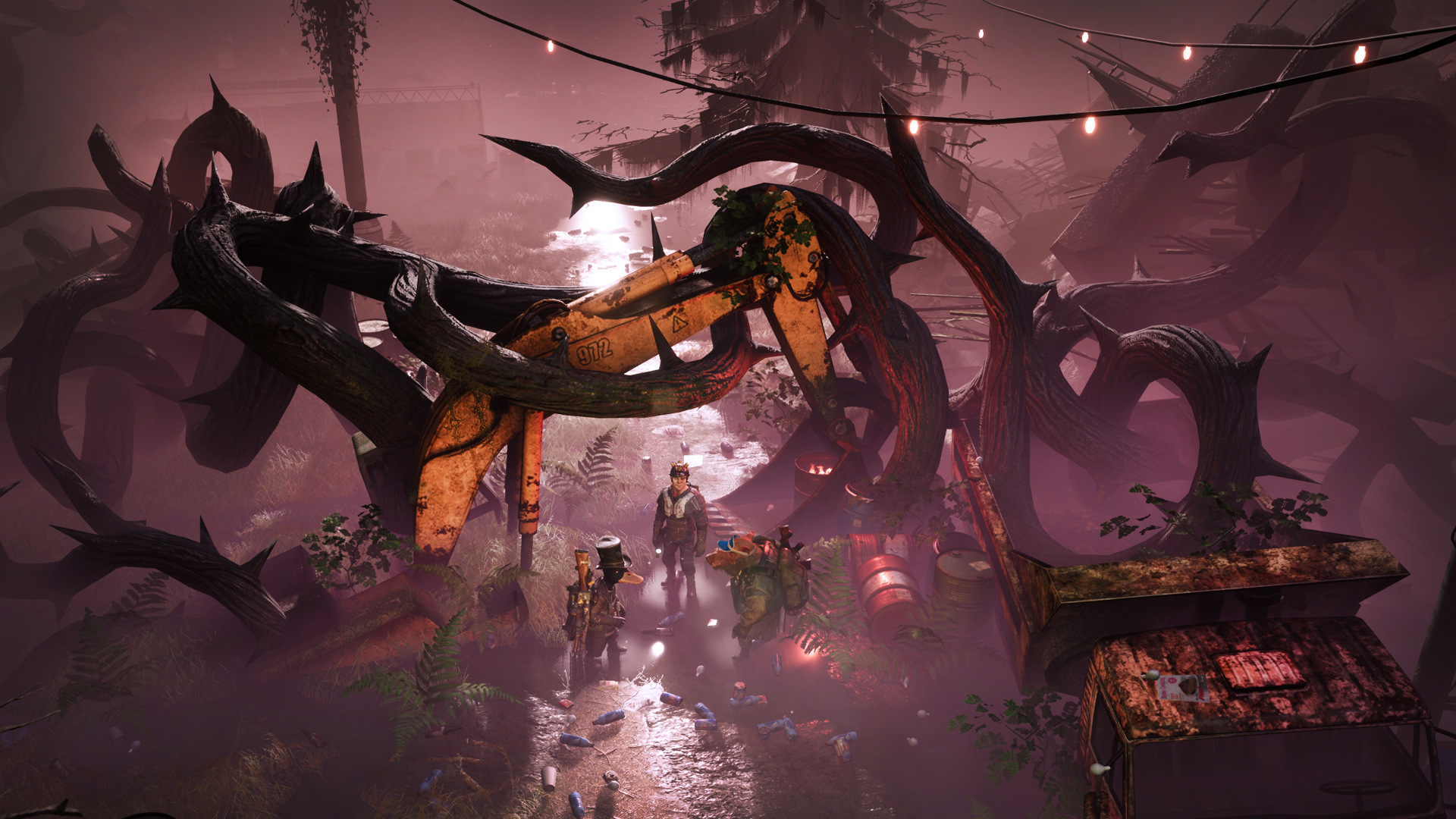
Mutant Year Zero: Road to Eden takes place after pandemics, climate change and nuclear war have left cities in ruins and the countryside reclaimed by nature. Mutated people and animals survive in scattered communities, with the Ark serving as a protected settlement above the surrounding Zone. The Ark itself sits on an old bridge; beyond it, abandoned roads and buildings contain scrap, weapons and remnants of the world that came before. Zone Ghouls, mutated creatures and still-functioning machines make those ruins dangerous, and the Elder sends Stalkers out because the community needs supplies. The campaign begins with Dux and Bormin returning from a mission, then gives them a specific task that draws them farther into the wasteland. The search for the legendary Eden supplies a destination, but the day-to-day work is grounded in scouting, gathering and getting the team back alive.
The Stalkers are a small group of distinctive mutants rather than a faceless troop roster. Dux is a crossbow-carrying duck, while Bormin is a shotgun-using boar; Selma, a human-like mutant, joins the expedition as it grows. Their conversations and reactions give the overgrown ruins a local perspective: a relic such as a boombox is an odd artifact to them, while scraps of old-world technology are valuable if they can be repurposed. Back at the Ark, the Elder gives direction and context, Pripp runs a bar where recovered artifacts can be exchanged for team-wide benefits, Delta maintains weapons, and Iridia sells supplies. These residents connect the expedition to a fragile community with practical needs. The search is therefore not a detached tour of abandoned places: each trip pushes the team toward the Elder’s mission while bringing back resources that can help the Ark’s defenders survive.
Travel through each part of the Zone happens in real time, with the player controlling a party of up to three Stalkers and searching the area before moving on. Scrap is the Ark’s everyday currency, weapon parts improve firearms, and ancient artifacts can unlock shared bonuses through Pripp. Delta’s fix pit upgrades weapons with those parts, while Iridia’s shop trades scrap for items such as medkits, grenades, scopes and guns. A Stalker can carry two weapons, so loadouts can balance quiet tools for isolated targets with louder options for a fight that has already begun. Since supplies are limited to what the team finds and brings back, side paths and containers have a concrete strategic purpose: they expand what the party can buy or improve before the next push into hostile ground. The Ark is the hub for those exchanges and the staging point for each expedition.
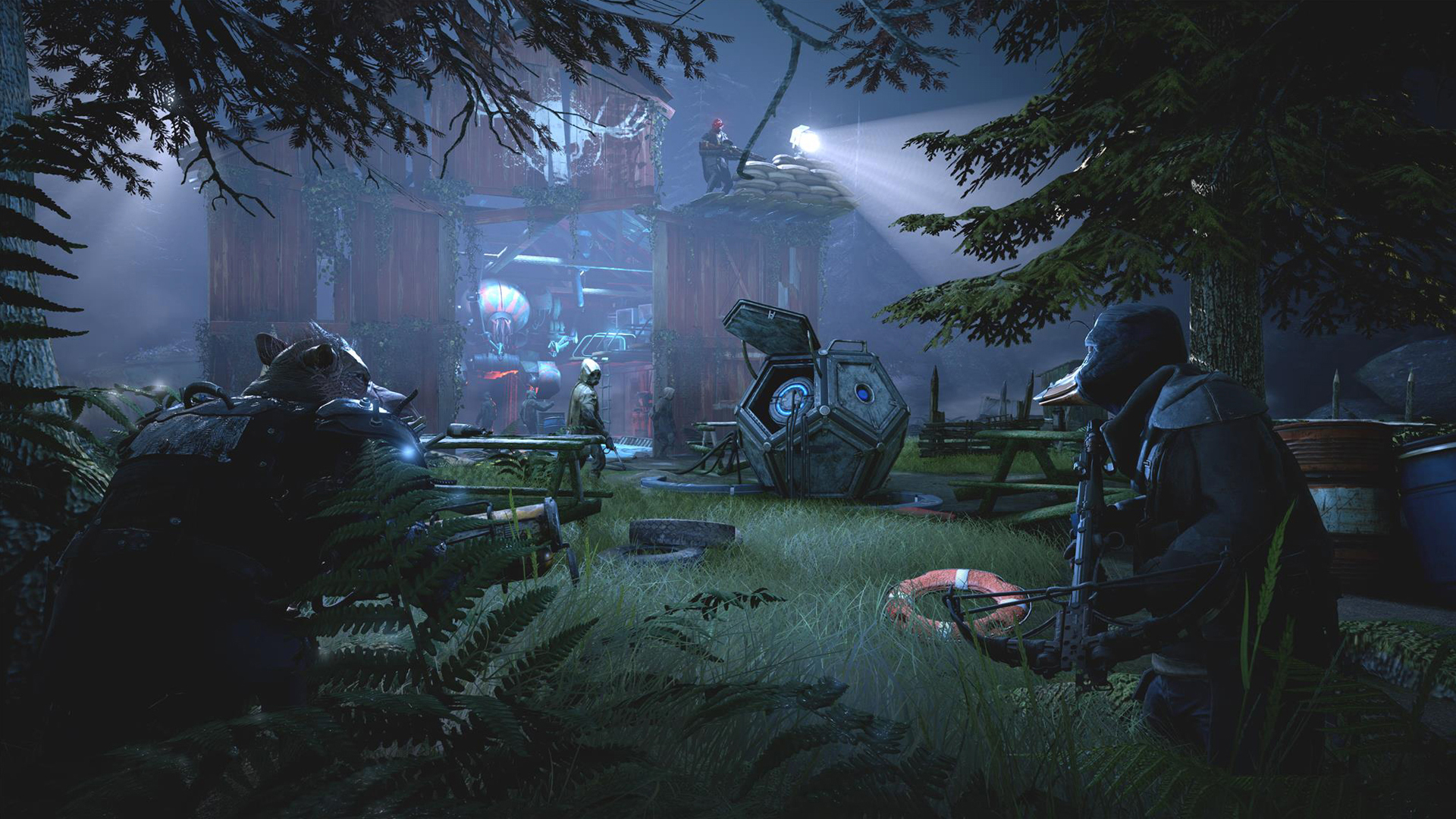
The transition from exploration to combat begins with awareness. Enemies have visible fields of vision, and switching off the party’s flashlight places the mutants in a lower-profile stealth stance. The group can split up so each Stalker moves independently, take cover from sight, and approach a patrol from different angles before triggering the tactical encounter. Silent weapons, including Dux’s crossbow and Selma’s pistol, can remove a lone enemy without immediately drawing its companions; a nearby witness can still raise an alarm. This makes patrol spacing and target choice part of the battle plan. The opening shot may thin a group before the rest react, while a noisy attack risks drawing several opponents into the fight at once. Exploration therefore doubles as reconnaissance: the player reads the enemy formation, then decides where and when to switch from sneaking to the combat grid.
Once hostilities begin, the view shifts to a third-person tactical grid where the player positions the Stalkers behind cover, finds flanking angles and spends action points on movement and attacks. Gunfire can end a character’s turn, so the order of actions and the location of every mutant matter. The Zone’s opponents demand different responses: some Ghouls rush into melee, others throw fire or attack from range, and old robots bring their own hazards. A party that begins in stealth can use silent weapons to eliminate isolated threats, then commit louder weapons and mutations when a larger encounter is unavoidable. Retreat remains an option when the fight turns against the team. Because the Stalkers are vulnerable to being overwhelmed, good positioning and coordinated abilities support survival as much as raw damage. The battle is the payoff to the approach through the patrol’s field of vision, not a disconnected arena encounter.
Experience earned during the campaign gives characters points to spend on mutations, including active abilities and passive bonuses. Bormin’s Stoneskin helps him absorb danger, while Dux can develop long-range and disabling skills; other mutants bring different tools, such as Selma’s grasping vines. Mutation combinations can be changed outside combat, and the available team can be rearranged before the next engagement. That flexibility matters because an ability useful against a robot may be less useful against an organic target. On each expedition, the player weighs that specialist knowledge against the weapons and consumables carried by the three selected Stalkers, then searches for upgrades and artifacts that strengthen the team as a whole. The game’s progression thus links individual character builds to the shared economy of the Ark: tactical victories yield experience, exploration yields materials, and both feed into a better-prepared return to the Zone.
- Developer
- The Bearded Ladies
- Genre
- Turn-based tactical strategy adventure with real-time exploration and stealth