
About Mouthwashing
Mouthwashing is a first-person psychological horror story about the five-person crew of the Tulpar, a space freighter stranded far from help. With the ship damaged and its supplies dwindling, isolation turns the crew’s shared confinement into a growing strain. Exploration, environmental details and unsettling shifts in perception shape this spoiler-light account of their predicament.
The Tulpar is a freighter lost in the empty reaches of space, where its five crew members face a long, uncertain wait with no clear prospect of rescue. The ship’s perpetual sunset gives the setting an unnatural stillness, and the crew’s situation is defined by dwindling necessities: the power supply will not last indefinitely, and food runs short sooner. Captain Curly is alive but severely injured and unable to speak, leaving him dependent on the people around him. This is the starting predicament, not a story about a routine mission. The vessel’s cramped interior becomes the world the crew must inhabit, and the pressure of sharing that space shapes the horror from the outset.
The game presents this situation from a first-person perspective. The player moves through the freighter and pays attention to what the rooms contain, how the ship is arranged and what details seem out of place. The environment carries much of the storytelling, so the act of looking is part of following the narrative. Corridors, work areas and shared spaces are more than a backdrop: they make the crew’s confinement tangible and give the player a changing view of life aboard the vessel. The presentation invites attention to surroundings without explaining every image or event immediately. As the ship and the people inside it grow more difficult to understand, ordinary observation becomes one way of staying oriented.
Mouthwashing centres its narrative on the crew living through starvation, isolation and one another. That wording points to a conflict with both material and social dimensions. Food and power are finite, so the characters exist under a practical countdown; at the same time, they cannot leave the people with whom they are stranded. The small crew is not simply a collection of voices delivering information. Their relationships and responses to the crisis are part of the danger, while their restricted environment limits the distance they can put between themselves. The story follows the strain of this shared predicament, maintaining uncertainty about what can be trusted and how the people around the player will behave. Hunger, isolation and the strain of living together are joined rather than treated as separate threats; each makes the others harder to escape in the sealed space of the freighter.
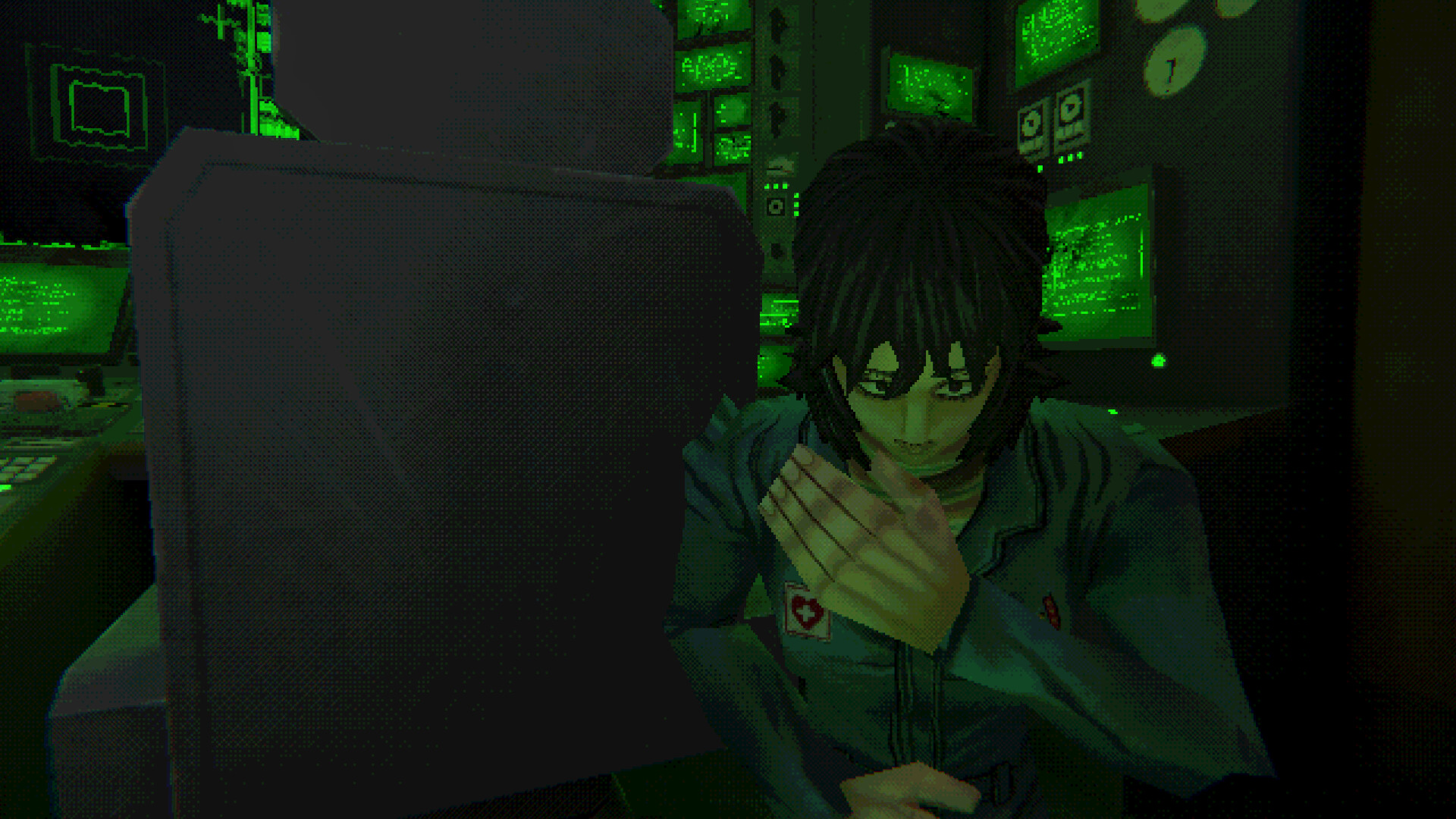
The freighter’s condition gives the narrative a steady sense of pressure. A fixed supply of power and even shorter food reserves turn the ship into a place where everyday systems matter. The crew cannot rely on rescue to resolve these problems, so the prospect of continued survival hangs over each part of their confinement. Mouthwashing uses this closed setting to focus its attention: rather than opening onto a broad space adventure, it keeps the player near a handful of people, the rooms they occupy and the signs of what is happening to them. That narrower scale makes absence meaningful. The distance outside the hull is immense, but the immediate world is measured in ship corridors, equipment and human needs.
Horror arrives through psychological uncertainty as well as the situation itself. The game warns that perception can be unreliable, and it uses unsettling changes in what the player sees to disturb confidence in the scene. This approach leaves room for interpretation without requiring a catalogue of supernatural rules. A familiar location can become unnerving when its details do not feel stable, and the player has to take in what is visible while questioning the impression it creates. The result connects the visual style to the story’s concerns: isolation affects how people relate to each other, and the environment does not always provide a neutral or dependable frame for understanding events.
The visual presentation uses a low-resolution, PSX-style look, which gives faces and spaces a deliberately limited, stark appearance. The contrast between the ship’s recognisable practical spaces and the more disturbing images encountered within them supports the psychological tone. Environmental detail contributes to how a scene is read, while the first-person viewpoint keeps the player close to the crew’s surroundings. Rather than presenting the freighter as a realistic technical simulation, the game uses its spaces as part of a tightly framed horror narrative. The result is an atmosphere built from confinement, damaged routines and uncertainty about what the player can trust in a given moment.
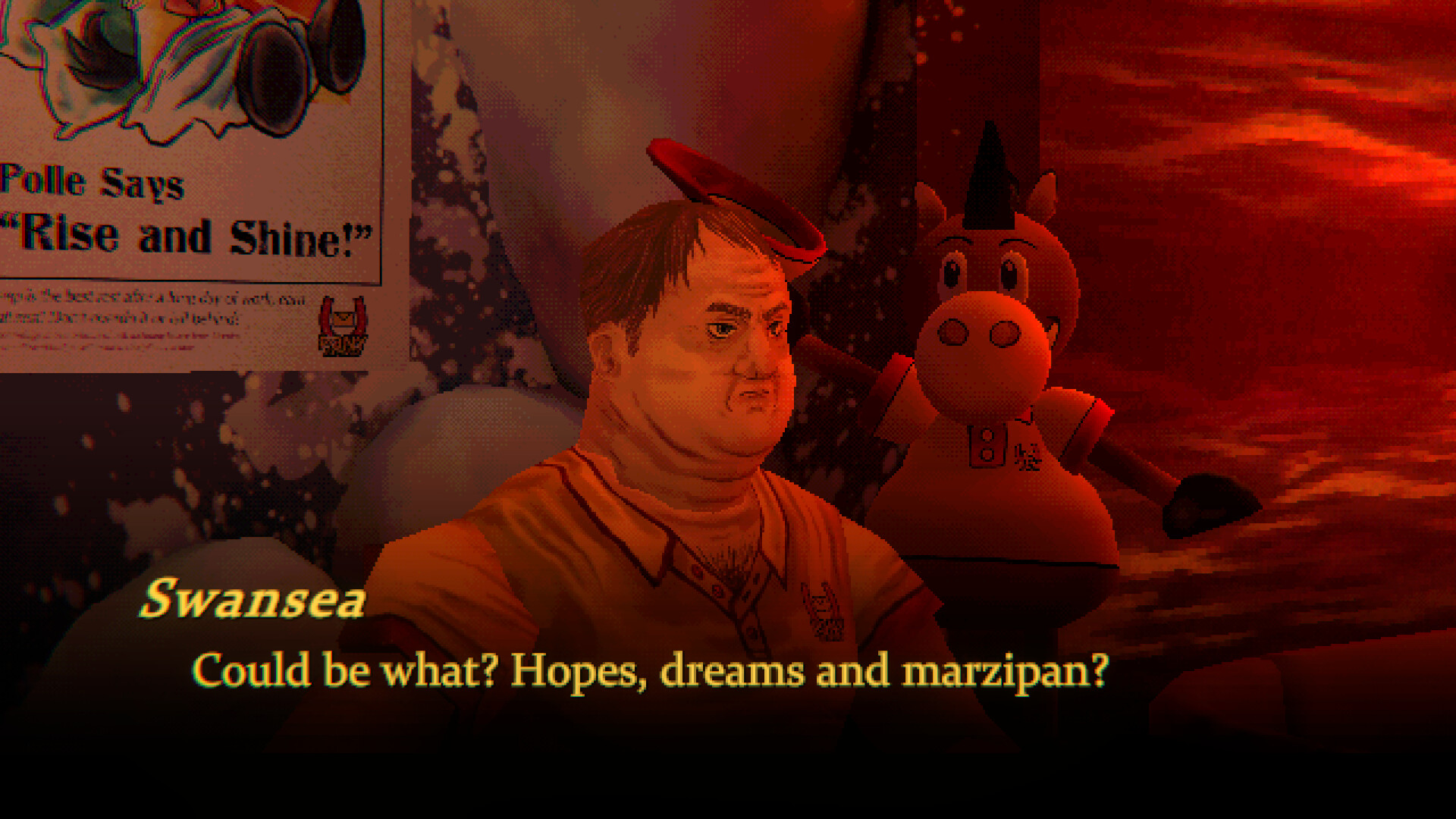
Mouthwashing is a single-player first-person horror adventure whose main focus is the dying crew and their shipwrecked freighter. Its scope is compact and story-led: follow the crew’s situation, move through the Tulpar, and pay attention to the environments and shifts in perception that accompany the narrative. The game’s descriptions establish starvation, isolation, severe injury and extreme violence as part of its mature horror content, so its tone is bleak throughout. This overview stops at the setup and presentation, leaving the story’s later developments undisclosed. The central experience is the uneasy act of being enclosed with a small group in a failing ship, where limited supplies and fractured trust make the future difficult to face.
- Developer
- Wrong Organ
- Genre
- Single-player first-person horror adventure with psychological horror and narrative exploration