
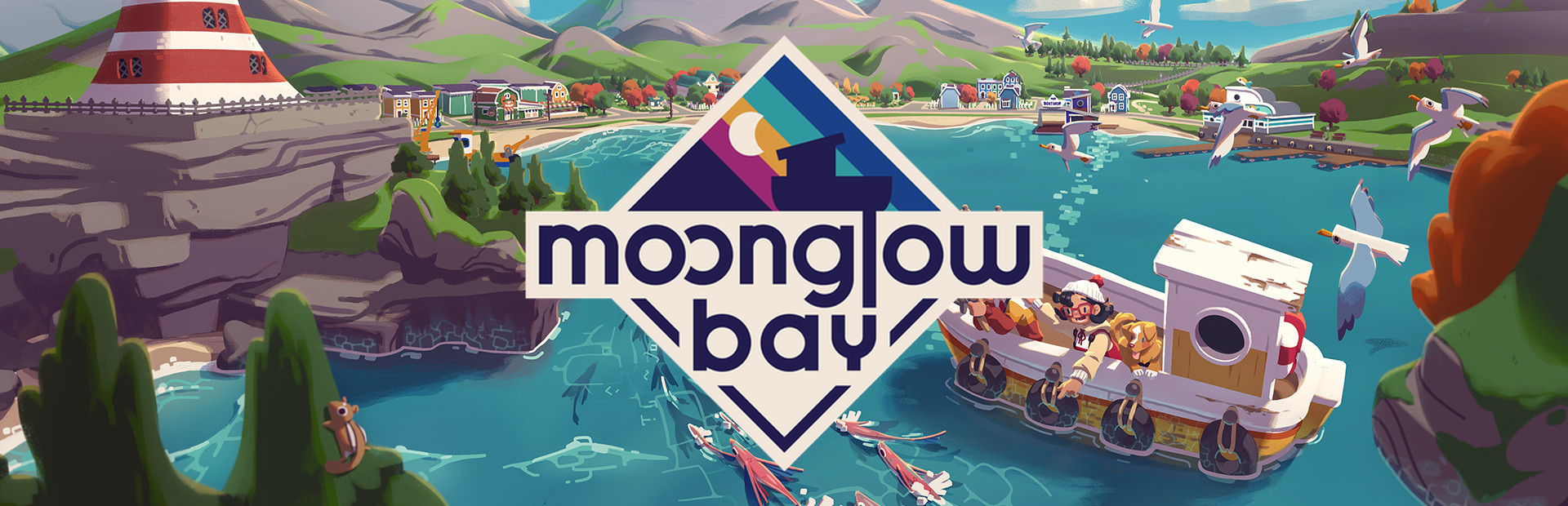
About Moonglow Bay
Set on the Eastern Canadian coast in the 1980s, Moonglow Bay casts the player as a rookie angler trying to honour a partner’s final wish while keeping a local business afloat. Fishing, cooking, selling recipes, helping residents and restoring the town connect ocean trips with the community’s recovery.
Moonglow Bay is set on the Eastern Canadian coast in the 1980s. The player is a rookie angler trying to honour a partner’s final wish while keeping a business afloat in a town facing bankruptcy. Fishing is part of that responsibility: catches provide ingredients and goods for the shop, but they also connect to quests, the town’s aquarium and a journal of aquatic species. The bay and settlement are linked parts of the player’s routine. A trip out to sea produces fish and discoveries; returning to shore brings the player back to residents, shop work and community requests. The story places everyday business within the recovery of a fishing town whose trade has declined. The premise gives the angler an ongoing reason to learn the waters and sustain a local enterprise, while the surrounding community supplies requests and relationships beyond the simple sale of a catch. The opening also identifies the angler as an older adult with an adult daughter, River, who moves in to help, and a dog named Waffles. The fishing journal is the partner’s gift that starts the player’s activity on the water.
Town life gives the player reasons to leave the waterfront and meet residents. A bulletin board provides quests, and helping people is tied to rebuilding the community and restoring weathered buildings. Several story arcs unfold through the people who live in Moonglow Bay, and their requests can involve a specific fish or meal as well as tasks unrelated to fishing. Waffles, the town dog, is part of the everyday cast. The settlement’s recovery is marked through visible projects and a centennial celebration, while residents’ needs connect land-based activities to work at sea. Some tasks are gated by earlier restoration: renovating the library is a prerequisite for proceeding with a Civic Restoration objective. This gives the town project sequence concrete dependencies, alongside the more open requests found on the board. Local co-op allows another player to join fishing and town activities in drop-in play; the game supports local play rather than online multiplayer. Some residents offer information about rare fish, while others ask for a particular fish-based meal or help with unrelated side tasks. The variety means the bulletin board and conversations can lead to work on land even when no fishing request is involved.
Fishing offers more than one way to gather aquatic life. The player can cast a rod and line, use nets, set traps or fish through ice, and the journal records species found across the bay. The catalogue contains 151 aquatic species, giving anglers a longer-term collection goal alongside individual requests. With rod fishing, a bite leads into a tug-of-war: the player pulls against the fish’s direction, and a well-timed reel can bring smaller catches in quickly. Baited traps can be left in the water and checked later. Nets have more than one use: they can scoop several fish from a visible shoal or catch insects on the beach that serve as bait. These methods give the player different ways to work a fishing ground, rather than repeating only one rod interaction. Donations to the aquarium reveal information about species and can make it easier to find a particular fish later for a quest or recipe. Nets can also collect floating trash, making cleanup of the bay another use for the tool. Rods, lures and bait can be changed at designated spots, linking fishing preparation to where the player stops during an outing.

The boat carries the angler from the town’s coast to more distant fishing grounds. Named regions include the Glacier and Sulphur zones and the Astral Clouds, where icy waters, steaming geysers and unusual wildlife provide different settings for trips. The waters also hold the rumored Mythical Monsters of Moonglow. Preparing for an outing can involve bait, tackle and improvements to the boat. Later upgrades can add a bunk and kitchen, letting the player sleep or prepare meals during a longer cruise, while a stronger engine increases travel speed. Fishing through ice and using traps extend the range of methods beyond casting from shore. The game can be played alone or in local drop-in/drop-out co-op, so a second player can share an excursion. Each trip ties the boat’s equipment and destination to what the player intends to catch, discover or bring back for the business and town. Chapter-ending boss encounters use fishing tools to catch or move objects around a large fish rather than relying on conventional weapons. They make the fishing equipment part of story set pieces as well as ordinary trips.
Catches can be cooked, sold or donated. Cooking has its own sequence of brief tasks: washing, chopping, frying, boiling and baking use different minigames. More elaborate recipes require additional steps and ingredients, and unlocked dishes can be prepared in batches. The player can sell meals through a vending machine outside the home; raw fish can also be sold there. Cooking and sales provide income for improvements to the shop, gear and fishing boat. The aquarium offers another use for a catch: a donated fish becomes part of a public display, and its entry provides information that helps locate it again. Town requests add a further consideration, since a resident may ask for a particular fish or fish-based dish. The same trip can therefore supply ingredients, fill a journal entry, meet a request or provide a display specimen, depending on what the player chooses to do with the catch. Vending machines can also be bought and placed in other parts of town, extending where prepared food or raw fish can be sold. Recipe progression brings additional dishes to cook, and batches can be prepared once they have been learned.
Progression connects those uses to the town’s recovery. Earnings from meals can be put into shop, equipment and boat improvements, while civic projects restore businesses and public buildings. Residents’ quests may call for a specific species or recipe, and the board also offers errands that do not depend on fishing. The player decides whether a limited trip should prioritize a request, collect an unfamiliar fish, or return with ingredients for sale. Bait and tackle prepare the next outing; a bunk, kitchen or stronger engine changes what the boat can support. These are connected paths through the game: fishing creates goods and discoveries, the storefront turns food into income, and town projects put resources back into the community. The library renovation requirement in Civic Restoration is one example of a town objective depending on prior work rather than being immediately available. The town projects include rebuilding named civic landmarks such as the clock tower and library, while donations help restore local businesses that have closed. The player’s earnings therefore fund visible changes around town as well as personal equipment.
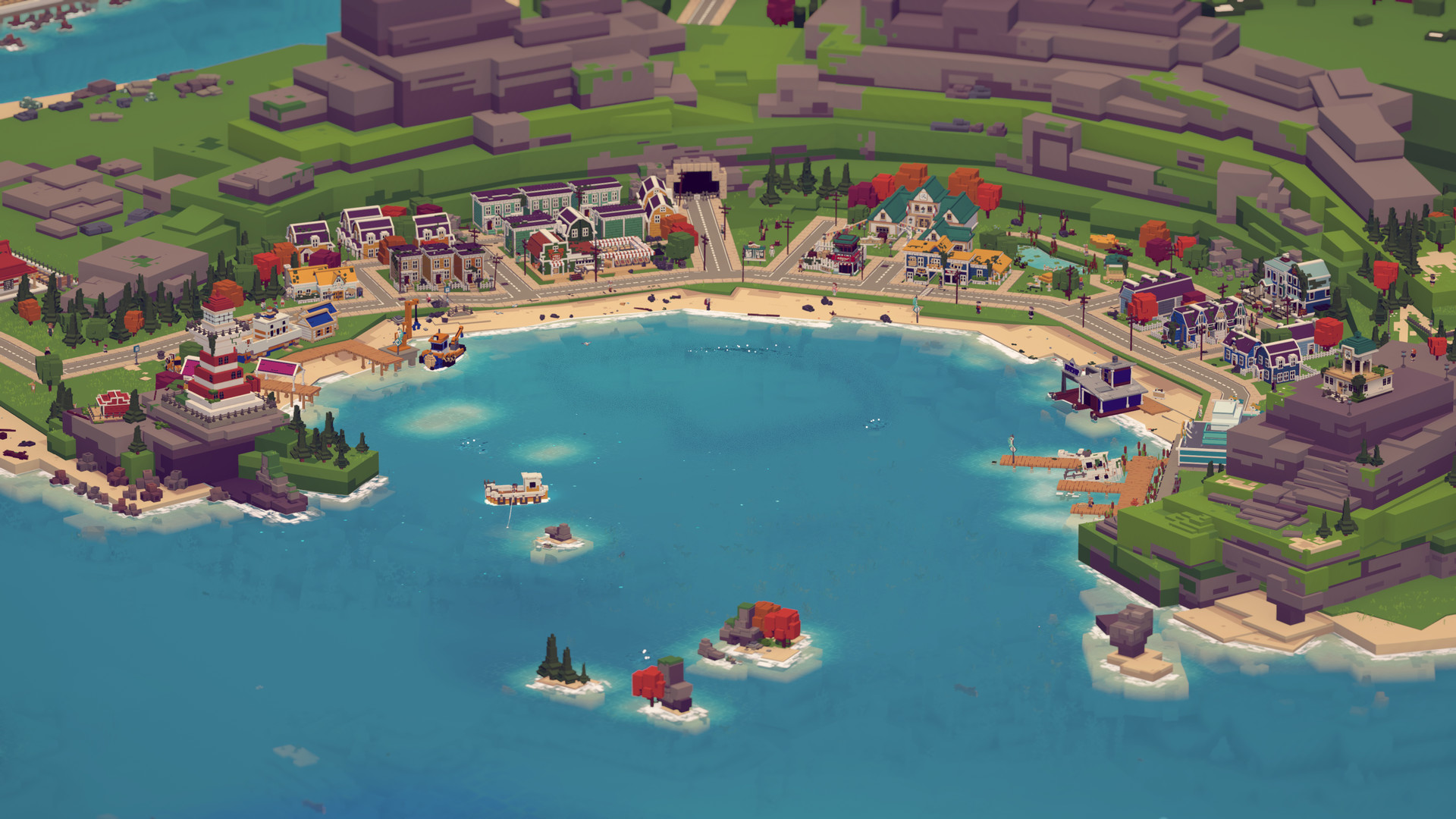
The Picture Perfect update adds a photo mode, storefront decorations and a questline involving Marina. She investigates the remains of a long-lost sea creature, assembles its skeleton from bones, works out its legend and searches for fossils across land and sea. That quest adds a specific exploration goal alongside the existing fishing and community requests. The camera mode lets players frame the shoreline and ocean from new angles, while storefront decorations change the appearance of the business. Moonglow Bay uses voxel art for the town and its waters, and the soundtrack was composed by Lena Raine. These update activities broaden what the player can do around the same setting: fish and record species, prepare food, respond to residents, restore the town, photograph the environment and follow Marina’s fossil search. The fishing journal has an illustrated, two-dimensional design with thick outlines and block colors for its fish entries, contrasting with the voxel-built town and water. Sound changes with the setting too, moving from acoustic pieces near home toward quieter synth and piano in new regions.
- Developer
- Bunnyhug
- Genre
- Fishing role-playing adventure