
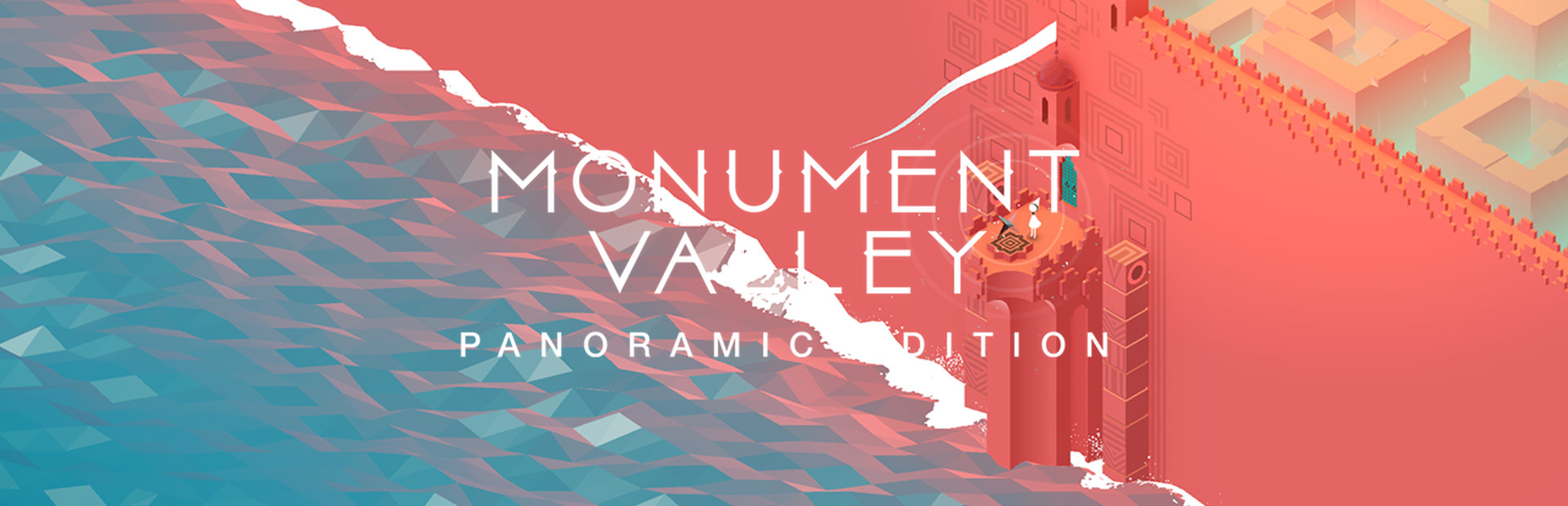
About Monument Valley
Monument Valley follows Ida, a silent princess travelling through a world of impossible architecture on a quest for forgiveness. Players guide her across compact monuments, rotating and shifting structures to make disconnected paths meet. Perspective, switches and encounters with the Crow People shape each chapter, while the story is told through movement, changing spaces and spare visual scenes.
Monument Valley follows Ida, a silent princess travelling through a mysterious world of monumental structures. The Steam description frames her journey as a quest for forgiveness, while the game presents it through her movement rather than extended dialogue. Each chapter gives her a new structure to cross, with an exit, a button or another point of passage drawing her onward. Crow People inhabit some of these places and can stand directly in the way. The world is therefore both the setting and the main problem: staircases, platforms and doors define where Ida might go, while their strange arrangement makes an obvious route seem impossible. As she moves from monument to monument, the spaces change in scale, color and shape, giving the journey a visual rhythm without explaining every part of its history. The game leaves its larger mythology spare and mysterious. Its concrete focus is Ida’s route through each place and the player’s task of making a path where the current view seems to show none.
Ida moves along paths when the player selects a reachable point, while interactive structures alter the route around her. The first monument establishes this relationship with a wheel beside a disconnected path. Turning the wheel changes a pillar’s orientation; from the new perspective, two sections appear to meet, and Ida can walk across to the exit. This early interaction demonstrates the game’s basic rule in a specific way: the player does not simply find a hidden bridge but changes the shape of the monument so a connection becomes possible. Later structures use different pieces, including movable towers, walls, rooms and cubes. A tap or drag can shift one part while leaving another still, so the player has to watch which routes change and which remain blocked. Ida’s movement provides a clear test of the arrangement. If a path is continuous from her position to the next destination, she can follow it; if not, the architecture needs another adjustment.
The monuments offer more than rotation. Some mechanisms move a platform or tower; others open a door, alter a wall or reveal a room that was hidden from the current view. The player may need to create a route to an exit, but other chapters require Ida to reach a button or pass through a doorway along the way. These objectives change how a structure is read: the shortest apparent route may not reach the required point, and a side section can matter because it contains the control that unlocks the next passage. The level remains a compact architectural puzzle rather than a sprawling maze. Its boundaries are visible, but perspective can make separate parts seem nearer, farther or more connected than they are. Changing the view of the structure can clarify a route, while changing the structure itself can create one. An opened door is a route target, while a switch can make reaching an intermediate point more important than going directly to the far side. The player must track both spatial continuity and what the structure asks Ida to do when she arrives. This distinction—seeing a connection and making a connection—gives the player two related ways to reason about a monument.

Crow People add moving obstacles to several routes. They walk along the architecture and may occupy a narrow path Ida needs to use. The player must account for where they are and how the available route changes around them. Because the figures move through the same spaces as Ida, they affect passage without turning the game into a combat encounter. A puzzle can involve opening a route while considering the Crow People’s position, or reaching a point that is blocked until the structure has been adjusted. The official listing describes outsmarting these figures, and the independent account notes that both Ida and the Crow People use the paths created by the monuments. Switches and doors provide other concrete goals: Ida may have to step on a marked point before she can leave. A totem provides a different kind of aid: it can be slid around to help Ida reach otherwise inaccessible areas. This makes an architectural object an active part of the route, rather than another hazard to avoid. These interactions expand the basic wheel-and-path idea with obstacles and conditions. The player’s progress depends on reading the whole level, including the parts Ida cannot immediately reach, rather than simply choosing the next visible tile.
The game’s perspective isometric view makes observation an active part of solving a level. A staircase can appear to continue behind a wall; a platform may seem detached until the tower turns; another area may remain hidden until a room opens. The player sees a composed section of the monument and infers how its pieces relate. Then a rotation or movement tests that inference, changing which surfaces line up and which routes Ida can walk. Color and silhouette distinguish platforms, mechanisms and paths, while the clean geometry keeps the puzzle readable even when its spatial logic is impossible. The levels also make use of concealment: a route or room may not be visible until Ida or the player changes the structure. This makes progress a cycle of inspection, manipulation and movement. The game rarely asks for a quick reaction; its main demand is to examine the arrangement and work out what kind of change could make a passage viable. The architecture itself supplies the clues and the available actions.
Monument Valley tells its story through Ida’s progress and the changing scenes around her. The princess is small against towers, arches and open backgrounds, which makes the structures feel like the main presence in each chapter. Her movement shows whether a new connection is real within the game’s visual rules: she steps onto the route, crosses the gap and reaches the next section. Crow People are characterized by their place in the environment and their movement along its paths. The game uses sparse text and sound, so the visual arrangement carries much of the atmosphere. A monument can unfold or rotate as the player interacts with it, changing the composition as well as the available route. This connection between scenery and action is central to the presentation. The monuments remain active puzzle spaces, changing both the view and the route as Ida travels through them.
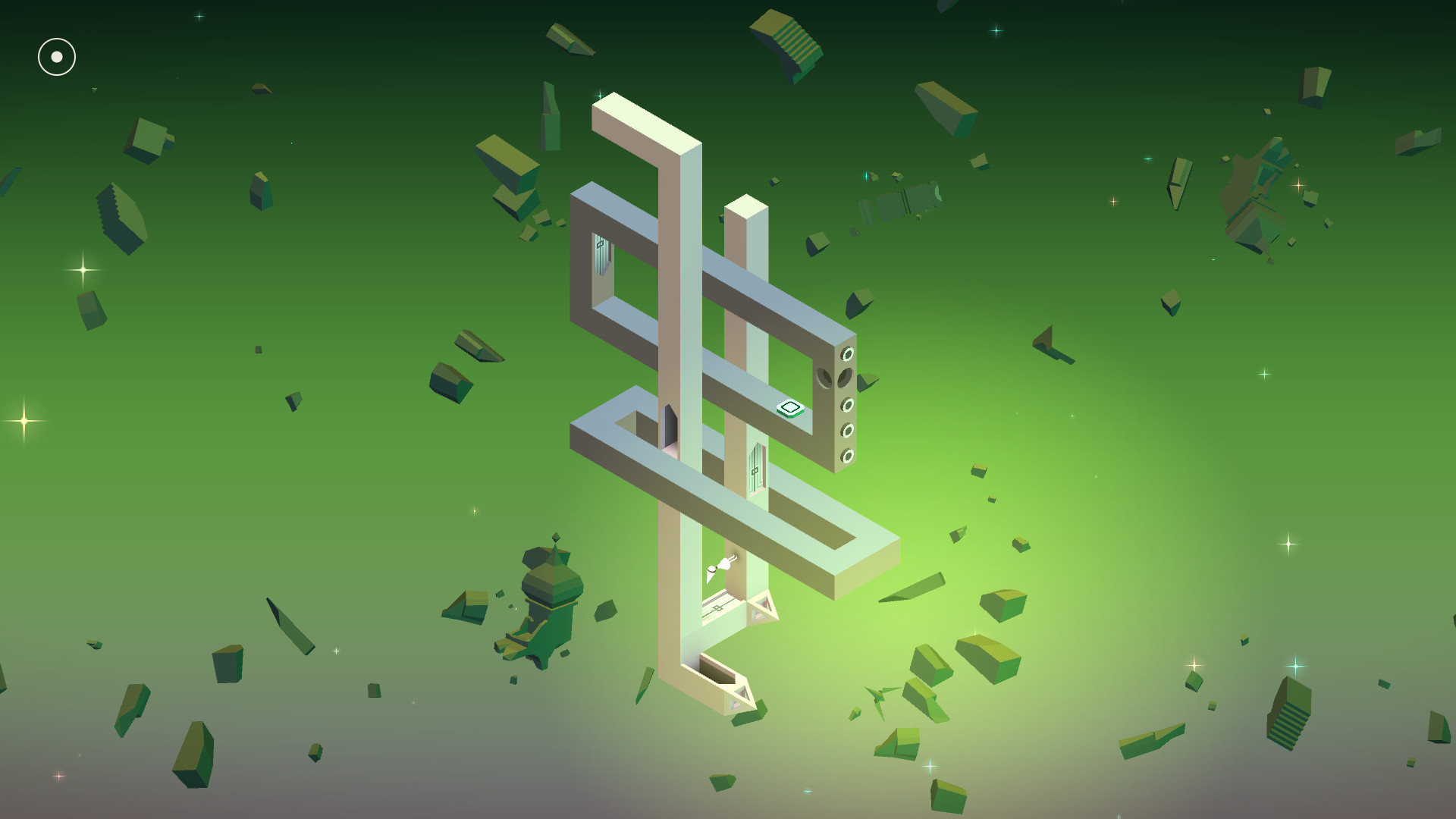
Monument Valley progresses through chapters built around distinct architectural puzzles. The player encounters turning wheels and towers, shifting passages, Crow People and the movable totem, learning to read each monument's rules as the journey continues. There is no character build to develop; the player's understanding of the structures is what accumulates. On PC, the Panoramic Edition includes all chapters, add-ons and DLC for the original game, including Forgotten Shores and Ida's Dream. Monument Valley 2 is a separate sequel with Ro and her child's story. Ida's stated quest for forgiveness gives the original a clear emotional direction, while the sparse presentation leaves the larger history open. Chapter completion carries her onward through a changing series of monuments, where progress comes from finding a route through each place. Since a chapter centers on a bounded structure, the player can focus on the connections and mechanisms visible there. The decisive clue may be a wheel, a switch along the route, a passage hidden by the current view, or a Crow Person moving across the path. Each level asks the player to understand how its pieces affect access, then use that understanding to guide Ida toward the exit.
- Developer
- ustwo games
- Genre
- Puzzle adventure