
About Middle-earth: Shadow of Mordor
Middle-earth: Shadow of Mordor follows Gondorian Ranger Talion and a mysterious Wraith as they fight through Sauron’s forces in Mordor. Sword combat, stealth, archery and the Nemesis System connect the story missions to a shifting hierarchy of Uruk captains and warchiefs, while upgrades expand Talion’s abilities.
Middle-earth: Shadow of Mordor is an open-world action adventure set in Mordor, in the period after Sauron’s return and before the events of The Lord of the Rings. Talion, a Ranger of Gondor stationed at the Black Gate, is killed during an attack by Sauron’s forces and revived in a strange bond with a Wraith. The pair travel across the hostile land to confront the Black Hand, while Talion pursues vengeance and the Wraith’s identity and purpose remain part of the story. The campaign gives that personal conflict a larger practical goal: undermine Sauron’s army from within. Main missions advance the narrative, but much of the route through the open world is shaped by encounters, information gathering and opportunities to weaken Uruk leadership.
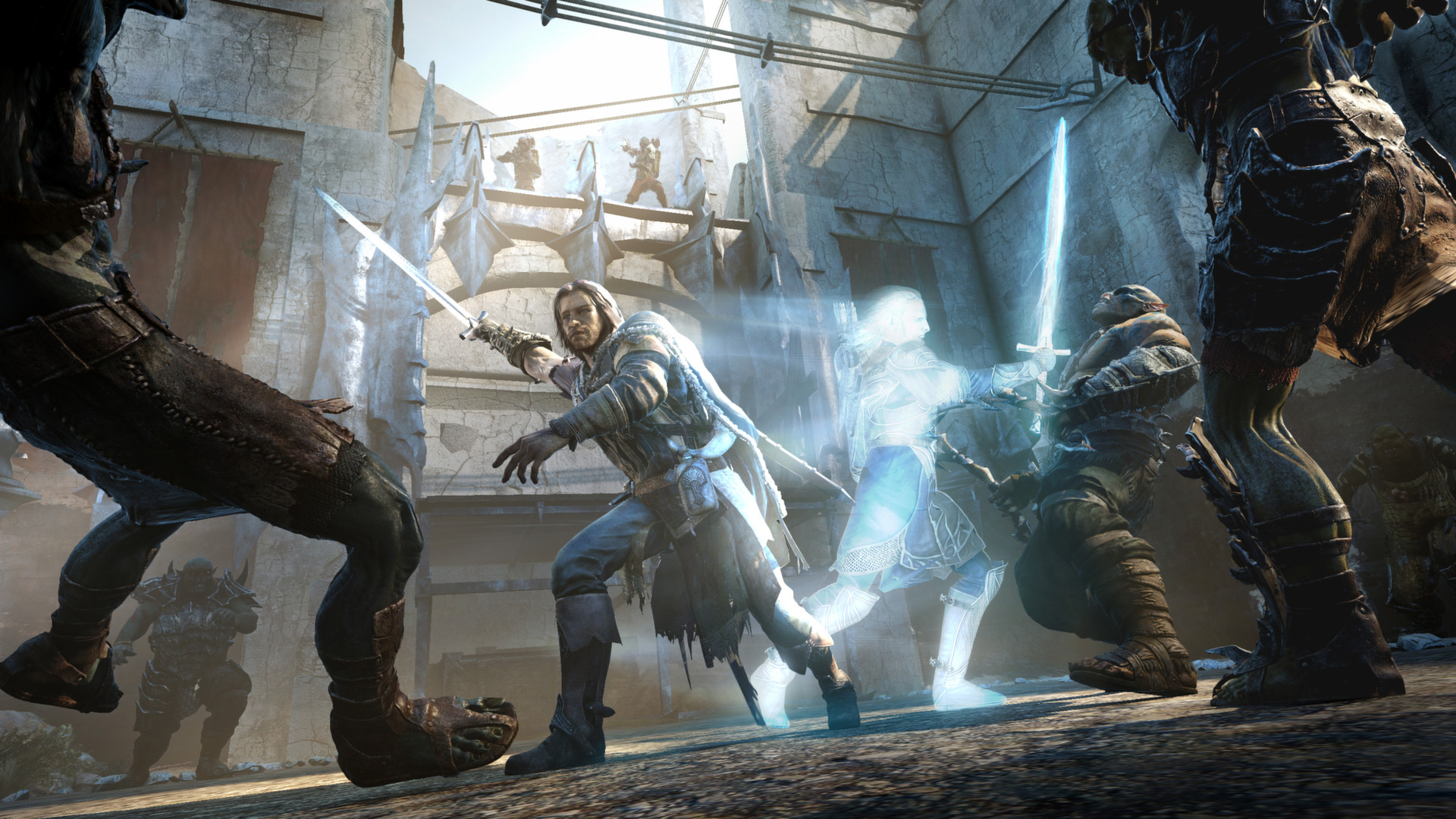
Talion moves through camps, ruins and rocky terrain using climbing, sprinting and stealth, and can approach a fight from the ground, from above or with a bow. Sword combat is built around attacks and counters: incoming strikes can be parried, while marked heavy attacks and ranged threats call for a dodge. A hit streak creates chances to finish enemies, and grabbing an Uruk can let Talion drain it for Elf-shot, the ammunition used by his bow. Focus slows time while aiming, helping line up a charged shot, but it is limited and recovers when unused. Stealth offers another way to manage a group: bushes conceal Talion, height can keep him out of sight, and a quiet takedown can remove a guard without raising an alarm. These approaches feed into one another as a camp can shift quickly from a planned infiltration to a crowded melee.
Mordor’s map combines story missions with side activities and landmarks. Ancient forge towers can be climbed and reforged; doing so reveals nearby missions and collectibles, and later gives Talion a point from which to return after death. The Wraith World highlights enemies and useful points of interest through walls, making it a tool for reading a camp before moving in. Advancing time at a tower allows the Uruk hierarchy’s power struggles to play out and lets herbs grow back. Duels, ambushes and betrayals can create openings to influence the army or earn power, so the map is not only a route between story objectives. It also gives the player a way to choose when to investigate, intervene in a rivalry, rescue captives or continue along the main campaign.
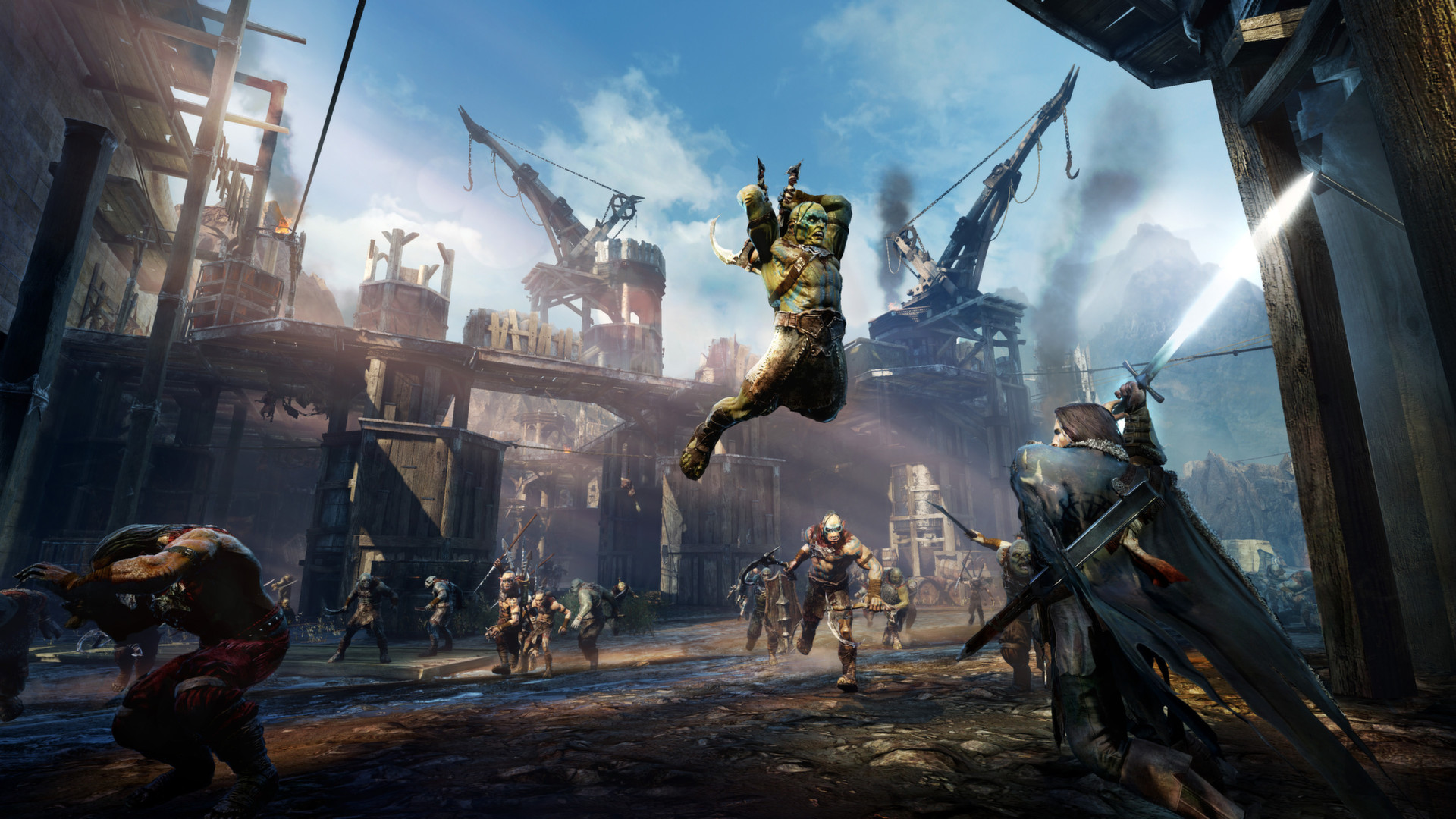
The Nemesis System makes individual Uruks part of the campaign’s changing opposition. An Uruk who survives an encounter can become a nemesis, with a name, a personal history with Talion, a power rating and a particular set of strengths and weaknesses. Captains command ordinary grunts, while warchiefs sit higher in Sauron’s chain of command. Their positions and relationships appear in the Sauron’s Army screen, including links such as a captain serving as a warchief’s bodyguard. Defeat does not simply remove a fixed enemy from a roster: death advances time, and a nemesis can gain power before the next meeting. The player’s actions therefore influence which rival becomes familiar, which leaders rise and where the next dangerous encounter may occur.
Information can change the way Talion takes on a captain. Uruks and worms can be interrogated to reveal a target’s identity, rank, strengths and vulnerabilities; documents found in enemy camps also reveal information. Until identified, a nemesis appears as a silhouette in the army screen, so scouting can help before committing to a fight. When a weakness is known, Talion can decide whether to exploit it directly, draw the target into a power struggle or reduce the surrounding force first. Captains and warchiefs also differ in their relationships and positions, which lets a player choose a more prepared attack rather than treating every marked enemy as an isolated duel. Power struggles include duels, betrayals and ambushes that can be joined or disrupted, adding another way to affect the hierarchy.
Progression is split across experience, power and Mirian. Killing enemies, completing missions and freeing slaves award experience; enough experience grants an ability point for one of two trees. Ranger abilities develop stealth and swordplay, while Wraith abilities improve archery and supernatural powers. Power, gained from defeating nemeses and completing selected missions, unlocks higher ability tiers. Mirian pays for attributes such as health, Focus and Elf-shot capacity, as well as weapon improvements. Defeating a nemesis also yields a rune that can be fitted to Talion’s sword, dagger or bow; more powerful foes produce stronger runes. Each weapon begins with one rune slot, and Mirian can expand its capacity. This progression ties preparation to the army: pursuing a tougher captain can bring both a more demanding fight and a more useful reward.
Optional activities add other reasons to move through the landscape. Outcast rescue missions begin after Talion frees certain slaves from their Uruk masters; the rescues reward experience and Mirian, and freed captives may later offer intel or resist their captors. Survival and hunting challenges ask for particular herbs or wildlife, with successive objectives offering greater rewards. In Wraith World, artifacts can be examined to locate a memory point that reveals one of the Wraith’s buried memories, while Ithildin markings on ruins also reward Mirian. Weapon legend missions become available as Talion unlocks abilities and provide experience and Mirian; completing a weapon’s set changes its appearance. These activities sit alongside the central conflict, linking exploration to character growth, the Wraith’s history and the tactical work of learning how Mordor’s forces are organized.
- Developer
- Monolith Productions
- Genre
- Open-world action adventure