
About Metroid Prime Remastered
Samus Aran investigates a Space Pirate presence on Tallon IV in Metroid Prime Remastered, a first-person adventure rebuilt for Nintendo Switch. Scan the planet’s life and technology, fight hostile creatures, and recover suit upgrades that open routes through interconnected environments.
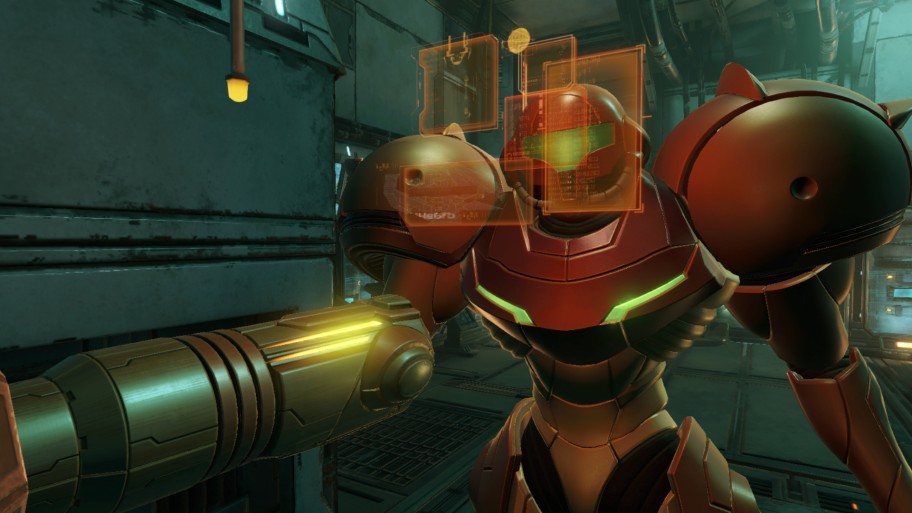
Metroid Prime Remastered brings the original Metroid Prime adventure to Nintendo Switch with updated graphics, sound and control options. It follows intergalactic bounty hunter Samus Aran after she tracks Space Pirate activity to Tallon IV, an alien planet marked by the ruins of the Chozo civilization. Samus explores the planet to understand the threat and uncover how its inhabitants and ecosystems are connected to the Space Pirates’ operations. The story is delivered through environmental details, scans and discoveries as much as through direct exchanges. Players experience the journey from inside Samus’s Power Suit, moving through a first-person world that adapts the exploration, platforming and ability progression associated with the series to three dimensions. The remaster preserves the original game’s structure while offering modernized presentation and several ways to configure its controls.
Tallon IV is made up of connected environments, including the Tallon Overworld, Chozo Ruins, Magmoor Caverns, Phendrana Drifts and the Phazon Mines. Each region has its own terrain, environmental hazards, creatures and doors that may require a particular beam or upgrade. The player travels between areas through elevators and routes that become more useful as Samus gains new equipment. A room that initially contains an inaccessible ledge or sealed passage can become a destination later in the adventure. This design makes the map a record of places to reconsider, rather than simply a list of completed objectives. Map Stations can supply area information, while the suit’s displays show the rooms Samus has visited. Finding a new tool often creates several possible returns, linking navigation and progression across the planet.
The Scan Visor is central to understanding both the environment and the story. Samus can scan creatures, machinery, artifacts and other objects to add information to her Logbook. Scanning may reveal background about Tallon IV’s ecology and Chozo history, identify enemy traits, or activate technology that opens a door or elevator. The visor turns observation into an action the player performs directly, encouraging a pause before rushing through a room. The Combat Visor is used for movement and fighting, while other visors later provide specialized ways to see information or threats that are otherwise difficult to detect. Switching between visors changes what is visible and which interactions are possible. The result is a first-person adventure where looking closely at a room can be as important as firing at what moves inside it.
Combat uses a lock-on system that lets Samus keep an enemy targeted while she moves around it. The player can strafe, jump and dodge while maintaining focus on a threat, then fire the Arm Cannon or launch missiles when an opening appears. Different beam types provide distinct effects and are useful against different enemies or environmental barriers. Charging the cannon adds a stronger shot, while missiles supply a separate source of damage. Changing beams during a fight can matter when an opponent resists one attack or responds to another. The lock-on system shifts attention from precise manual tracking toward positioning, timing and choosing the right tool. Encounters range from roaming creatures to Space Pirates and larger bosses, whose behavior and weak points can be investigated through scanning as well as learned during combat.
Samus’s suit and equipment expand over the course of the expedition. New weapons and suit upgrades increase her ability to survive hostile conditions and interact with parts of the environment that were previously unreachable. The Morph Ball changes Samus into a compact form for rolling through tunnels, using bombs and navigating spaces too narrow for ordinary movement. Other upgrades add ways to cling to specialized surfaces, swing from grapple points or cross areas with different hazards. Some abilities serve more than one purpose: an upgrade may counter a particular enemy, open a kind of door and expose a previously hidden path. Finding energy tanks and missile expansions can also increase Samus’s capacity, supporting longer expeditions between save points. This gradual accumulation of tools is the main progression loop: explore, find a new capability, and use it to reach another part of the world.
The Logbook provides a growing record of scanned creatures, technologies and written material, and some scans are tied to progression. Scans can also offer extra text that helps explain what a machine does or how an enemy behaves. This makes the player’s information gathering useful even when an object is not a direct obstacle. The world’s history is presented through the traces left by previous inhabitants and by the Space Pirates, allowing the player to assemble context while moving between destinations. Saving is performed at Save Stations or at Samus’s gunship rather than through automatic checkpoints. These locations also create natural moments to pause and plan where to go next. The remaster includes a Hint System and adjustable options, but the basic structure still asks the player to use observation, the map and acquired abilities to navigate the expedition.
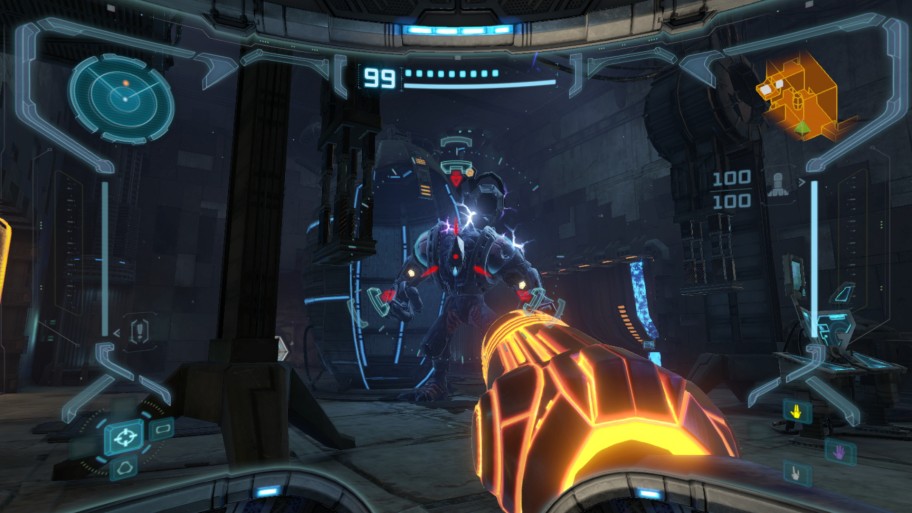
The Nintendo Switch version adds modern dual-stick controls as its default layout, alongside schemes inspired by the original GameCube release and the Wii version. Gyro support can be combined with the dual-stick setup, and menus offer additional gameplay and accessibility adjustments. The remaster also refreshes the audiovisual presentation and expands unlockable gallery content, including artwork and a 3D model viewer. These additions surround the same core adventure: traversing Tallon IV, scanning its inhabitants and devices, fighting threats, and revisiting locations as Samus’s suit becomes more capable. The first-person perspective keeps the action anchored to what Samus can see through her visor, while the connected world makes each new upgrade an invitation to reassess familiar spaces. Exploration, combat and discovery remain closely linked throughout the game.
- Developer
- Retro Studios with additional development support
- Genre
- First-person action adventure