
About Metro: Last Light Redux
In the year 2034, Artyom travels through the ruined Moscow Metro as station communities edge toward war over D6, a military installation whose weapons could determine who controls the tunnels. Metro: Last Light Redux combines first-person combat, stealth and survival with surface expeditions, resource management and a campaign shaped by encounters across the underground network.
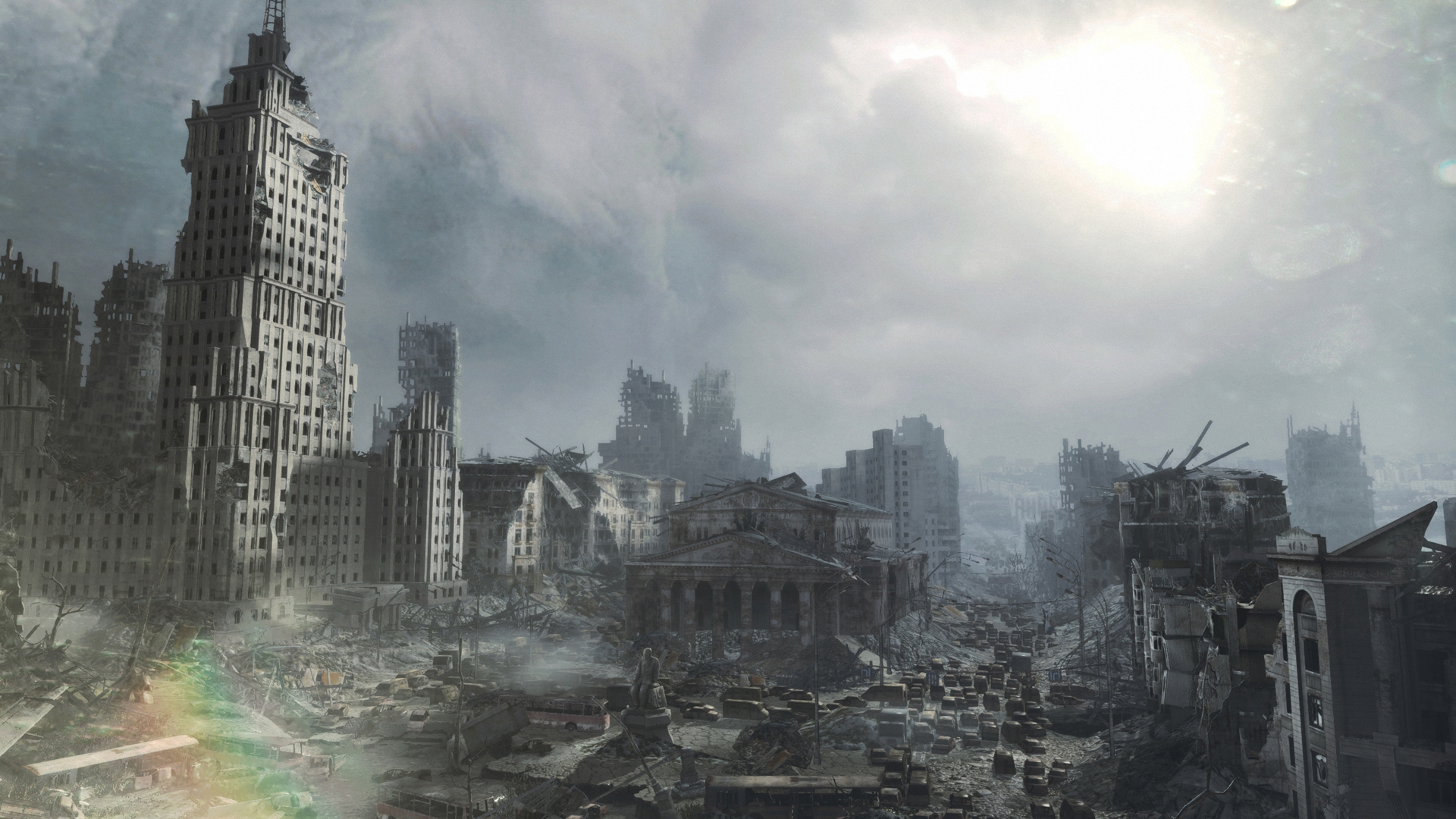
Metro: Last Light Redux takes place beneath a Moscow devastated by nuclear war, where survivors inhabit stations connected by dark tunnels and rail lines. Artyom, a young member of the Spartan Rangers, is drawn into a conflict over D6, an old military complex whose stockpiles have become a source of power. The station-cities are divided by competing political groups, including the Communist Red Line and the Nazi Fourth Reich, while mutants and the irradiated surface threaten everyone. The story moves between inhabited stations, military outposts, abandoned infrastructure and dangerous stretches above ground, showing how political struggles and everyday survival occupy the same cramped spaces.
The campaign follows Artyom as he moves through this unstable network, meeting people whose allegiances are not always obvious. Pavel, a Red Line soldier, becomes a companion during part of the journey; Anna, a Spartan sniper, is another central figure in the Rangers’ efforts. Their conversations and changing circumstances place the D6 dispute in a human setting, while the broader conflict brings Artyom into contact with soldiers, refugees, prisoners and civilians. The setup draws on the earlier Metro story, but Last Light gives its own focus to what happens after the Rangers gain control of the facility and other powers begin maneuvering to take it. The Redux version includes the full single-player campaign and the previously released downloadable chapters.
Most of the game is played from a first-person view, with movement, observation and combat unfolding through connected spaces rather than a sequence of isolated arenas. Tunnels can hide hostile patrols or mutants; a room in a station may instead hold residents, a trader or a quiet scene that adds context to the world. The player advances through objectives, follows companions, searches side rooms and reacts to encounters that can shift from cautious movement to firefights. In stealth sections, visibility and sound matter: lights can be switched off, enemies can be avoided or silently approached, and a discovered player may bring a larger group into the fight. Combat remains available when concealment fails, so the same passage may be crossed carefully or cleared with weapons.
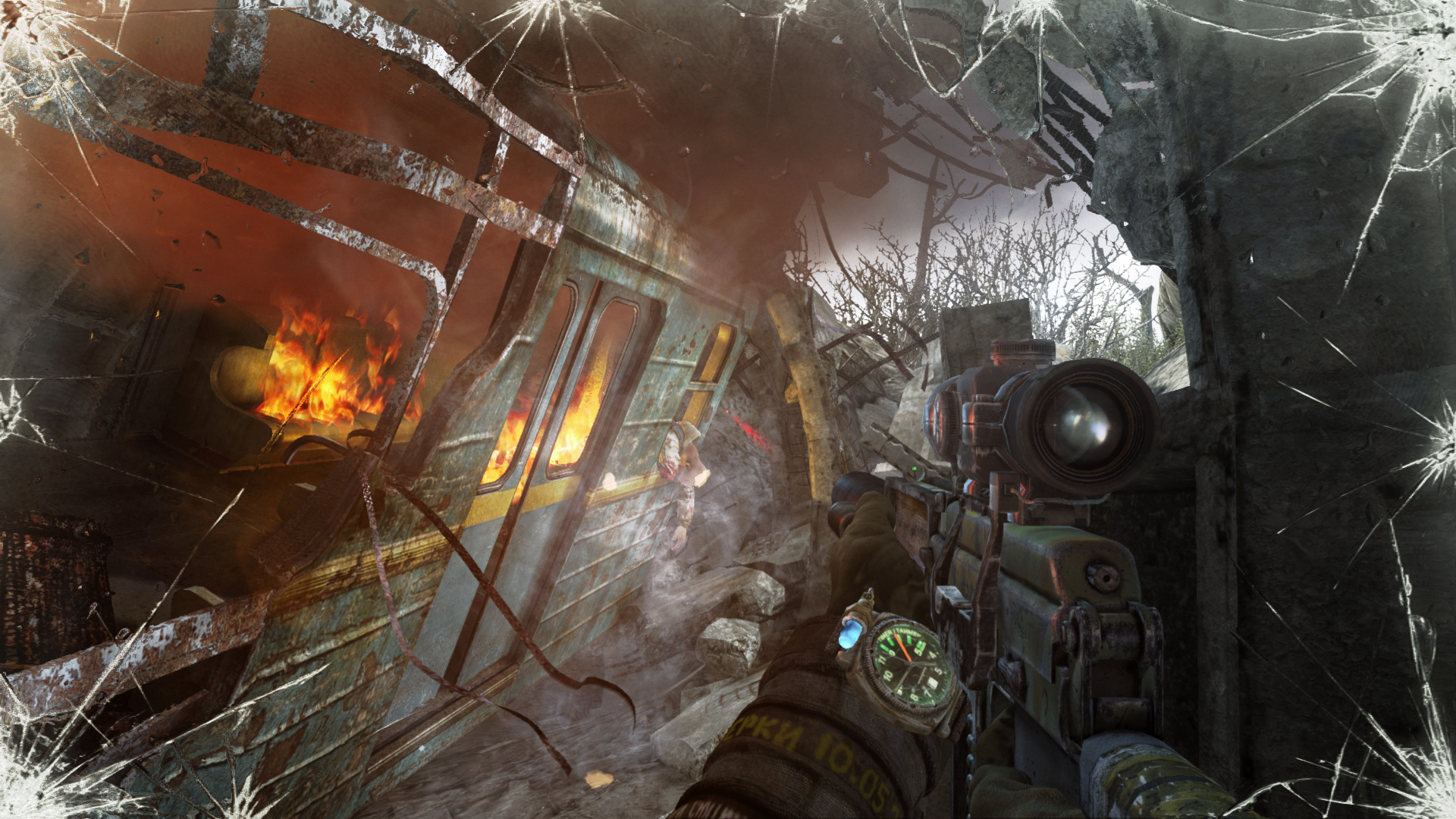
Artyom carries handmade firearms suited to the Metro’s improvised conditions, and weapons can be fitted with attachments such as sights and silencers. The Redux release adds the ability to check a watch and ammunition supplies without opening a broader inventory view, making these small status checks part of movement through a level. Ammunition, filters and medical supplies are found in the environment or on fallen enemies, which gives exploration practical value. The gas mask is essential in poisoned outdoor areas; its filter supply is limited, and the watch helps track how much time remains before a change is needed. Cracked lenses and a fogged mask can also make it harder to see, so survival depends on noticing conditions as well as aiming at threats.
The campaign alternates between enclosed underground journeys and excursions across the ruined surface. Outside, the mask turns exposure into a timed problem, while mutants and armed human groups can make open ground dangerous. Inside, low light, narrow sightlines and groups of enemies encourage more deliberate movement. Artyom can use melee attacks, firearms and throwable weapons, and the exact approach depends on the space and opposition. A silenced weapon can support quiet progress, while louder weapons make a direct confrontation possible at the cost of drawing attention. Between encounters, searching rooms can uncover ammunition, filters, medkits and other useful supplies, often placed away from the most obvious route.
Redux offers two campaign styles, Survival and Spartan, that alter the pace and resource pressure of the same story. Survival emphasizes a slower, more resource-conscious rhythm, while Spartan shifts the experience toward the more action-oriented combat style associated with Last Light. Ranger Mode adds a further challenge by removing the HUD and limiting resources while making combat more dangerous. These options change how players read their surroundings and decide when to spend supplies: a visible indicator may be absent, a firefight can consume scarce ammunition, and checking equipment becomes more important. They are ways to experience the campaign’s existing levels and systems, rather than separate stories.
A quieter thread runs through the action in the form of moral points, which can be gained through certain discoveries and interactions during the campaign. Listening to conversations, helping people or finding particular details can influence Artyom’s moral standing without appearing as a conventional dialogue-choice menu. This makes attention to the environment part of progression: a short detour or a pause to hear what people are saying may matter alongside clearing the immediate objective. The game does not reduce every encounter to a binary choice, and its story continues through scripted events as well as these less visible decisions. In Echoes, completing a section without Watchmen detecting Artyom and helping Pavel after a plane encounter are documented triggers for additional morality points.
- Developer
- 4A Games
- Genre
- Action; story-led first-person shooter with survival horror, exploration, tactical combat and stealth elements