
About Metro Exodus
In 2036, Artyom and a band of Spartan Rangers leave Moscow aboard the Aurora, a converted steam locomotive bound east through a year of changing seasons. Metro Exodus combines story-led travel between Russian regions with open-ended expeditions, stealth and combat, scavenging, handmade weapon customization, and survival in irradiated environments.
Metro Exodus continues Artyom’s story after years of life beneath Moscow, where survivors have endured poisoned air, mutated creatures and conflict between human groups. In 2036 he leaves the tunnels with a small band of Spartan Rangers, travelling east in the Aurora, a heavily modified steam locomotive. Anna, Artyom’s wife and a Spartan Ranger, and her father Colonel Miller are among the people aboard. The mission gives the journey a clear direction—find a place where the group can build a new life—while each stop exposes the travellers to a different community and a different kind of danger. The setting stays recognisably post-nuclear Russia, but the move out of the Metro changes the scale of the journey from tunnel-to-station passages to stretches of open wilderness.
The Aurora is both transport and a recurring point of return. Its route unfolds across roughly a year, passing through spring, summer and autumn before winter, and the intervening regions vary in terrain, weather and settlement. Story-led sequences keep the expedition moving, while broad areas let Artyom leave the main route to inspect buildings, camps and other points of interest. Day and night alter visibility and the timing of encounters; weather can also shape how exposed or difficult a crossing feels. The journey is therefore paced between travel with the crew and local excursions on foot, with the train marking the connective thread rather than turning the whole game into a single continuous open map.
On those excursions, Artyom moves through spaces where human groups and mutated wildlife present different threats. Against armed people, he can use cover, darkness and quieter takedowns to pass through a camp or reduce opposition before a direct fight. If combat breaks out, the handmade firearms and limited ammunition make range and weapon choice consequential. Mutants create a different pressure: they attack in close quarters and cannot be treated as another armed patrol. The game lets players shift between stealth and force as a situation changes, and its wider levels provide more than one approach to many objectives. The aim is not to clear every location in one prescribed order; the player follows the expedition while deciding how much risk to take in its surrounding spaces.
Scavenging keeps those choices connected to survival. Artyom gathers two broad crafting resources—materials and chemicals—from abandoned structures and other sites, then spends them on supplies. His backpack supports quick preparation while away from shelter, including medical kits, gas-mask filters and ammunition for the air-powered weapon. More extensive recipes, such as ammunition for conventional firearms and throwable weapons, require a workbench on the Aurora or at safe houses. That distinction makes an outing a small planning cycle: use what can be made in the field to manage immediate needs, search the area for more components, and return to a bench when the loadout needs a fuller reset. Useful equipment may also come from exploring rather than from a shop-based purchase system.
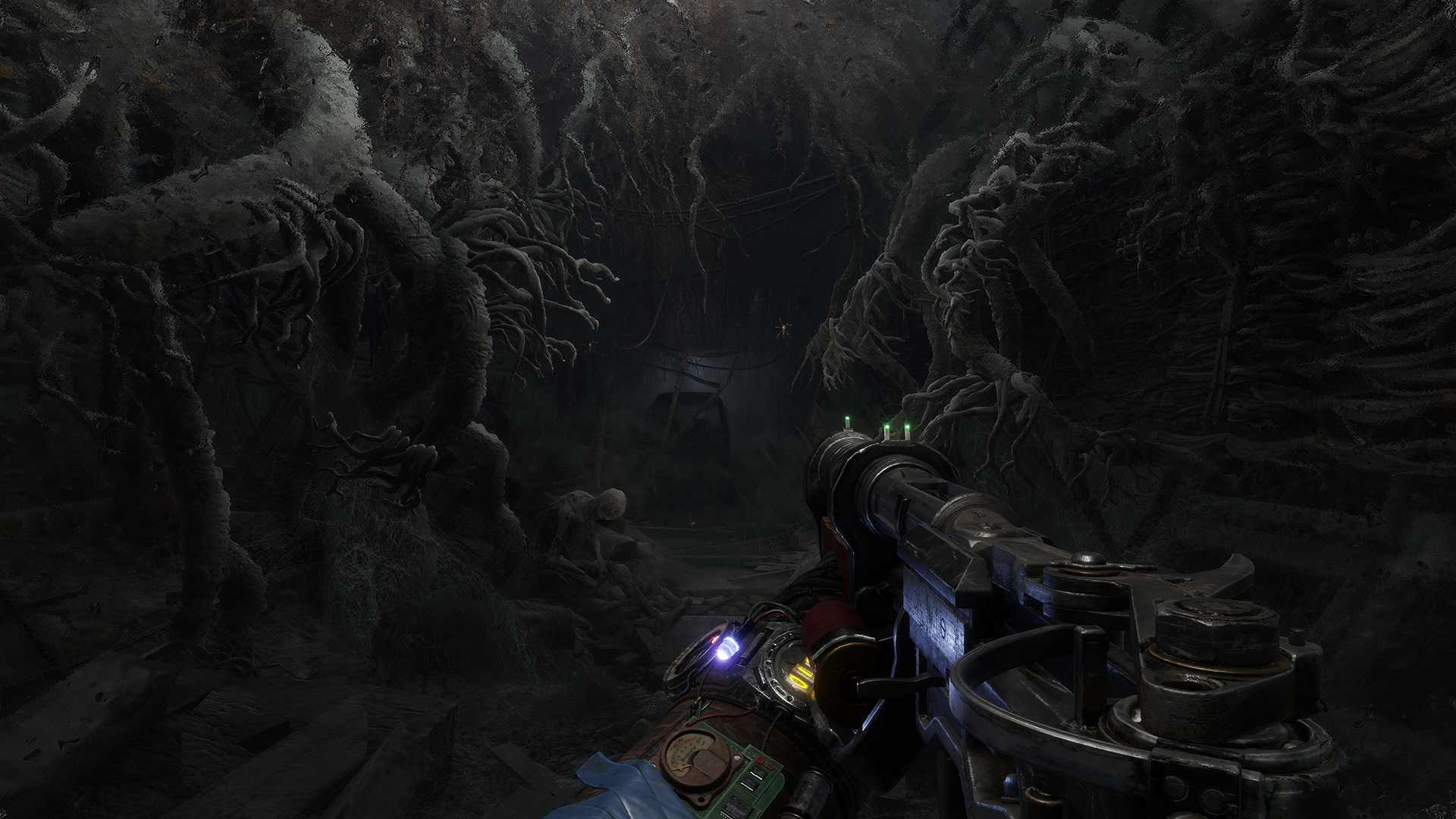
Firearms are built from interchangeable parts, so finding an attachment can change how an existing gun handles. Artyom can modify his weapons from the backpack during an expedition, swapping pieces such as sights, barrels and magazines to fit the next encounter. Weapons carried by human opponents are another source of useful components: he can take a dropped firearm or strip it for parts to adapt to his own kit. At benches he can make more involved adjustments and clean weapons that have accumulated dirt. Maintenance is part of the same resource loop as ammunition and medical supplies: overlook a fouled gun for too long and it may become less reliable, so safe stops offer a practical reason to service equipment as well as craft.
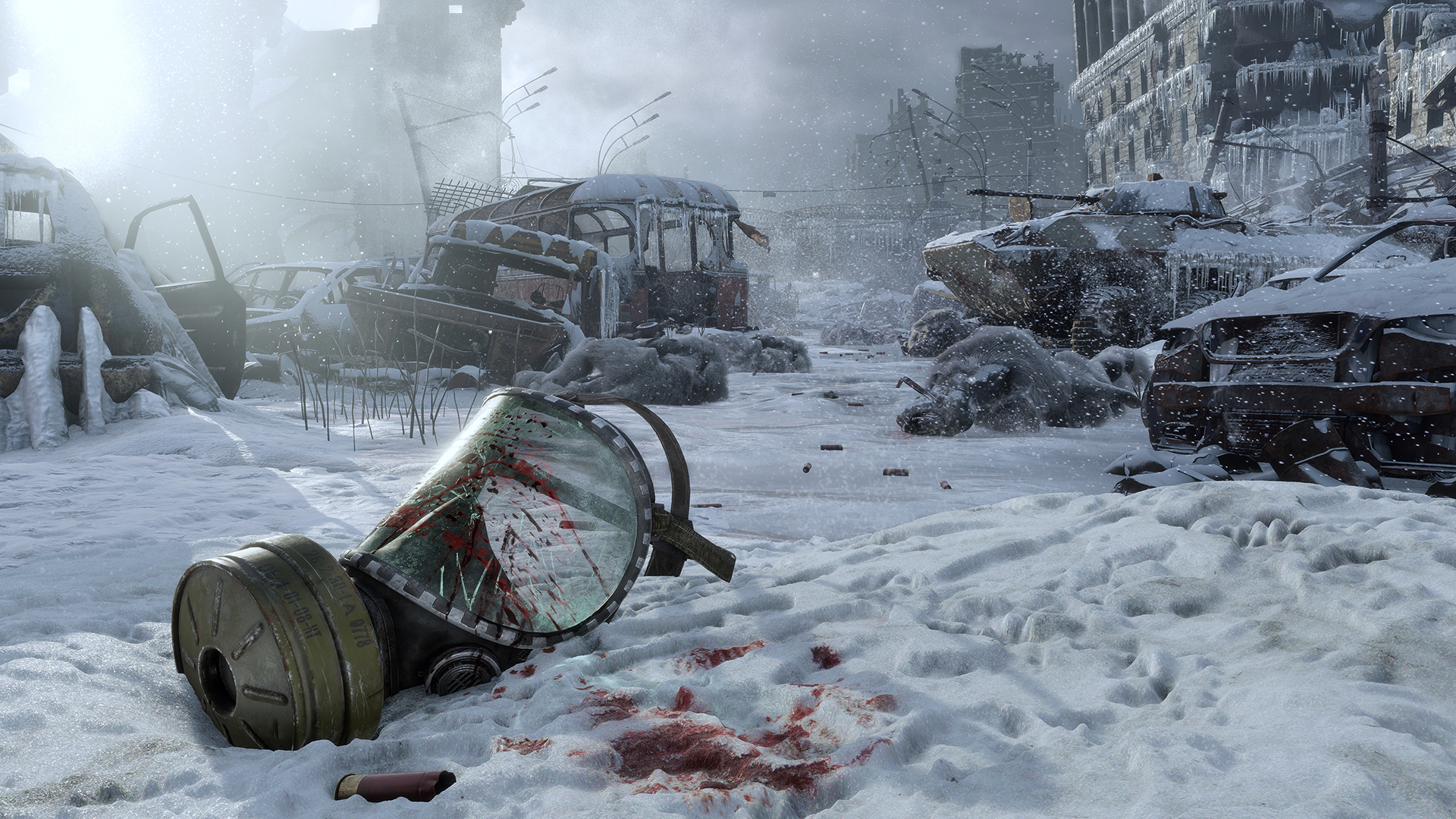
The wilderness also makes protective gear part of routine preparation. Toxic areas require a gas mask and filters, while damage and environmental exposure can consume medical items or make a route harder to manage. The player watches filter time, maintains the mask and decides whether a detour is worth the supplies it may yield. Because creatures do not provide the same ammunition supply as armed human enemies, exploration and conservation matter in different ways from a tunnel station with traders. A careful route can add materials or a gear component, but carrying enough supplies for the next stretch still takes priority. These pressures make movement through an area a sequence of practical decisions—what to search, when to use a resource and when to return to shelter.
The people travelling on the Aurora give the expedition a second kind of progression. The crew spends time together between trips, and conversations and changing circumstances fill in how its members respond to life beyond Moscow. Artyom’s decisions during encounters can affect the companions’ fate, so the consequences of an expedition extend beyond its immediate objective. The game links these character moments to its regional structure: a stretch of travel establishes the group’s current situation, an excursion tests it against the local environment, and the next leg carries forward the results. This crew-and-journey thread sits alongside the survival systems, adding relationships and changing conditions to a campaign built around travel rather than a single underground network.
- Developer
- 4A Games
- Genre
- Story-driven first-person shooter with stealth, exploration and survival horror elements