
About Metro 2033 Redux
Metro 2033 Redux is 4A Games’ remastered version of the 2010 first-person shooter. As Artyom, a young resident of Moscow’s underground Exhibition station, you travel through the Metro and onto the irradiated surface to seek help for your home, managing ammunition and air filters while facing human factions and mutants.
In Metro 2033 Redux, most survivors of nuclear war live in station-cities beneath Moscow, where the subway has become both shelter and the world people know. Artyom was born near the end of the old world and raised underground at Exhibition station. A crisis there sends him on a journey through the Metro to find help for his home and warn other survivors about a danger threatening the scattered communities. The route passes through forgotten tunnels and, at intervals, the ruined city above. Its central question is how humanity can endure when the air, wildlife and political divisions all pose risks. Redux retells the original Metro 2033 story with a revised presentation and gameplay framework, rather than being the original 2010 release or the later Metro: Last Light.
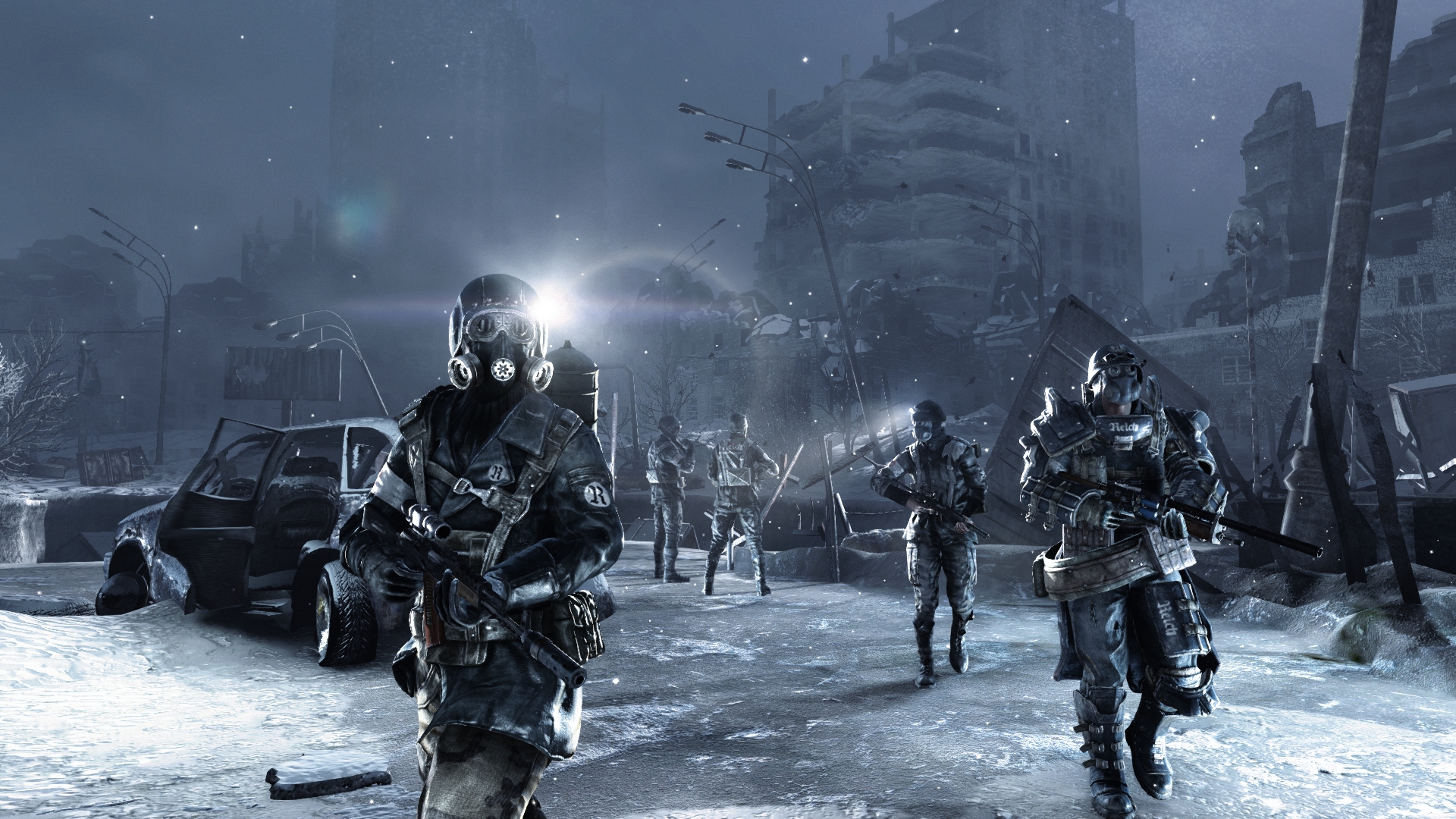
The Metro is a network of lived-in stations joined by dark transit tunnels, maintenance passages and abandoned spaces. Each station has its own people, routines and anxieties; travel through these settlements gives Artyom glimpses of families, traders and guards trying to preserve ordinary life beneath the ruins. Human politics have survived alongside the physical dangers. Armed factions, including Nazis and Communists, contest power and territory, so a passage through the tunnels may bring a checkpoint or hostile patrol as readily as a safe place to rest. The campaign is primarily a directed journey rather than a free-roaming map: Artyom moves from one connected section to another, with local spaces to observe, search or cross quietly before the story carries him onward.
Leaving shelter changes the survival problem. Above ground, poisonous air means Artyom must wear a gas mask and keep track of the time left on its air filters; a damaged or empty mask can turn exposure into an immediate threat. Filters and protective equipment are scarce enough that he needs to notice supplies while moving through dangerous areas. The game also places traps, tripwires and other hazards in spaces both above and below ground, so watching the path matters as much as watching enemies. A wristwatch helps show remaining filter time and whether Artyom is visible to opponents. These readable cues turn a short crossing into a deliberate sequence of checking the mask, choosing when to move and finding the next protected space.
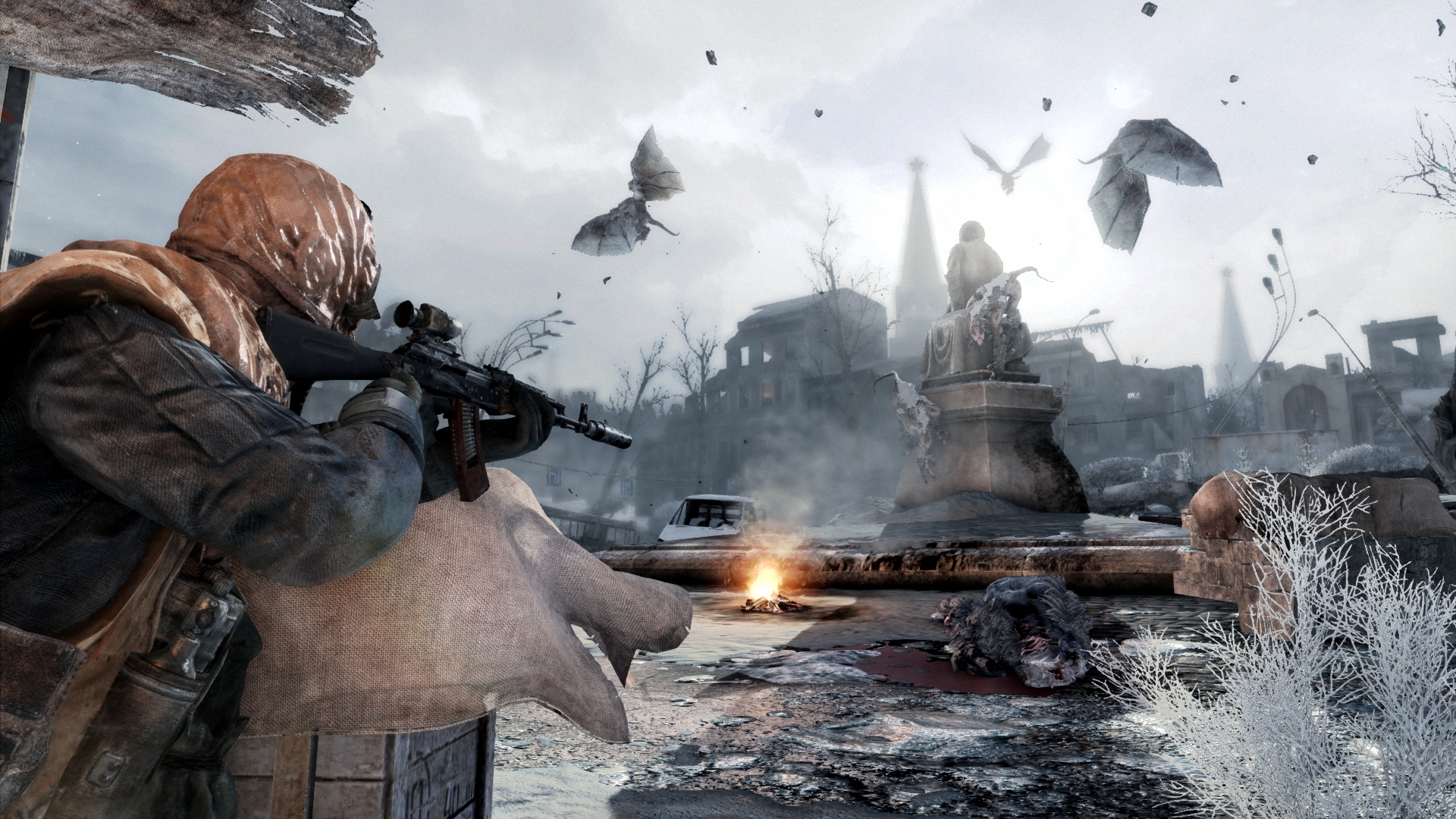
Stealth is built around light and sound. In guarded sections, Artyom can use a lighter to clear cobwebs, extinguish lamps to deepen shadows, and move between dark areas while watching for enemy awareness. Silenced weapons and close takedowns let him remove threats without announcing his position, though discovery can turn a quiet approach into a gunfight. The decision to sneak or fight changes how much ammunition he spends and how many enemies react. Darkness is useful but does not erase other dangers: mutants may be encountered in the tunnels or open city, and some situations require direct combat. Redux smooths the original’s controls and stealth mechanics and provides radial menus for selecting weapons and equipment, keeping those choices close at hand.
When a confrontation is unavoidable, Artyom carries an assortment of improvised firearms and grenades suited to different distances. The Redux version brings weapon handling and enhancements from Metro: Last Light into the rebuilt game, so loadout decisions include weapon variants and attachments as well as how many rounds remain. Ammunition is not interchangeable in value: ordinary scavenged rounds can be fired, while the pre-war military-grade bullets hit harder. Medical supplies, filters, and weapons also compete for attention during a trip through hostile territory. The game alternates between stretches of cautious movement and abrupt attacks, asking the player to track the immediate threat while preserving enough gear to continue through the next exposed passage.
The ammunition economy makes each found round serve two possible purposes. Dirty rounds are the common, lower-powered ammunition used in weapons; military-grade rounds are more effective in a fight, but Metro markets also accept them as money for equipment. Spending a military round in combat therefore gives Artyom a stronger shot at the cost of something he could otherwise trade. Scavenging and buying supplies become connected decisions instead of separate activities: the player weighs whether to spend precious currency on a weapon or reserve it for the next encounter. Gas-mask filters form a parallel survival constraint, especially when a route reaches the open air. Searching abandoned spaces and human outposts can replenish these resources, but the game keeps the journey’s equipment limits in view.
Redux lets players choose between Survival and Spartan play styles, then select a difficulty. Survival uses the slower, resource-conscious approach associated with Metro 2033: ammunition, filters and equipment found along the way carry greater weight, so careful movement and conservation matter. Spartan adopts a more action-oriented pace with more plentiful basic supplies and draws on the combat style of Metro: Last Light. Ranger is an additional high-challenge mode that removes the HUD and hints while making combat deadlier and resources more limited. The remaster also rebuilds Metro 2033 in the later game’s engine and framework, updating lighting, weather, controls, enemy behaviour and weapon handling while preserving Artyom’s original underground-to-surface journey.
- Developer
- 4A Games
- Genre
- First-person shooter with survival horror, stealth and exploration elements