
About Metal Gear Solid V: The Phantom Pain
In 1984, Snake awakens from a nine-year coma and builds the Diamond Dogs private army while pursuing the group responsible for his former unit’s destruction. Deploy by helicopter into open battlefields, choose how to approach each mission, and bring recruits and supplies back to Mother Base to expand the tools and support available for later operations.
Metal Gear Solid V: The Phantom Pain is a tactical stealth action game about Snake, also known as Big Boss, returning to conflict in 1984 after a nine-year coma. With Ocelot’s help, he establishes Diamond Dogs and searches for the shadow group XOF, while his former partner Kazuhira Miller is held by Soviet forces in Afghanistan. The story follows a private military force through a Cold War shaped by nuclear weapons, revenge and the consequences of warfare. This entry follows the events of Metal Gear Solid V: Ground Zeroes, but the two are separate games: Ground Zeroes is the earlier prologue, while The Phantom Pain is the larger campaign built around repeated field missions, two expansive operating regions and the growth of Diamond Dogs.
The campaign alternates between planning at Mother Base and deploying to an operation. From the helicopter’s Aerial Command Center, Snake selects a main mission or Side Op, a landing zone, equipment and a buddy; the helicopter inserts him into the area, and he can then reach objectives on foot or move through the terrain by horse or vehicle. Missions ask him to rescue or extract people, recover information, destroy equipment or reach another objective. The player is free to study an outpost before acting, approach from different directions and decide whether to avoid guards or engage them. Completing operations earns rewards and opens more missions, while Side Ops offer smaller tasks beyond the main story sequence.
The field is designed around observation and flexible infiltration. Snake can crouch, crawl, climb, use cover, perform close-quarters combat, aim weapons or use tools such as the cardboard box to evade detection. Before entering a guarded area, he can survey it and mark soldiers, then use that knowledge to plan a route or identify a patrol that blocks the objective. A mission can shift into an open firefight if he is discovered, and the available weapons, vehicles and support actions allow a more direct response. Weather and the day-night cycle affect the situation, so visibility and enemy routines change the timing and shape of an approach. The player can adjust equipment before deployment, making reconnaissance and preparation part of the mission rather than a separate menu exercise.
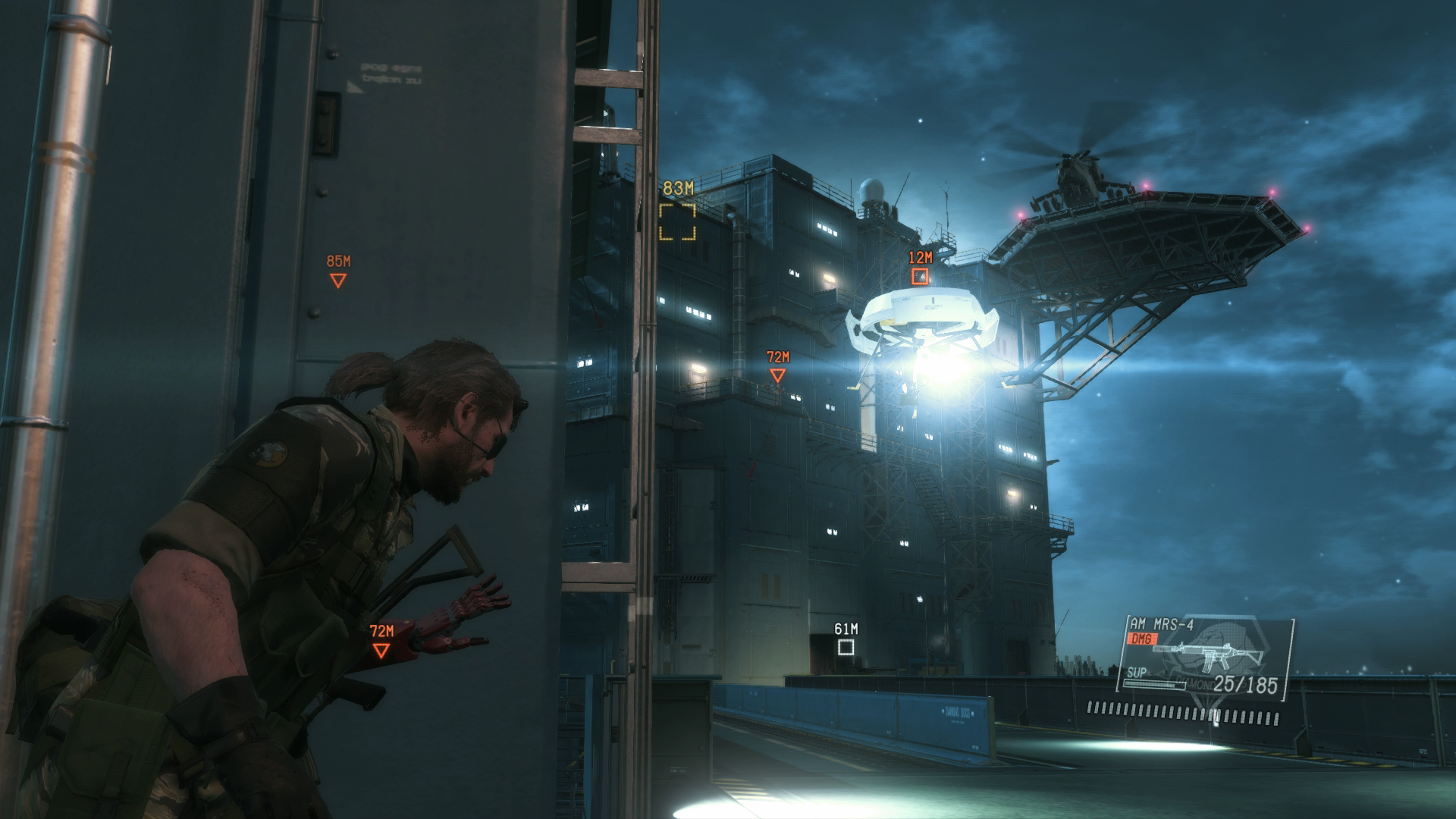
Enemy forces respond to repeated tactics. If Snake relies heavily on headshots, soldiers may begin wearing helmets; repeated use of the Fulton extraction balloon can lead troops to shoot down later balloons. Night operations can prompt guards to carry flashlights or night-vision equipment, while frequent covert infiltration can bring decoys, directional mines and surveillance cameras. These countermeasures alter the risks around familiar approaches and make it useful to change tactics, tools or timing. The response system links the player’s habits to the battlefield: a method that worked against one group of guards may become less dependable as the campaign progresses. This gives reconnaissance continued value, because an outpost’s defenses can reflect the methods Snake has used elsewhere.
Buddies provide field support selected before deployment. D-Horse offers a way to travel through the terrain, while D-Dog can detect and mark nearby enemies; Quiet can provide long-range cover with her rifle. Each ally has a different role, and the player chooses one for an operation based on the task and preferred tactics. Buddies can receive orders through the Call Menu, so they act as part of the mission plan rather than simply following Snake everywhere. Their availability depends on fulfilling in-game requirements, and the support they provide can change how a player crosses a guarded area, locates a target or handles a confrontation. Equipment and buddy selection happen in the helicopter before insertion, connecting Mother Base preparation to decisions in the field.
The Fulton system carries the field operation back to Mother Base. Snake can extract soldiers and prisoners to recruit them into Diamond Dogs, and can also recover animals, weapons, vehicles, containers and raw materials. Recruited personnel are assigned to units suited to their abilities; as unit levels rise, new features become available to support missions. Mother Base grows from its initial command platform as Diamond Dogs gains staff and resources, adding facilities such as Research and Development, Medical, Intel, Support, Base Development and Combat Unit platforms. Their functions affect the campaign: for example, Support improves supply drops, while Research and Development enables new equipment. GMP, the organization’s funds, comes from completing missions or selling recovered assets and is spent on development, so extraction and resource gathering feed directly into future loadouts.
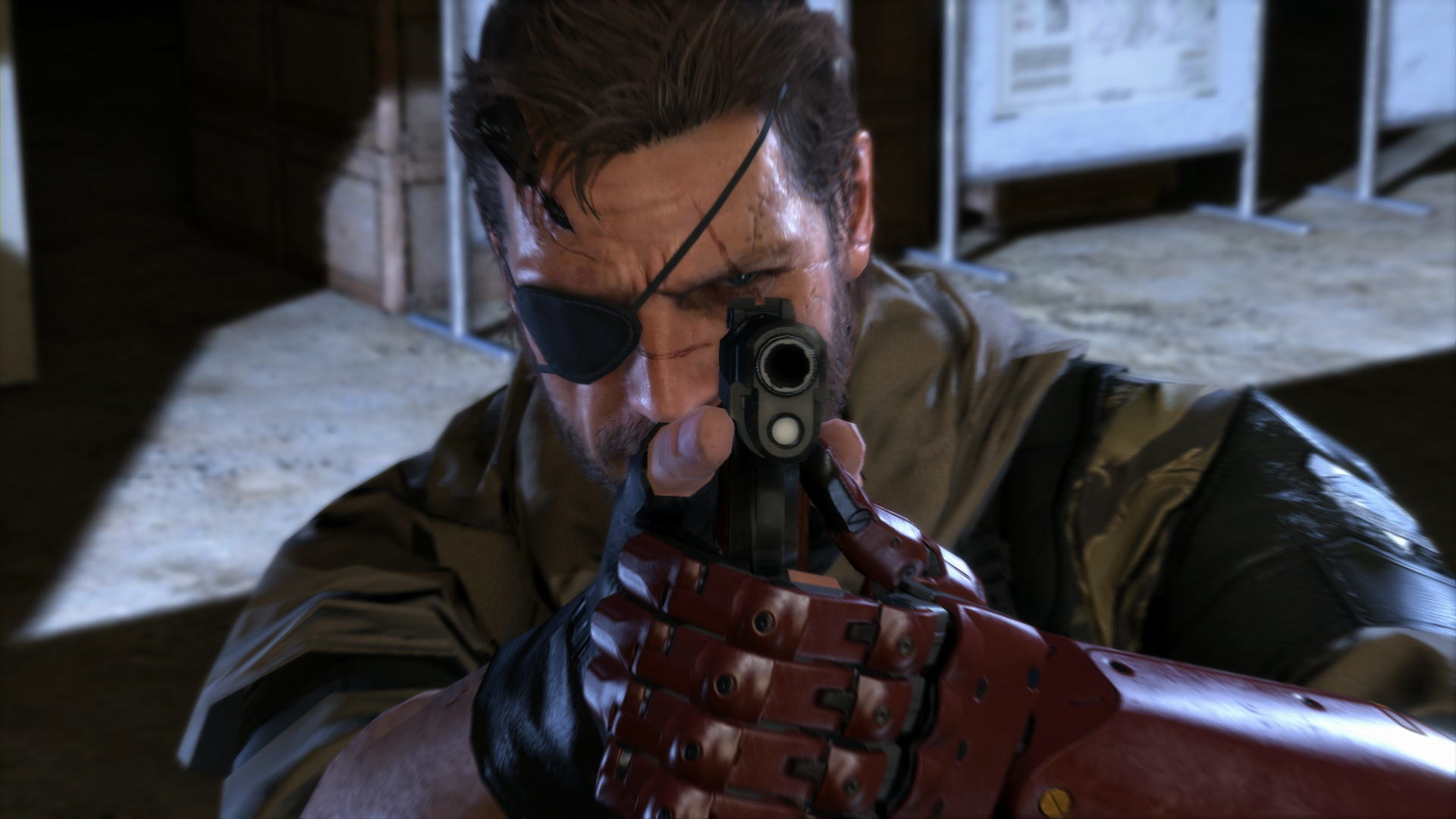
The Phantom Pain also contains online systems that sit alongside its single-player campaign. Forward Operating Bases, or FOBs, are online extensions of Mother Base: players can infiltrate one another’s bases and take personnel or supplies, while defenders configure security and equipment to resist attacks. Konami identifies FOBs as online-only and says the main story can be played while disconnected, with online functions unavailable in that state. Metal Gear Online is a separate competitive multiplayer mode included with the game, rather than a co-operative version of the campaign; Konami’s support material states there is no co-op play. These boundaries keep the story missions and Mother Base progression distinct from player-versus-player FOB incursions and the dedicated multiplayer mode.
- Developer
- Kojima Productions (The Phantom Pain Steam listing metadata names KONAMI as developer and publisher).
- Genre
- Tactical stealth action; KONAMI describes the series' genre as Tactical Espionage Operations.