
About METAL GEAR SOLID V: GROUND ZEROES
Big Boss infiltrates Camp Omega, a Cuban military detention site, to rescue prisoners and escape before the guards close in. METAL GEAR SOLID V: GROUND ZEROES combines a focused story operation with Side Ops that reuse the camp for different objectives, letting you scout, sneak, fight and plan your extraction.
METAL GEAR SOLID V: GROUND ZEROES places Big Boss, also known as Snake, on a rescue mission inside Camp Omega, a military detention site in Cuba. The camp is the game’s central play space: floodlit fences, guard posts, barracks, prison cells, roads and exposed approaches make one compound serve as both the story setting and the tactical problem. The mission follows events in METAL GEAR SOLID: PEACE WALKER and leads into the separate METAL GEAR SOLID V: THE PHANTOM PAIN. Ground Zeroes gives Snake a focused operation with its own beginning and extraction, rather than presenting Phantom Pain’s larger campaign as part of this game. Its story concerns prisoners held at the camp and the effort to reach them without allowing the guards to control the situation.
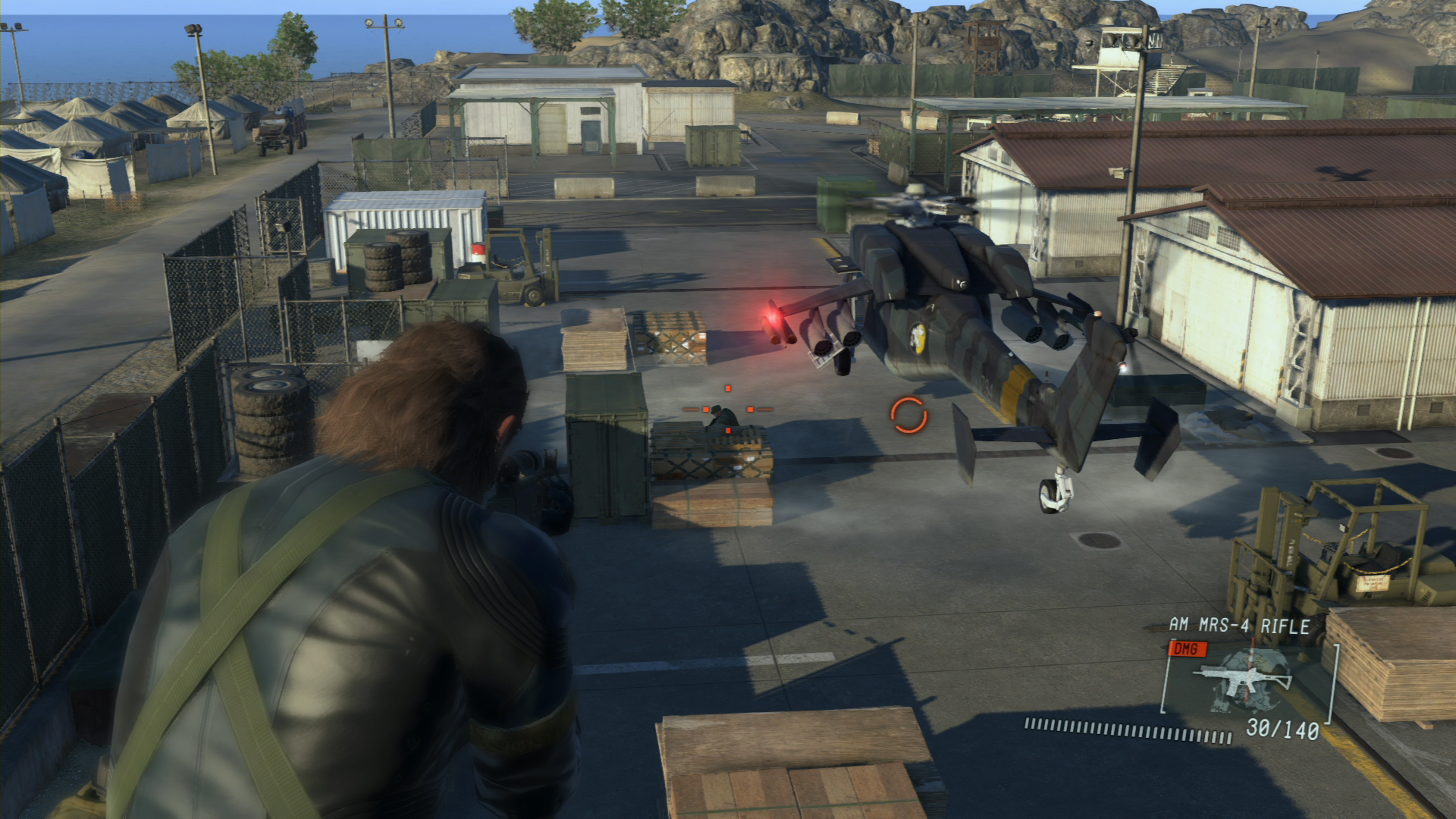
The main objective gives you room to decide how to enter, where to move and what risks to accept. Camp Omega can be approached across open ground, through guarded structures or along elevated walkways and service routes. Walls, sandbags, vegetation and darkness offer cover, while searchlights and patrol routes make careless movement visible. Snake can walk, run, crouch and crawl, and the transition between those movement states is direct. The compound also contains vehicles and usable weapons, so a plan can change after an alarm: you can break contact and hide, move through another section, or fight toward an exit. The map remains one connected military site, but fences, buildings, roads and observation points create distinct routes through it. Every approach brings different sightlines and guard positions into play.
Preparation starts with observation. Snake can use binoculars to inspect distant guards and mark them, leaving a visible indicator that helps track their movement after he looks away. A directional microphone picks up nearby conversations; listening can reveal information about the prisoners or the camp. You can also close in on soldiers, hold them up or grab them, then question them for useful details such as hidden weapons and the positions of other guards. This information makes the compound easier to read, but it does not remove the need to watch patrols and choose your timing. Soldiers react to unusual sounds, missing security cameras and glimpses of Snake. A search can turn into a full alarm if they confirm his presence, and radio chatter lets you hear the changing response. Marking and reflex assistance can be disabled for a more demanding infiltration.
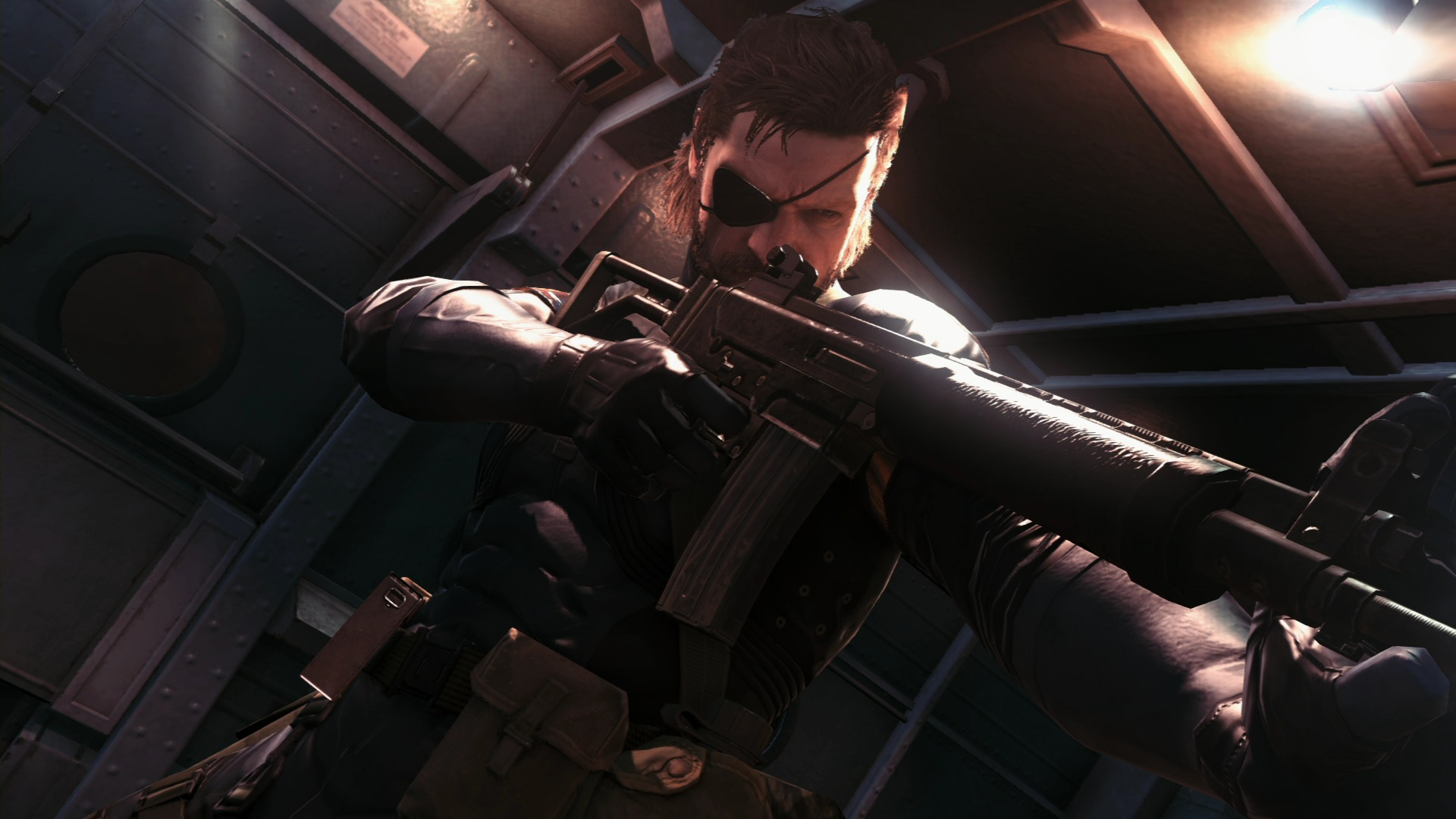
Rescue work asks you to manage people as well as routes. Finding a prisoner is only part of the task: Snake must get the captive out of the guarded compound, and the chosen extraction can expose the route to more soldiers. The iDroid lets him contact his helicopter support and request an extraction at a point he chooses; he still has to cross the guarded compound to reach it. Moving on foot, using a vehicle or calling the helicopter each presents a different problem when patrols converge. The same support channel gives the operation a practical rhythm: scout, reach the captive, choose a way out and adjust when the camp responds. A save transfer can carry people Snake rescues here into The Phantom Pain, where POWs and VIPs can join Mother Base staff. The two campaigns remain separate.
After the central story operation, Side Ops return to Camp Omega with objectives that change what you do there. The objectives span tactical action, aerial assaults and covert tasks, from identifying a target to attacking camp defenses or supporting an extraction. You revisit familiar roads, towers and buildings, but the objective changes which parts matter and what equipment is useful. Some tasks reward patience and quiet movement, while others ask you to disrupt the site directly. Mission results assess how effectively you handled the objective, with rewards such as weapon drops and in-mission trials changing later attempts. This structure makes the camp a compact set of scenarios instead of a chain of entirely new locations. Revisiting it lets you learn guard positions and alternate routes, then test a different approach against the same terrain.
Combat is available, but it changes the pressure around the objective. Snake can use firearms and explosives, take cover, or close the distance for hand-to-hand control. A captured guard can be questioned, disarmed, knocked out or killed; an unattended body can draw attention, and a soldier who recovers may raise an alarm. If enemies spot Snake clearly, they call for help and search his last known position. You can try to escape the search and let it subside, or confront soldiers as they surround the area. The game evaluates mission performance, including detection and casualties, so direct force and a quiet rescue can lead to different results. A small HUD keeps much of the camp in view without a conventional radar, placing more weight on binocular marks, visual observation and incoming radio reports.
Two bonus operations add different objectives to the Steam version. Hidden XOF patches around Camp Omega unlock Deja Vu and Jamais Vu. In Deja Vu, Solid Snake revisits scenes from the earlier Metal Gear Solid; Jamais Vu puts Raiden in the camp to identify disguised aliens. Both missions reuse the compound’s routes and guard network, but change what you look for and how you move between soldiers. They are optional diversions from the prisoner rescue, with familiar tools such as binoculars, weapons and stealth still shaping how you approach each task.
- Developer
- KONAMI (Steam listing; Steam description also refers to Kojima Productions)
- Genre
- Action; Adventure (Steam listing)