
About Metal Gear Rising: Revengeance
In a near future shaped by private military companies and cyborg technology, Raiden works for Maverick Security after the collapse of the Patriots. An attack by Desperado sends him into a sword-focused campaign of close combat, stealth approaches, high-speed traversal and precise cutting with his high-frequency blade.
Metal Gear Rising: Revengeance shifts the series toward fast, close-range action, placing Raiden at the centre of a conflict over cyborg soldiers and the business of war. Several years after the events of Metal Gear Solid 4, he works for Maverick Security Consulting, a private military and security company that takes on protection and reconstruction assignments. During a security job in a recovering country, an attack by the rival group Desperado Enforcement leaves the local prime minister dead and Raiden badly injured. The mission that follows takes him through a wider conspiracy involving private military contractors, political violence and the people who profit from renewed conflict. The story follows Raiden’s effort to stop Desperado while confronting the violent past that still shapes his identity.
Raiden is a cyborg equipped with a high-frequency katana, and the campaign’s encounters are built around switching quickly between movement, ordinary attacks and defensive timing. Light and heavy strikes can be combined into strings, while directional inputs and jumps add further attacks. Rather than relying on a conventional block button, Raiden can deflect incoming blows by moving toward an attacker while striking. A well-timed deflection can become a counterattack; landing that counter can stagger an opponent and create an opening for a more forceful follow-up. Some opponents use multiple attacks in succession, so reading the sequence and responding to each hit becomes part of the duel. The game also includes an Easy Assist option that can automatically perform parries while the player attacks.
Blade Mode turns the katana into a precision tool. Holding the mode slows the surrounding action when Raiden has enough fuel-cell energy, and the player can steer the blade to choose the direction and angle of a cut. The system is used to damage enemies and to slice through particular environmental objects, while armoured targets may need to be weakened before the game marks a cuttable area. Against a staggered enemy, a red target can identify its repair unit. Cutting at that location and taking the unit triggers Zandatsu, restoring both health and fuel-cell energy. The same resource therefore supports the slowed cutting state and can be replenished through well-executed finishers, linking offensive precision to survival during longer encounters.
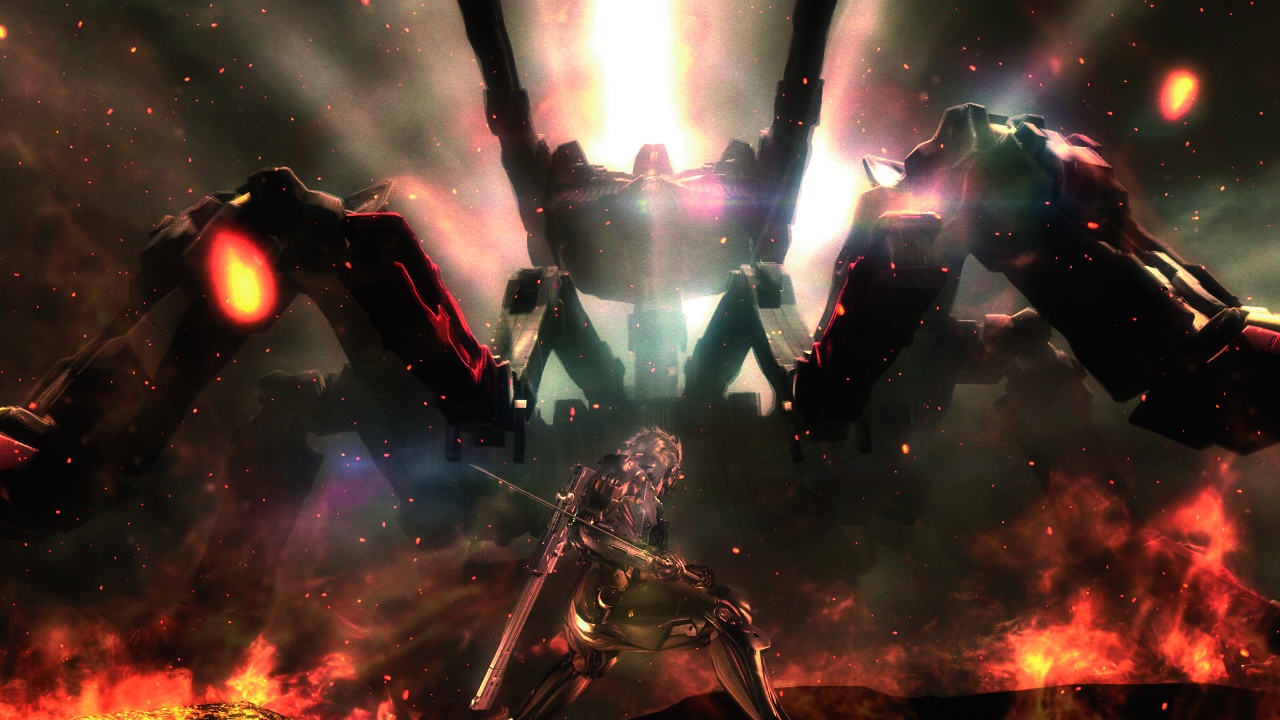
Movement gives combat arenas and connecting spaces a strong forward drive. Ninja Run lets Raiden sprint at high speed while automatically vaulting over obstacles and avoiding certain incoming fire; attacks during the run can become a dash strike or slide. The route still asks the player to manage threats, since automatic movement does not remove every hazard or solve every enemy encounter. Some spaces also allow a quieter approach: reaching an unaware opponent from behind or above can trigger a Ninja Kill, a single-action takedown. That stealth option can lead directly into Blade Mode and a Zandatsu opportunity. The contrast between a sudden ambush and a face-to-face sword exchange gives the player different ways to begin a fight without changing the game’s emphasis on close combat.
The enemy roster makes the sword systems answer different problems. Desperado employs cyborg fighters as well as more specialised operatives, including Mistral, Monsoon and Sundowner, each associated with a distinct weapon or combat method. Mistral uses the flexible polearm Étranger; Monsoon manipulates the Dystopia tactical sai with magnetism and can separate body components; Sundowner fights with paired high-frequency machetes. A separate encounter introduces the unmanned LQ-84i, whose dialogue interface and orders complicate its role as an opponent. Their different ranges, attack patterns and defences make parrying, repositioning and finding a temporary opening more useful than repeating one attack string. Boss fights extend the campaign’s central sword duel into tests of observation and response.
Raiden’s development is supported by Battle Points earned through play. These points can be spent to improve his body, including health capacity and fuel-cell capacity, and to acquire techniques that expand his move set. The player can also access sub-weapons such as grenades and launchers, while major encounters can make new secondary weapons available. These alternatives change reach, speed and attack coverage, so selecting a tool becomes a practical response to the opposition rather than a replacement for the katana. Combat performance is also evaluated across the mission structure, encouraging players to balance speed, damage taken and effective attacks as they revisit stages. The upgrades and weapon choices add a gradual layer of customisation to a campaign whose basic rhythm remains movement, close-range pressure, defence and decisive cutting.
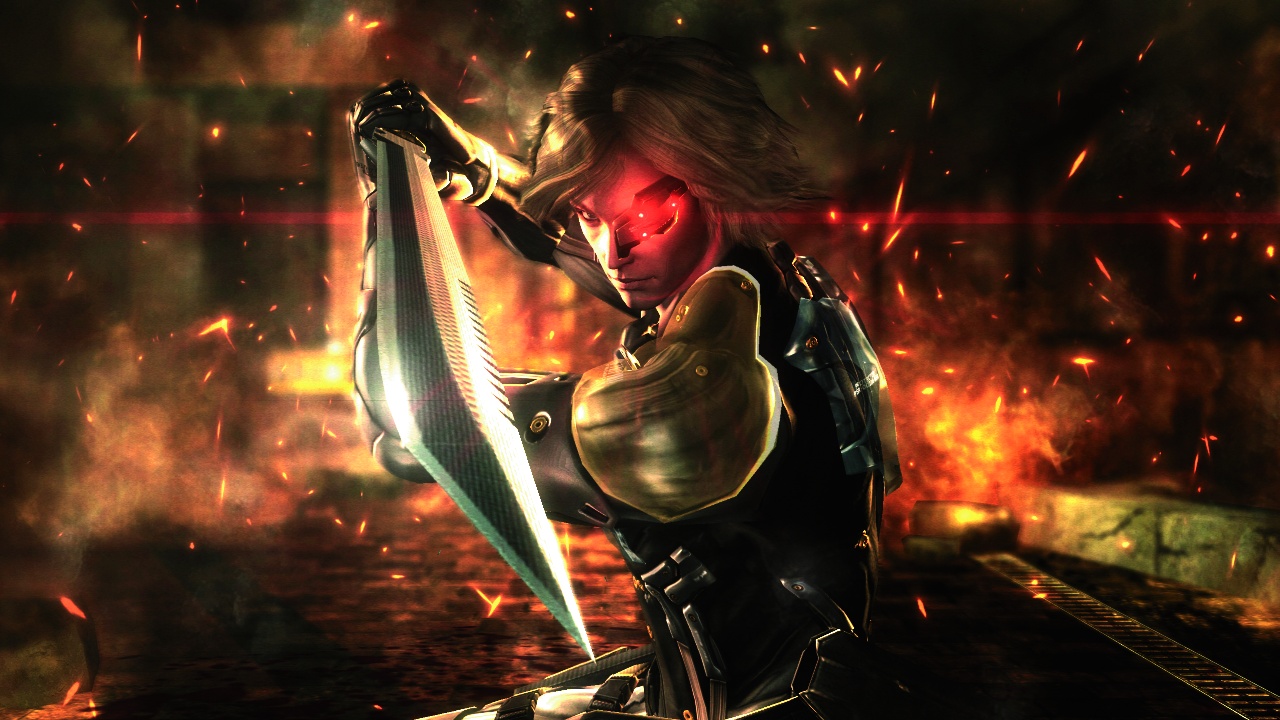
Between fights, codec conversations provide context about the operation, the people involved and the technology behind the conflict. The campaign’s environments range from urban streets and occupied facilities to more fortified military spaces, with traversal and combat often flowing together. Short stealth passages, platforming hazards and sequences built around movement interrupt the arena battles, while set-piece encounters keep Raiden active through scenes that might otherwise be presented as cutscenes. This structure keeps control in the player’s hands through much of the action and makes the story’s scale visible in the spaces Raiden crosses. The result is a focused action game about a cyborg swordsman whose defensive timing, resource use and deliberate blade control all feed into the same momentum-driven fight system.
- Developer
- PlatinumGames; Kojima Productions also collaborated
- Genre
- Action