
About Maximum Action
Maximum Action turns the first-person shooter into a playable action-movie sandbox, with dives, slides, kicks, dual wielding and controllable slow motion shaping each shootout. Still in Early Access, the game offers a growing set of levels and a level editor as development continues.
Maximum Action takes inspiration from Hong Kong action cinema, heroic slow-motion gunfights and old-school first-person shooters. It is built around the idea of becoming the lead in an over-the-top action sequence, with the player choosing how to move through a fight and how to stage each encounter. The game is an evolving single-player shooter built around the player’s ability to create a spectacle from movement, weapons, physics and timing. It remains in Early Access, with content and polish still developing.
The campaign and selectable levels provide a framework for these encounters, but the way through a room can vary considerably. Its levels let players choose their weapons before entering, and their layouts provide a clear route through each fight. The number of possible outcomes comes from how players approach those encounters. A straight run with a firearm can become a dive through a doorway, a slide beneath incoming fire, a kick to knock an opponent away, or a slow-motion sequence that gives the player time to redirect an attack. The levels supply the setting and opposition; the player supplies the choreography. This focus gives each replay a chance to feel different without promising an open-world structure.
Movement is central to that choreography. Diving, sliding, punching, kicking and dual wielding are all part of the combat system, alongside active ragdolls and controllable slow motion. These actions can be chained together, so the player can enter an encounter with a dive, redirect with a kick and continue firing while the action slows down. The physics-based presentation lets impacts and bodies react to the fight, reinforcing the game’s exaggerated action-film tone. Slow motion is a tool the player controls, not just a cutscene effect, and the ability to manage its timing supports different approaches to the same level. Success is framed around improvisation and style, without leaning on elaborate skill trees or character levels.
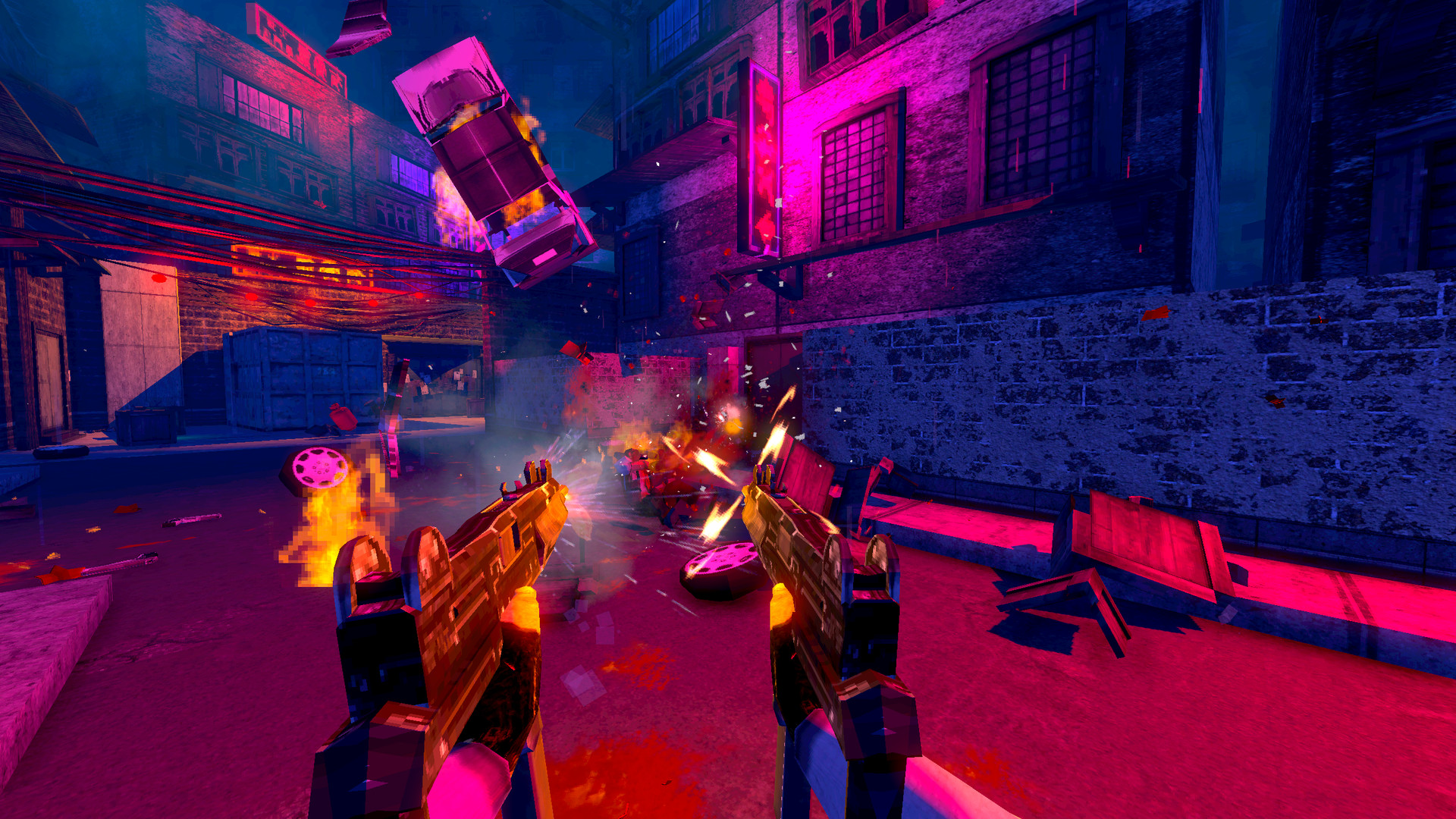
The weapon selection supports flexible loadouts. Players can choose from weapons such as knives, pistols, submachine guns, assault rifles, shotguns, rifles, grenades, crossbows, bazookas and katanas. Many can also be dual-wielded. That breadth encourages players to experiment with how a weapon behaves alongside movement and slow motion, rather than expecting a fixed gun assigned to each encounter. The game’s sandbox menu lets a player revisit levels with different combinations of weapons or add enemies to increase the challenge. This creates a simple loop: choose a setup, test it in a level, then adjust the ingredients and run the scenario again.
Replayability extends beyond the built-in levels. Maximum Action includes a level editor and Steam Workshop support, so players can create and share custom stages and try community-made scenarios. The editor turns the action systems into tools for constructing encounters, letting users decide where opponents and props should appear and what kind of sequence they want to stage. Players can shape encounters around the same movement and combat options, then share those ideas for others to try. Workshop downloads offer a changing selection of custom levels and weapons, so a player can move between creating a scene and stepping into another player’s design. This shared creative space gives the available level roster room to grow alongside the developer’s own work. The editor also gives the player a way to explore the game’s physics and enemy encounters on their own terms. A stage can be made to reward a particular route or to test a different weapon combination, then revised after seeing how the action plays out. Shared levels carry those experiments into other players’ libraries, where they can be replayed or used as inspiration for another design. This community layer helps the sandbox remain varied even between updates to the developer’s own levels.
The Early Access label is important to understanding the available scope. Most core mechanics are in place, while level content, player customisation and bugs remain areas for improvement. The full version is planned to include more levels, weapons, enemies and customisation. Work continues on new areas such as Jungle and Arctic 2, alongside improvements to replays, controller play and editor support. These updates reflect a project whose playable foundation is established while its level roster and presentation continue to develop. Because the game remains in Early Access, future content is still subject to change and previews may not yet be available in the main release.
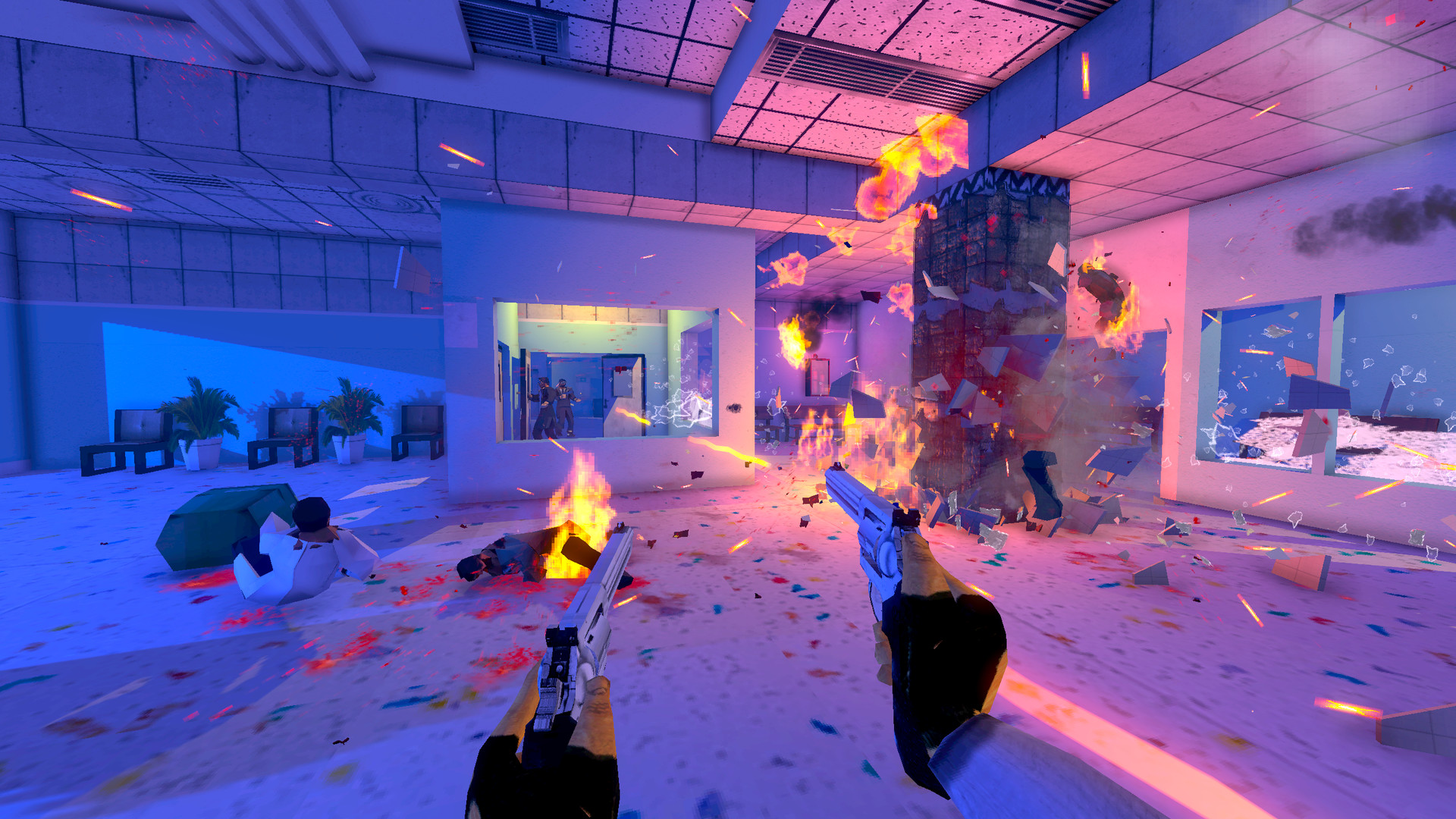
Replays extend the action beyond the moment-to-moment firefight. They let players revisit a run, study how a sequence unfolded and enjoy the dives, kicks or slow-motion shots from another angle. Paired with the level editor, that feature makes the game’s action-film inspiration practical: players can construct a scene, perform it, then watch how it played out. The same tools invite experimentation with different weapons, routes and enemy arrangements. Maximum Action is built around that cycle of staging and performing a shootout. New levels and refinements continue to expand the range of situations that players can create and replay.
- Developer
- George Mandell
- Genre
- Single-player physics-based first-person shooter