
About Max Payne 3
Former New York detective Max Payne takes a private security job protecting the Branco family in São Paulo, hoping to leave his past behind. When the assignment unravels, he searches for the truth through a single-player campaign of gunfights and pursuit. Bullet Time and Shootdodge shape combat, while painkillers connect survival to resource management.
Max Payne 3 follows the former New York City detective years after the tragedies that defined his earlier life. No longer a police officer and struggling with painkiller addiction, Max accepts work protecting the family of wealthy real-estate figure Rodrigo Branco in São Paulo, Brazil. The job is meant to offer distance from his past, but events soon spiral beyond his control. Max becomes isolated in an unfamiliar city and tries to understand what has happened while fighting to survive. The story moves between the Branco family’s security troubles and Max’s memories, keeping his personal history close to the present crisis. Its central setting shifts the series from New York to São Paulo, where private security, wealthy clients and armed threats shape the work Max has taken on.
The campaign is a linear, chapter-based third-person action story. Max moves through environments tied to the Branco family and the people pursuing them, including urban streets and guarded interiors, using firearms to clear encounters and advance to the next scene. The Rockstar Store describes a single-player campaign and emphasizes that Max’s search for truth unfolds as his protection job collapses. Chapters interleave combat with cinematics and transitions, keeping the player close to Max’s point of view as the situation changes. The main activity is not running a citywide sandbox or managing a security business: it is following the story through arranged locations, surviving gunfights, and responding to new information. The campaign’s motion between scenes makes the protection assignment the frame for a wider investigation.
Gunfights combine aiming, firearm selection, cover and Max’s signature Bullet Time. Activating Bullet Time slows the surrounding action while Max can still aim and fire; the resource is finite, and Rockstar’s support material notes that kills return some of it, with the reward tuned by story difficulty. The pause in enemy movement gives Max a window to line up shots or cross a dangerous angle, but it does not remove the need to manage ammunition and exposure. Shootdodge turns a directional leap into a moving attack, letting Max evade incoming fire while firing during the dive. Rockstar’s store lists both Bullet Time and Shootdodge among the game’s central shooting mechanics. Together they make movement part of an encounter: a player can use cover to reset position, then spend time or dive to create a brief offensive opening.
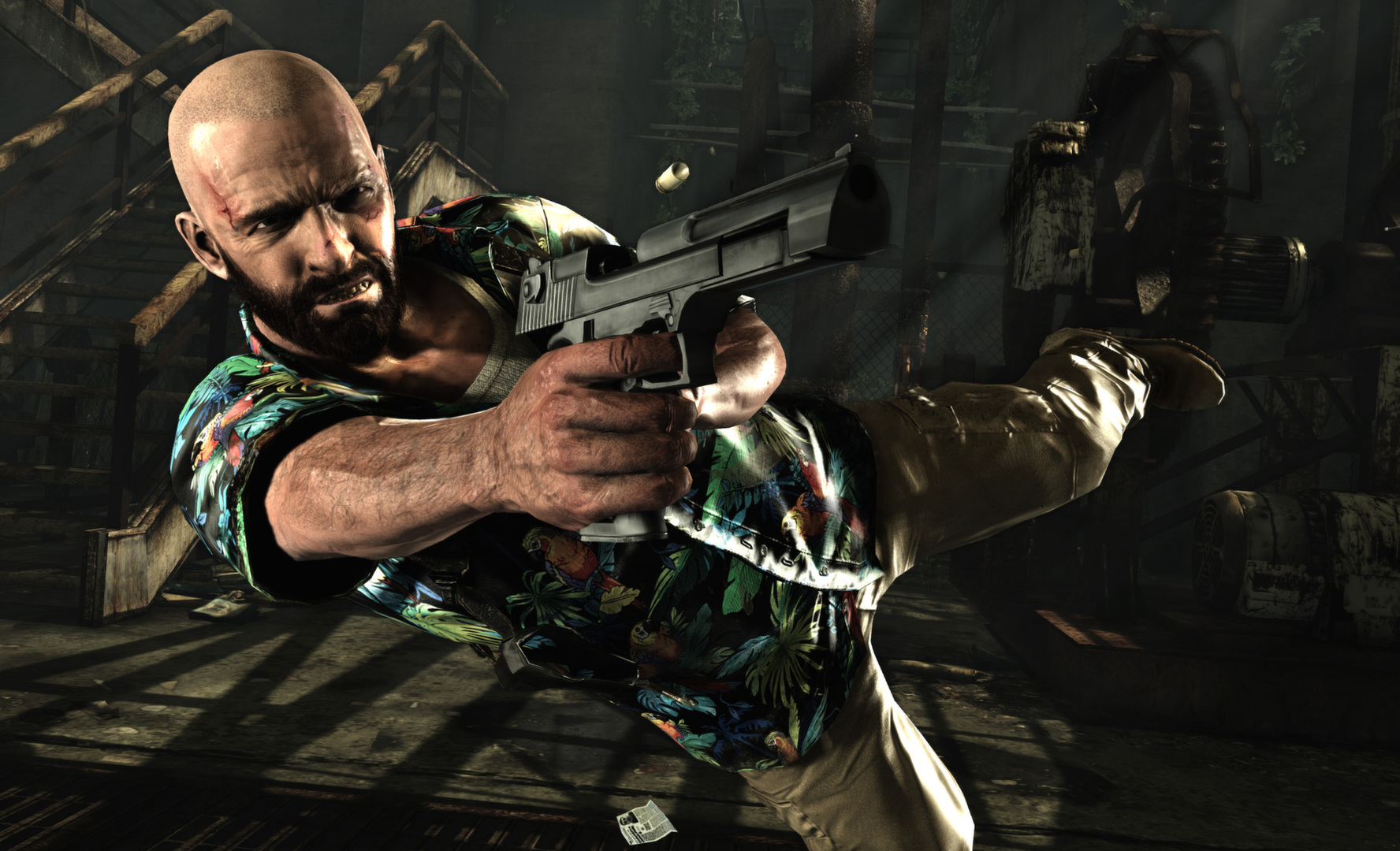
Health and recovery items give the campaign a resource layer. Painkillers restore Max after damage, making their use a decision during a chapter rather than an automatic refill. Rockstar’s Story difficulties adjust health and Bullet Time rewards, and checkpoint retries can provide extra ammunition or painkillers under some settings after repeated deaths. Old School, unlocked by completing Story on Hard, disables Last Man Standing. On other settings, this mechanic can give Max a final chance to shoot the enemy who dealt the fatal hit when a painkiller remains. These rules change how a player approaches exposure and recovery in a firefight: cover and movement may preserve health, while an item can be used immediately or held for a later encounter.
Score Attack makes accuracy and movement visible in its scoring. In Score Attack, body hits, headshots, kills, melee and environmental destruction award points, while consecutive hits build multipliers. A missed shot or death ends a combo, while Shootdodge, the prone state and Bullet Time each contribute separate state multipliers. That gives the mode a different objective from the Story campaign: the player is still using Max’s shooting vocabulary, but score depends on chaining actions cleanly. These are challenge rules rather than changes to the narrative campaign’s checkpoints or recovery settings. The distinction keeps the resource decisions of Story separate from the accuracy-and-combo focus of Arcade play.
The single-player campaign’s supporting modes extend its encounters through score and time challenges. Rockstar’s support material describes Score Attack as a mode with points for body hits, headshots, kills, melee and environmental destruction, with combos increasing the score until a missed shot or death breaks the multiplier. It also documents New York Minute, where kills add time and headshots add a larger time bonus; Bullet Time slows the timer’s progression to match the game’s slowdown. These rules reward different priorities from simply reaching the next scene: maintaining accuracy, chaining hits or completing encounters quickly. They remain structured challenges around the campaign’s gunplay rather than a separate open-ended world. The single-player focus here is Max’s Story and its connected Arcade-style challenges, without making assumptions about the present availability of the game’s older online services.
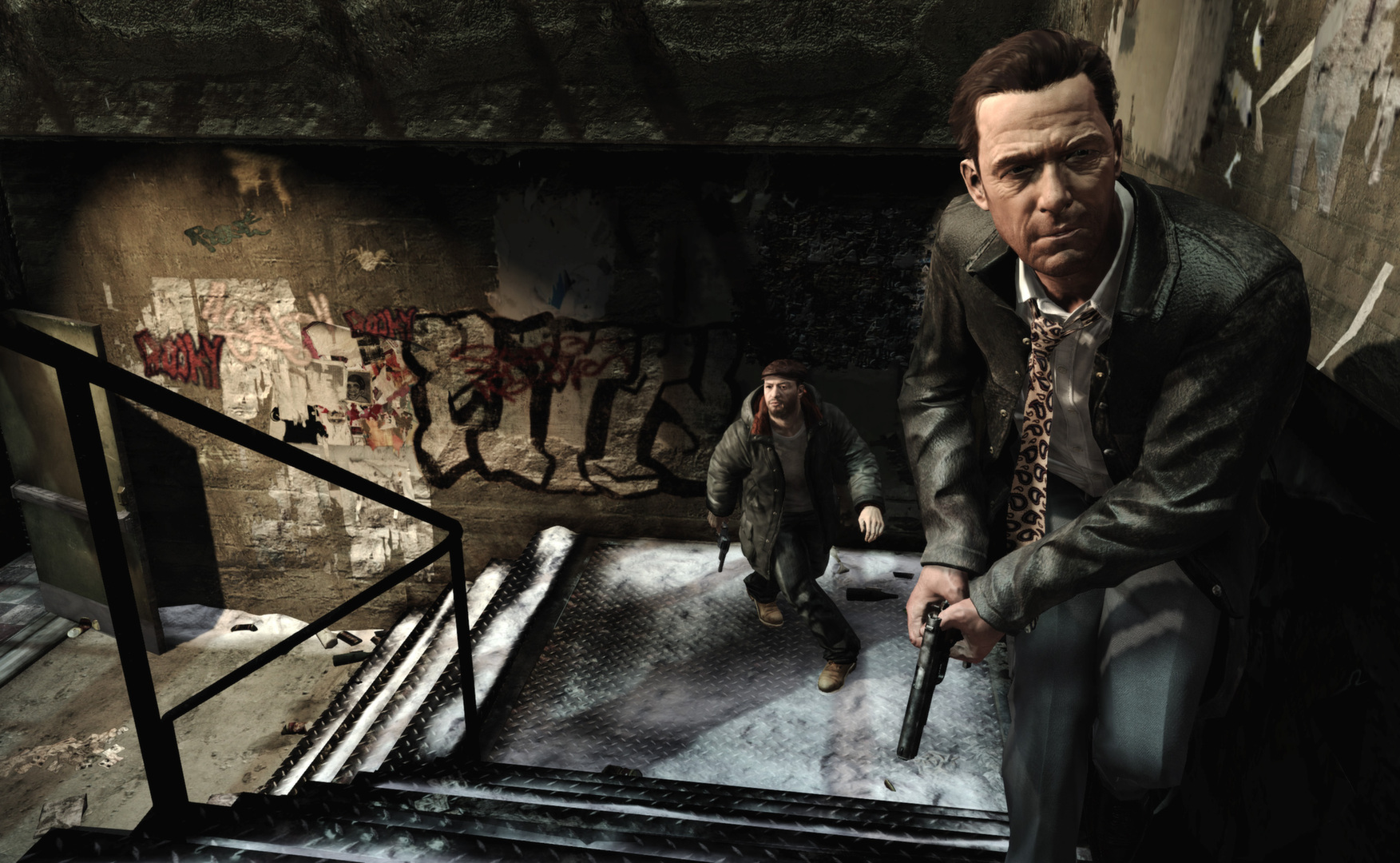
Max can pair two single-handed weapons, including combinations of pistols, revolvers and submachine guns. Rockstar identifies this as an extension of the series’ dual-wielding system, giving the player a choice beyond picking one firearm for a fight. The pairing affects the weapons in Max’s hands as he moves through a chapter’s next encounter; it sits beside the separate decisions about cover, Bullet Time and Shootdodge. A player can keep two different one-handed guns ready for a close exchange or switch back to a single weapon when a different range or firing pattern is needed. That concrete loadout choice adds another layer to the campaign’s tightly arranged gunfights.
- Developer
- Rockstar Studios
- Genre
- Third-person action shooter