
About Martha Is Dead
Set in Tuscany in 1944, Martha Is Dead is a first-person psychological thriller about Giulia, whose twin sister Martha is found drowned as war advances. Giulia searches for the truth amid grief, folklore and upheaval, exploring the countryside, photographing and developing images, consulting tarot, and revisiting memories through puppet-theatre sequences.
Martha Is Dead is set in Tuscany in 1944, as conflict between German and Allied forces intensifies. Giulia, a young woman and the daughter of a German soldier, must confront the death of her twin sister Martha and investigate the circumstances of her murder. The story follows Giulia’s search for truth through grief, family relationships and the psychological weight of the period. Folklore and superstition complicate what she encounters, while the approaching war provides a wider historical pressure around the intimate tragedy. The game is presented in first person and keeps the player close to Giulia’s perspective. Her own secrets are part of the narrative, so the investigation is also about the way she understands her memories and relationships. It is a psychological thriller shaped by uncertainty, not a combat story about the military conflict.
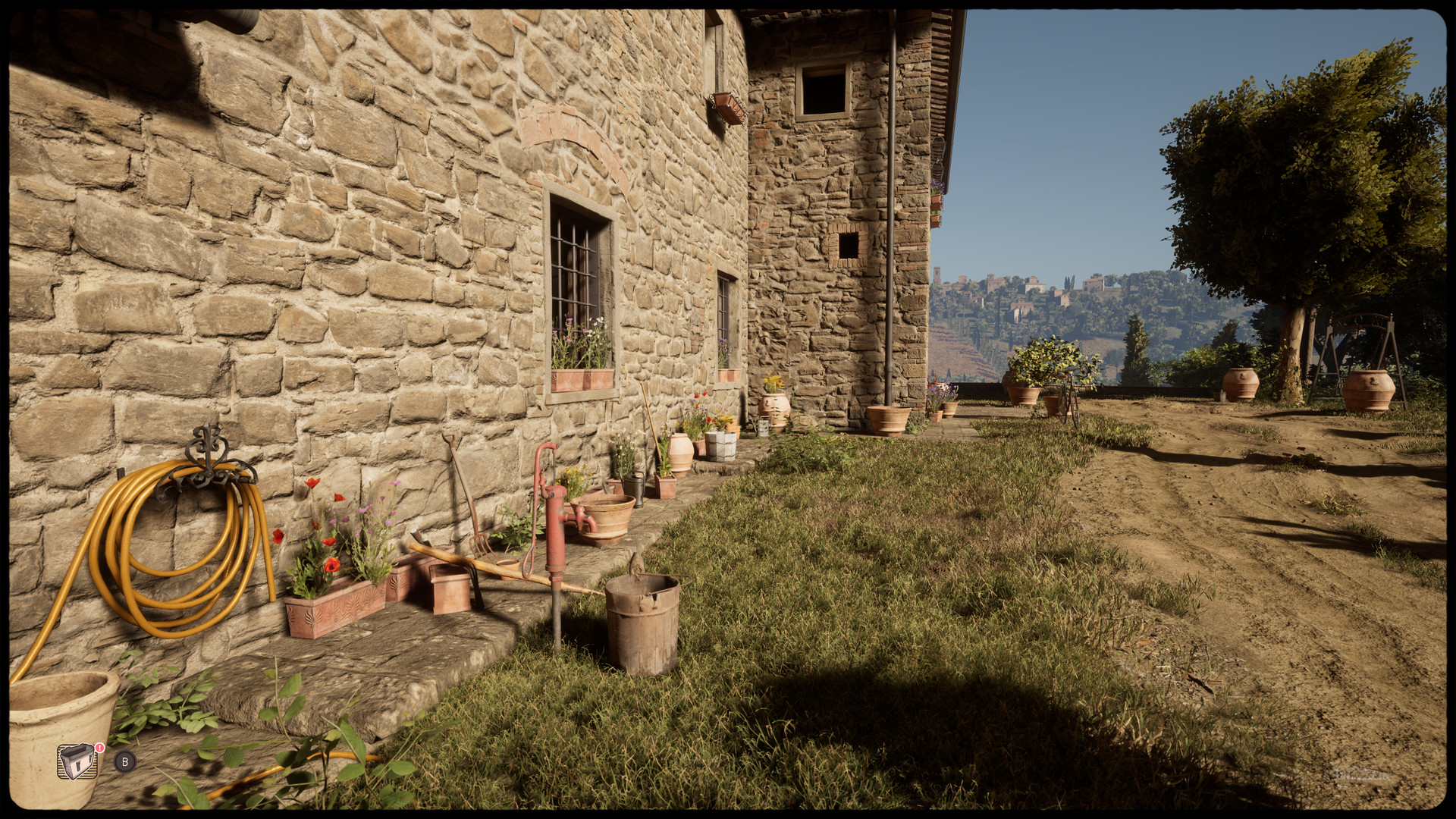
The Tuscan countryside is freely explorable on foot, by boat or by bicycle. Giulia’s routes connect the investigation to a detailed rural setting inspired by real places and historical context. Travel gives the player time to notice locations and objects, while newspapers, telegrams and radio broadcasts provide news about the war beyond the immediate family story. These different forms of information build the setting from both personal and public details: the player can explore a quiet stretch of countryside, then encounter a document or broadcast that points back to the conflict. The landscape is grounded in reality, but folklore gives familiar places another layer of meaning. Moving through the region is therefore part of following the mystery, with different ways of travelling linking exploration to the evidence Giulia finds. The choice of transport belongs to ordinary movement across the region, keeping the player’s route through Tuscany connected to the investigative work rather than to combat objectives.
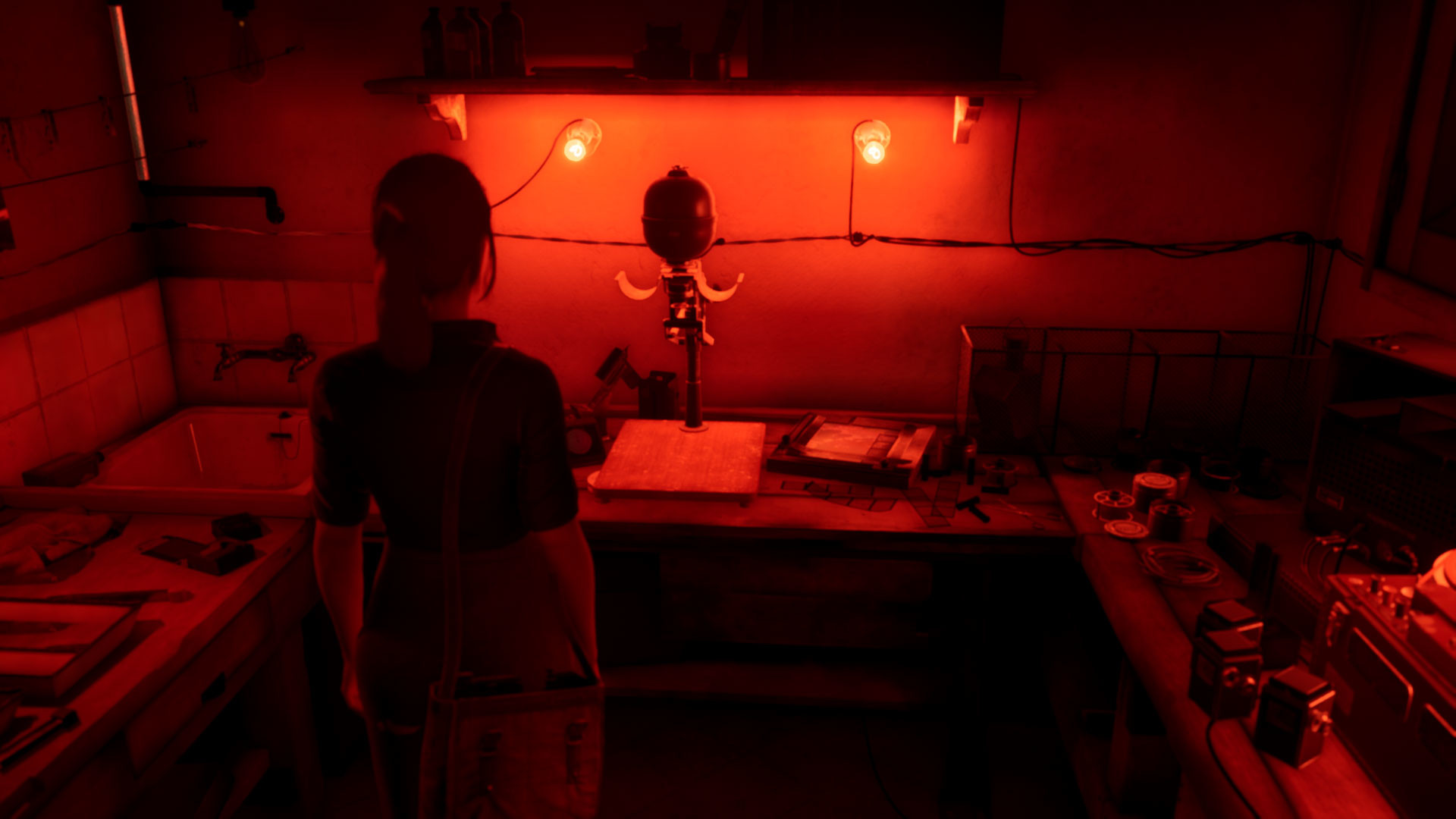
Photography is both an optional activity and a way to progress the story. Giulia uses a camera to capture images, and the game provides a simulator for 1940s photography as well as a working in-game darkroom for developing the photographs. The player can take pictures for their own sake or use them to discover more about the world and advance the narrative. This makes the camera a system with practical steps: choose what to photograph, take the picture and develop it. The darkroom gives that process a dedicated place in the game and makes developing an interactive part of Giulia’s routine. Images connect the player’s observation of the countryside to the unfolding story, so photography functions as more than decoration. It provides another way to examine the world the investigation passes through.
Folklore and superstition have their own interactions. Players unlock symbols and use tarot cards to reveal new aspects of the game and summon the spirit of The Lady. These actions connect Giulia’s search to local belief and the supernatural, giving the player a way to engage with that layer of the setting directly. Tarot is distinct from photographing or reading wartime documents: it asks the player to use symbols and cards within the mystery. The game does not treat folklore as background texture alone; it shapes what can be uncovered and which presences can be invoked. This system sits beside the investigation rather than resolving every uncertainty. Giulia’s search moves between what can be observed in a place, what can be recorded in a photograph and what is approached through ritual and belief.
The puppet theatre offers a different interaction focused on memory. In marionette sequences, players work with dolls as Giulia remembers repressed memories. These scenes shift the player from travelling through the countryside to manipulating a staged representation, making memory something encountered through play. Their theatrical form separates them from the camera and tarot systems while keeping them tied to Giulia’s personal history. The player does not simply receive a new location to explore; the sequence presents a recollection through figures and staging. This adds a distinct pace and format to the narrative, where relationships and past events surface through performance. The puppet theatre is one of several ways the story delivers information, but its focus is specifically on remembered material and the experience of revisiting it through marionettes.
Sound and language further ground the setting. Italian is the default voice language, reflecting the characters’ environment, and the soundtrack draws on period music alongside newly written material. Its credited contributors include Between Music, Aseptic Void and Francesca Messina, with reimagined versions of songs including “Ave Maria” and “O Bella Ciao.” Music gives the wartime countryside a cultural texture distinct from the clues found in documents and photographs. Alongside the radio reports, it helps establish the period through sound as well as scenery. The game’s activities—exploration, photography, tarot and puppet sequences—each approach a different part of Giulia’s experience. Together they keep the investigation personal, connecting a family loss to the surrounding folklore and to a conflict that continues to draw nearer. The music places wartime references alongside sounds that reflect uncertainty in the story.
- Developer
- LKA
- Genre
- First-person psychological thriller and narrative adventure