
About Mail Time
On a first solo route through Grumblewood Grove, a newly trained Mail Scout delivers letters, helps the forest’s animal residents, and earns badges toward full scout status. Running, jumping, mushroom bounces, and a letter glider open paths through eight woodland areas, while hidden trinkets and character errands give the small courier reasons to explore beyond each delivery.
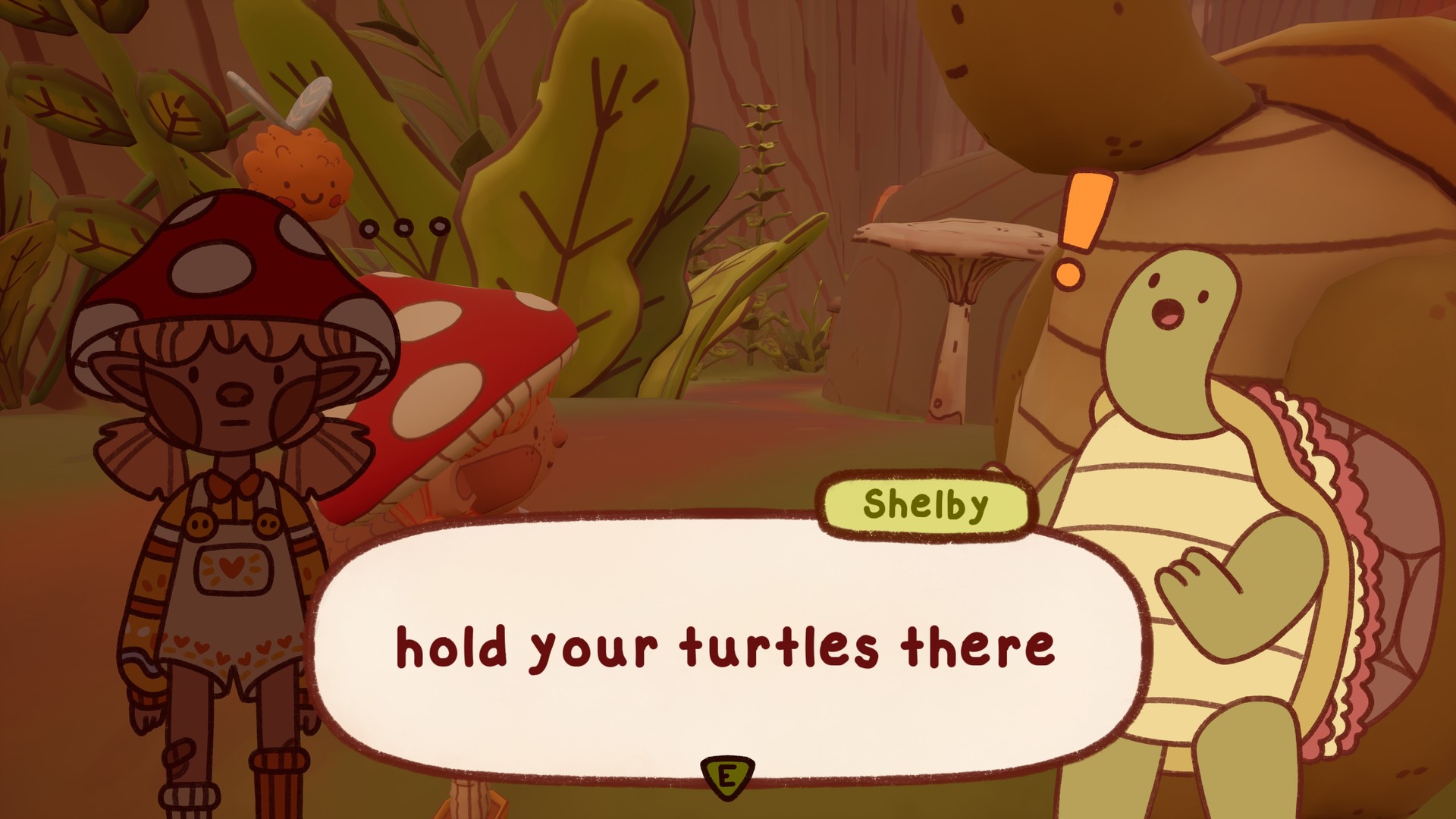
Mail Time begins with a newly trained Mail Scout setting out on a first independent delivery through Grumblewood Grove. The Scout starts with a mushroom-shaped hat, a backpack of letters, and instructions from Janet, the previous courier on the route. The first named recipient is Greg, but the errand quickly becomes more than carrying one envelope from point A to point B. Residents ask the newcomer to pass messages and packages along, and conversations reveal that many of them have small problems or requests as well. The postal assignment therefore gives the player a reason to approach people and learn the layout, while each completed handoff connects the Scout to another corner of the forest community. The story’s scale stays close to this first day at work: the Scout is trying to prove themself through deliveries, useful favors, and the badges that mark progress toward becoming a full Mail Scout. The tutorial also introduces the route through a small handoff for Janet: the new Scout carries her note to a nearby turtle before continuing toward Greg. This early task establishes that mail can pass between residents as well as travel from the Scout to a named recipient. It also gives the player a first chance to practice approaching characters and interacting with them before the Grove opens into longer searches. Once that basic exchange is understood, further requests can lead away from the direct path, turning each delivery into a prompt to ask who needs help next and where that person might be found.
Grumblewood Grove is built as a compact storybook woodland with routes that rise from ground-level paths into flowers, branches, and treetop spaces. The game has eight distinct areas, including a lively village, a large flower field, a murky swamp, and a peaceful farm. These settings give the same delivery job different spatial problems: a recipient may be near an open path, above the ground among branches, or in a pocket of the landscape reached by moving between natural platforms. The forest’s scale is part of the premise. Flowers and mushrooms tower over the tiny courier, turning familiar plants into landmarks and platforms. Traveling between the areas also means encountering new residents, which keeps exploration tied to the social purpose of the job instead of making the Grove an empty obstacle course. Hidden trinkets and less obvious ledges reward looking around beyond the direct route to a recipient. The Grove’s layout also makes elevation useful for more than spectacle: a branch or roof can act as a route between nearby clearings, while a lower path may bring the Scout to the base of a climb. Looking from above helps the player compare those options and spot a landmark that can be recognized again from below. The flower field, swamp, and farm sit within the same forest setting through which the courier carries out the day’s work. That continuity lets one delivery lead naturally into exploration nearby, where another resident, trinket, or possible landing place may be visible.
Movement combines running and jumping with a letter-shaped glider that lets the Scout descend across gaps and steer toward raised ledges. Bouncy mushrooms provide extra lift, so the player can use them to gain height before opening the glider and drifting toward a branch, platform, or landing area. These actions work together: a jump can reach a mushroom, its bounce can create the height needed to travel farther, and a glide can convert that height into horizontal distance. Mail deliveries and resident errands often ask the player to use these movement tools while searching for a particular character or item. The forest has no enemy encounters or combat loop, and deliveries do not run on a timer. Falling does not damage the Scout, so a missed landing returns the character to a lower part of the environment rather than ending the trip. The challenge is in reading the terrain, choosing a route, and controlling the descent toward a small landing place.
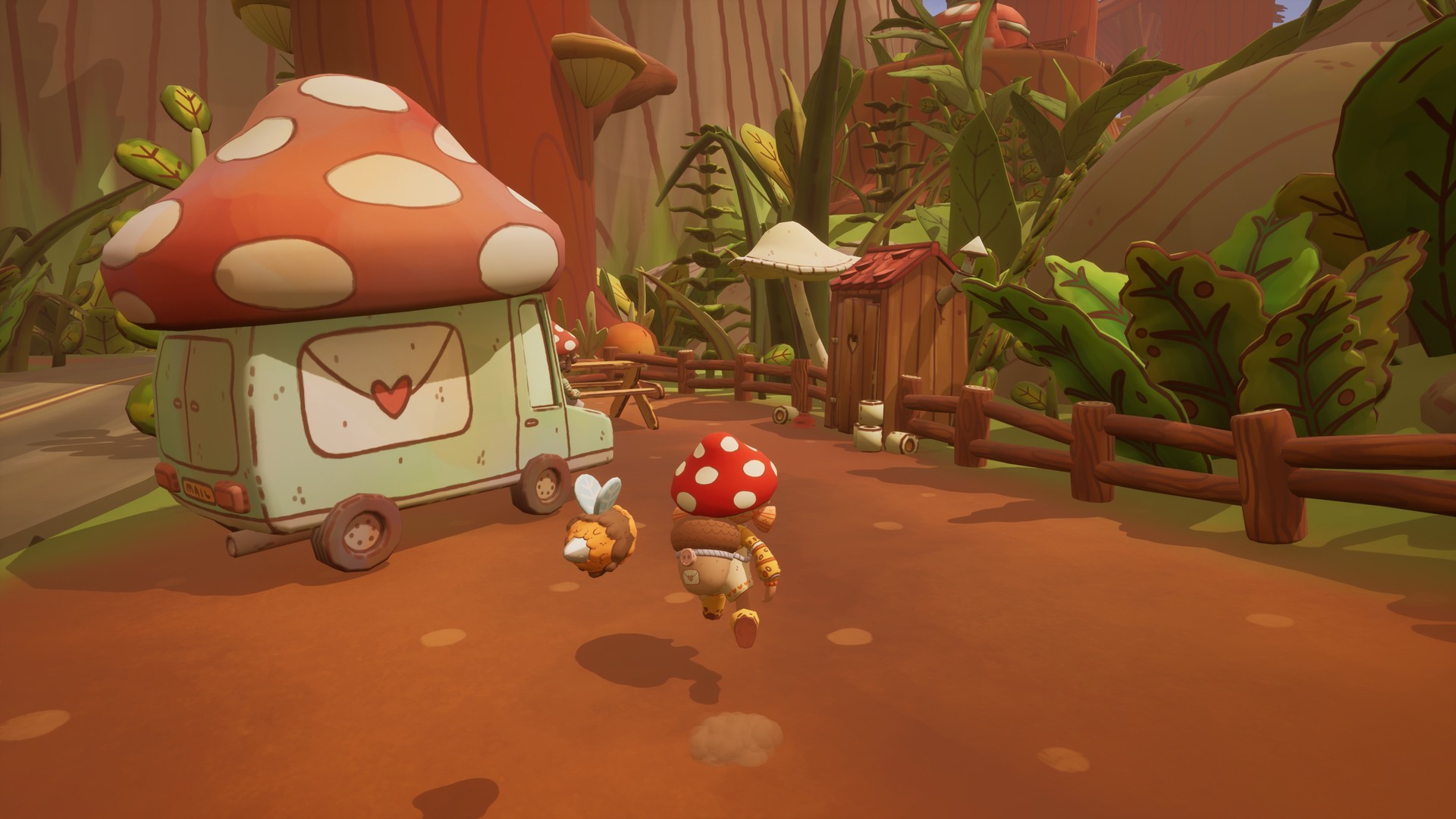
The Scout keeps track of recipients through the letters and parcels in the backpack, while small envelope icons identify current errands. Each icon pairs a delivery with its recipient, giving the player a reminder of who to find while moving through Grumblewood Grove. Locating someone such as the bird Kaz can depend on recognizing forest landmarks and remembering where residents were encountered. Height helps with that search: climbing toward a branch or rooftop can reveal paths and clearings that are difficult to see from below. A delivery may therefore involve two linked tasks, first working out where the recipient is and then selecting a route through the Grove’s vertical spaces to reach them. The terrain itself supplies the visual cues used to navigate between the courier’s current position and the next handoff. In a place where flowers and mushrooms dwarf the Scout, a change of elevation can make the difference between overlooking a trail and seeing how it connects to the next clearing.
Grumblewood Grove’s residents are woodland animals with distinct personalities and errands. The poetic frogs, punk-rock woodpeckers, and grumpy squirrels each bring a different voice to the courier’s rounds. Delivering one letter may complete an immediate handoff, while a conversation can prompt the Scout to look for another character or an item. For example, one squirrel is bothered by a noisy woodpecker, while a caterpillar asks for litter to be collected because he suspects worms are using it to spy on him. These favors send the player back into the surrounding spaces to locate the relevant person or object, then return to finish the task. The requests keep the postal route connected to the residents’ everyday concerns: carrying a note can introduce the Scout to a dispute, a collection task, or a new place to search. Dialogue and errands provide the social structure around which the platforming is arranged.
Mail Scout badges connect the errands to progression. Completing deliveries and helping Grove inhabitants earns badges, and badges improve the Scout’s gliding ability. This creates a direct relationship between the postal work and traversal: finishing favors strengthens a tool that can help reach higher or farther places on later searches. Hidden trinkets add another collection goal alongside the letters and character requests. Finding them encourages the player to check branches, ledges, and corners that a direct delivery route might pass by. The resulting loop joins several parts of play: explore a new area, find an item or resident, complete the associated task, and gain progress toward a better glide. Improved movement can then make additional places reachable, while optional trinkets give a reason to examine those places carefully. The badge system therefore marks both service to the Grove and growing ability to travel through it.
Character creation lets players choose the Scout’s pronouns and adjust their name, hairstyle, hair color, skin tone, outfit, backpack, and glider. These options shape the courier seen throughout the journey, including the mushroom hat that remains a defining part of the Mail Scout’s silhouette. Settings also provide camera-control adjustments, giving players a way to tailor how the view follows movement through the forest’s raised paths. The game allows play at the player’s own pace, without timed deliveries or fall damage, and includes additional accessibility options. The customization and control settings address different parts of the same experience: one shapes the identity of the character moving through the Grove, while the other helps the player manage the view as they jump, bounce, and glide between recipients.
- Developer
- Kela van der Deijl (appelmoes games)
- Genre
- 3D light-platforming adventure