
About LOST EMBER
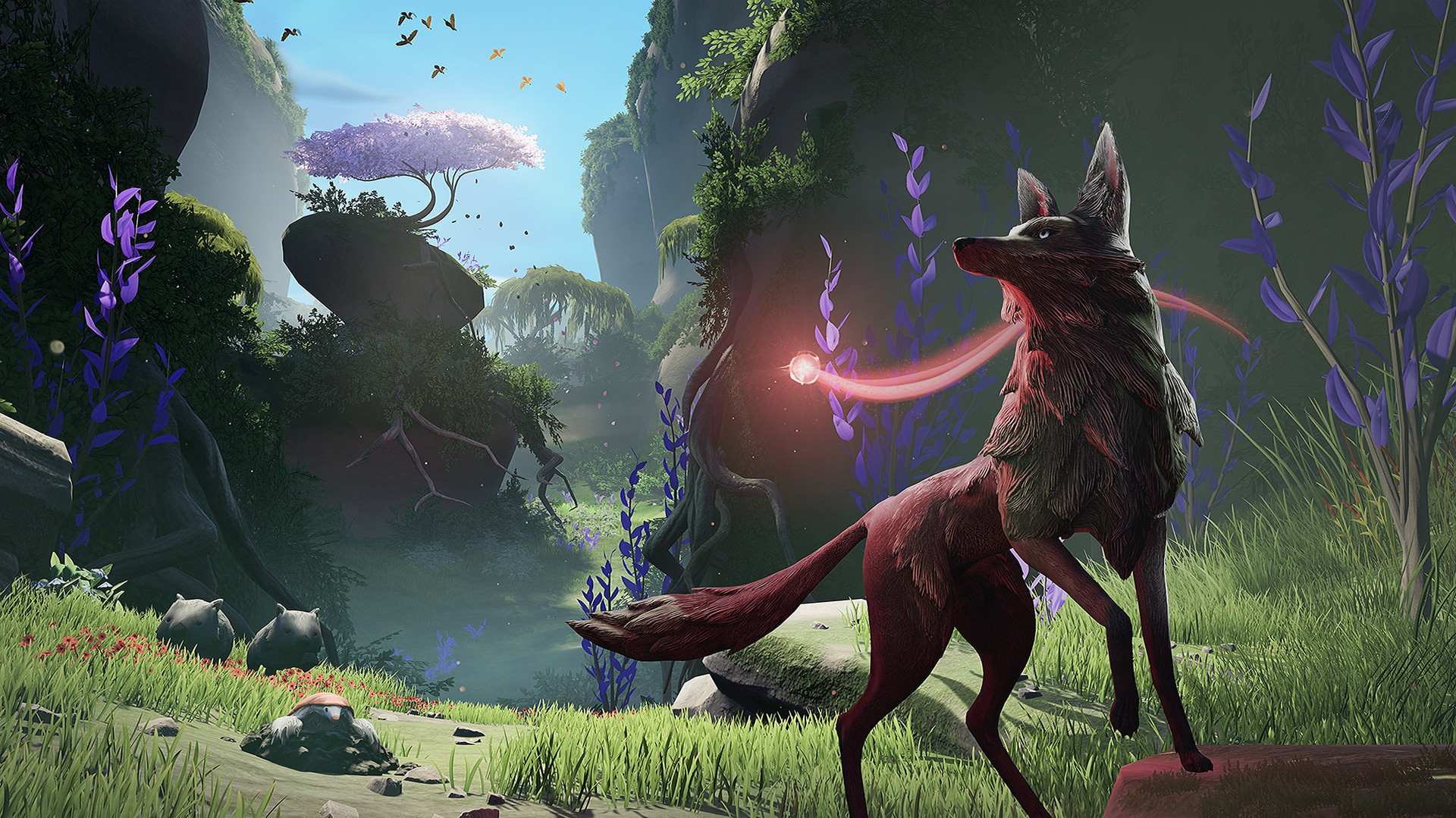
In LOST EMBER, a wolf and a wandering spirit cross a wilderness reclaimed by nature, tracing the ruins of the Yanrana civilization and the memories buried there. By inhabiting nearby animals, the wolf can move through ground, water and air in different ways, uncovering the past while helping the spirit seek the City of Light.
LOST EMBER begins in a world where human society has vanished and vegetation and wildlife have spread across its remains. The player guides a wolf accompanied by a glowing spirit, whose journey toward the City of Light gives the trip a clear direction. The landscape is not simply a natural wilderness: ruined buildings and fragments of a former culture sit among forests, canyons, waterways and dry plains. The spirit has questions about its own fate, while the wolf is connected to the people known as the Yanrana. Their intertwined search brings the distant past into view through discoveries made in the present. Rather than centring the journey on battles or survival, the game uses movement through these places to connect the living ecosystem with the traces of the society that once occupied it. As the two companions travel, the contrast between overgrown terrain and old stone structures establishes the central subject: what remains of a civilization after its people are gone, and how the memories of individual lives fit into that broader collapse.
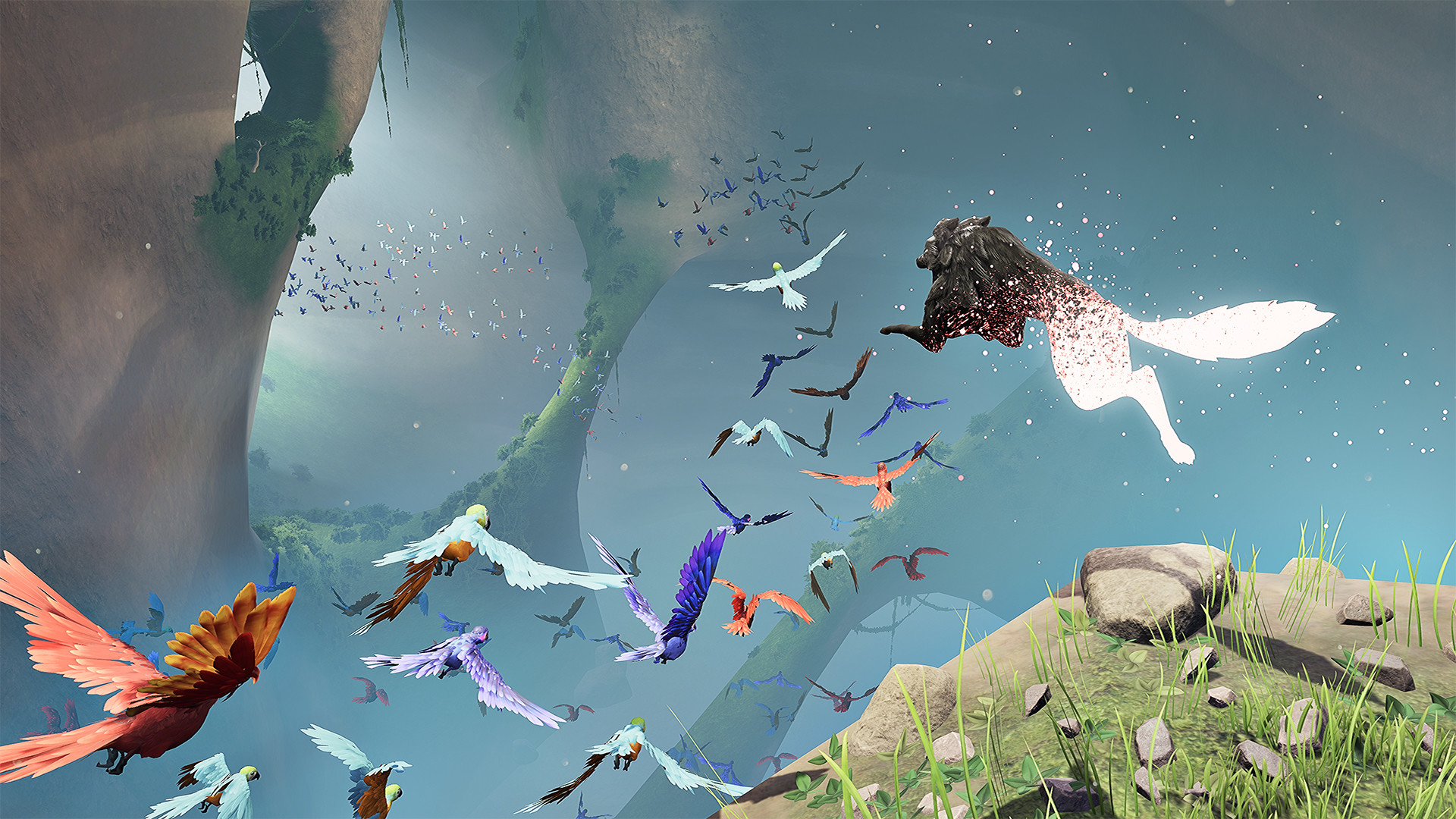
The wolf is the default body, but it is not the only way to cross the terrain. The protagonist can inhabit animals encountered along the route, shifting control to a creature whose body suits the obstacle ahead. A smaller animal can pass into cramped spaces that block the wolf; a bird can cross a wide gap or reach a higher route; and a fish can enter submerged passages and move through lakes. Other creatures add different forms of access, including digging under the ground or climbing steep rock faces. These changes are immediate and practical: a switch in form changes speed, reach and the available path through the same stretch of landscape. The ability turns the environment into a sequence of connected habitats rather than a single kind of running space. A clearing may lead to a water channel, a constricted opening or an exposed ledge, and the animal forms make those boundaries navigable. The game presents possession as a means of seeing the world from different physical perspectives, so traversal carries the main interactive variety instead of weapon use or character statistics.
Several route interactions show how specifically the animal bodies change what the player can do. A mole or armadillo can crawl through a low tunnel that the wolf cannot enter, while a duck or hummingbird can cross a cavernous gap. Fish do more than swim across open water: the game uses them to reach submerged spaces, jump up short waterfalls and slide down wet rock channels. In later environments, an elephant can push through dense bamboo or break rocky obstacles, while a mountain goat can climb steep cliff faces. These are concrete passages tied to the animal selected, rather than interchangeable movement bonuses. The shift in fauna as the journey moves from forest and jungle into desert, oasis and snowy crags also changes the kinds of bodies available around the route. A bird, fish, burrowing animal, elephant and goat each open a different kind of path, and the obstacle itself helps make the relevant ability understandable. The player keeps returning to the wolf between these encounters, so the distinct animal movement remains a temporary way to cross or inspect a particular part of the landscape.
Exploration also advances the story through memory fragments associated with the wolf's past. These discoveries appear within the landscape and trigger short recollections that reveal pieces of Yanrana life. The memories do not arrive as a single uninterrupted account; they accumulate as the companions move between ruins and natural spaces. The spirit reacts to what is revealed, and its understanding of its own history develops alongside the wolf's connection to the civilization. The arrangement ties progress to attention and travel: moving through a new area can expose a fragment, and each recollection adds context to the places where it is found. The old structures can briefly appear as they once were during these scenes, making the difference between the present wilderness and remembered settlement visible. The story includes social divisions and the consequences of human choices, but its main forward motion remains the companions' attempt to reach the City of Light. This structure gives the player a reason to inspect the remains around the main route without turning the experience into a dialogue-heavy sequence of missions or a combat campaign.
The environments change considerably over the journey. Dense woodland and rainforest give way to open canyon country, dry plains, oases, snow-covered heights and ancient temple remains. Each setting changes the palette and scale of movement, as well as the animals most relevant to getting around. Open spaces let the player follow the spirit across long views, while cliffs, water and underground passages break a route into distinct layers. The camera follows the creature being controlled, keeping the ground-level view close to the wolf and shifting with animals that swim or fly. Nature is presented as active life rather than empty scenery: the player can encounter different species and observe small creature-specific actions when not trying to advance. These quieter interactions sit alongside the larger discovery loop, where a new form reveals a route or perspective and a memory gives a nearby ruin historical weight. There is no traditional combat progression to master; the meaningful changes come from the terrain, the available animals, and the further context added to the companions' journey.
The Yanrana past gives the ruins a social history as well as an architectural one. Memory fragments gradually show a society whose impressive temples and buildings were connected to a sharp divide between an elite and poorer people. Kalani's place in that conflict makes the fragments more than decorative glimpses of a vanished civilization: they show how public grandeur could rest on private hardship, and how the choices of individuals became entangled with a wider struggle. The companion spirit also remembers parts of its former life, so the two travelers do not hold identical perspectives on the past. This contrast lets the story disclose the culture in pieces as the wolf and spirit move through its remains. The present landscape has no human settlement left to explain those buildings; the recovered scenes supply that context, then return the player to overgrown stone and wildlife. The game keeps the political history within the personal journey, linking the fate of the Yanrana to loyalty, despair and betrayal without requiring the player to follow a separate faction or quest system.
Side discoveries offer a different reason to leave the obvious route. Relics take the form of remnants such as small statues, pottery and utensils, while mushrooms and rare animals provide other things to notice across the chapters. These objects are collected and recorded, giving curious players a growing catalogue of what lives in or was left behind in each region. The animal forms also have optional creature-specific actions, framed in the game as small playful behaviors rather than tools required to finish the journey. A wolf can lie down, while an armadillo can eat buried vegetables; PC Gamer describes these interactions as separate from the main progression. Returning to a familiar animal can therefore reveal more than a shortcut: its idle behavior and the species around it help make the wilderness feel inhabited. The optional layer does not replace the forward path through the spirit's memories, but it rewards slowing down between one traversal challenge and the next.
- Developer
- Mooneye Studios
- Genre
- Single-player third-person adventure