
About Lorelai
Lorelai is a psychological horror adventure about a young woman trying to escape an abusive home and recover what she has lost. Its side-on exploration, conversations, inventory puzzles and choices carry her between everyday places and stranger territory. Harvester Games made it as the final, separately sold story in the Devil Came Through Here trilogy.
Lorelai begins with a young woman who wants a life beyond her family home. Harvester Games describes her as someone from whom the little she had has been taken, yet who refuses to surrender the possibility of getting it back. That premise makes the ordinary circumstances matter before the supernatural horror enters. The house is not simply a backdrop for a monster; it is the place she is trying to leave, and the developer's content notice explicitly identifies domestic abuse, alcohol addiction and depression among the game's subjects. Lorelai's desire for independence sits beside responsibility for people close to her, so escape is not presented as a clean change of address. The story follows her effort to decide what she can do for herself and for others when adults with power over her have failed. Death also belongs to the premise, though explaining its later turns in detail would take away the discoveries that the game asks players to make. What carries the opening is the tension between a very recognizable domestic trap and the suggestion that the limits of life and death may not hold in the way Lorelai expects.
A care home gives Lorelai another world to inhabit, and it has a particular history behind its inclusion. Creator Rem Michalski worked in a nursing home in Sidmouth before making the game; he has said that the experience inspired this setting and that he wanted to pay tribute to the people he encountered there. In the story, care work means spending time around residents and colleagues whose needs cannot be reduced to a horror clue. It also places Lorelai among adults with their own routines, dependencies and histories, away from the family house but not away from difficult subjects. The game can move from a room associated with a job or a conversation to a scene whose imagery breaks with ordinary reality. That shift works because the care home and the household have been established as places where people depend on one another, sometimes unequally. They give Lorelai things to observe and people to speak with, rather than a series of anonymous chambers. Michalski's account is useful context for the location, but the characters and events remain a fictional horror story, not a retelling of individual residents' lives.
The player follows Lorelai through side-on scenes, moving her near people and objects to see which actions are available. Environmental hotspots support examination and interaction; conversations reveal what another person knows or wants; inventory objects may need to be used in a different place or combined with another item. This is an adventure structure built around attention to a room and the circumstances of its inhabitants, rather than a map full of combat encounters. A detail that appears to be part of the scenery can become relevant once another exchange changes the immediate problem. The puzzles are linked to what Lorelai is trying to accomplish in a particular scene, and the story gives the player reasons to look carefully at ordinary surroundings even when the horror grows less ordinary. Keyboard movement and Xbox controller support come with an in-game tutorial and remappable inputs. Calling it a point-and-click adventure describes the lineage of its puzzles, but the direct character movement and context-sensitive interactions better explain what the hands actually do from moment to moment.
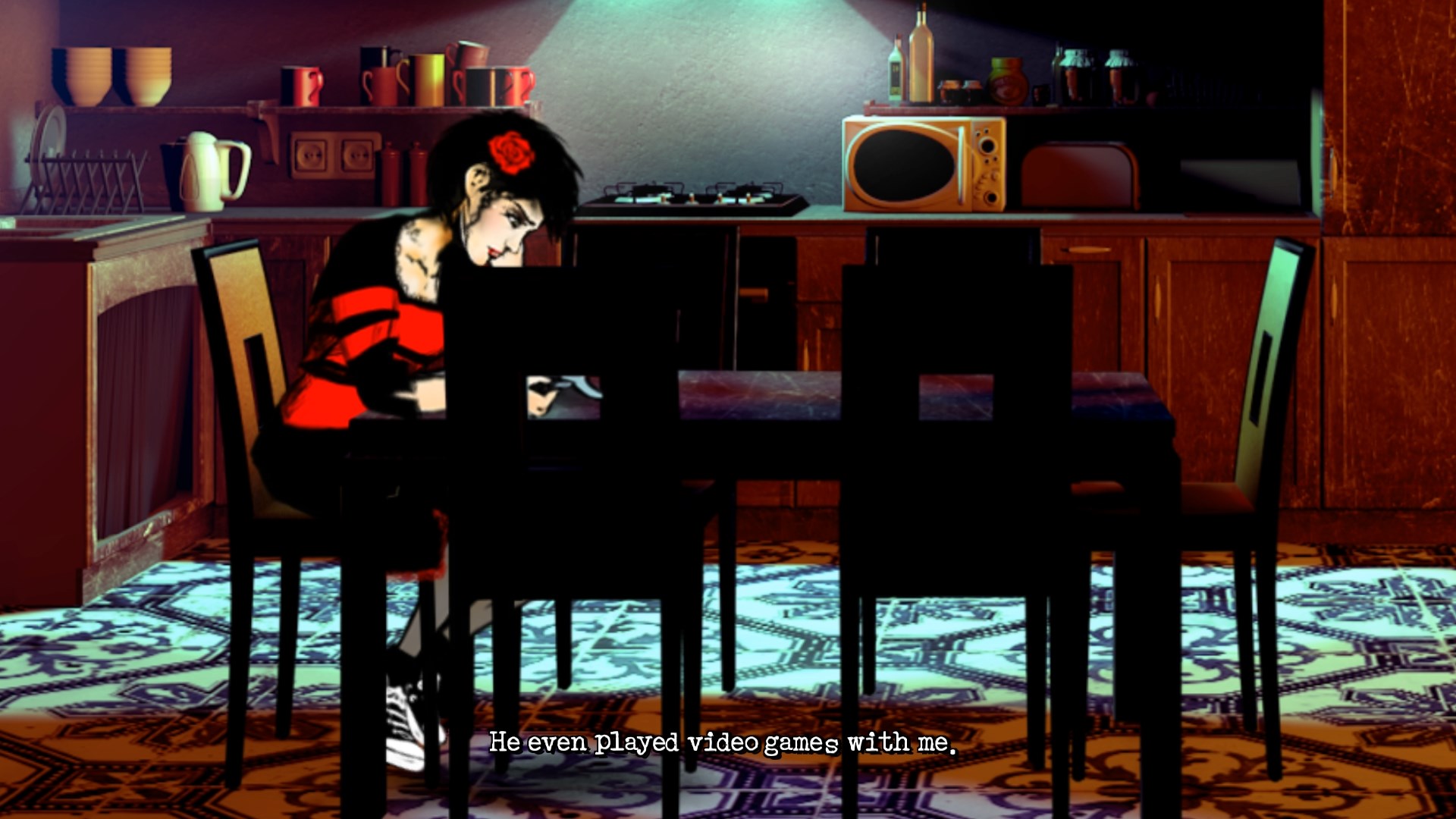
Conversation and choice also affect how Lorelai responds to people rather than only which object opens a door. Accounts of the game describe decisions that can change the direction of particular exchanges and the fate of people she meets. That does not mean every spoken line creates a completely separate campaign; an authored story remains the frame. The distinction matters because the game repeatedly places a vulnerable person in front of Lorelai while she is managing her own danger and loss. A decision can ask whether she will help, withhold help or take a more expedient route. There is room to revisit such decisions: there are two manual save slots alongside autosaving, a practical feature when a player wants to keep a point before a difficult exchange. Steam also mentions achievements and a bittersweet ending, but those extras do not turn the narrative into a simple checklist of optimal answers. The immediate interest lies in what Lorelai learns about another person and what her response says about the kind of future she is trying to build.
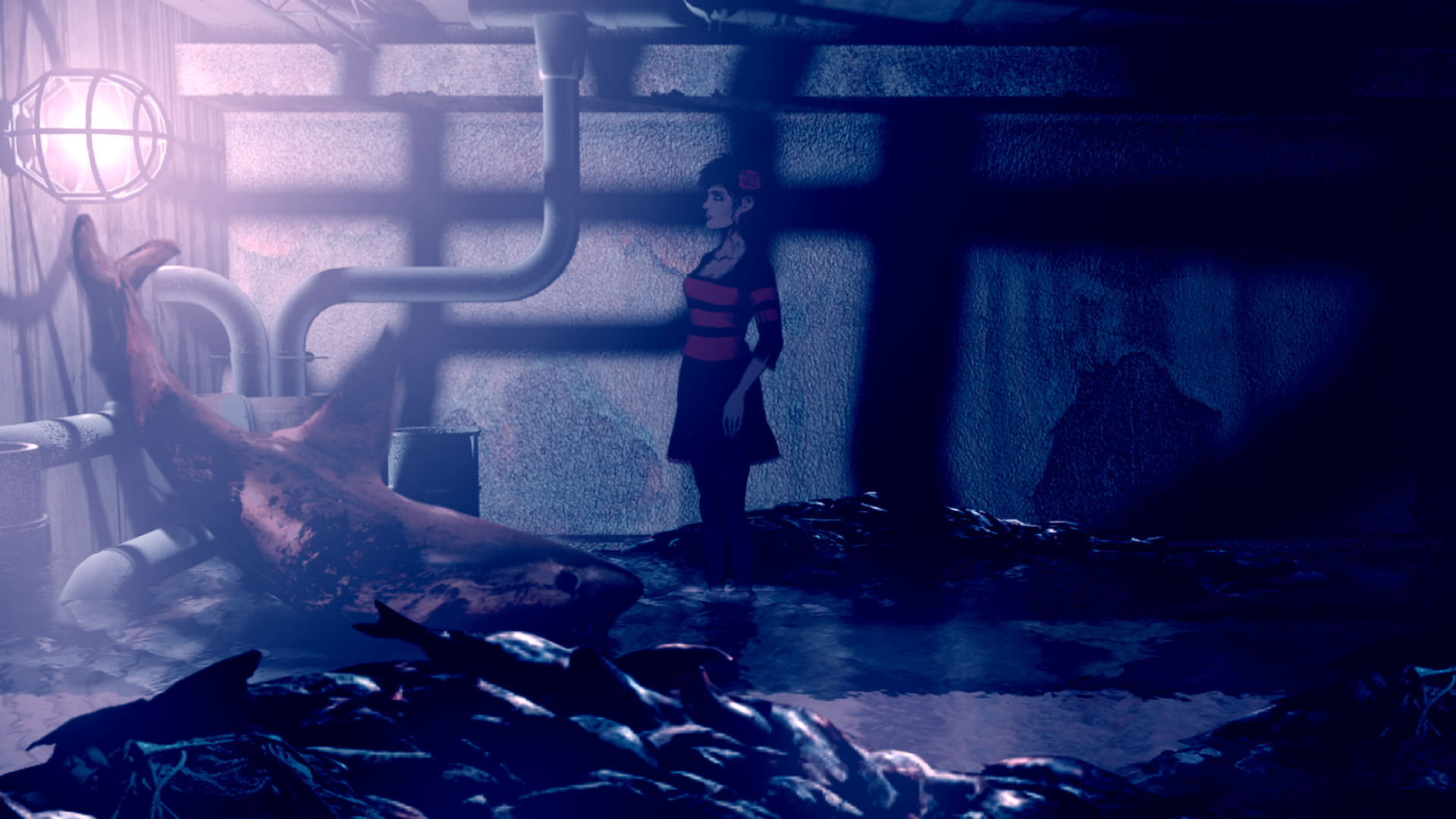
Lorelai's horror draws much of its force from the distance between everyday life and the images that interrupt it. Harvester Games presents domestic rooms, work spaces and human faces alongside threatening, sometimes grotesque visions. It is a psychological thriller for adults, and the content notice is unusually specific: it warns about violence and gore, strong language, sexual innuendo, domestic abuse, alcohol addiction, depression and suicide. These subjects are not decorative genre tags; they explain why a familiar home or workplace can become frightening without a conventional enemy patrol. The game uses colour, abrupt changes of visual register and sound to make a scene feel unstable while the player is still trying to understand what is happening to its people. Character artist and animator Stefano Collavini contributed to Lorelai, while English performances include Maisy Kay in the title role. A score by micAmic and guest artists gives the intimate conversations and the more surreal passages different kinds of pressure. The result is an adventure whose presentation works with its themes, rather than a detached series of jump scares.
Lorelai is the concluding game in Harvester Games' Devil Came Through Here trilogy, following The Cat Lady and the 2016 Downfall remake. The relationship is closer than a shared genre label: Michalski presents the three stories as connected, and familiar ideas about death, suffering and the possibility of resisting despair return in new circumstances. Yet this is Lorelai's story, centred on a younger protagonist with a family and a care-home setting of her own. Someone who knows the earlier games may recognize a wider pattern or a returning presence, while the immediate reason for her actions is established here. Steam sells Lorelai separately and also includes it in a bundle with the two earlier games and soundtrack items; it is not an expansion attached to either predecessor. That distinction helps if a reader finds the trilogy label on a storefront and assumes a single continuous download or a mandatory purchase order. Burnhouse Lane, the developer's later horror adventure, is another separate game; Michalski has explicitly described it as a new universe rather than a hidden fourth part of Lorelai's story.
This 2019 PC release marked a technical change for Harvester Games as well as a final chapter in the related stories. Lorelai was the studio's first Unity game and includes options for language, subtitles and controls. Steam describes full-HD presentation, English voice acting and Xbox controller support, while native 4K rendering was not part of the original specification. Those are useful edition details if the trilogy's earlier games have led someone to expect the same engine and interface throughout. GOG offers Lorelai as a separate PC purchase with an offline installer; Steam's version includes its own platform achievements and trading cards. None of those storefront features changes the central pattern of play: guide Lorelai through an environment, understand who is present and what they need, work through objects and dialogue, then live with the direction of her choices. The game starts from the possibility of leaving home and makes that question larger by asking what can be recovered after a life has been broken, and what independence means when other people still depend on her.
- Developer
- Harvester Games / Remigiusz Michalski
- Genre
- Psychological horror adventure