
About Loop Hero
The Lich has broken the world into a repeating path, and a lone hero sets out from a small camp to piece it back together. You shape each expedition with cards that add terrain, structures and enemies while the hero travels and fights automatically. Gear, resources and camp improvements carry progress between journeys toward the guardians behind the loop.
Loop Hero begins after the Lich has cast the world into a timeless loop. The hero wakes with little memory in a camp beside a path that circles through a largely empty landscape. Each expedition retraces that road, but its surroundings are assembled from cards earned during the journey. The hero moves and fights without direct steering; the player influences what the route contains, equips the items recovered from battles and decides how long to remain out. The ruined setting and fragmented recollections give the campaign its central question: what happened to the world, and can enough of it be restored to break the cycle?
Before setting out, the player chooses a class and a deck of cards from those unlocked so far. During a run, defeating creatures adds cards and equipment to the expedition’s available rewards. Terrain cards such as meadows and mountains occupy open spaces, while other cards place buildings or enemies along or beside the road. The hero then encounters those placements as the path brings them around again. Adding a dangerous tile can produce more fights, cards, equipment or materials, so the map becomes a plan for both survival and progress rather than a background to cross. Cards can also be held or discarded as the hand fills; the player does not have to turn every draw into another encounter. Completing a circuit also brings the hero past the campfire, making the edge between another lap and a return a recurring decision. Cards left unused are not necessarily wasted: once the hand is full, discards contribute materials for later camp construction.
Tile placement creates interactions that change what individual spaces do. Meadows restore health as the day passes, and placing one beside another tile can turn it into a Blooming Meadow with a stronger daily effect. Mountains and rocks raise the hero’s maximum health, but filling a group of nine mountain or rock spaces creates a Mountain Peak with a larger bonus and a new danger in the surrounding area. Rivers amplify the effects of adjacent landscape tiles, making their position matter across several spaces. Some cards instead add a structure with its own rules: a Battlefield can leave a chest on the road, while a Vampire Mansion adds vampires to nearby battles. The map therefore links healing, combat density, loot and the pressure of the expedition’s day cycle. Ruins create another kind of spatial pressure: giant worms associated with them can attack from adjacent spaces, and the tile’s position affects where those enemies appear in battle.
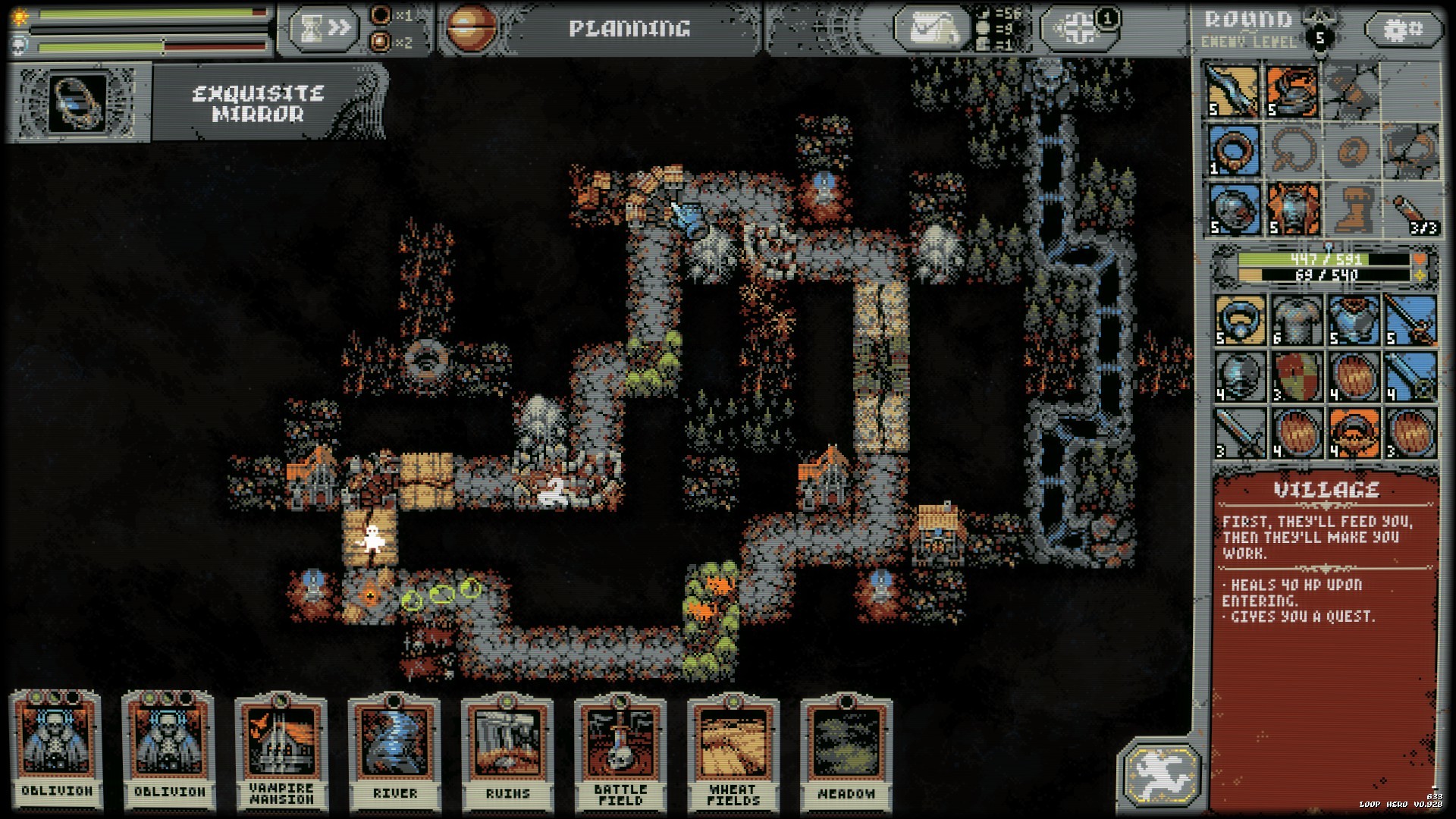
Combat resolves automatically, so preparation happens through the hero’s class, equipment and the encounters placed on the route. The starting Warrior can equip a weapon, armor, shield and ring; its damage rises as a fight continues, giving durability time to matter. The Rogue fights with two weapons and gathers trophies from defeated enemies, exchanging that accumulated haul for equipment at the campfire. The Necromancer uses a book and summons skeletons to fight, with attack speed affecting how quickly they appear and summon quality shaping what they become. These distinctions give the classes different ways to use the same cards and gear. New equipment can replace a current item immediately, but its useful stats matter more than its displayed level alone. Item level and color do not settle every swap: a lower-level piece can be more useful when it supplies a needed stat, and overflowing a full inventory turns its oldest item into scrap for camp buildings.
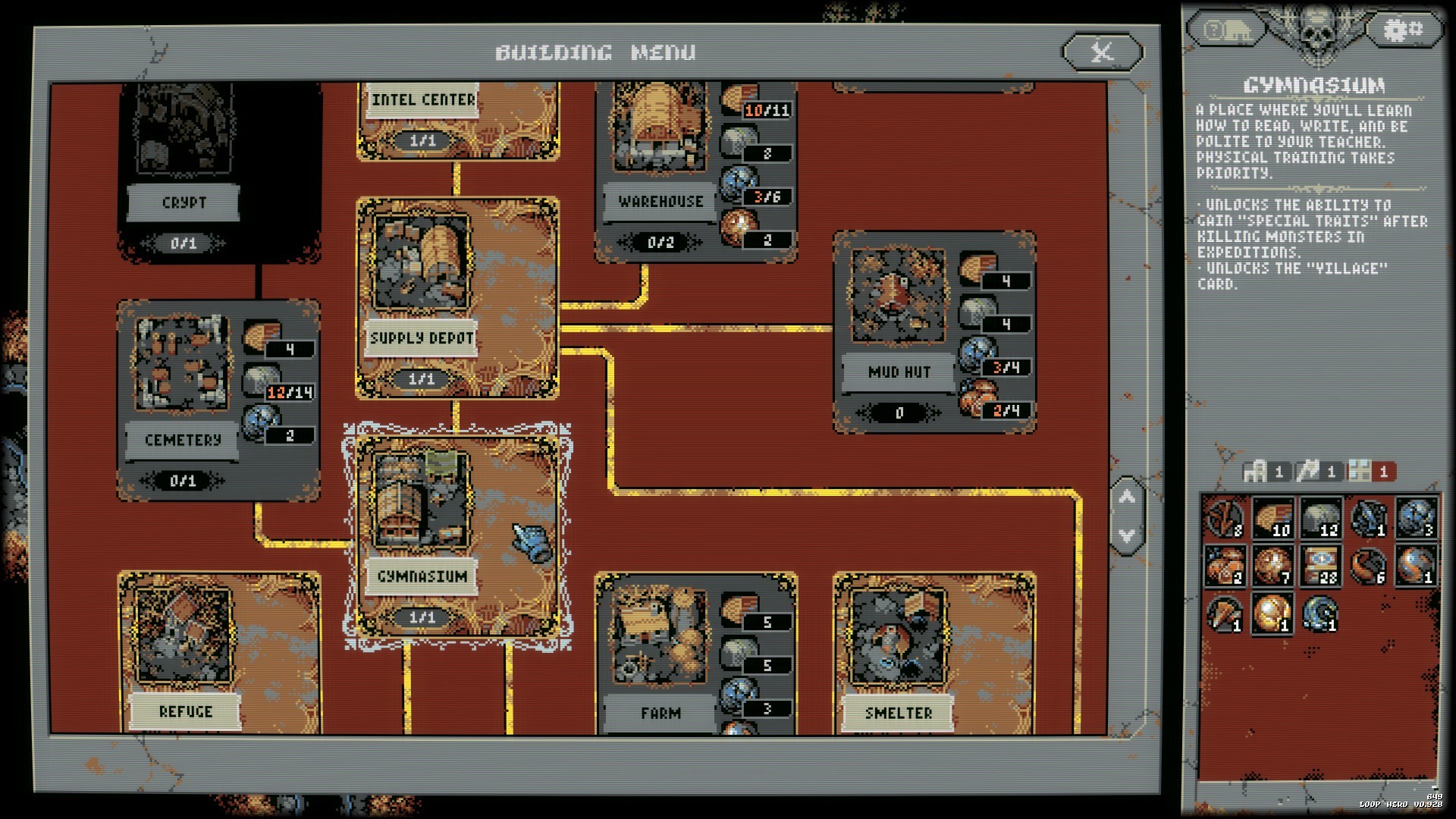
An expedition ends through defeat or retreat, and timing affects how many collected materials return to the camp. Returning to the campfire gives the player a safe opportunity to leave with the haul; retreating elsewhere preserves only part of it, while death costs more. Resources recovered on the road pay for buildings and improvements in the survivor camp. New structures expand the card pool, unlock classes or provide support for later runs, so a journey can be worthwhile even when the hero does not reach a guardian. Between expeditions, the camp’s buildings also reveal more about the lost world and the people trying to rebuild it. This turns repeated loops into linked attempts: cards and equipment shape the immediate run, while construction changes what can be attempted next.
As the route fills with enough placed terrain and structures, a chapter’s guardian arrives at the campfire. The player can influence when that threshold is reached by choosing which cards to place, then meet the boss with the gear, health and abilities accumulated on that expedition. Defeating guardians advances the campaign through further chapters and unlocks additional cards, classes and camp options. The available card deck is therefore both a collection of tools and a limit on what kinds of paths can be made. Loop Hero’s progression moves between expedition planning, automatic battles, resource decisions and permanent camp development, with each return to the same circular road taking place in a world that has acquired more of its missing pieces.
- Developer
- Four Quarters
- Genre
- Indie role-playing strategy game